Understanding the Nail Matrix: The Foundation of Healthy Nail Growth

Updated: 3 days ago
Medically reviewed by Dr. Baraa Alnahhal, MD | Last reviewed: October 7, 2026
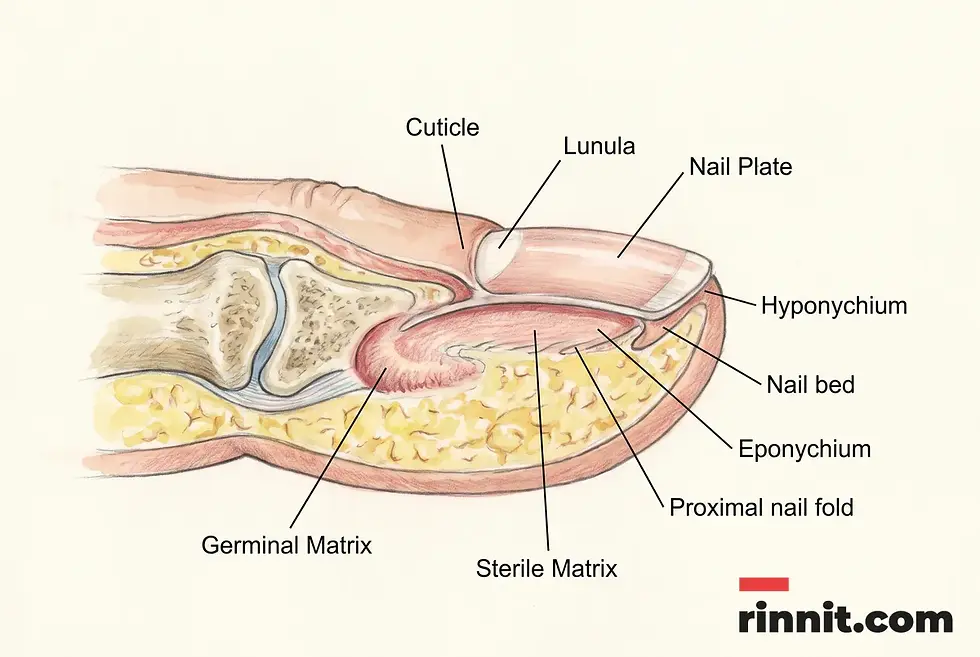
Quick Answer: What is the nail matrix?
The nail matrix is the specialized tissue that produces the cells forming fingernails and toenails. [1] Its germinal matrix drives about 90% of nail growth, while the sterile matrix contributes the remaining 10% and helps keep the nail attached to the skin beneath. [1] It produces 196 layers of cells for each nail, making it the foundation of new nail growth. [1]
What the research says
Fungal infection is a common cause of nail changes, but how common it is depends on who is tested. A systematic review and meta-analysis of 219 studies found that 22.91% (95% CI 20.32–25.60) of tested samples were positive for onychomycosis, compared with 8.57% (95% CI 6.77–10.55) in community-based studies (Wongyikul et al., Journal of Epidemiology and Community Health, 2026). [2]
Fungus and psoriasis can look alike, and they can occur together. In a meta-analysis of 13 studies (2,751 people with psoriasis and 10,967 without), onychomycosis was 1.68 times more common in people with psoriasis (95% CI 1.21–2.33), and the authors advise ruling out fungal infection before diagnosing nail psoriasis (Liu et al., Mycoses, 2025). [3]
Nail melanoma is often diagnosed late, which is why a color change in a single nail should be checked promptly. A meta-analysis of nail apparatus melanoma studies estimated a 5-year cumulative survival of 77.0% and a 5-year progression-free survival of 68.5%, and noted that prompt biopsy could help identify suspicious lesions at a less invasive stage (Lieberherr et al., Journal of the European Academy of Dermatology and Venereology, 2020). [4]
Overview of the Nail Matrix
The human nail is a complex structure, and at its very core lies the nail matrix. This highly active region is where the biological process of nail formation begins. Unlike hair follicles, which go through periods of rest, the nail matrix is constantly working to produce the hard, protective plates that shield the tips of your fingers and toes. [1] Understanding its anatomy and function is the first step in recognizing when something might be wrong with your nail health, and it fits into the bigger picture of the hand, which you can explore in our guide to hand and wrist anatomy.
Anatomy and Functional Roles
The nail matrix is divided into two primary functional areas: the germinal matrix and the sterile matrix. [1] The germinal matrix lies under the base of the nail, beneath the proximal nail fold, and is the powerhouse of production, generating the vast majority of the nail’s growth. The sterile matrix lies underneath the nail plate and adds the remaining cells while acting as the primary anchor that keeps the nail firmly attached to the underlying skin. [1]
Component | Growth Contribution | Primary Function |
Germinal Matrix | About 90% | Production of new nail plate cells |
Sterile Matrix | About 10% | Final cell layering and attachment of the nail to the underlying skin |
Lunula | Visible part | The white, crescent-shaped visible portion of the nail matrix |
The Process of Nail Formation
Every single fingernail and toenail is the result of a dense accumulation of cell layers. Each nail matrix produces 196 layers of cells that combine to make the nail plate. [1] Because this area is so metabolically active, it is highly sensitive to changes in your overall health. The only part of the matrix that is visible to the naked eye is the lunula, the white “half-moon” at the base of the nail, though some people do not have a visible lunula, and that is normal too. [1]
Common Conditions and Disruptions
A variety of factors can interfere with the nail matrix’s ability to produce healthy nails. These range from localized injuries, such as crushing a finger, to systemic health events that temporarily interrupt nail growth. [1] When the matrix is stressed or damaged, the change often shows up in the nail as it grows out, appearing as ridges, dents, discoloration or changes in texture.
Condition Type | Common Signs | Potential Causes |
Infections | Thick, yellow, cracked, or cloudy nails | Fungal infection (onychomycosis), most often of the toenails |
Systemic Stress | Beau’s lines (horizontal ridges) | Serious illness (such as a heart attack, COVID-19 or pneumonia) or medications such as chemotherapy |
Physical Trauma | Bruising, ridges, dents, or nail loss | Pinching, crushing, or heavy impact |
Skin Diseases | Pitting, crumbling, or white lines | Psoriasis or severe eczema |

Recognizing Signs of Damage
Damage to the nail matrix is often identified through changes in the nail’s appearance or texture, such as dents, horizontal ridges, splits, pain, spots or streaks of color, or a nail that becomes thicker or crumbly. [1] While minor trauma might result in temporary ridges or dents, severe injuries can cause the entire nail to fall off. [1] In most cases, the matrix will heal and resume production, though it can take several weeks for the new nail to appear. [1]
Not every nail change means the matrix is damaged, because some problems affect the nail bed, nail plate or nail folds instead. [1] It can be hard to tell a harmless change from one that needs treatment, so any change to your fingernails or toenails is worth showing to a healthcare provider. [1]
Professional Care and Treatment
Treating nail matrix issues requires addressing the underlying cause. Prescription antifungal pills are the typical treatment for nail fungus, and nail psoriasis can be managed with pills, injections or topical treatments depending on your needs. [1] A bruise under the nail may call for nail trephination, a procedure that drains the trapped blood, relieves pain and helps the new nail grow in correctly; it must be done within 48 hours of the injury, before the blood clots. [1] Subungual melanoma, a form of skin cancer that arises in the nail matrix, needs to be removed with surgery after a biopsy confirms the diagnosis, and further treatment such as chemotherapy or radiation may be needed if the cancer has spread. [1]
Proactive Maintenance Strategies
Maintaining a healthy nail matrix involves a combination of good habits and physical protection. Trim toenails straight across and fingernails with a slight curve at the edges, without cutting them too short, and avoid manipulating the cuticle. [1] Protect your hands during manual labor, wear properly fitting footwear, and avoid walking barefoot in public bathrooms or locker rooms, where foot fungi thrive. If you have a condition that can affect your nails, such as psoriasis, see your provider regularly to manage it. [1]

Conclusion
The nail matrix serves as the essential engine for all nail growth, and its health is directly reflected in the strength and appearance of your fingernails and toenails. By understanding how this specialized tissue functions and recognizing the early warning signs of disruption, you can take proactive steps to ensure your nails remain a healthy and functional part of your body.
Next Steps
If you notice persistent changes in your nails, such as unexplained discoloration, deep ridges, or pitting, consult a healthcare professional for a comprehensive evaluation. Early detection of matrix-related issues is key to preventing long-term damage and supporting the continued growth of healthy nails.
Frequently Asked Questions
What exactly is the nail matrix?
The nail matrix is the specialized tissue where your fingernails and toenails are formed through the constant production of new cells.
Where is the nail matrix located?
The nail matrix is located under the base of the nail, beneath the proximal nail fold and cuticle, and extends underneath the nail itself.
Can I see my nail matrix?
The only visible part is the lunula, the white crescent shape at the base of the nail. Some people do not have a visible lunula, and that is normal too. The rest of the matrix is hidden beneath the skin.
What is the difference between the germinal and sterile matrix?
The germinal matrix produces about 90% of nail growth, while the sterile matrix produces the remaining 10% and is more important for keeping the nail attached to the underlying skin.
How many layers of cells make up a nail?
Each nail matrix produces 196 layers of cells that combine to form the nail plate.
What are Beau’s lines?
Beau’s lines are horizontal ridges in the nails caused by a temporary interruption in nail growth, which can follow a serious illness or the use of certain medications such as chemotherapy.
Does the nail matrix ever rest?
No. Unlike hair follicles, which go through periods of rest, the nail matrix is constantly making new nail cells.
Can an injury stop nail growth permanently?
It is rare, but severe damage to the nail matrix can mean that some or all of the nail does not grow back. In most cases, the nail starts to grow again once the matrix heals.
What does a fungal infection do to the nails?
Certain fungi can infect the nails, most often the toenails, causing them to look thick, yellow, cracked, or cloudy.
What is subungual melanoma?
Subungual melanoma is a type of skin cancer that affects the nail matrix. Brown or black discoloration on a nail is the most common sign.
How should I trim my nails to protect the matrix?
Trim toenails straight across to help prevent ingrown toenails, and trim fingernails with a slight curve at the edges without cutting them too short. Avoid manipulating the cuticle.
What is nail trephination?
Nail trephination is a procedure that drains blood trapped under a nail after an injury. It relieves pain and helps the new nail grow in correctly, and it must be done within 48 hours of the injury, before the blood clots.
How long does it take for a new nail to appear after an injury?
It may take several weeks of healing before a new nail starts to appear.
Can psoriasis affect the nail matrix?
Yes. Up to 80% of people with psoriasis develop nail psoriasis, which can cause white lines, pitting, and crumbling.
What should I do if I see color changes in one nail?
See a healthcare provider promptly. Brown or black discoloration is the most common sign of subungual melanoma, and any color change in a single nail should be evaluated.
Related Reading
Understanding Nail Anatomy: The Structure of Fingernails and Toenails describes every part of the nail and how they fit together.
Nail Psoriasis: Symptoms, Causes, and Effective Management Strategies explains pitting and other nail changes caused by psoriasis.
Onychomycosis: Nail Fungus Symptoms, Diagnosis and Treatment covers fungal nail infections and how they are treated.
Ingrown Toenails: A Comprehensive Guide to Prevention and Treatment explains ingrown nails and when the nail root is treated.
Sources
Cleveland Clinic. Nail Matrix. Cleveland Clinic. Last updated February 14, 2023. https://my.clevelandclinic.org/health/body/24734-nail-matrix
Wongyikul P, Lumkul L, Preechasuth K, et al. Global and regional prevalence, aetiology and socioeconomic distribution of onychomycosis: a systematic review and meta-analysis (2013-2023). J Epidemiol Community Health. 2026;80(8):576-583. PMID: 41819790. DOI: 10.1136/jech-2025-224978
Liu M, Kang Y, Zhang R. The prevalence of onychomycosis in psoriasis patients: a systematic review and meta-analysis. Mycoses. 2025;68(2):e70035. PMID: 39962858. DOI: 10.1111/myc.70035
Lieberherr S, Cazzaniga S, Haneke E, et al. Melanoma of the nail apparatus: a systematic review and meta-analysis of current challenges and prognosis. J Eur Acad Dermatol Venereol. 2020;34(5):967-976. PMID: 31788861. DOI: 10.1111/jdv.16121
Medical disclaimer
This content is for informational purposes only and is not intended as medical advice. Always seek the guidance of a qualified healthcare professional regarding any medical condition or treatment.



Comments