Understanding Sphincters: The Body’s Essential Gatekeepers

Updated: 2 days ago
Medically reviewed by Dr. Baraa Alnahhal, MD · Last reviewed: October 2026
Quick Answer: What are sphincters?
Sphincters are circular bands of muscle that open and close to regulate the flow of food, bile, urine and feces between parts of the body. [1] Like tiny gates, they relax to allow passage and contract to seal openings. [1] The body has nine major sphincters in the digestive and urinary systems, plus microscopic ones in blood vessels and the eyes.
What the research says
Pelvic floor muscle training can cure or improve urinary incontinence. A Cochrane review of 31 trials (1,817 women) found that women with stress urinary incontinence who did pelvic floor muscle training were eight times more likely to report cure than controls (56% vs 6%; risk ratio 8.38, 95% CI 3.68 to 19.07; high-quality evidence). Most trials were small to moderate in size with follow-up generally under 12 months (Dumoulin et al., Cochrane Database Syst Rev, 2018) [2].
Acid reflux, which often involves the lower esophageal sphincter, is common worldwide. A systematic review of population-based studies found GERD prevalence ranging from 18.1% to 27.8% in North America, 8.8% to 25.9% in Europe, and 2.5% to 7.8% in East Asia, with evidence of an increase since 1995 (El-Serag et al., Gut, 2014).
What role do sphincters play in the body?
The primary biological role of a sphincter is to maintain the controlled movement of substances from one anatomical compartment to another. By functioning as muscular valves, they ensure that bodily processes occur in a unidirectional and regulated manner. For instance, without the proper closure of these gates, stomach acids would freely flow back into the esophagus, and waste products would leak uncontrollably from the body. [1]
Sphincters are categorized based on how they are controlled by the nervous system. Involuntary sphincters operate automatically and are stimulated by the autonomic nervous system, requiring no conscious effort. [1] In contrast, voluntary sphincters are part of the somatic nervous system, allowing individuals to consciously regulate actions such as urination and bowel movements. [1]
Control Type | Nervous System | Example | Primary Function |
Involuntary | Autonomic | Lower esophageal sphincter | Prevents acid reflux automatically |
Voluntary | Somatic | External anal sphincter | Allows conscious control of bowel movements |
What are the major sphincters of the human body?
The major sphincters of the human body are nine muscular rings that govern critical digestive and urinary functions [1], though many microscopic sphincters also exist. These structures are strategically located to separate distinct organs and regulate the transition of materials.
Digestive System Sphincters
The digestive tract relies heavily on sphincters to move food through various stages of digestion while preventing backflow. The upper and lower esophageal sphincters manage the entry and exit of the esophagus, while the pyloric and ileocecal sphincters control the movement of food through the stomach and intestines. [1] For more on how the gut moves food along, see our guide to GI motility, and for a condition of the pyloric region in babies, see pyloric stenosis in infants.
Sphincter Name | Location | Primary Role |
Upper esophageal (UES) | Throat to esophagus | Controls food entry and protects airways |
Lower esophageal (LES) | Esophagus to stomach | Prevents stomach contents from backing up |
Sphincter of Oddi | Bile and pancreatic ducts | Regulates bile and pancreatic juice flow |
Pyloric sphincter | Stomach to small intestine | Controls food exit from the stomach |
Ileocecal sphincter | Small to large intestine | Seals small intestine during digestion |

Urinary and Anal Sphincters
The regulation of waste elimination is managed by pairs of internal and external sphincters. [1] In both the urinary and anal systems, the internal sphincter operates involuntarily to provide baseline closure, while the external sphincter provides the voluntary control necessary for healthy social and physical function.
System | Sphincter | Control | Function |
Anal | Internal anal sphincter | Involuntary | Prevents leakage of gas and stool |
Anal | External anal sphincter | Voluntary | Consciously controls bowel movements |
Urinary | Internal urethral sphincter | Involuntary | Regulates urine flow from the bladder |
Urinary | External urethral sphincter | Voluntary | Allows conscious control of urination |
What are the physical characteristics and anatomy of sphincters?
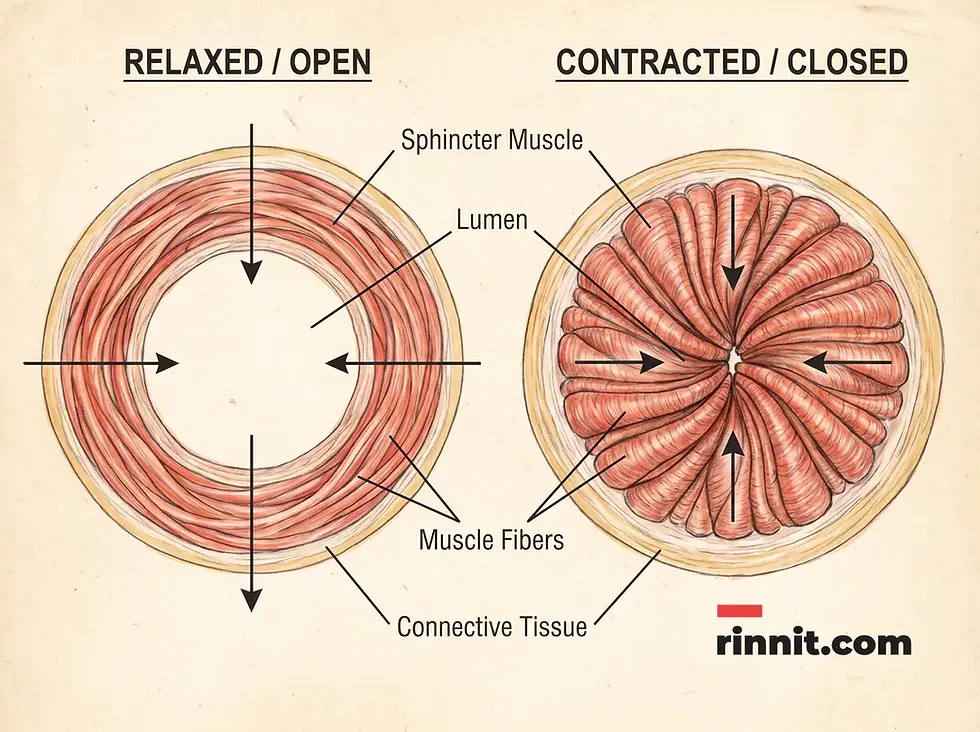
Sphincters are characterized by their circular, ring-like shape, often compared to a donut. [1] They are composed of specialized muscle tissue, which can be either smooth muscle (found in involuntary sphincters) or striated muscle (found in voluntary sphincters). Their physical dimensions vary significantly depending on their location and function within the body. The sphincters in tiny blood vessels called capillaries are microscopic, while the sphincters of the anus may be about the size of a dime. [1]
What conditions affect sphincters and how do they impact health?
When a sphincter becomes damaged or weakened, it can no longer effectively regulate the flow of substances, leading to various health complications. [1] Weakening can occur due to several factors, including nerve damage, the natural aging process, physical trauma, or complications arising from surgery or childbirth. [1]
The impact of sphincter dysfunction depends on the specific muscle affected. For example, a weakened lower esophageal sphincter is the primary cause of acid reflux, while dysfunction in the urethral or anal sphincters results in incontinence (see our guide to stress incontinence). Difficulty swallowing can also stem from problems in the esophagus (read about esophageal disorders).
Condition | Affected Sphincter | Common Symptoms |
Acid reflux | Lower esophageal (LES) | Heartburn, chest pain, bile backup |
Urinary incontinence | Urethral sphincters | Leaking urine, loss of bladder control |
Fecal incontinence | Anal sphincters | Loss of bowel control, leakage |
Dysphagia | Esophageal sphincters | Difficulty or pain when swallowing |
How are sphincter problems managed, and how can you keep sphincters healthy?
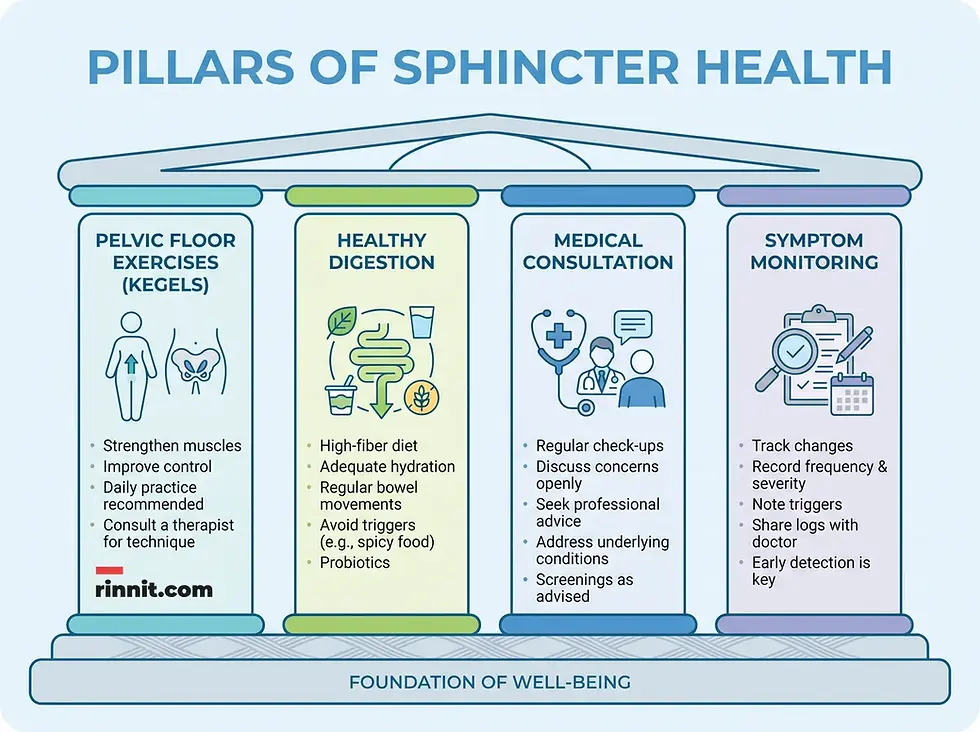
Addressing sphincter-related issues often involves a combination of lifestyle adjustments, physical therapy, and medical intervention. For those experiencing mild weakening, targeted exercises such as Kegels can help strengthen the pelvic floor muscles that support urinary and anal sphincters (see also perineoplasty and the pelvic floor).
In cases of severe damage or chronic dysfunction, medical professionals may recommend surgical repairs or the placement of an artificial sphincter to restore control. Medications such as proton pump inhibitors (PPIs) are frequently used to manage the symptoms of acid reflux, while others may be prescribed to regulate bowel movements.
Conclusion
Sphincters are the unsung heroes of internal regulation, performing the essential task of managing the body’s complex flow of nutrients and waste. By acting as precise muscular gates, they protect the respiratory system, facilitate digestion, and maintain personal hygiene. Understanding how these muscles function and recognizing the early signs of dysfunction is critical for long-term health and quality of life.
Next Steps
If you are experiencing symptoms such as persistent acid reflux, difficulty swallowing, or a loss of bladder or bowel control, it is important to consult a healthcare professional. Early diagnosis of sphincter dysfunction can lead to more effective management strategies and prevent long-term complications.
Trusted resource: Cleveland Clinic: Sphincters.
Frequently Asked Questions
What is the main purpose of a sphincter?
The main job of a sphincter is to act as a muscular gate that controls the flow of substances like food, air, and waste between different parts of the body.
How many major sphincters are in the human body?
There are nine major sphincters that regulate the digestive and urinary systems, though many smaller ones exist in blood vessels and the eyes.
Can I control all of my sphincters?
No, most sphincters work automatically (involuntary), but a few, such as the external anal and urethral sphincters, are under your voluntary control.
What happens when a sphincter stays open?
If a sphincter fails to close properly, substances can leak or back up, leading to issues like acid reflux or incontinence.
What is the difference between smooth and striated muscle in sphincters?
Involuntary sphincters are typically made of smooth muscle, while voluntary sphincters are made of striated muscle.
What causes a sphincter to weaken?
Common causes include aging, nerve damage, physical trauma, and complications from surgery or childbirth.
Is acid reflux caused by a sphincter problem?
Yes, acid reflux occurs when the lower esophageal sphincter (LES) weakens or relaxes at the wrong time and allows stomach acid to flow back up into the esophagus.
What is the sphincter of Oddi?
The sphincter of Oddi controls the flow of bile and pancreatic juices into the small intestine to aid in digestion.
How do Kegel exercises help sphincters?
Kegel exercises strengthen the muscles that support the voluntary sphincters in the urinary and anal systems, helping to improve control.
Are there sphincters in the eyes?
Yes, the iris sphincter muscle controls the size of the pupil in response to light.
What are precapillary sphincters?
Precapillary sphincters are microscopic sphincters in the blood vessels that regulate blood flow into the capillaries.
Can surgery repair a damaged sphincter?
Yes, surgery can be performed to repair tears or to implant an artificial sphincter in severe cases.
What is dysphagia?
Dysphagia is the medical term for difficulty swallowing, which can be caused by esophageal sphincter dysfunction.
Does aging affect sphincter function?
Yes, muscles naturally weaken as you age, which can lead to decreased sphincter efficiency.
When should I see a doctor about sphincter issues?
You should seek medical advice if you experience leaking waste, persistent heartburn, or difficulty swallowing.
Related Reading
Acid Reflux & GERD: Symptoms, Causes, Diagnosis, and Treatment explains reflux caused by a weak lower esophageal sphincter.
Achalasia: Symptoms, Causes, and Treatment covers a swallowing disorder where the esophageal sphincter fails to relax.
Pyloric Sphincter: Location, Function, Disorders and Care describes the valve that controls food leaving the stomach.
Fecal (Bowel) Incontinence: Symptoms, Causes, and Treatment Options Explained explains loss of bowel control and the treatments that help.
References
Cleveland Clinic. Sphincters. Cleveland Clinic. September 3, 2025. https://my.clevelandclinic.org/health/body/sphincters
Dumoulin C, Cacciari LP, Hay-Smith EJC. Pelvic floor muscle training versus no treatment, or inactive control treatments, for urinary incontinence in women. Cochrane Database Syst Rev. 2018;10(10):CD005654. PMID 30288727. https://doi.org/10.1002/14651858.CD005654.pub4
El-Serag HB, Sweet S, Winchester CC, et al. Update on the epidemiology of gastro-oesophageal reflux disease: a systematic review. Gut. 2014;63(6):871-880. PMID 23853213. https://doi.org/10.1136/gutjnl-2012-304269
Medical Disclaimer
This article is for informational purposes only and does not constitute medical advice. Always seek the advice of your physician or other qualified health provider with any questions you may have regarding a medical condition. Never disregard professional medical advice or delay in seeking it because of something you have read in this article.



Comments