Understanding Rapid Sequence Intubation: A Life-Saving Emergency Procedure

Updated: 3 days ago
Medically reviewed by Dr. Baraa Alnahhal, MD · Last reviewed: October 2026
Definition: Rapid sequence intubation (RSI) is an emergency medical technique used to quickly secure a patient's airway.
How it works: A sedative and a muscle relaxant are given together so a breathing tube can be inserted safely while minimizing the risk of stomach contents entering the lungs.
When it is used: When a patient cannot breathe independently due to trauma, severe allergic reactions, or respiratory failure.
Outcome: A high success rate in life-threatening situations.
Quick Answer
Rapid sequence intubation is an emergency procedure that inserts a breathing tube into the windpipe as quickly and safely as possible. A sedative and a paralytic agent are given together to induce sleep and relax muscles, preventing coughing or vomiting. It is used in urgent situations with high risk of aspiration or respiratory failure, reliably maintaining oxygen delivery. [1]
What the research says
Overall success outside the hospital is very high, but first-pass success is lower. A systematic review and meta-analysis of 83 studies of out-of-hospital RSI found overall intubation success of 99% (95% CI 98% to 99%) for physicians and 97% (95% CI 95% to 99%) for nonphysicians. First-pass success was 88% (95% CI 83% to 93%) for physicians and 78% (95% CI 65% to 89%) for nonphysicians. The authors noted that no firm conclusions could be drawn about differences in adverse events (Fouche et al., Ann Emerg Med, 2017).
First-pass success varies widely, and several factors predict failure. A systematic review and meta-analysis found that prehospital RSI first-pass success rates vary between 59% and 98%. Factors linked to failure included age under 1 year, blood or fluid in the airway, restricted jaw or neck movement, trauma, nighttime procedures and equipment problems. Protective factors included an experienced intubator, adequate training, certain videolaryngoscopes, an inclined patient position and use of a bougie (Hayes-Bradley et al., Br J Anaesth, 2024).
The choice of sedative affects blood pressure but not first-pass success. A meta-analysis of 9 eligible studies comparing etomidate with ketamine found that etomidate was associated with a lower risk of post-induction hypotension (OR 0.53, 95% CI 0.31 to 0.91; 6 studies, 12,060 patients). First-pass success did not differ (OR 1.13, 95% CI 0.95 to 1.36; 7 studies, 15,574 patients) (Sharda and Bhatia, Indian J Crit Care Med, 2022).
What is Rapid Sequence Intubation?
Rapid sequence intubation (RSI) serves as a cornerstone of emergency medicine, providing a controlled yet rapid method for securing a patient's airway when every second counts. Unlike scheduled intubations where patients fast for hours, RSI is designed for emergency situations where the stomach may not be empty. By using a specific combination of medications, medical teams can bypass the body's natural reflexes, such as gagging or coughing, which could otherwise complicate the insertion of an endotracheal tube.
The procedure is highly effective, with clinical data indicating a success rate exceeding 95% for proper tube placement. This reliability makes it the preferred choice for managing patients suffering from acute respiratory failure, severe anaphylaxis, or traumatic brain injuries that impair their ability to protect their own airways. The primary goal is to establish a direct path for oxygen to reach the lungs while shielding them from potentially harmful foreign substances like vomit or blood.
Aspect | Rapid Sequence Intubation (RSI) | Standard Scheduled Intubation |
Primary Setting | Emergency Department or ICU | Operating Room (Planned) |
Patient Preparation | None (Emergency) | 8-hour fast required |
Medication Timing | Simultaneous sedative and paralytic | Staged induction and relaxation |
Primary Goal | Rapid airway protection and aspiration prevention | Controlled airway management for surgery |
Aspiration Risk | High (Unknown stomach contents) | Low (Empty stomach) |
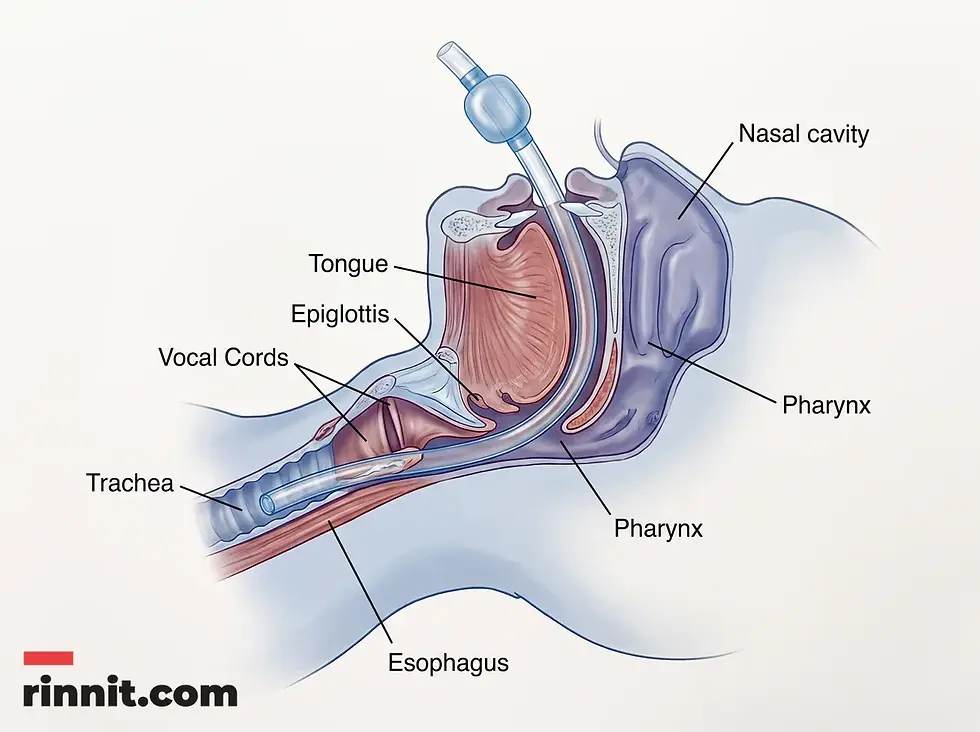
What are the steps of rapid sequence intubation?
The execution of RSI follows a strict clinical protocol to ensure patient safety and procedure efficiency. It begins with preoxygenation, where the patient receives high-flow oxygen through a mask or nasal cannula to build up a reserve in the body. Following this, the medical team administers a sedative to ensure the patient is unconscious and a neuromuscular blocking agent to induce temporary paralysis.
Once the medications have taken effect, a laryngoscope—often equipped with a video camera—is used to visualize the vocal cords. The breathing tube is then carefully guided into the windpipe and secured. The final step involves verifying the tube's position through physical assessment, such as listening for breath sounds, and diagnostic tools like X-rays or carbon dioxide monitors.
What equipment is used for rapid sequence intubation?
Successful RSI requires a specialized kit of equipment ready for immediate use. Beyond the medications themselves, providers rely on monitoring systems to track heart rate, blood pressure, and oxygen levels throughout the process. Suction devices are kept on standby to clear any obstructions from the airway, while various sizes of endotracheal tubes ensure a proper fit for the patient's anatomy.

What are the benefits and safety considerations of rapid sequence intubation?
The most significant benefit of RSI is its ability to provide lifesaving oxygen to the body while protecting the lungs from aspiration. In patients with a possible spinal injury, a team member holds the head and neck still by hand during the procedure, because intubation itself does not stabilize the neck. However, like any invasive procedure, it carries certain risks, including the potential for airway trauma, allergic reactions to medications, or difficulty in placing the tube on the first attempt.
Benefit Category | Description |
Airway Security | Establishes a definitive path for mechanical ventilation. |
Aspiration Prevention | Minimizes the risk of stomach contents entering the lungs. |
Trauma Protection | Paralysis limits patient movement, while the team holds the neck still by hand to protect possible spinal injuries. |
Speed | Allows for airway control within minutes of the decision to intubate. |
What is recovery and aftercare like after rapid sequence intubation?
After the breathing tube is successfully placed, the patient is typically connected to a ventilator for ongoing respiratory support. Once the underlying emergency is resolved and the tube is removed, most patients can talk and swallow comfortably within a few hours. Temporary side effects such as a sore throat, hoarseness, or a mild cough are common and usually resolve within a week. If these symptoms persist or if signs of infection like fever or difficulty breathing develop, immediate medical consultation is necessary.

Conclusion
Rapid sequence intubation is a vital emergency intervention that saves countless lives by securing the airway in critical moments. By combining speed with pharmacological control, it provides the safest possible environment for intubation when patients are at their most vulnerable. Understanding the procedure's steps and the care involved helps demystify this essential component of modern emergency medicine.
What are the next steps after learning about rapid sequence intubation?
If you or a loved one are recovering from an emergency procedure involving intubation, it is important to follow all post-operative instructions provided by your medical team. Monitor for persistent hoarseness or swallowing difficulties and contact a healthcare professional if you have concerns about your respiratory health or recovery progress.
Frequently Asked Questions
What is the main difference between RSI and normal intubation?
RSI is an emergency procedure used when a patient has not fasted, requiring simultaneous medication to prevent vomiting and secure the airway quickly. Normal intubation is a planned procedure for surgery where the patient has fasted for at least eight hours.
Is the patient awake during rapid sequence intubation?
No, the patient is not awake. A sedative is administered simultaneously with a paralytic agent to ensure the patient falls asleep quickly and does not feel pain or discomfort during the procedure.
Why is a paralytic medication used in RSI?
The paralytic agent, also known as a neuromuscular blocking agent, temporarily relaxes all muscles. This prevents the patient from coughing, gagging, or straining, which makes it easier for the provider to insert the tube and reduces the risk of aspiration.
How long does the RSI procedure take?
In most emergency settings, the entire process of rapid sequence intubation, from the administration of medication to the securing of the breathing tube, can be completed within a few minutes.
What are the most common side effects after RSI?
The most common side effects include a sore throat, a hoarse voice, or a mild cough. These physical symptoms are usually temporary and typically resolve within a few days to a week after the tube is removed.
What is aspiration and how does RSI prevent it?
Aspiration occurs when foreign substances like vomit or blood enter the lungs. RSI prevents this by using medications to relax the muscles and quickly securing the airway with a tube, often combined with manual pressure on the neck to close off the esophagus.
What happens if the breathing tube cannot be inserted?
If a provider is unable to insert the tube using RSI, they have alternative emergency methods and backup equipment ready to ensure the patient still receives necessary oxygen, such as using a different type of mask or surgical airway.
Can RSI be used for children?
Yes, rapid sequence intubation is used for patients of all ages, including children and infants, when an emergency airway needs to be secured. The equipment and medication dosages are specifically adjusted based on the patient's size and weight.
When can a patient talk again after intubation?
Most patients are able to talk and swallow comfortably within a few hours after the breathing tube has been removed, although their voice may be slightly hoarse for a short period.
What are the signs of an infection after intubation?
Signs of a potential infection include a fever, a cough producing colored or bloody mucus, shortness of breath, a rapid heart rate, or chest pain. If these occur, you should contact a healthcare provider immediately.
Related Reading
Extubation: When a Breathing Tube Comes Out, Risks and Recovery explains how breathing tubes are removed.
General Anesthesia: How It Works, Risks and Recovery explains how general anesthesia works during surgery.
References
Cleveland Clinic. Rapid Sequence Intubation. Cleveland Clinic Health Library. Accessed October 11, 2026. https://my.clevelandclinic.org/health/treatments/rapid-sequence-intubation
Fouche PF, Stein C, Simpson P, et al. Nonphysician out-of-hospital rapid sequence intubation success and adverse events: a systematic review and meta-analysis. Ann Emerg Med. 2017;70(4):449-459.e20. PMID: 28559038. DOI: https://doi.org/10.1016/j.annemergmed.2017.03.026
Hayes-Bradley C, McCreery M, Delorenzo A, et al. Predictive and protective factors for failing first pass intubation in prehospital rapid sequence intubation: an aetiology and risk systematic review with meta-analysis. Br J Anaesth. 2024;132(5):918-935. PMID: 38508943. DOI: https://doi.org/10.1016/j.bja.2024.02.004
Sharda SC, Bhatia MS. Etomidate compared to ketamine for induction during rapid sequence intubation: a systematic review and meta-analysis. Indian J Crit Care Med. 2022;26(1):108-113. PMID: 35110853. DOI: https://doi.org/10.5005/jp-journals-10071-24086
Medical disclaimer
This article is for informational purposes only and is not a substitute for professional medical advice, diagnosis, or treatment. Always seek the advice of your physician or other qualified health provider with any questions you may have about a medical condition.



Comments