Understanding Phantom Limb Pain: Causes, Symptoms, and Management

Updated: 2 days ago
Medically reviewed by Dr. Baraa Alnahhal, MD · Last reviewed: September 2026
TL;DR: Phantom limb pain is a real medical condition where pain is felt in a limb that has been removed. It affects over half of all amputees and is caused by the brain misinterpreting nerve signals during its adjustment to limb loss. While the pain can be severe, a variety of treatments—including mirror therapy, medications, and neurostimulation—can help manage symptoms and improve quality of life.
Quick Answer: What Is Phantom Limb Pain?
Phantom limb pain refers to painful sensations felt in a body part that is no longer present following an amputation. This condition occurs because the brain and spinal cord continue to receive and misinterpret signals from the remaining nerves. Symptoms can range from aching and burning to stabbing or tingling. Treatment typically involves a combination of medications, physical therapies like mirror therapy, and lifestyle adjustments to reduce triggers such as stress and fatigue.
What Is Phantom Limb Pain?
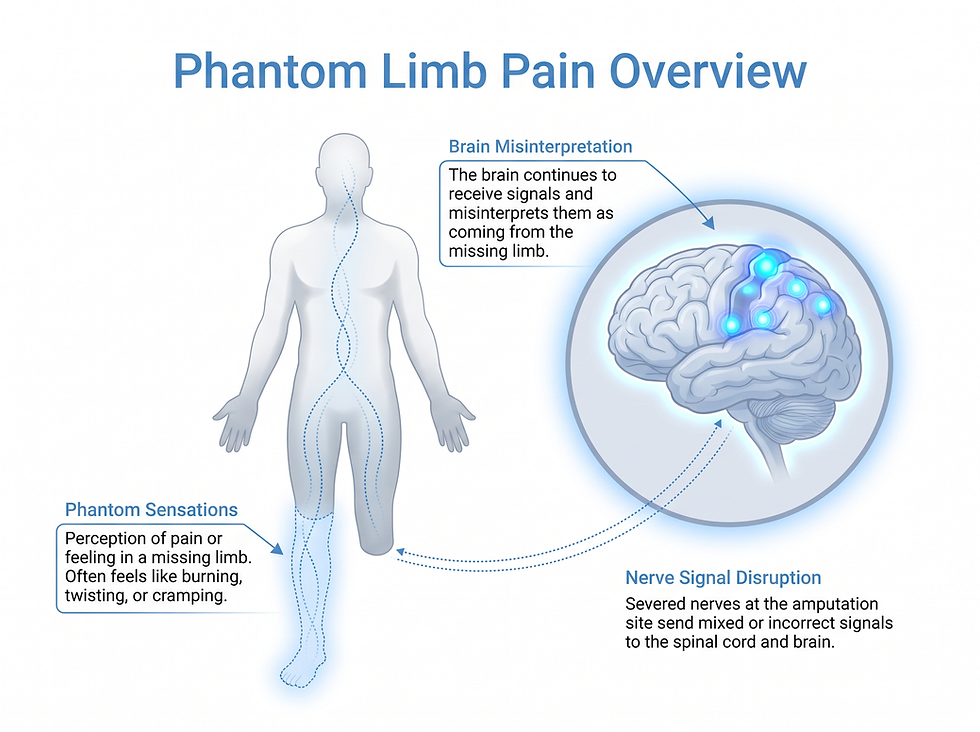
Phantom limb pain is a common yet complex condition where an individual experiences painful sensations in a limb that has been surgically removed or lost through trauma. Although the physical limb is gone, the pain felt by the individual is entirely real. This phenomenon occurs as the body and brain attempt to adjust to the sudden absence of a body part. It is estimated that over half of all people who undergo an amputation will experience some form of phantom limb pain.
Medical professionals distinguish between several types of post-amputation sensations:
Phantom Pain: Explicitly painful sensations in the missing limb.
Phantom Sensations: Non-painful feelings, such as touch, pressure, itching, or temperature changes, in the area where the limb used to be.
Phantom Pain Syndrome: A combination of both painful and non-painful sensations in the missing limb's location.
Residual Limb Pain: Pain specifically located in the remaining part of the limb (the stump), often caused by medical issues like infection or nerve damage.
Symptoms and Triggers
The sensations associated with phantom limb pain are highly varied and can differ significantly from one person to another. Some individuals describe the pain as a dull ache or a burning sensation, while others experience sharp, stabbing, or twisting pains. Beyond pain, many people report feeling as though the missing limb is still attached, moving, or even shrinking over time.
Category | Common Symptoms and Triggers |
Pain Sensations | Aching, burning, itching, stabbing, throbbing, tingling, and temperature changes. |
Physical Triggers | Fatigue, infections, poor blood flow, and pressure or swelling on the residual limb. |
Emotional Triggers | Stress, anxiety, and depression. |
Limb Perceptions | Feeling the limb is in an unusual position, moving, or shrinking. |
While phantom limb pain is most intense during the first six months following an amputation, many individuals continue to experience intermittent symptoms for two years or longer.
Why Does Phantom Pain Occur?
The exact cause of phantom limb pain is not fully understood, but it is widely believed to be the result of a miscommunication within the nervous system. Even after a limb is removed, the nerve connections in the spinal cord and brain that once served that limb remain. The brain, which is accustomed to receiving a constant stream of sensory data, must learn to adapt to the sudden loss of input.
During this adjustment period, the brain may misinterpret signals from the remaining nerves or "rearrange" sensory pathways. This can lead to increased sensitivity and the perception of pain in a limb that no longer exists. Essentially, the brain is attempting to process trauma and sensory loss, and the resulting confusion manifests as physical pain.
Diagnosis and Evaluation
Diagnosing phantom limb pain primarily involves a thorough physical examination and a review of the patient's medical history. A healthcare provider will examine the residual limb to check for signs of infection, open wounds, or other physical complications that could be causing "residual limb pain" rather than phantom pain.
Diagnostic Step | Purpose |
Physical Exam | To check the stump for infection, bone spurs, or poorly fitting prosthetics. |
Blood & Imaging Tests | To rule out underlying medical causes like bone infections (osteomyelitis). |
Psychological Evaluation | To assess how stress, anxiety, or depression may be triggering or worsening the pain. |
Treatment and Management Strategies
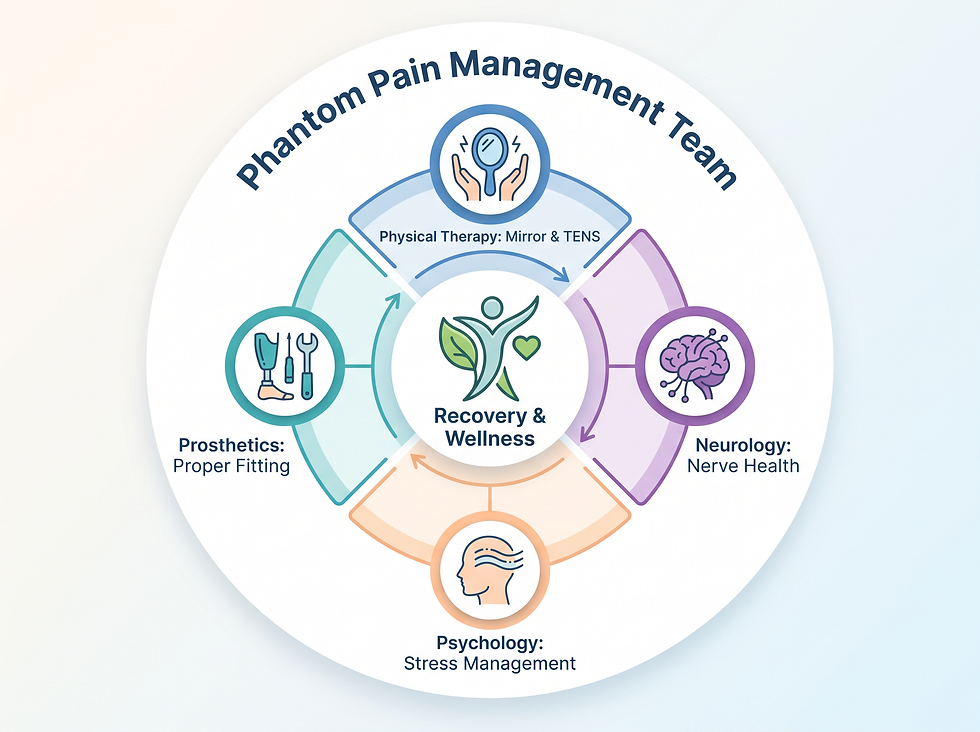
There is no single "cure" for phantom limb pain, but a multidisciplinary approach can effectively manage the symptoms. Treatment plans are often tailored to the individual's specific needs and may involve a combination of medical, physical, and psychological therapies.
Therapeutic Approaches
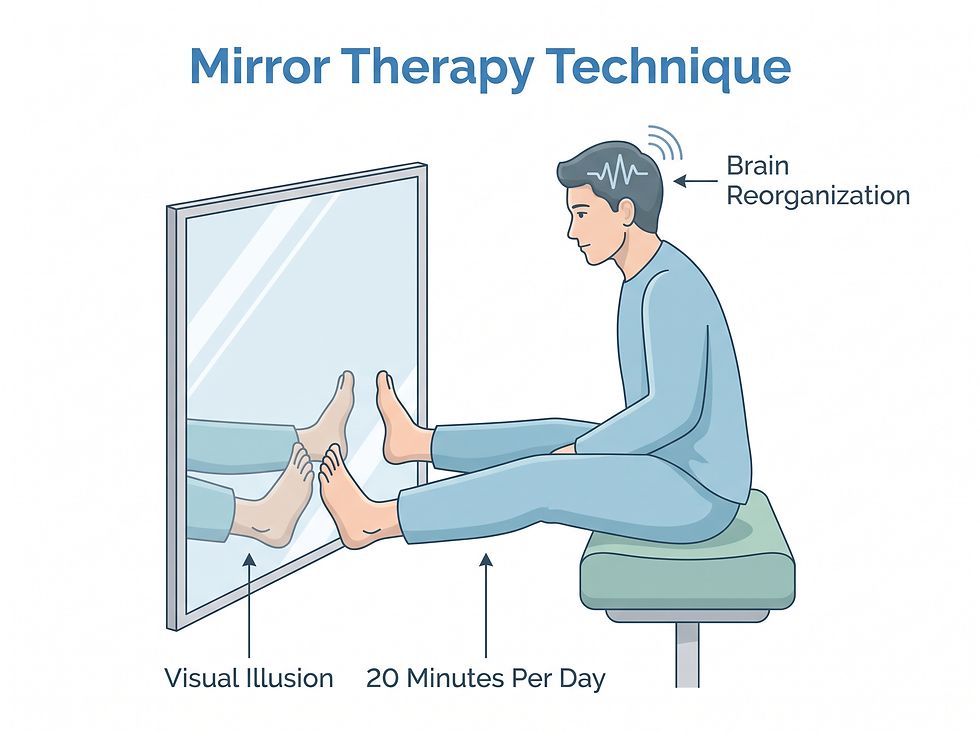
Mirror Therapy: This technique uses a mirror to create a visual illusion that the missing limb is still intact. By watching the reflection of the healthy limb move, the brain is "tricked" into thinking the missing limb is also moving, which can help reorganize the mixed-up sensory signals and reduce pain.
Medications: Various drugs may be prescribed, including NSAIDs for inflammation, antidepressants, anticonvulsants, or muscle relaxants to address nerve-related pain.
Neurostimulation: Procedures such as Transcutaneous Electrical Nerve Stimulation (TENS) or spinal cord stimulation use electrical impulses to interrupt pain signals before they reach the brain.
Complementary and Lifestyle Support
Many people find relief through complementary therapies such as acupuncture, massage, and biofeedback. Additionally, mental health support, including Cognitive Behavioral Therapy (CBT) and mindfulness exercises, can help patients cope with the emotional toll of chronic pain and reduce the impact of stress as a trigger.
Outlook and Complications
Living with phantom limb pain can be challenging and may significantly impact an individual's mental health, potentially leading to anxiety, depression, and sleep disturbances. However, with consistent management and the right combination of therapies, the frequency and intensity of the pain typically decrease over time. It is essential for patients to work closely with their healthcare team to find the most effective strategies for their unique situation.
Conclusion
Phantom limb pain is a complex neurological response to the loss of a limb, but it is a manageable condition. By understanding the triggers and utilizing modern therapies like mirror therapy and neurostimulation, individuals can regain control over their symptoms. If you are experiencing pain or unusual sensations following an amputation, consult your healthcare provider to develop a comprehensive care plan that addresses both the physical and emotional aspects of recovery.
Are you looking for more resources on post-amputation care? Learn more in our guide to amputation surgery and long-term recovery.
Frequently Asked Questions (FAQs)
1. What is phantom limb pain? It is a real painful sensation felt in a body part that has been removed.
2. How common is this condition? More than half of people who undergo an amputation experience phantom pain.
3. Is the pain all in my head? While the cause is neurological, the pain you feel is a real physical sensation.
4. What does phantom pain feel like? It can feel like aching, burning, stabbing, tingling, or even a sensation of the limb twisting.
5. What triggers phantom limb pain? Common triggers include stress, anxiety, fatigue, infections, and poor blood flow.
6. What is mirror therapy? A treatment using mirrors to trick the brain into thinking the missing limb is still there, which helps reduce pain.
7. Can medications help? Yes, doctors may prescribe antidepressants, anticonvulsants, or pain relievers to manage symptoms.
8. How long does phantom pain last? It is most common in the first six months but can persist for two years or longer.
9. What is the difference between phantom pain and residual limb pain? Phantom pain is in the missing part; residual limb pain is in the remaining stump.
10. Can stress make the pain worse? Yes, emotional stress and anxiety are known triggers that can increase pain intensity.
11. Are there non-medical treatments? Yes, therapies like acupuncture, massage, and meditation can be very effective.
12. Does wearing a prosthetic help? Some people find the pain is worse when they are not wearing their prosthetic device.
13. Can phantom pain be prevented? There is no guaranteed way to prevent it, but early management of post-surgical pain may help.
14. When should I see a doctor? Consult a doctor if pain interferes with sleep, daily activities, or mental well-being.
15. What is TENS therapy? It stands for Transcutaneous Electrical Nerve Stimulation, which uses electrical pulses to block pain signals.
Medical disclaimer: This content is for informational purposes only and does not constitute medical advice. Always seek the advice of your physician or other qualified health provider with any questions you may have regarding a medical condition.
Source date: March 7, 2024
Comments