Understanding Ostomy Surgery: Types, Procedure, and Recovery

Updated: 2 hours ago
Medically reviewed by Dr. Baraa Alnahhal, MD · Last reviewed: September 2026
TL;DR
An ostomy is a surgical procedure that creates a new opening in the body, called a stoma, to divert waste into an external pouch. This lifesaving intervention is used when parts of the digestive or urinary tract are damaged or need time to heal. Depending on the area bypassed, patients may receive a colostomy, ileostomy, or urostomy. While it requires adjustment, proper care and maintenance allow many individuals to lead active, full lives.
Quick Answer
Ostomy surgery creates a small opening in the abdomen, known as a stoma, to allow waste (poop or pee) to exit the body when the natural pathway is nonfunctional. The waste collects in a secure, external ostomy bag. This procedure can be temporary or permanent and is commonly used to treat conditions like colorectal cancer, inflammatory bowel disease, or severe obstructions. About 1 in 500 people live with an ostomy, successfully managing their health with modern pouching systems.
Overview of Ostomy Surgery
An ostomy is a surgical operation designed to help the body remove waste when the usual biological pathways are compromised. This procedure is often necessary if part of the digestive or urinary tract is damaged by disease, injury, or requires a period of rest to heal. During the surgery, a medical professional creates an opening in the abdominal wall called a stoma. The functional portion of the intestine or urinary tract is then connected to this opening, allowing waste to exit the body directly into a specialized collection pouch worn externally.
Depending on the underlying medical necessity, an ostomy may be temporary or permanent. A temporary ostomy provides the body with a chance to heal after significant surgery or acute disease, with the potential for reversal later. Conversely, a permanent ostomy is utilized when a portion of the system is irreparably damaged or must be surgically removed. This procedure is remarkably common, with approximately 1 in every 500 individuals in the United States living with an ostomy.
Types of Ostomies
The specific type of ostomy performed depends entirely on which part of the digestive or urinary system requires bypassing. The three primary categories include colostomy, ileostomy, and urostomy. Each serves a distinct purpose and involves different anatomical connections to the stoma.
Ostomy Type | Description | System Affected |
Colostomy | Redirects part of the colon (large intestine) to the abdominal stoma. | Digestive (Large Intestine) |
Ileostomy | Redirects the ileum (end of the small intestine) to the abdominal stoma. | Digestive (Small Intestine) |
Urostomy | Redirects the ureters (tubes carrying urine) to the abdominal stoma. | Urinary |

Procedure Details
Before undergoing surgery, patients meet with their medical team to discuss the procedure and determine the optimal stoma location. This site is carefully marked on the abdomen to ensure it is easily accessible for the patient to manage post-operatively. The surgery itself is performed under general anesthesia and can be conducted through a traditional open incision (laparotomy) or via minimally invasive laparoscopic techniques involving several smaller incisions.
During the operation, the surgeon divides the digestive or urinary tract above the diseased or nonfunctioning section. The stoma is created at the pre-marked location, and the healthy portion of the bowel or ureter is secured to this opening. In cases where there is insufficient healthy tissue to reach the abdominal wall, a surgeon may create an extension piece, such as an ileal conduit or pouch, using a small segment of the intestine to bridge the gap.
Risks and Benefits
The primary benefit of an ostomy is its ability to be a lifesaving intervention. By bypassing dysfunctional or diseased organs, the remaining healthy systems can continue to function properly. For many living with chronic conditions like Crohn’s disease or ulcerative colitis, an ostomy can significantly improve quality of life by eliminating constant pain, distress, and complications associated with their condition.
However, like any major surgical procedure, there are potential risks and complications that patients should monitor. These can range from minor skin issues to more significant internal concerns.
Potential Complication | Description | Prevention/Management |
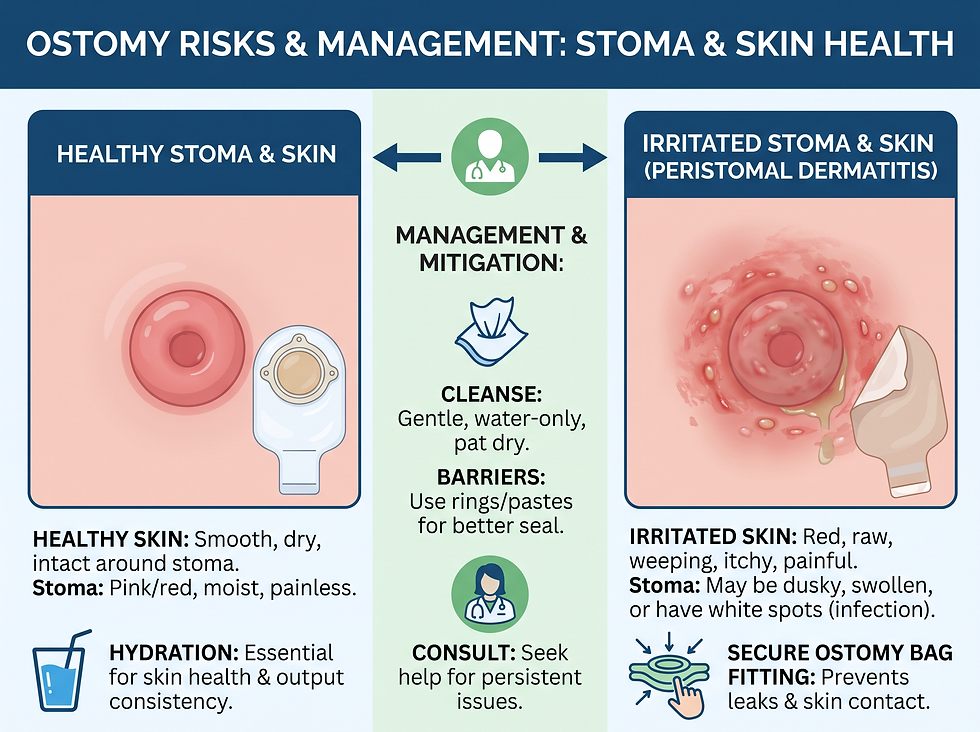
Skin Irritation | Irritation caused by waste leaking around the stoma. | Proper bag fitting and frequent emptying. |
Electrolyte Imbalance | Dehydration or loss of nutrients, especially with ileostomies. | Increased fluid intake and monitoring by a provider. |
Obstruction | Blockage caused by scar tissue or undigested food. | Dietary adjustments and medical monitoring. |
Parastomal Hernia | Tissue bulging through the weakened abdominal wall. | Supportive garments or corrective surgery if needed. |
Prolapsed Stoma | The bowel pushing itself out through the stoma opening. | Manual reduction by a provider or surgery in rare cases. |
Recovery and Maintenance
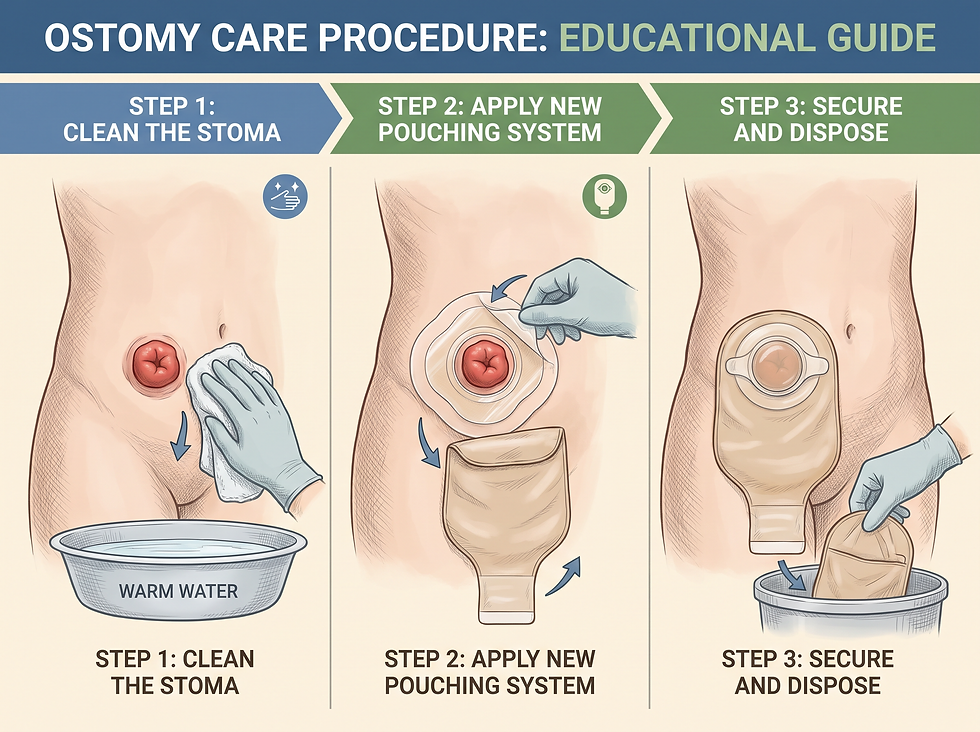
Most patients spend several days in the hospital following surgery to monitor their recovery and receive hands-on education regarding stoma care. A full recovery typically takes up to eight weeks, during which bowel movements gradually become more regular. Engaging in light physical activity, such as walking, can help accelerate the healing process.
Managing an ostomy involves wearing a pouching system that must be emptied and changed regularly. Most people change their ostomy bag every three to seven days, although some prefer a daily routine. Proper hygiene is essential; the stoma should be cleaned with warm water and mild soap, and the surrounding skin must be dried completely before applying a new barrier. Daily inspection of the stoma is recommended to notice any changes in size, shape, or color.
Conclusion
Ostomy surgery is a vital medical intervention that provides a functional alternative for waste elimination when natural systems fail. While the transition requires significant physical and psychological adjustment, modern medical advancements and specialized support systems enable patients to manage their health effectively. Understanding the different types of ostomies, the surgical process, and the necessary maintenance steps is the first step toward a successful recovery and a return to an active lifestyle.
Next Steps
If you are preparing for or recovering from ostomy surgery, consider the following actions:
Consult with a wound ostomy continence nurse (WOCN) for personalized care training.
Develop a daily routine for stoma inspection and pouch maintenance.
Monitor your hydration and nutritional intake, especially if you have an ileostomy.
Join a support group to connect with others living with an ostomy for practical tips and emotional support.
FAQ
1. What exactly is a stoma? A stoma is the actual opening on the surface of your abdomen created during surgery where waste exits the body.
2. Does having an ostomy hurt? The stoma itself has no nerve endings and does not feel pain, though the surrounding skin can become irritated if not cared for properly.
3. Can I still exercise with an ostomy? Yes, once fully recovered, most people can return to their favorite physical activities, including swimming and sports.
4. Will people be able to see my ostomy bag under my clothes? Modern ostomy pouches are designed to be low-profile and are typically not noticeable under standard clothing.
5. How often do I need to empty the pouch? Most people empty their pouch when it is one-third to one-half full, which usually happens several times a day.
6. Can an ostomy be reversed? Many ostomies are temporary and can be reversed after the body has had sufficient time to heal from the original condition or surgery.
7. What should a healthy stoma look like? A healthy stoma should be moist, shiny, and pink or red, similar to the inside of your cheek.
8. Do I need to follow a special diet? While many people return to a regular diet, some may need to avoid certain high-fiber or gas-producing foods to prevent blockages.
9. Is an ostomy bag waterproof? Yes, ostomy bags are designed to be waterproof, allowing you to shower, bathe, and swim normally.
10. What causes skin irritation around the stoma? Irritation is most often caused by waste leaking onto the skin or an allergic reaction to the adhesive barrier.
11. Can I still travel with an ostomy? Absolutely. With a little extra planning and supplies, people with ostomies travel worldwide by car, plane, and boat.
12. How do I prevent odors? Modern pouches are made with odor-proof materials and often include integrated filters to manage gas and scent.
13. What is a parastomal hernia? This is a type of hernia that occurs when abdominal tissue bulges through the opening created for the stoma.
14. Will my bowel movements ever be "normal" again? While the exit point has changed, your body will eventually establish a regular output routine.
15. When should I seek medical attention for my stoma? Contact a provider if you notice significant changes in stoma color (becoming dark or pale), persistent skin sores, or a complete lack of output.
References
Medical Disclaimer: This content is for informational purposes only and does not constitute medical advice. Always seek the advice of your physician or other qualified health provider with any questions you may have regarding a medical condition or surgical procedure.
Comments