Understanding Ostomy Reversal Surgery: Reconnecting Your Digestive System

Updated: 2 days ago
Medically reviewed by Dr. Baraa Alnahhal, MD · Last reviewed: September 2026
TL;DR
Ostomy reversal is an elective surgical procedure that reconnects your bowel segments and closes the abdominal stoma, allowing for normal bowel movements through the anus. Typically performed 3 to 12 months after the initial surgery, the procedure requires complete internal healing and functional muscle control. While generally simpler than the original surgery, it involves a hospital stay and a gradual transition back to a normal diet.
Quick Answer
Ostomy reversal is a surgery to reverse a temporary colostomy or ileostomy by reattaching the bowel ends and closing the stoma. It is performed once the underlying bowel condition has resolved and the surgical site has healed. The procedure aims to restore natural bowel function, eliminating the need for external collection bags. Candidates must have adequate anal muscle control and no active infections or internal leaks at the original surgical site.
Overview of Ostomy Reversal
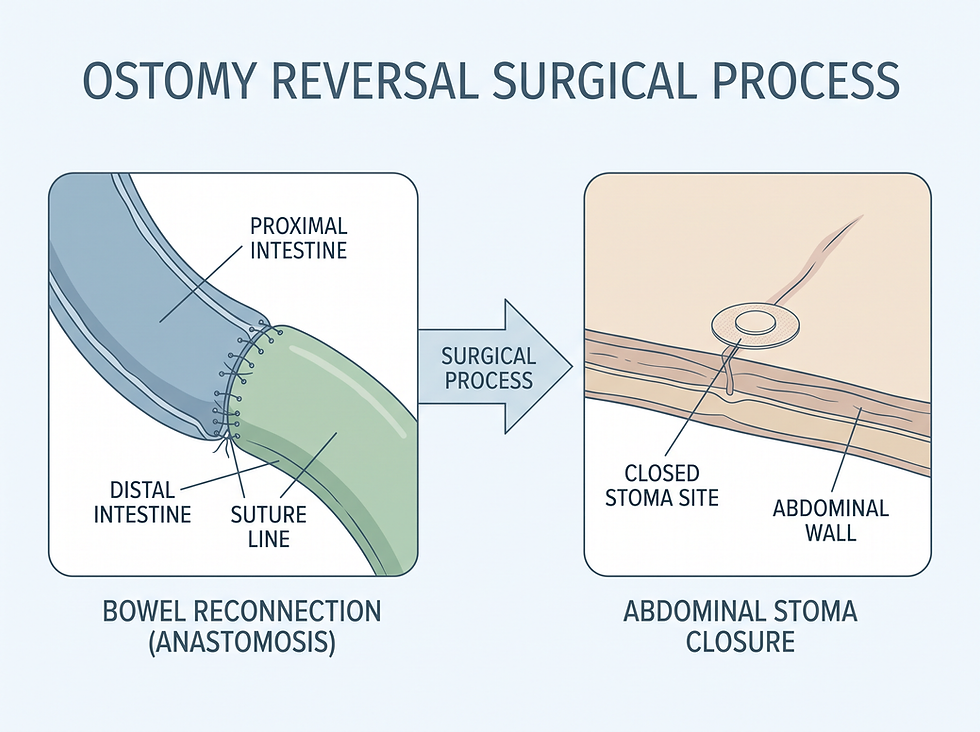
An ostomy reversal is an elective operation designed to restore the natural pathway of the digestive system. During an initial procedure, a surgeon may have redirected the large or small intestine to an opening in the abdomen called a stoma. This temporary measure is often necessary to allow an injured or diseased section of the bowel to heal. Once recovery is complete, the reversal surgery reconnects the separated bowel segments (anastomosis) and closes the abdominal opening.
Restoring bowel continuity offers significant practical and psychological benefits. Patients no longer need to manage ostomy appliances, care for stoma sites, or worry about complications like skin irritation or fluid leaks. This procedure represents a major milestone in returning to the lifestyle and physical function experienced before the initial bowel surgery.
Eligibility and Requirements
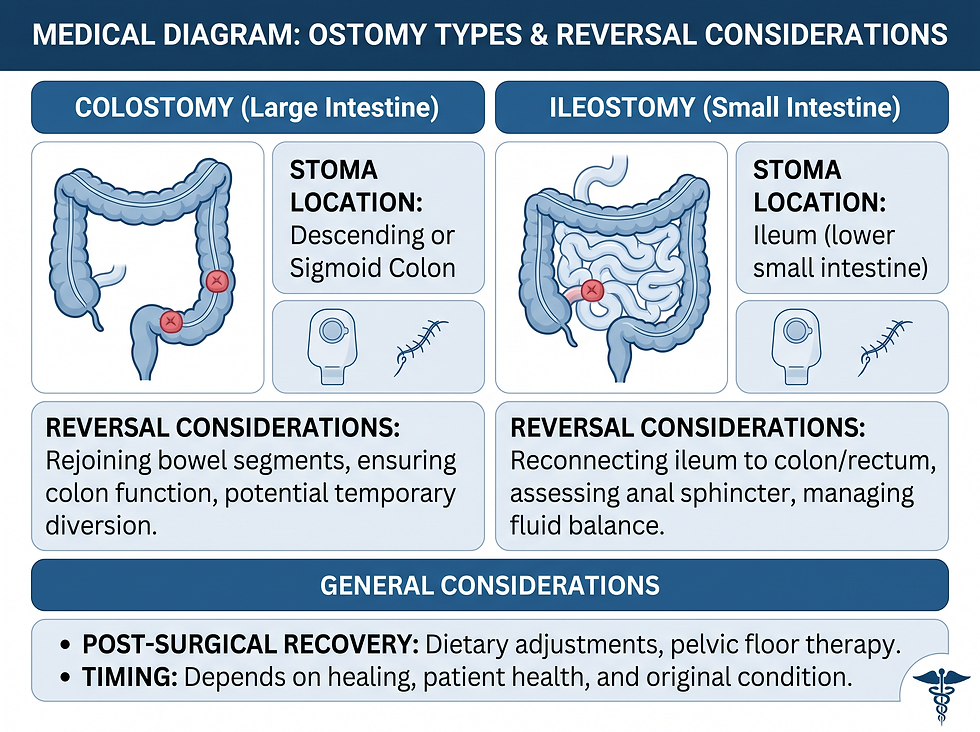
The possibility of a reversal depends on the type of ostomy performed and the patient's recovery progress. Surgeons often categorize ostomies as "loop" (intended to be temporary) or "end" (often more permanent). Reversal is typically considered between three and 12 months after the first surgery, provided specific health criteria are met.
Requirement Category | Specific Criteria for Reversal |
Internal Healing | Complete healing of the original bowel site with no signs of leaks. |
Infection Status | Absence of active infection or inflammation in the digestive tract. |
Muscle Function | Adequate control of anal nerves and muscles for bowel movements. |
Overall Health | Physical fitness sufficient to undergo general anesthesia and surgery. |
Preoperative Preparation
Before scheduling the reversal, healthcare providers conduct several diagnostic tests to ensure the body is ready for the transition. These evaluations confirm that the bowel is clear of obstructions and that the patient can maintain continence after the reconnection.
Common preoperative assessments include:
Endoscopy: A visual inspection of the bowel to check for disease or blockages.
GI X-ray with Contrast: Imaging to verify there are no leaks in the intestinal walls.
Digital Rectal Exam: A physical test to evaluate the strength and control of anorectal muscles.
Blood Panels: Tests to assess nutritional status and general health markers.
Patients are typically advised to fast before the procedure and may need to perform a bowel cleanse using laxatives or enemas. Avoiding tobacco and alcohol is also recommended to support optimal healing.
The Surgical Procedure
Ostomy reversal is performed under general anesthesia, ensuring the patient is asleep and comfortable. While the complexity varies based on individual anatomy and previous surgeries, the procedure generally takes between one and two hours.
The surgeon begins by detaching the bowel from the abdominal stoma. The ends of the intestine are then carefully reattached to restore the digestive path. Finally, the former stoma site and any other incisions are closed. Surgeons may use minimally invasive laparoscopic techniques or traditional open surgery, depending on the presence of scar tissue or other clinical factors.
Recovery and Aftercare
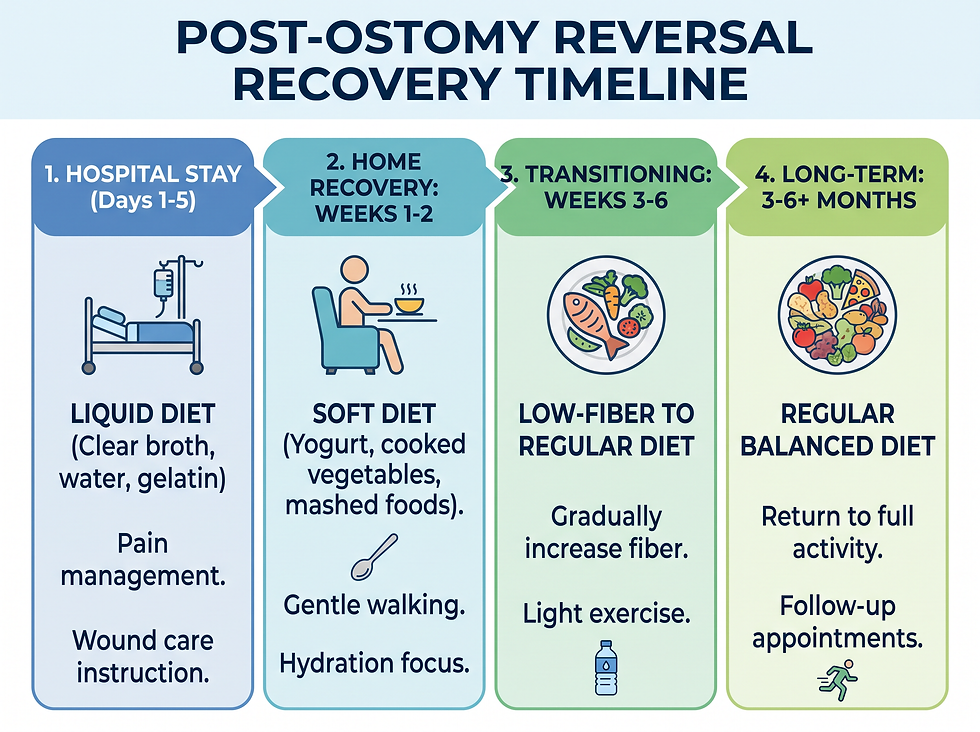
Following surgery, patients remain in the hospital for a few days to monitor bowel function. The digestive system is often slow to restart, necessitating a staged dietary approach.
Recovery Stage | Dietary and Physical Guidelines |
Immediate Post-Op | Liquid diet to allow the bowels to begin moving safely. |
Transition Phase | Progression to a soft diet once bowel movements resume. |
Home Recovery | Return to a regular diet as tolerated; focus on incision care. |
Short-term side effects are common and expected. These include abdominal bloating, soreness, and temporary changes in bowel habits, such as diarrhea or increased urgency. Most patients find that their bowel movements gradually stabilize over several weeks or months as the muscles regain their coordination.
Risks and Long-Term Considerations
While ostomy reversal is generally simpler than the initial surgery, it carries standard surgical risks such as infection, bleeding, or blood clots. A rare but serious complication is an anastomotic leak, where the reconnected bowel segments fail to seal properly. This can lead to abdominal infections and requires prompt medical attention.
Long-term considerations include the potential for abdominal adhesions (bands of scar tissue) or hernias at the incision site. These conditions may develop due to the weakening of the abdominal wall from repeated surgeries. Regular follow-up appointments help monitor for these issues and ensure the continued health of the digestive system.
Conclusion
Ostomy reversal is a transformative procedure that restores natural digestive function and improves quality of life. By successfully reconnecting the bowel, patients can move past the challenges of stoma management and return to their normal routines. While the surgery requires careful preparation and a dedicated recovery period, the long-term benefits of restored physical continuity are substantial for most candidates.
Next Steps
If you are currently managing a temporary ostomy, discuss the timeline for reversal with your surgical team. Focus on maintaining optimal nutrition and following all postoperative care instructions from your initial surgery to ensure your body is ready for the reconnection process.
FAQ
1. How long after the first surgery can I have a reversal?
Reversal is typically considered 3 to 12 months after the original procedure to allow for full healing.
2. Is ostomy reversal a major surgery?
It is a significant procedure requiring general anesthesia and a hospital stay, though it is often simpler than the original ostomy creation.
3. Will my bowel movements go back to normal immediately?
No, it usually takes several weeks or months for bowel habits to stabilize and for muscles to regain coordination.
4. What is an anastomotic leak?
It is a rare complication where the reconnection point between bowel segments leaks, potentially causing infection.
5. Can everyone with an ostomy have a reversal?
No, it depends on the underlying reason for the ostomy and whether enough healthy bowel and functional muscle remain.
6. How long is the hospital stay after reversal?
Most patients stay in the hospital for a few days until they can eat, drink, and pass stool normally.
7. What can I eat after the surgery?
You will start with a liquid diet, then move to a soft diet before returning to regular foods.
8. Is the surgery performed laparoscopically?
Many reversals are performed using minimally invasive techniques, but some require open surgery if there is extensive scar tissue.
9. Will I have a scar where the stoma was?
Yes, there will be a scar where the stoma site was closed, though its appearance fades over time.
10. Can I develop a hernia after reversal?
Yes, repeat abdominal surgeries can weaken the abdominal wall, increasing the risk of an incisional hernia.
11. What are abdominal adhesions?
These are bands of scar tissue that can form after surgery and may occasionally cause bowel obstructions.
12. Will I need to do a bowel prep before surgery?
Most surgeons require a bowel cleanse using laxatives or enemas to ensure the tract is clear.
13. Is the procedure painful?
You will be asleep during the surgery. Afterward, soreness is managed with standard pain relief medications.
14. What are the signs of a complication after surgery?
Contact your doctor if you experience high fever, severe abdominal pain, or a lack of bowel movements.
15. Does the surgery always work?
Success rates are high, but a reversal may fail if the reconnection does not heal properly or if muscle control is insufficient.
Medical Disclaimer: This content is for informational purposes only and does not constitute medical advice. Always seek the advice of your physician or other qualified health provider with any questions you may have regarding a medical condition or surgical procedure.
Comments