Understanding Neural Tube Defects: Types, Causes, and Prevention

Updated: 2 days ago
Medically reviewed by Dr. Baraa Alnahhal, MD · Last reviewed: October 2026
Quick Answer: Essential Facts About Neural Tube Defects
Neural tube defects are congenital defects of the brain, spine or spinal cord that occur within the first month of pregnancy, often before it is confirmed. [1] The most common types are spina bifida and anencephaly, and folate deficiency is the primary risk factor. Taking 400 mcg of folic acid daily helps prevent them, and prenatal tests can detect them. [1]
Feature | Details |
Definition | Congenital defects of the brain, spine, or spinal cord. [1] |
Timing | Occur within the first month of pregnancy, often before it is confirmed. [1] |
Most Common Types | Spina Bifida (spine) and Anencephaly (brain/skull). [1] |
Primary Risk Factor | Folate (Vitamin B9) deficiency. |
Prevention | 400 mcg of folic acid daily for women of childbearing age. |
Diagnosis | Prenatal blood tests (AFP), ultrasound, and amniocentesis. [1] |
What the research says
Surgery before birth reduced the need for shunts in spina bifida. In the MOMS randomized trial, prenatal repair of myelomeningocele before 26 weeks of gestation led to a shunt-or-death outcome in 68% of infants versus 98% with standard postnatal repair (relative risk 0.70; 97.7% CI 0.58 to 0.84). Actual shunt placement was 40% versus 82%, and motor outcomes at 30 months improved, but prenatal surgery carried a higher risk of preterm delivery and uterine dehiscence. (Adzick et al., N Engl J Med, 2011 [2])
Folate status can slip in whole populations. In UK survey data (5,792 participants, 2008 to 2019), red blood cell and serum folate fell by about 3 percentage points per year, and the share of females of reproductive age below the folate cut-off linked to higher NTD risk rose from 69% to 89%. (Jones et al., Am J Clin Nutr, 2023 [3])
Folic acid supplements were protective where NTDs are common. In a meta-analysis of 25 studies covering 611,354 newborns in Ethiopia, the pooled birth prevalence of NTDs was 83.40 per 10,000 births (95% CI 60.78 to 106.02), and women's folic acid supplement intake and planned pregnancy were identified as protective factors. (Gebremariam et al., PLoS One, 2025 [4])
What Are Neural Tube Defects?
Neural tube defects (NTDs) are a group of congenital conditions that affect the development of a fetus's brain, spine, or spinal cord. [1] These defects occur very early in pregnancy, typically within the first 28 days, often before a person even realizes they are pregnant. During this critical window, the neural tube, which eventually forms the brain and spinal cord, is supposed to fold and close completely. An NTD happens when this tube fails to close properly along its length. [1]
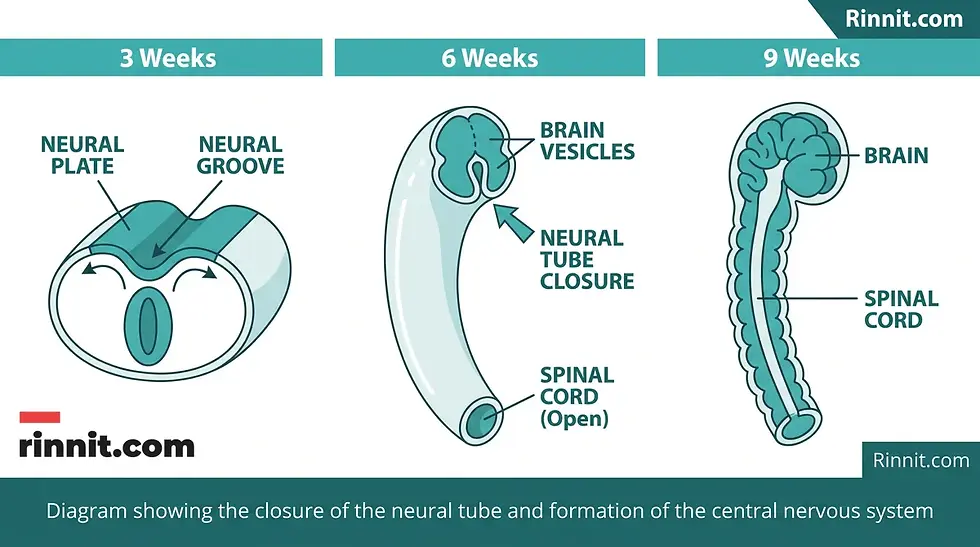
In the United States, approximately 3,000 pregnancies are affected by NTDs each year. [1] The severity of these conditions can range from mild physical limitations to life-threatening complications, depending on the type and location of the defect.
What are the main types of neural tube defects?
NTDs are categorized based on which part of the neural tube failed to close and the resulting impact on the infant's anatomy.
Spina Bifida
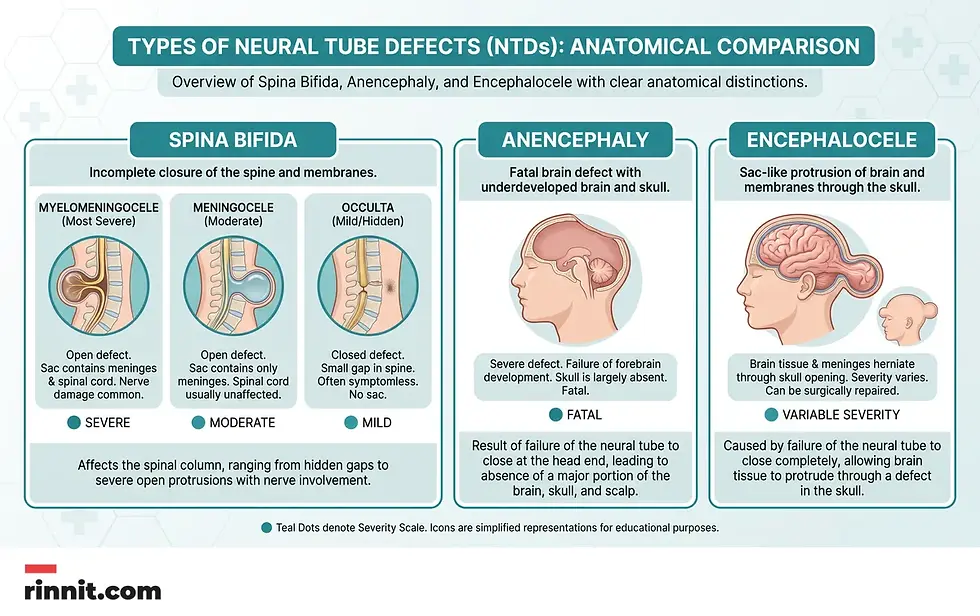
Spina bifida is the most common form of NTD and occurs when the spine fails to close completely. [1] It exists in several forms:
Myelomeningocele: The most severe type, where a sac containing part of the spinal cord and nerves protrudes through the back.
Meningocele: A fluid-filled sac protrudes, but the spinal cord remains undamaged. [1]
Spina Bifida Occulta: The mildest form, often appearing as a small gap in the spine without an external opening. [1]
Anencephaly and Other Severe Types
Anencephaly occurs when the top of the neural tube fails to close, resulting in the absence of major portions of the brain, skull, and scalp. [1] Tragically, infants with this condition are usually stillborn or die shortly after birth. [1] Other rarer types include encephalocele, where brain tissue protrudes through a skull opening, and iniencephaly, which involves severe spinal misshaping. [1]
What causes neural tube defects and who is at risk?
Neural tube defects are thought to result from genetic, environmental and nutritional factors, and folate deficiency before and during early pregnancy is a significant, well-documented risk factor. [1]
The Role of Folate
A significant and well-documented risk factor is a deficiency in folate (vitamin B9) before and during the earliest stages of pregnancy. [1] Folate is essential for healthy cell growth and the proper closure of the neural tube. Beyond nutrition, other risk factors include a family history of NTDs, poorly managed diabetes, obesity, and the use of certain antiseizure medications like valproic acid.
Environmental Triggers
Exposure to high core body temperatures (hyperthermia) during early pregnancy, such as from a prolonged fever or the use of hot tubs and saunas, has also been associated with a slightly increased risk of developing these defects. [1]
How are neural tube defects diagnosed and managed?
Modern prenatal care allows for the early detection and management of many neural tube defects.
Prenatal Screening
Healthcare providers use several tools to monitor fetal development:
AFP Blood Test: Measures alpha-fetoprotein levels between the 16th and 18th week of pregnancy; elevated levels can indicate an NTD. [1]
Prenatal Ultrasound: The most accurate diagnostic method, typically performed in the first and second trimesters. [1]
Amniocentesis: A more invasive test that analyzes the amniotic fluid for specific markers. [1]
Treatment Options
While anencephaly and iniencephaly are not treatable, conditions like spina bifida and encephalocele often require surgical intervention. [1] Surgeons may perform repairs shortly after birth or, in some cases, even before the baby is born through fetal surgery. [1] Long-term care often involves a multidisciplinary team to manage complications such as hydrocephalus (excess brain fluid) or mobility issues.
How can neural tube defects be prevented?
The most effective way to reduce the risk of NTDs is through adequate folic acid supplementation. The general recommendation for all women of childbearing age is to take 400 micrograms (mcg) of folic acid daily. This is because the neural tube closes so early in pregnancy that waiting until a pregnancy is confirmed may be too late to provide the necessary protection.

In addition to supplements, a diet rich in natural folates (found in leafy greens, beans, and citrus) and fortified foods (like enriched cereals and breads) is highly recommended. Women with a higher risk profile should consult their doctor about potentially higher doses of folic acid. [1]
What steps can you take to lower the risk of neural tube defects?
For more information on prenatal nutrition and fetal development, visit Rinnit.com.
Frequently Asked Questions
When does the neural tube close?
The neural tube typically closes by the 28th day after conception, which is often before a woman knows she is pregnant.
Is folic acid the same as folate?
Folate is the natural form of vitamin B9 found in foods, while folic acid is the synthetic form used in supplements and fortified foods.
Can I get enough folate from food alone?
While a healthy diet helps, most health organizations recommend a daily 400 mcg folic acid supplement to ensure adequate levels for NTD prevention.
Does a family history of NTDs increase my risk?
Yes. If you have previously had a pregnancy affected by an NTD, your chance of another affected pregnancy is about 2% to 3%, much higher than average, and your provider may recommend a higher dose of folic acid.
What is the most common neural tube defect?
Spina bifida is the most frequently occurring type of NTD.
Are all NTDs fatal?
No. Many infants with spina bifida and encephalocele survive and lead fulfilling lives with the help of medical treatment and support.
Can hot tubs really cause birth defects?
High core body temperatures (hyperthermia) in early pregnancy are linked to a slightly higher risk of NTDs, so hot tubs are generally discouraged during the first trimester.
What is fetal surgery?
Fetal surgery is a procedure where surgeons repair a defect, like spina bifida, while the baby is still inside the uterus.
What is hydrocephalus?
Hydrocephalus is a common complication of NTDs where excess fluid builds up around the brain, often requiring a shunt for drainage.
Does obesity affect the risk of NTDs?
Yes, having obesity before becoming pregnant is considered a risk factor for neural tube defects.
Can antiseizure medications cause NTDs?
Certain medications, particularly valproic acid, have been linked to an increased risk of these defects.
How accurate are ultrasounds for detecting NTDs?
Prenatal ultrasounds are highly accurate and are the primary tool for diagnosing most neural tube defects.
What is the AFP test?
The AFP test is a maternal blood test that screens for high levels of alpha-fetoprotein, which can be a marker for NTDs.
Are NTDs linked to intellectual disability?
Some children with NTDs may experience intellectual disabilities, though this varies greatly depending on the severity of the defect.
Can men's health affect NTD risk?
Current research primarily focuses on maternal health and nutrition, particularly folate levels, as the primary factor in NTD prevention.
Related Reading
Prenatal Genetic Testing: Screening vs Diagnostic Tests, Timing and Accuracy explains the screening and diagnostic tests that can detect this condition during pregnancy.
Amniocentesis: Why It's Done, What Happens, Risks and What Your Results Mean explains the prenatal test that can detect this condition before birth.
Alpha-Fetoprotein (AFP) Test: Pregnancy Screening, Cancer Marker and What Results Mean explains the blood test used in pregnancy screening and as a liver cancer marker.
Quad Screen: What the Second-Trimester Blood Test Checks For and What Results Mean explains the second-trimester blood screen for Down syndrome and neural tube defects.
References
Cleveland Clinic. Neural Tube Defects (NTDs): What They Are, Causes & Prevention. Cleveland Clinic. February 11, 2026. https://my.clevelandclinic.org/health/diseases/22656-neural-tube-defects-ntd
Adzick NS, et al. A randomized trial of prenatal versus postnatal repair of myelomeningocele. N Engl J Med. 2011;364(11):993-1004. PMID 21306277. https://doi.org/10.1056/NEJMoa1014379
Jones KS, et al. National Diet and Nutrition Survey data reveal a decline in folate status in the United Kingdom population between 2008 and 2019. Am J Clin Nutr. 2023;118(6):1182-1191. PMID 37839706. https://doi.org/10.1016/j.ajcnut.2023.10.006
Gebremariam BM, et al. Birth prevalence and determinants of neural tube defects among newborns in Ethiopia: A systematic review and meta-analysis. PLoS One. 2025;20(1):e0315122. PMID 39746047. https://doi.org/10.1371/journal.pone.0315122
Medical disclaimer
This article is for general informational purposes only and does not constitute medical advice. Always consult a qualified healthcare professional regarding pregnancy and prenatal care.



Comments