Understanding Hypertonia in Babies: Signs, Causes, and Care

Updated: 15 hours ago
Medically reviewed by Dr. Baraa Alnahhal, MD · Last reviewed: October 2026
Quick Answer: What Is Hypertonia in Babies?
Hypertonia is a medical term for "too much muscle tone." [1] In babies, this manifests as stiff limbs and a stiff neck [1], making movements appear robotic or difficult. It occurs when the central nervous system cannot properly signal muscles to relax. [1]
What the research says
Doctors use precise definitions to tell the types of hypertonia apart. An NIH consensus workshop defined spasticity as hypertonia where resistance to movement increases with the speed of the stretch, dystonia as involuntary sustained or intermittent muscle contractions that cause twisting movements or abnormal postures, and rigidity as resistance that is present at very low speeds and does not depend on speed. (Sanger et al., Pediatrics, 2003) [2]
Cerebral palsy, the most common cause, can now be recognized early. Cerebral palsy occurs in about 1 in 500 live births, and a systematic review found it can be diagnosed before 6 months of corrected age rather than at 12 to 24 months. Before 5 months, the Prechtl General Movements Assessment (98% sensitivity), the Hammersmith Infant Neurological Examination (90%) and term-age MRI (86–89%) were the most predictive tools. (Novak et al., JAMA Pediatr, 2017) [3]
Several treatments for stiffness have evidence behind them in children with cerebral palsy. A GRADE-based overview of research from 2012 to 2019 listed botulinum toxin (alone or with occupational therapy or casting), diazepam, intrathecal baclofen, selective dorsal rhizotomy, casting, strength training and goal-directed training among the effective interventions. (Novak et al., Curr Neurol Neurosci Rep, 2020) [4]
Botulinum toxin reduces spasticity in the short term, but evidence for better function is mixed. A systematic review of 15 randomized trials (499 children with cerebral palsy) found that botulinum toxin A in the upper limb reduced spasticity in the short term, while gains in function and quality of life were conflicting or not significant. (Farag et al., JBJS Rev, 2020) [5]
Each injection's effect wears off. A review reports that botulinum toxin in large limb muscles of children with cerebral palsy lowers muscle activity for roughly 3 to 6 months, and recommends using it more thoughtfully, less frequently, and with closer monitoring. (Multani et al., Paediatr Drugs, 2019) [6]
Key Takeaways
Feature | Details |
Primary Symptom | Stiff, rigid muscles (arms, legs, neck) [1] |
Core Cause | Central nervous system damage or communication errors [1] |
Common Types | Spasticity (resistance that rises with speed of movement), dystonia (involuntary sustained contractions) and rigidity (constant stiffness) [2] |
Diagnosis Age | Typically identified before age two [1] |
Main Treatment | Physical therapy and muscle-relaxing medications [1] |
Long-term Goal | Improve range of motion and prevent permanent joint stiffness |
What is muscle tone, and what is hypertonia in babies?
Muscle tone is the natural tension or resistance in a muscle even when it is at rest. [1] It is what allows humans to maintain posture and control reflexes. In babies with hypertonia, this tension is abnormally high, leading to limited flexibility and "robotic" movements.

Types of Hypertonia
Healthcare providers categorize hypertonia based on how the muscles react to movement:
Spasticity: Muscle spasms and exaggerated reflexes, with resistance that increases the faster the limb is moved. [1] [2]
Dystonia: Involuntary, sustained or intermittent muscle contractions that cause twisting movements or abnormal postures. [2]
Rigidity: Constant muscle stiffness that does not change regardless of how fast or in what direction the limb is moved. [1] [2]
What are the symptoms of hypertonia in babies?
Because infants are still developing their motor skills, hypertonia may first be noticed as a delay in reaching milestones or as unusual physical resistance during diaper changes or dressing.
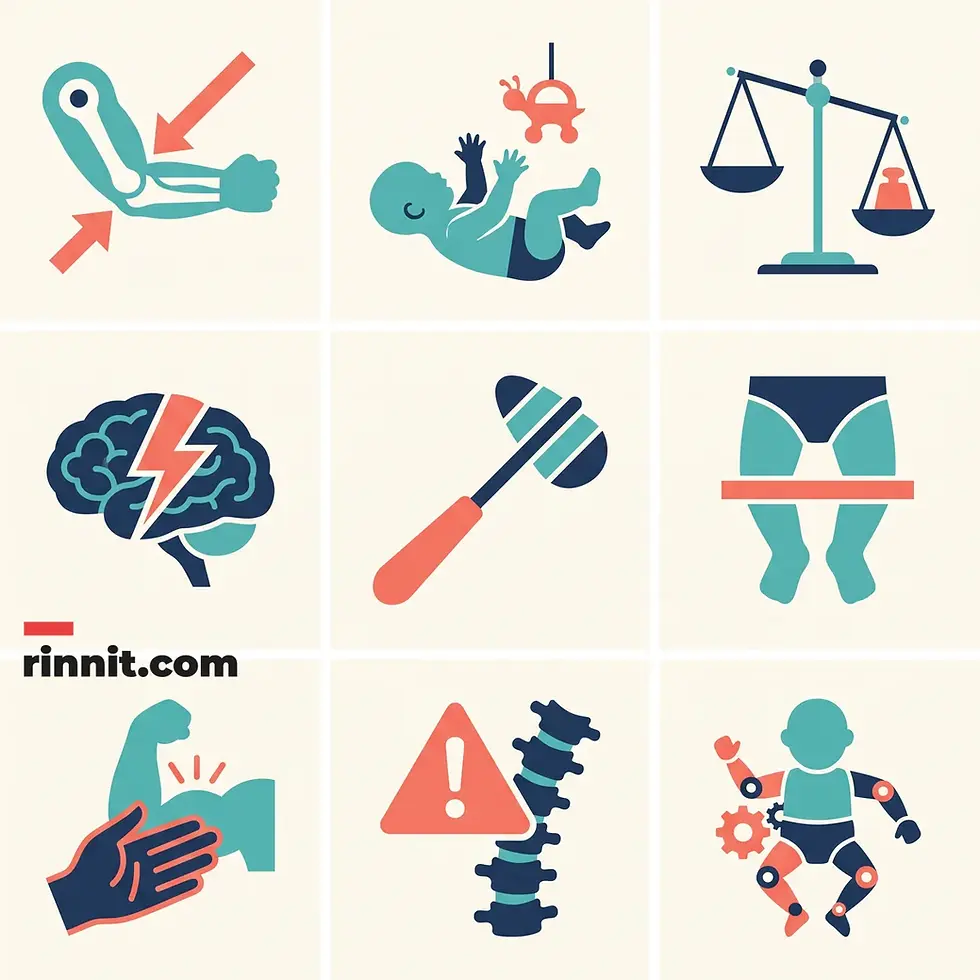
Common Indicators
Decreased Range of Motion: Difficulty fully extending the arms or legs. [1]
Robotic Movement: Lack of fluid, natural motion in the limbs.
Loss of Balance: Frequent falls or instability once the child begins to sit or walk. [1]
Myoclonus: Involuntary muscle twitching or jerking. [1]
Contracture: In severe cases, joints may become "frozen" in place due to permanent tightening of the tissues. [1]
Children with hypertonia may also have trouble walking, difficulty reaching for and grabbing objects, and sometimes need help eating. [1]
What causes hypertonia in babies, and what conditions are linked to it?
Hypertonia is not a disease itself but a symptom of an underlying issue within the central nervous system. If the brain's pathways are damaged, the "relax" signal never reaches the muscles. [1]
Potential Causes
Birth Injuries: Lack of oxygen during labor or delivery. [1]
Fetal Development Issues: Problems with how the brain formed during pregnancy. [1]
Central Nervous System Trauma: Brain tumors or physical injuries to the brain or spinal cord. [1]
Neurological Disorders: Cerebral palsy is the most common, and other neurological conditions can also be responsible.
How is hypertonia in babies diagnosed?
Diagnosis typically occurs before a child reaches two years of age. [1] A healthcare provider will observe the baby's motor skills, balance, coordination, and reflexes. [1]
To identify the type, the provider moves the baby's arm or leg from a relaxed position at different speeds and in a range of directions. [1]
Physical Examination: Using tools like a reflex hammer to check nerve function. [1]
Medical History Review: Identifying complications during pregnancy or delivery.
Imaging Tests: MRI or CT scans to look for damage in the brain or spinal cord. [1]
Electromyogram (EMG): A test to measure how well the nerves and muscles are communicating.
How is hypertonia in babies managed long term?
Hypertonia is usually a lifelong condition, but many children see significant improvement in mobility with consistent treatment. [1]

Therapeutic Interventions
Physical Therapy: The cornerstone of treatment, focusing on stretching and improving the range of motion. [1]
Muscle Relaxants: Medications designed to reduce spasms and allow for more fluid movement. [1]
Botulinum Toxin Injections: Localized injections that can temporarily "turn off" nerve signals in specific stiff muscles. [1] [4]
Mobility Aids: In severe cases, equipment like walkers or specialized strollers may be used to ensure safety and independence.
Care also includes exercising regularly within personal limits and working closely with the baby's healthcare provider. [1]
How is hypertonia different from hypotonia in babies?
Hypertonia and hypotonia are often confused, but they are opposites: hypertonia means stiff, rigid muscles, while hypotonia means limp, weak muscles.
Hypertonia: Stiff, rigid muscles; "too much" tone.
Hypotonia: Limp, weak muscles; "too little" tone (often called "floppy infant syndrome"). [1]
Hypertonia is less common than hypotonia in babies. [1]
Frequently Asked Questions
Is hypertonia a form of cerebral palsy?
Hypertonia is a common symptom of cerebral palsy, but not everyone with hypertonia has CP. It can be caused by various other brain or spinal cord issues.
Can my baby grow out of hypertonia?
When it is caused by a lasting injury to the brain or spinal cord, it is usually a lifelong condition, but many children improve significantly with early and consistent physical therapy. [1] The goal is to manage the symptoms so the child can reach their developmental milestones.
Does hypertonia cause pain?
Yes, the constant muscle tension can lead to throbbing pain, soreness, and discomfort in the affected limbs. [1]
How is muscle tone different from muscle strength?
Muscle tone is the tension in a muscle at rest. Strength is the ability of a muscle to contract and exert force. A baby can have high muscle tone (stiffness) but still have weak muscle strength.
What are contractures?
Contractures occur when muscles, tendons, and skin permanently tighten, causing the joint to become extremely stiff or frozen in one position.
Can a birth injury cause this?
Yes. A lack of oxygen during delivery (hypoxia) is a known cause of the brain damage that leads to hypertonia.
How often should my baby have physical therapy?
The frequency depends on the severity of the condition. Most providers recommend regular sessions, often weekly or bi-weekly, supplemented by daily stretches at home.
What does "robotic movement" mean?
It refers to movements that lack the smooth, fluid quality of typical infant motion, often appearing jerky or stiff because the muscles cannot relax.
Are there side effects to muscle relaxants?
Some medications can cause drowsiness or upset stomach. Always discuss potential side effects with your pediatrician.
What is an EMG test?
An electromyogram (EMG) measures the electrical activity of muscles at rest and during contraction to see how well the nerves are communicating with them.
Can hypertonia affect eating?
In some cases, yes. If the muscles in the neck or jaw are affected, a baby may have difficulty sucking or swallowing.
Is hypertonia hereditary?
It depends on the cause. If it's due to a congenital condition, there may be a genetic link. If it's due to a birth injury, it is not hereditary.
What is spasticity?
Spasticity is a type of hypertonia where resistance to movement increases with the speed of the stretch [2] and is often accompanied by exaggerated reflexes. [1]
How does an MRI help with diagnosis?
An MRI allows doctors to see the structure of the brain and spinal cord to identify any areas of damage or malformation.
Can my baby still learn to walk?
Many children with hypertonia learn to walk, though they may require braces, walkers, or physical therapy to manage their balance and stiffness.
What is "floppy infant syndrome"?
That is a nickname for hypotonia, which is the opposite of hypertonia (low muscle tone instead of high muscle tone). [1]
Can botulinum toxin (Botox) really help babies?
Yes, in specific cases, it is used to relax very stiff muscles, allowing for better movement and preventing contractures. It carries an FDA boxed warning: rarely, its effect spreads beyond the injection site and causes swallowing or breathing problems, a risk highest in children treated for spasticity, so seek care right away if these occur.
Is hypertonia common?
It is less common than hypotonia, but because it is often a symptom of other conditions, the exact rate of occurrence is difficult to track.
What should I look for during a diaper change?
If your baby's legs are very difficult to pull apart or feel rigid and resistant to your touch, it may be a sign of hypertonia.
Does hypertonia affect intelligence?
Not necessarily. Hypertonia is a motor (movement) issue. While the underlying brain injury could affect other areas, many children with hypertonia have typical cognitive development.
What is myoclonus?
Myoclonus refers to sudden, involuntary jerking or twitching of a muscle or group of muscles.
Can hypertonia be prevented?
Often it cannot be prevented, especially if it's due to a developmental issue. Safe delivery practices can help reduce the risk of birth injuries.
What is the difference between spasticity and rigidity?
Spasticity changes with the speed of movement; rigidity is a constant resistance regardless of how fast the limb is moved. [2]
Can a brain tumor cause hypertonia?
Yes, any injury or growth that interferes with the central nervous system's communication pathways can cause high muscle tone.
How do I help my baby at home?
Following the stretching routine provided by your physical therapist is the most important thing you can do to help maintain your baby's flexibility.
What is a reflex hammer used for?
It is used to test deep tendon reflexes, which can help a doctor determine if a neurological issue is present.
Can hypertonia affect the neck?
Yes, a stiff neck can be a sign of hypertonia, making it difficult for the baby to turn their head.
Are there support groups for parents?
Yes, many organizations for cerebral palsy and other neurological conditions offer resources and support for families dealing with hypertonia.
What is a CT scan?
A CT scan uses X-rays to create detailed cross-sectional images of the body, including the brain and spine.
How long does treatment last?
Because the underlying neurological cause is usually permanent, management of hypertonia is typically a lifelong process.
Can hypertonia cause bedsores?
In very severe cases where mobility is extremely limited, the risk of bedsores (pressure ulcers) increases.
What is the "relax" signal?
It is the chemical and electrical message the brain sends through the nerves to tell a muscle to stop contracting.
Can hypertonia lead to bone fractures?
The stiffness can lead to poor balance and frequent falls, which increases the risk of broken bones. [1]
What is a pediatric neurologist?
A doctor who specializes in treating disorders of the nervous system in children. They usually lead the care team for hypertonia.
Can physical therapy reverse the brain damage?
No, physical therapy cannot fix the brain injury, but it can train the body to move better and prevent secondary issues like joint freezing.
Is there a specific diet for hypertonia?
There is no specific diet, but maintaining a healthy weight is important to avoid putting extra strain on stiff joints and muscles.
Can hypertonia affect sleep?
Muscle spasms and pain can sometimes make it difficult for a baby to get comfortable and stay asleep.
What are "robotic" movements?
Jerky, stiff movements that lack the natural, smooth flow seen in typical infant activity.
Can hypertonia be diagnosed at birth?
In some severe cases, yes, but it is often identified as the baby fails to reach motor milestones in the first few months of life.
What is the ICD-10 code for hypertonia?
The code P94.1 is used specifically for congenital hypertonia (present at birth).
Can a stroke happen to a baby?
Yes, neonatal strokes can occur and are a known cause of the brain damage that leads to hypertonia.
What is a contracture?
A permanent shortening of a muscle or joint, usually due to prolonged lack of movement and high muscle tone.
Can hypertonia affect both sides of the body?
Yes, it can affect one limb, one side of the body (hemiplegia), or all four limbs (quadriplegia), depending on the location of the brain injury.
What is the most common cause?
Cerebral palsy is the most common condition associated with hypertonia in children.
Can I use a walker for my baby?
Specialized medical walkers may be recommended by a physical therapist, but standard baby walkers should be avoided as they can be unsafe for children with balance issues.
What is "rigidity"?
A type of hypertonia where the muscle is constantly stiff and resistant to any movement, regardless of speed. [2]
Can hypertonia be treated with surgery?
In some severe cases, surgery may be used to lengthen tendons or reduce nerve signals (rhizotomy) to improve mobility.
How do I know if my baby is just "strong"?
True muscle strength allows for controlled, fluid movement. Hypertonia is characterized by stiffness and a lack of control.
Can hypertonia affect the eyes?
While it primarily affects skeletal muscles, some underlying neurological conditions can also impact eye movement and coordination.
What is the first step if I'm worried?
Schedule an appointment with your pediatrician to discuss your baby's muscle tone and motor development milestones.
Related Reading
Cerebral Palsy: Symptoms, Causes, Diagnosis, and Treatment Explained explains a common cause of high muscle tone in children.
Hypotonia in Babies: Symptoms, Causes, and Management explains low muscle tone in babies, its causes and care.
Developmental Delay in Children: Signs, Types, Causes, and What Early Intervention Can Do explains signs of delayed milestones and how children get support.
Pediatric Occupational Therapy: A Guide to Developmental Milestones explains how occupational therapy helps children build movement and daily skills.
References
Cleveland Clinic. Hypertonia in Babies. Cleveland Clinic. Last updated December 29, 2021. Accessed October 18, 2026. https://my.clevelandclinic.org/health/diseases/22231-hypertonia-baby
Sanger TD, Delgado MR, Gaebler-Spira D, et al. Classification and definition of disorders causing hypertonia in childhood. Pediatrics. 2003;111(1):e89-e97. PMID: 12509602. https://doi.org/10.1542/peds.111.1.e89
Novak I, Morgan C, Adde L, et al. Early, accurate diagnosis and early intervention in cerebral palsy: advances in diagnosis and treatment. JAMA Pediatr. 2017;171(9):897-907. PMID: 28715518. https://doi.org/10.1001/jamapediatrics.2017.1689
Novak I, Morgan C, Fahey M, et al. State of the evidence traffic lights 2019: systematic review of interventions for preventing and treating children with cerebral palsy. Curr Neurol Neurosci Rep. 2020;20(2):3. PMID: 32086598. https://doi.org/10.1007/s11910-020-1022-z
Farag SM, Mohammed MO, El-Sobky TA, et al. Botulinum Toxin A Injection in Treatment of Upper Limb Spasticity in Children with Cerebral Palsy: A Systematic Review of Randomized Controlled Trials. JBJS Rev. 2020;8(3):e0119. PMID: 32224633. https://doi.org/10.2106/JBJS.RVW.19.00119
Multani I, Manji J, Hastings-Ison T, et al. Botulinum Toxin in the Management of Children with Cerebral Palsy. Paediatr Drugs. 2019;21(4):261-281. PMID: 31257556. https://doi.org/10.1007/s40272-019-00344-8
Medical disclaimer
This guide is for general information only and is not a substitute for professional medical advice, diagnosis, or treatment. Always seek the advice of a physician or other qualified health provider with any questions about a medical condition. Never disregard professional medical advice or delay seeking it because of something you have read here.



Comments