Understanding Hypersplenism (Overactive Spleen)

Updated: 2 days ago
Medically reviewed by Dr. Baraa Alnahhal, MD · Last reviewed: October 2026
Quick Answer: What Is Hypersplenism?
Hypersplenism is a condition where an enlarged spleen removes too many blood cells from the bloodstream too soon. [1] This overactivity results in low blood cell counts (cytopenia), which can lead to fatigue, increased susceptibility to illness, and easy bruising or bleeding. [1] It is usually a secondary symptom of another health issue. [1]
What the research says
For hypersplenism from cirrhosis, partial splenic embolization has fewer complications than splenectomy. A meta-analysis of 23 studies (1,849 patients) found that splenectomy raised platelet counts more, but partial splenic embolization meant less operating time and blood loss, a shorter hospital stay and fewer complications (odds ratio 0.53; 95% CI 0.32–0.90), with no significant difference in white-cell or hemoglobin gains. (Huang et al., Minim Invasive Ther Allied Technol, 2022) [2]
Removing the spleen carries real risks, which is why it is usually a last resort. A systematic review of 41 articles reported an intraoperative mortality of 3–5%, a thromboembolic event rate of about 10%, portal vein thrombosis in 5–37%, and overwhelming post-splenectomy infection in about 0.5% of people at 5 years, with mortality as high as 60% for pneumococcal infections. (Siu et al., Aerosp Med Hum Perform, 2022) [3]
Vaccines still work after the spleen is gone, but the best timing is unproven. A systematic review of 21 studies found that splenectomized adults seem to have adequate antibody responses to pneumococcal vaccines, though most studies were small and at moderate to high risk of bias, and trials are still needed on clinical efficacy and the best timing. (Lenzing et al., Expert Rev Vaccines, 2022) [4]
Key Takeaways
Feature | Details |
Primary Mechanism | Overactive filtration and removal of blood cells [1] |
Common Causes | Liver disease (cirrhosis), infections (HIV, mono), autoimmune disorders [1] |
Associated Condition | Splenomegaly (abnormally enlarged spleen) [1] |
Main Risks | Anemia, frequent infections, easy bleeding/bruising [1] |
Diagnostic Tools | Complete blood count (CBC), physical exam, ultrasound [1] |
Primary Treatment | Addressing the underlying disease [1] |
How does hypersplenism affect the body?
Hypersplenism makes the spleen discard healthy blood cells along with damaged ones, leading to low red cells, white cells or platelets. [1] In hypersplenism, the spleen becomes “overenthusiastic,” retaining a higher percentage of the body’s total blood volume and discarding healthy cells along with the damaged ones. [1] This leads to several types of cytopenia:

What commonly causes hypersplenism (overactive spleen)?
Hypersplenism is rarely a standalone condition; it is usually triggered by an underlying disease that causes the spleen to enlarge (splenomegaly). [1]
Primary Triggers
Liver Disease: Conditions like cirrhosis or chronic hepatitis cause portal hypertension, increasing pressure in the blood vessels and causing the spleen to swell. [1]
Infections: Viral (mononucleosis, HIV), bacterial (tuberculosis, endocarditis), and parasitic (malaria) infections stress the spleen’s immune functions. [1]
Autoimmune Disorders: Chronic inflammation from lupus, sarcoidosis, or rheumatoid arthritis can trigger spleen hyperplasia (overproduction of cells). [1]
Blood Cancers: Leukemia, lymphoma, and myeloproliferative neoplasms can infiltrate the spleen with multiplying foreign cells. [1]
Metabolic Disorders: Inherited conditions like Gaucher disease or sickle cell disease can cause substances to build up within the spleen tissue. [1]
What are the symptoms of hypersplenism?
Many people with hypersplenism notice no symptoms at first, [1] but symptoms can involve the spleen itself or come from low blood counts. When they do occur, they often fall into two categories:
Physical Spleen Symptoms
Symptoms of Low Blood Counts
Condition | Symptoms |
Anemia | Fatigue, dizziness, weakness, pale skin, feeling cold |
Leukopenia | Frequent or lingering infections, fever |
Thrombocytopenia | Easy bruising, nosebleeds, bleeding gums, petechiae (small red spots on skin) |

How is hypersplenism diagnosed and tested?
A healthcare provider typically diagnoses hypersplenism by confirming both an enlarged spleen and low blood cell levels. [1]
Physical Examination: Feeling for an enlarged spleen in the upper left quadrant of the abdomen.
Complete Blood Count (CBC): A blood test to measure the levels of red cells, white cells, and platelets. [1]
Imaging: An abdominal ultrasound or CT scan to measure the exact size and volume of the spleen.
Additional Testing: Tests to identify the underlying cause, such as liver function tests or bone marrow biopsies.
How is hypersplenism treated and managed?
Because hypersplenism is usually a side effect, the priority is treating the underlying condition. [1] Successfully managing the primary disease often restores the spleen to its normal function. [1]
Direct Interventions
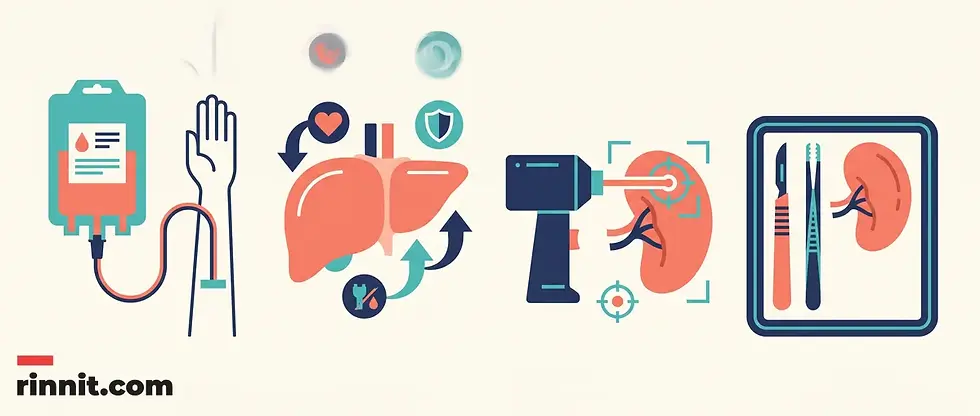
If treating the underlying cause is not enough or if the condition is severe, doctors may recommend:
Blood Transfusions: Restoring red cells or platelets using donated blood. [1]
Radiation or Ablation: Using low-dose radiation or radiofrequency ablation to shrink the spleen tissue. [1]
Splenectomy: Surgical removal of part or all of the spleen. This is typically a last resort because living without a spleen increases the lifelong risk of severe infections. [1]
What is the long-term outlook for hypersplenism?
The prognosis for hypersplenism is generally positive, provided the underlying cause can be managed. While blood cell counts can be restored through transfusions, long-term health depends on the nature of the primary disease (whether it is temporary, chronic, or progressive). [1] Patients who undergo a splenectomy will require specific vaccinations and, in some cases, daily antibiotics to protect their compromised immune systems. After splenectomy, any fever needs prompt medical attention, because serious infections can progress very quickly. [1]
Bridge to Infographic Templates: Understanding the relationship between the liver, spleen, and blood flow is essential for managing chronic conditions. For detailed anatomical diagrams or patient education materials, explore our infographic templates.
Frequently Asked Questions
Is hypersplenism the same as an enlarged spleen?
Not exactly. Splenomegaly is the physical enlargement of the spleen, while hypersplenism is the functional overactivity that results in low blood cell counts. You can have an enlarged spleen without it being overactive. [1]
Can I live without a spleen?
Yes, you can live without a spleen. However, because the spleen is part of the immune system, you will be more susceptible to certain bacterial infections for the rest of your life. [1]
Does hypersplenism cause pain?
Hypersplenism can cause a dull ache or fullness in the upper left side of the abdomen, especially after eating.
Can diet help treat an overactive spleen?
There is no specific diet to treat hypersplenism, but a healthy diet can support liver health and the immune system, which may help manage the underlying causes.
Is hypersplenism a form of cancer?
No, it is not cancer, but it can be a side effect of blood cancers like leukemia or lymphoma. [1]
How fast can the spleen remove blood cells?
In severe cases, an overactive spleen can remove cells so quickly that even regular blood transfusions struggle to keep counts at a safe level.
What is portal hypertension?
Portal hypertension is high blood pressure in the portal vein system, which carries blood from the digestive organs to the liver. It is a leading cause of spleen enlargement.
Can infections cause the spleen to burst?
While rare, some infections like mononucleosis can make the spleen so swollen and fragile that it is at higher risk of rupturing if hit or stressed. Sudden, severe pain in the upper left belly, especially with dizziness, confusion or fainting, can mean a ruptured spleen and needs emergency care: call 911.
Are there medications to shrink the spleen?
There are no medications specifically designed just to shrink the spleen, but drugs that treat the underlying cause (like chemotherapy for cancer or antivirals for infection) often result in the spleen shrinking.
What happens during a splenectomy?
A splenectomy is a surgical procedure where the spleen is removed, usually through small incisions (laparoscopically) or a single larger incision.
Why does an overactive spleen make me tired?
The spleen removes red blood cells, which carry oxygen. Fewer red cells mean less oxygen for your muscles and brain, leading to fatigue.
Can children have hypersplenism?
Yes, children can develop it, often due to inherited blood disorders like sickle cell disease or Gaucher disease.
What is cytopenia?
Cytopenia is the medical term for having a lower-than-normal number of blood cells.
Does hypersplenism affect the liver?
Hypersplenism itself doesn’t damage the liver, but liver damage is one of the most common causes of hypersplenism.
Can I exercise if I have an enlarged spleen?
Doctors usually recommend avoiding contact sports (like football or wrestling) because a swollen spleen is more likely to rupture if you take a blow to the abdomen.
How is an ultrasound used for the spleen?
An ultrasound uses sound waves to create a picture of the spleen, allowing doctors to measure its length and thickness accurately.
What are platelets?
Platelets are small cell fragments in the blood that help form clots to stop bleeding.
Is hypersplenism hereditary?
The condition itself isn’t hereditary, but many of the diseases that cause it (like Gaucher disease or sickle cell anemia) are.
Can malaria cause hypersplenism?
Yes, malaria is a common parasitic cause of spleen enlargement and overactivity in certain parts of the world.
Does a splenectomy cure hypersplenism?
Yes, removing the spleen stops the overactive filtration, but it creates a new set of risks related to immune function.
Can alcohol cause hypersplenism?
Chronic alcohol use can lead to cirrhosis of the liver, which is a major cause of portal hypertension and hypersplenism.
What is a “partial” splenectomy?
A partial splenectomy is a surgery where only the overactive or damaged part of the spleen is removed, attempting to save some of the organ’s immune function.
How often do I need blood tests with this condition?
It depends on the severity, but patients with active hypersplenism may need a CBC every few weeks or months to monitor their cell counts.
Can lupus affect the spleen?
Yes, as an autoimmune disease, lupus can cause chronic inflammation that leads to spleen enlargement. [1]
What is the role of white blood cells?
White blood cells are the “soldiers” of the immune system, responsible for fighting off bacteria, viruses, and other foreign invaders.
Can hypersplenism be reversed?
Yes, if the underlying cause is successfully treated, the spleen can often return to a normal function. [1]
What are petechiae?
Petechiae are tiny, circular, non-raised patches that appear on the skin as a result of bleeding under the surface, often due to low platelets.
Can I fly with an enlarged spleen?
Generally yes, but if your red blood cell count is very low, you may feel more dizzy or short of breath due to the lower oxygen levels in the cabin.
What is splenic sequestration?
Splenic sequestration is a serious complication, often in sickle cell disease, where a large amount of blood suddenly gets trapped in the spleen, causing a life-threatening drop in circulating blood.
Does the spleen produce blood?
In adults, the spleen usually doesn’t produce blood, but it can start doing so (extramedullary hematopoiesis) if the bone marrow is damaged.
What is Gaucher disease?
Gaucher disease is a rare genetic disorder where fatty substances build up in cells and certain organs, particularly the spleen and liver.
Can a CT scan show hypersplenism?
A CT scan can show that the spleen is enlarged, but blood tests are needed to prove it is overactive (hypersplenism).
Why do I feel full so quickly?
An enlarged spleen can take up space in the abdomen and press against the stomach, making it feel like you’ve eaten a full meal when you’ve only had a few bites.
Is anemia always caused by the spleen?
No, anemia has many causes, including iron deficiency, vitamin deficiency, and bone marrow problems.
Can mononucleosis cause long-term spleen issues?
Usually, the spleen enlargement from “mono” is temporary and resolves as the virus clears.
What are prophylactic antibiotics?
Prophylactic antibiotics are antibiotics taken daily to prevent an infection from starting, rather than treating one that already exists.
Can hypersplenism cause a fever?
Not directly, but it can lead to a low white blood cell count, which makes you more likely to catch an infection that causes a fever.
Is the spleen on the left or right side?
The spleen is located on the upper left side of the abdomen, tucked under the rib cage.
Can sarcoidosis affect the spleen?
Yes, sarcoidosis causes small patches of red and swollen tissue (granulomas) to develop in organs, including the spleen.
What is radiofrequency ablation?
Radiofrequency ablation is a procedure that uses heat generated from medium-frequency alternating current to shrink or destroy tissue.
Can I get a tattoo if I have hypersplenism?
If your platelet count is low, you will bleed more, and if your white cell count is low, you are at higher risk of infection. Consult your doctor first.
Does hypersplenism cause jaundice?
Not directly, but the liver diseases that cause hypersplenism often cause jaundice (yellowing of the skin and eyes).
What is the “splenic pulp”?
The splenic pulp is the internal tissue of the spleen, divided into red pulp (which filters blood) and white pulp (which manages immune response).
Can sickle cell disease cause the spleen to shrink?
Over time, repeated episodes of blood trapping can scar the spleen so much that it actually shrivels up and stops working (autosplenectomy).
How is lymphoma related to the spleen?
Lymphoma is a cancer of the lymphatic system, and since the spleen is the largest lymphatic organ, it is frequently involved.
Can I take aspirin with hypersplenism?
Aspirin thins the blood. If your platelet count is already low due to hypersplenism, aspirin could significantly increase your risk of bleeding.
What is “hypersplenism cytopenia”?
Hypersplenism cytopenia is the medical term for the reduction in blood cells caused specifically by an overactive spleen.
Does the spleen store blood?
Yes, the spleen acts as a reservoir, storing a small amount of blood that can be released into the system during an emergency like a severe injury.
How long does a splenectomy recovery take?
Most people spend a few days in the hospital and take 4 to 6 weeks to fully recover from the surgery.
Related Reading
Enlarged Spleen: Symptoms, Causes, and Treatment explains why the spleen enlarges and what symptoms it can cause.
Splenectomy: Procedure, Recovery, and Long-Term Care describes surgery to remove the spleen, including recovery and risks.
Portal Hypertension: Complete Guide to Symptoms, Causes, Diagnosis, and Treatment explains high pressure in the liver's veins, a common cause of hypersplenism.
Cirrhosis of the Liver: What It Is, How Permanent Scarring Damages Your Liver, and What Treatment Involves covers liver scarring and how it affects the spleen and blood.
References
Cleveland Clinic. Hypersplenism: symptoms, causes & treatment. Cleveland Clinic. Last updated October 25, 2022. https://my.clevelandclinic.org/health/diseases/24339-hypersplenism
Huang Y, Ren D, Gao F, et al. An updated meta-analysis of partial splenic embolization versus splenectomy in the treatment of hypersplenism due to cirrhosis. Minim Invasive Ther Allied Technol. 2022;31(5):664-675. PMID 34106805. https://doi.org/10.1080/13645706.2021.1933535
Siu M, Levin D, Christiansen R, et al. Prophylactic splenectomy and hyposplenism in spaceflight. Aerosp Med Hum Perform. 2022;93(12):877-881. PMID 36757247. https://doi.org/10.3357/AMHP.6079.2022
Lenzing E, Rezahosseini O, Burgdorf SK, et al. Efficacy, immunogenicity, and evidence for best-timing of pneumococcal vaccination in splenectomized adults: a systematic review. Expert Rev Vaccines. 2022;21(5):723-733. PMID 35236233. https://doi.org/10.1080/14760584.2022.2049250
Medical disclaimer
The information provided in this article is for educational purposes only and should not be considered medical advice. If you are experiencing abdominal pain or persistent fatigue, consult a healthcare professional immediately.



Comments