Portal Hypertension: Complete Guide to Symptoms, Causes, Diagnosis, and Treatment

Updated: 2 days ago
Medically reviewed by Dr. Baraa Alnahhal, MD · Last reviewed: September 2026
Portal Hypertension: Complete Guide to Symptoms, Causes, Diagnosis, and Treatment
Content current as of the latest published medical reference (August 18, 2026).
TL;DR
Portal hypertension is high blood pressure in the veins that carry blood from the digestive organs to the liver. It is most often caused by cirrhosis and cannot usually be cured, but medicines, procedures, and lifestyle changes can prevent dangerous complications such as internal bleeding and fluid buildup.
Quick Answer
Portal hypertension is high blood pressure in the portal vein system, which carries blood from the digestive organs to the liver. It develops when blood flow through the liver is blocked or slowed, most often by cirrhosis. Portal hypertension is defined as a hepatic venous pressure gradient (HVPG) above 5 mm Hg, and complication risk rises sharply above 10-12 mm Hg. It causes few early symptoms, so the first warning signs are usually complications: fluid in the belly (ascites), enlarged veins that can bleed (varices), easy bruising, and changes in thinking. Treatment focuses on the underlying cause plus medicines, band ligation, or a TIPS shunt to prevent bleeding and remove excess fluid.
What Is Portal Hypertension?
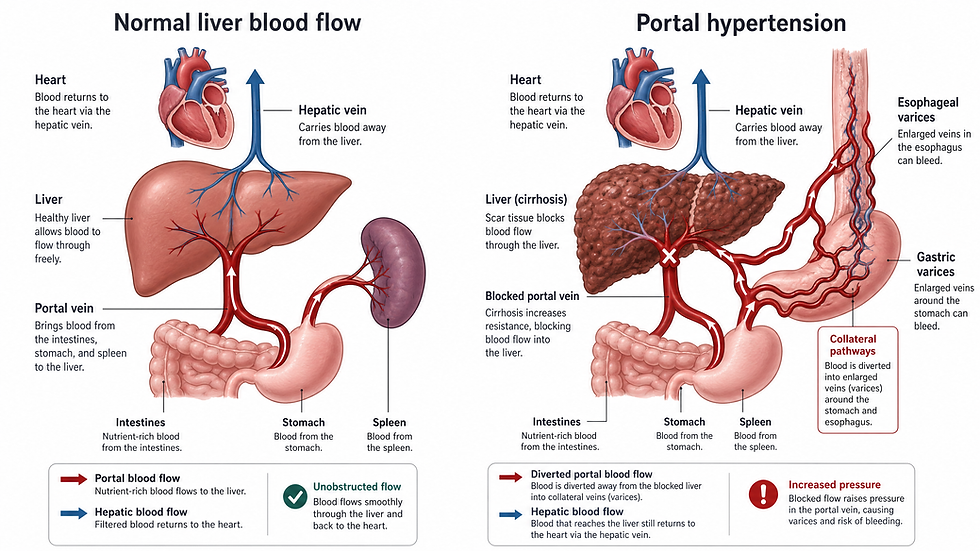
Portal hypertension means high blood pressure in the portal venous system — the network of veins that carries blood from the digestive organs to the liver. This system centers on the large portal vein and the smaller veins connected to it.
The condition develops when blood flow through the liver is blocked or slowed. A healthy liver filters incoming blood and then returns it to the heart. When pressure builds in the portal system, blood is forced into smaller side veins instead, and those veins enlarge and become fragile.
Portal hypertension can range from mild to severe, depending on how high the pressure is and how healthy the liver remains. Mild cases may cause no symptoms and can be discovered during testing for another condition. Severe cases raise the risk of bleeding in the digestive system, fluid buildup in the belly, and changes in thinking or alertness.
Answer nugget: Portal hypertension is high blood pressure in the vein system that carries blood from the digestive organs to the liver, caused when liver blood flow is blocked or slowed.
Can Portal Hypertension Be Reversed?
Some portal hypertension can be reversed, depending on the cause and how early it is found. Most cases are caused by cirrhosis, and cirrhosis-related portal hypertension cannot be cured or fully reversed. Ongoing treatment is needed to lower pressure, prevent complications, and treat the underlying cause.
Answer nugget: Most portal hypertension is caused by cirrhosis and cannot be cured or fully reversed, though it can sometimes be reversed depending on the cause and how early treatment begins.
Where Does the Blockage Happen? (Types Explained)
Healthcare professionals classify portal hypertension by where the blood flow slows down or stops.
| Type | Where It Happens | Common Causes | |---|---|---| | Prehepatic | Before blood reaches the liver | Portal vein thrombosis (blood clot); splenic vein clot | | Intrahepatic | Inside the liver itself (most common) | Cirrhosis from alcohol, viral hepatitis, fatty liver disease | | Posthepatic | After blood leaves the liver | Budd-Chiari syndrome, constrictive pericarditis, cardiomyopathy |
A less common form is left-sided (sinistral) portal hypertension, where pressure builds mainly in the splenic vein that drains the spleen. The blockage usually stems from pancreatic disease such as pancreatitis or pancreatic surgery — not liver disease. If it causes bleeding, surgical removal of the spleen (splenectomy) often cures the condition.
In children, prehepatic blockages can result from infections such as sepsis or a newborn umbilical cord infection, dehydration, or congenital portal vein anatomy, such as a vein that is too narrow.
What Causes Portal Hypertension?
The two most common causes worldwide are cirrhosis (liver scarring) and schistosomiasis, a parasitic liver infection. In Western countries, more than 90% of portal hypertension is caused by cirrhosis.
The causes group naturally by where the blockage occurs. Inside the liver — the most common site — cirrhosis is the leading culprit. In children, cirrhosis can follow autoimmune hepatitis, biliary atresia, chronic viral hepatitis, or metabolic liver diseases. In adults, causes include long-term alcohol use disorder, hepatitis B, hepatitis C, hemochromatosis, metabolic dysfunction-associated steatotic liver disease (formerly called nonalcoholic fatty liver disease), primary biliary cholangitis, and Wilson's disease. Conditions such as sarcoidosis and amyloidosis can also cause cirrhosis, and schistosomiasis remains a major cause in many parts of the world.
After the liver, causes include Budd-Chiari syndrome, constrictive pericarditis, serious cardiomyopathy, and blood clots in the vein carrying blood to the heart. When no cause can be identified, the condition is called idiopathic.
Answer nugget: In Western countries, more than 90% of portal hypertension is caused by cirrhosis; worldwide, the second most common cause is schistosomiasis, a parasitic liver infection.
What Are the Risk Factors for Portal Hypertension?
Some risk factors can be changed; others cannot.
| Risk Factor | Changeable? | How It Increases Risk | |---|---|---| | Heavy drinking | Yes | Causes liver damage and cirrhosis, the main cause | | Hepatitis B or C infection | Partly (treatable) | Ongoing infection damages the liver over time | | Diabetes, fatty liver disease, high cholesterol, high blood pressure (combined) | Partly | Together they increase liver damage risk | | Inherited liver conditions (hemochromatosis, Wilson's disease) | No | Passed down in families; damage the liver | | Congenital portal vein anatomy (e.g., narrow vein) | No | Present at birth; restricts blood flow |
What Are the Symptoms of Portal Hypertension?
Portal hypertension causes no symptoms at first. Symptoms usually appear only when complications develop — typically when blood is forced out of the portal system into other veins and organs.

The warning signs fall into five groups:
Fluid buildup. Swelling in the belly, called ascites, can make the abdomen look or feel distended. Fluid can also accumulate in the legs, called edema.
Digestive bleeding. Blood in vomit may look like fresh blood or coffee grounds. Stool may appear red, darker, or black. Both can signal bleeding in the digestive system from enlarged veins.
Bleeding changes. Easy bruising, unusual bleeding, or petechiae — tiny red, purple, or brown dots under the skin — can all point to thrombocytopenia (low platelets), which occurs when blood backs up into an enlarged spleen. An enlarged spleen can also lower white blood cell counts.
Visible surface veins. Blood vessels may become visible on the skin of the belly as blocked portal blood finds alternative routes to the heart.
Changes in thinking or alertness. Trouble focusing, confusion, or altered sleep can occur when the liver fails to filter toxins from the blood — a complication called hepatic encephalopathy.
Answer nugget: Portal hypertension itself has no early symptoms; the first warning signs are complications such as belly swelling (ascites), blood in vomit or stool, easy bruising with petechiae, visible belly veins, and changes in thinking.
When Should You Seek Emergency Care?
Contact a healthcare professional promptly for new or worsening symptoms, weight change outside agreed limits, or trouble breathing.
Go to the nearest emergency facility immediately if you experience vomiting blood, black or bloody stool, or belly swelling combined with fever, belly pain, or confusion — the last combination can indicate infected fluid in the belly.
What Complications Can Portal Hypertension Cause?
Portal hypertension is often noticed only after complications begin.
Ascites. When the liver is damaged, the kidneys retain excess salt, which makes the body hold water and accumulate fluid in the belly. Increased portal pressure also lets fluid leak from blood vessels into the abdomen. Ascites can occasionally become infected, a condition called spontaneous bacterial peritonitis.
Varices and bleeding. Elevated portal pressure forces blood into the veins of the esophagus, stomach, and intestines, where the veins enlarge into varices. Varicose veins in the esophagus are esophageal varices; those in the stomach are gastric varices. Because variceal walls are thin and fragile, they bleed easily — and larger varices are more likely to bleed. Red spots on the skin over varices suggest especially high bleeding risk. Varices can also form in the rectum; these are not the same as hemorrhoids.
Hepatic encephalopathy. When the liver cannot filter toxins such as ammonia from the intestines, they accumulate and affect brain function, causing confusion, personality changes, and impaired alertness.
How Is Portal Hypertension Diagnosed?
Diagnosis usually starts with a health history and physical exam, which can reveal fluid in the belly or an enlarged spleen. If you have known risk factors such as cirrhosis plus symptoms, that may be enough to make the diagnosis. Blood tests, imaging, and occasionally direct pressure measurement follow when needed.
What Blood and Lab Tests Show
A complete blood count (CBC) measures platelets. Since portal hypertension can enlarge the spleen and lower platelet counts, thrombocytopenia can suggest the condition. Liver function tests reveal whether a liver disease is at work.
One lab value is particularly specific: the serum-ascites albumin gradient (SAAG) compares albumin in the blood with albumin in belly fluid. A gradient of 1.1 g/dL or more indicates the fluid is likely caused by portal hypertension.
Blood and lab findings guide further testing but do not confirm portal hypertension on their own.
What Imaging Tests Show
| Test | What It Shows | Limitation | |---|---|---| | Abdominal ultrasound | Enlarged spleen, belly fluid, portal vein size changes | Does not measure pressure | | Doppler ultrasound | Direction and speed of portal blood flow | Altered patterns only suggest, not confirm, high pressure | | Upper endoscopy | Directly finds enlarged varices in esophagus and stomach | Does not measure pressure | | CT scan | Collateral veins, varices, underlying cirrhosis | Does not measure pressure | | MRI + MR elastography | Enlarged veins, blood flow changes, liver tissue stiffness | Stiffness helps gauge complication risk ("clinically significant" portal hypertension) |
Answer nugget: A serum-ascites albumin gradient (SAAG) of 1.1 g/dL or more means belly fluid is likely caused by portal hypertension.
How Is Portal Pressure Measured? (HVPG Explained)
When the diagnosis is unclear, pressure can be measured. The standard indirect method uses a catheter in the hepatic veins (not the portal vein itself). Pressure is recorded with a small balloon blocking flow and without blocking it; the difference is the hepatic venous pressure gradient (HVPG).
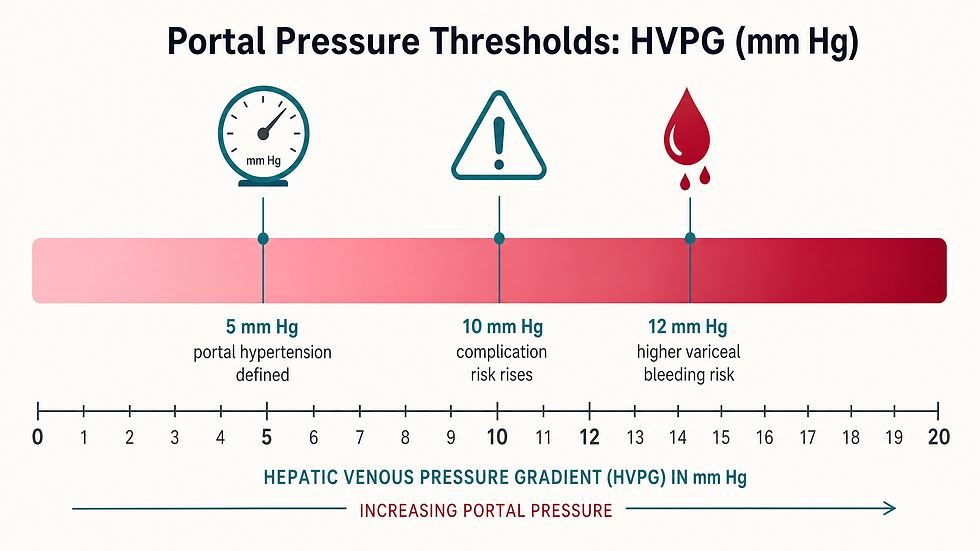
The thresholds matter clinically:
| HVPG Level | What It Means | |---|---| | Above 5 mm Hg | Portal hypertension is defined | | 10 mm Hg or more | Risk of complications increases | | Above 12 mm Hg | Higher risk of bleeding from enlarged veins |
Direct measurement through a catheter in the portal vein is possible but rarely done because it is invasive.
Answer nugget: Portal hypertension is defined as a hepatic venous pressure gradient (HVPG) greater than 5 mm Hg; risk of complications rises at 10 mm Hg, and bleeding risk climbs above 12 mm Hg.
What Are the Treatment Options for Portal Hypertension?
Treatment has two goals: manage the underlying cause, and prevent or manage complications such as digestive bleeding and belly fluid. Management relies on medicines and endoscopy procedures first, with shunts or liver transplant when those are not enough.
Can Portal Hypertension Be Cured?
If the underlying cause is reversible, the liver may heal and portal hypertension can be reversed or cured. Treating viral hepatitis, for example, may resolve both conditions, and a liver transplant for advanced disease replaces the underlying cause entirely. Medicines and procedures do not cure portal hypertension — but they protect the body from further damage and complications and improve symptoms.
What Medicines Are Used?
| Medication Type | Examples | What It Does | |---|---|---| | Beta blockers (lower portal pressure) | Propranolol, carvedilol, nadolol | Reduce bleeding varices risk by slowing heart rate and widening vessels; may be unsafe with ascites or infected ascites | | Vasoconstrictors (for acute bleeding) | Octreotide, vasopressin | Tighten widened vessels; given for several days during sudden variceal bleeding | | Diuretics (remove sodium and water) | Oral pills or IV | Prevent or reduce ascites; paired with a low-sodium diet | | Antibiotics | Oral or IV | Treat or prevent infection of belly fluid (peritonitis) | | Toxin reducers | Lactulose, rifaximin | Prevent ammonia and other toxins from building up and affecting the brain (hepatic encephalopathy) |
What Procedures and Surgeries Are Used?
Endoscopy and band ligation. An endoscope — a flexible tube with a camera passed through the mouth — finds and measures varices and checks for red streaks and spots that signal high bleeding risk. When risk is high or bleeding has started, endoscopic band ligation pulls varices into a chamber at the scope's tip and wraps them with an elastic band, cutting off the vein so it cannot bleed. The procedure carries a small risk of bleeding and scarring.
TIPS (transjugular intrahepatic portosystemic shunt). When medicines and endoscopy fail, TIPS reroutes blood from the portal vein to a hepatic vein using a small stent placed through blood vessels under imaging guidance — no traditional surgery. It lowers variceal pressure and often stops bleeding. TIPS can cause serious complications such as liver failure and mental confusion, because toxins the liver would normally filter pass straight into the bloodstream. It is used mainly when other treatments fail or as a bridge to transplant.
Surgical shunts. Rarely, a shunt is placed through traditional surgery instead of TIPS — for example, in non-cirrhotic portal hypertension with hard-to-manage bleeding, or when TIPS is technically impossible.
Liver transplant. Transplant is an option for severe liver disease or repeatedly bleeding varices. Although often successful, the number of people awaiting transplant far exceeds available organs.
Answer nugget: Beta blockers such as propranolol, carvedilol, and nadolol reduce the risk of bleeding varices by lowering pressure in the portal vein.
What Is the Prognosis for Portal Hypertension?
Portal hypertension is a serious condition. The outlook and life expectancy depend mainly on the underlying cause and the extent of liver damage. Idiopathic portal hypertension not caused by cirrhosis has a good prognosis when complications are managed well.
For most people, portal hypertension results from cirrhosis or other chronic liver disease, so the prognosis follows how that underlying disease progresses. The published statistics on variceal bleeding are sobering: the risk of death from an acute variceal bleed ranges from 15% to about 40% within six weeks of the bleed, and more than 60% of people do not survive five years beyond the first bleed. Treatment reduces the risk of further bleeding, and those with progressive liver disease and many varices ultimately need a liver transplant.
Answer nugget: After a first variceal bleed, the risk of death ranges from 15% to about 40% within six weeks, and more than 60% of people do not survive five years without effective treatment.
What Lifestyle Changes Help With Portal Hypertension?
Four habits protect the liver and reduce complication risk.
Do not drink alcohol. Even a single glass can cause further liver damage, regardless of the type of alcohol.
Eat a low-sodium diet. Extra salt makes the body retain fluid, worsening belly and leg swelling. Season food with herbs instead of salt and choose low-sodium prepared foods.
Protect yourself from infections. Cirrhosis weakens the body's ability to fight infection. Wash hands often, avoid people who are sick, and get vaccinated against hepatitis A and B, influenza, and pneumonia.
Use nonprescription medicines carefully. Liver damage slows how the body processes medicines, so always ask a healthcare professional before taking any medication, including over-the-counter products.
Conclusion
Portal hypertension develops silently, hides behind cirrhosis, and announces itself through complications — yet it is highly manageable. The numbers that matter most are simple: pressure above 5 mm Hg defines the condition, 10 mm Hg marks rising complication risk, and 12 mm Hg marks sharply higher bleeding risk. Early detection through screening, consistent beta blocker or banding therapy, a low-sodium diet, and complete alcohol avoidance together change the trajectory of this condition.
Next step: If you or a loved one has cirrhosis or unexplained belly swelling, easy bruising, or dark stool, ask your healthcare professional about variceal screening and a portal pressure assessment — the single most protective step you can take.
Frequently Asked Questions
What exactly is portal hypertension?
Portal hypertension is high blood pressure in the portal venous system — the veins that carry blood from the digestive organs to the liver. It occurs when blood flow through the liver is blocked or slowed, most often by cirrhosis.
What are the first symptoms of portal hypertension?
There are no early symptoms. The first warning signs are complications: swelling in the belly (ascites) or legs, blood in vomit or stool, easy bruising and petechiae, visible blood vessels on the belly, and changes in thinking or alertness.
What is the most common cause of portal hypertension?
Cirrhosis (liver scarring) causes more than 90% of portal hypertension cases in Western countries. Worldwide, schistosomiasis, a parasitic liver infection, is the second most common cause.
How is portal hypertension measured?
It is defined by the hepatic venous pressure gradient (HVPG). An HVPG above 5 mm Hg defines portal hypertension; 10 mm Hg or more signals rising complication risk, and above 12 mm Hg means a higher risk of variceal bleeding.
Can portal hypertension be cured or reversed?
If the underlying cause is reversible — for example, treated viral hepatitis or a liver transplant — the condition can be reversed or cured. Cirrhosis-related portal hypertension cannot be fully reversed, but treatment prevents complications and improves symptoms.
What is a TIPS procedure?
TIPS (transjugular intrahepatic portosystemic shunt) reroutes blood from the portal vein to a hepatic vein using a stent placed through blood vessels under imaging guidance. It lowers variceal pressure and often stops bleeding when medicines and endoscopy have failed.
What should I do if I vomit blood or have black stool?
Treat it as an emergency: call your healthcare professional or go to the nearest emergency medical facility immediately. Vomiting blood or passing black stool can mean bleeding from enlarged veins (varices), which is life-threatening without prompt treatment.
Can lifestyle changes make a difference?
Yes. Avoiding all alcohol, eating a low-sodium diet, staying current on vaccinations, avoiding infection exposure, and checking with a healthcare professional before taking any medication all reduce the risk of complications.
References
This article is for educational purposes only and does not replace professional medical advice. Always consult a qualified healthcare professional for diagnosis and treatment decisions. Content based on current clinical guidance and published medical sources; reviewed August 2026.
Health information, not medical advice. This article is for general education and is not a substitute for professional diagnosis or treatment. Always consult a qualified healthcare provider about your own health, and seek emergency care for urgent symptoms.
Comments