Understanding Hyper-IgE Syndrome (Job Syndrome): Symptoms and Management

Updated: 3 days ago
Medically reviewed by Dr. Baraa Alnahhal, MD · Last reviewed: October 19, 2026
Quick Answer: What Is Hyper-IgE Syndrome?
Hyper-IgE Syndrome is a primary immunodeficiency disorder caused by genetic mutations (most commonly in the STAT3 or DOCK8 genes) that disrupt the immune system's ability to fight off pathogens. [1] [3] [2] This results in "cold" staph infections (abscesses that lack typical redness and warmth), recurrent pneumonia, and severe eczema. [2] It is named "Job Syndrome" after the biblical figure Job.
What the research says
STAT3-related HIES affects many body systems, but outcomes are good with preventive care. In a French national survey of 60 patients with STAT3 mutations, high IgE was found in 96%, Staphylococcus aureus skin and mucous membrane infections in all patients, retained baby teeth in 65% and osteopenia in 50%. Recurrent pneumonia was linked to secondary bronchiectasis and pneumatoceles (67%). Fifty-six of the 60 patients were alive at the end of the study, and antibiotic prophylaxis (90% of patients), antifungal prophylaxis (50%) and IgG infusions (53%) were associated with a large drop in pneumonia recurrence. (Chandesris et al., Medicine (Baltimore), 2012) [4]
A short list of clinical features helps identify STAT3-related HIES. Among 100 patients with suspected HIES and IgE above 1,000 IU/mL, 64 had STAT3 mutations. A combination of 5 features (recurrent pneumonia, newborn rash, pathologic bone fractures, a characteristic face and a high palate) predicted a STAT3 mutation with 85% accuracy. (Woellner et al., J Allergy Clin Immunol, 2010) [5]
Stem cell transplant can cure DOCK8 deficiency, the best-known recessive form. In an international cohort of 81 transplanted patients, 84% were alive after a median follow-up of 26 months. Survival was 89% after matched related-donor and 81% after unrelated-donor transplants, and 97% with reduced-toxicity conditioning versus 78% with fully myeloablative busulfan-based regimens. (Aydin et al., J Allergy Clin Immunol Pract, 2019) [6]
Key Takeaways
What is hyper-IgE syndrome (Job syndrome)?
HIES is a complex condition where the body's immune defense is compromised, yet it overproduces IgE antibodies, the type usually associated with allergies. [1] [3] [2] This imbalance makes patients highly susceptible to specific types of germs, particularly Staphylococcus aureus and Candida (yeast). [1] [4] [2]

The Two Main Types
AD-HIES (Job Syndrome): Typically caused by a mutation in the STAT3 gene. This form affects multiple body systems, including the skeleton and blood vessels. [1] [2]
AR-HIES: Caused by mutations in genes like DOCK8. This form is more focused on the immune system and skin, often leading to widespread viral infections like molluscum contagiosum and warts. [1] [2]
What are the symptoms of hyper-IgE syndrome?
Symptoms often begin in infancy with a newborn rash that evolves into chronic eczema. [2]
Immune and Skin Symptoms
Recurrent Pneumonia: Often leads to the formation of permanent air-filled pockets (pneumatoceles) in the lungs. [1] [4] [2]
Cold Abscesses: Skin infections that don't feel hot or look red but are filled with pus. [2]
Chronic Yeast Infections: Persistent oral thrush or nail infections. [2]
Severe Eczema: Itchy, inflamed skin that is difficult to treat with standard creams.
Bone and Physical Symptoms (Primarily AD-HIES)
Facial Features: Deep-set eyes, a broad nasal bridge, and a prominent forehead.
Dental Issues: Baby teeth that do not fall out on their own, requiring surgical removal. [2]
Skeletal Changes: Scoliosis (curved spine) and hyperflexible joints. [1] [2]
Bone Density: Osteoporosis and a high frequency of fractures from minor injuries. [1] [2]
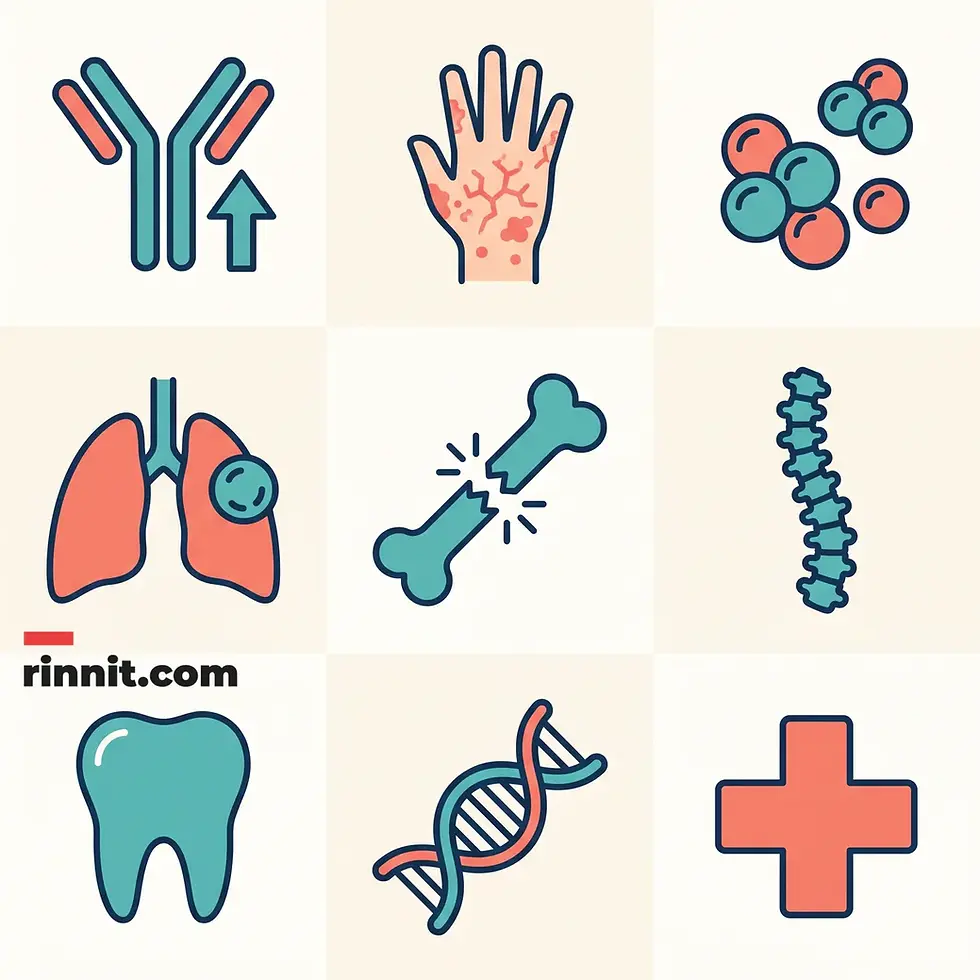
What causes hyper-IgE syndrome, and what role do genetics play?
HIES is caused by mutations in DNA that provide incorrect instructions to the immune system.
Inheritance: AD-HIES can be inherited from one parent (50% chance), while AR-HIES requires a mutation from both parents. [1] [2]
Sporadic Mutations: In many cases, the mutation occurs randomly for the first time in an individual with no family history. [1] [2]
Immune Dysfunction: The mutations prevent white blood cells from responding correctly to signals that normally trigger an attack on bacteria and fungi.
How is hyper-IgE syndrome diagnosed?
Early diagnosis is critical to prevent permanent lung damage from repeated infections.
Blood Tests: Measuring serum IgE levels (often exceeding 2,000 IU/mL) and checking other immune markers. [2]
Genetic Testing: Confirming mutations in STAT3, DOCK8, or other related genes. [1] [3] [2]
Imaging: X-rays and CT scans to look for pneumatoceles in the lungs or bone density issues. [1] [3] [2]
Clinical Scoring: Using a standardized point system based on the presence of characteristic physical features. [3] [5] [2]
How is hyper-IgE syndrome managed and treated?
Hyper-IgE syndrome has no cure for the underlying genetic mutation, but its symptoms can be managed effectively. [3] [2]
Treatment Category | Specific Interventions |
Infection Control | |
Immune Support | |
Skin Care | Diluted bleach baths, topical steroids, and heavy moisturizers for eczema. |
Bone Health | Calcium, Vitamin D, and sometimes bisphosphonates for osteoporosis. [2] |
Advanced Care |

What is the outlook and prognosis for hyper-IgE syndrome?
With consistent preventative care, many individuals with HIES live into adulthood. [1] [4] [2] The primary threats to long-term health are chronic lung disease (bronchiectasis) and vascular complications like aneurysms. [2] Regular monitoring by a team of immunologists, pulmonologists, and dermatologists is essential for a good quality of life.
Conclusion
Hyper-IgE Syndrome is a challenging condition that requires vigilant, lifelong care. However, understanding the specific genetic type and following a strict preventative regimen can significantly reduce the frequency of infections and improve skeletal health. Ongoing research into gene therapy and stem cell transplantation offers hope for more definitive treatments in the future.
Frequently Asked Questions
Why is it called Job Syndrome?
It is named after the biblical figure Job, who was tested with severe skin sores, mirroring the chronic boils and eczema seen in HIES patients.
How high are IgE levels in HIES?
While normal levels are under 100 IU/mL, HIES patients often have levels over 2,000 IU/mL, sometimes reaching as high as 50,000 IU/mL.
What is a "cold abscess"?
It is a staph infection that lacks the typical signs of inflammation, such as warmth, redness, and pain, making them easy to overlook. [2]
Can HIES be cured?
Currently, there is no cure for the genetic mutation itself, but stem cell transplants can sometimes "reset" the immune system in certain types. [1] [6] [2]
Are HIES patients allergic to everything?
Despite the high IgE levels (the "allergy antibody"), HIES patients do not necessarily have more allergies than the general population. [2]
Why don't baby teeth fall out in AD-HIES?
The genetic mutation interferes with the natural process of bone remodeling that allows baby teeth to loosen and fall out.
Is HIES contagious?
No, it is a genetic condition and cannot be spread from person to person.
What is a pneumatocele?
It is a thin-walled, air-filled cyst in the lung that forms after a severe infection, which can become a site for future infections. [2]
How is HIES different from severe eczema?
HIES includes internal issues like recurrent pneumonia and bone abnormalities that are not present in standard eczema. [2]
Can adults be diagnosed with HIES?
Yes, though most are diagnosed in childhood, some with milder symptoms may not be identified until adulthood.
What is the risk of passing HIES to children?
In the autosomal dominant form, there is a 50% chance. [1] [2] In the recessive form, the risk is much lower unless the partner also carries the mutation.
What germs are most dangerous for HIES patients?
Staphylococcus aureus (staph) and Aspergillus (a type of fungus) are the most common and dangerous pathogens. [2]
Does HIES cause cancer?
The autosomal recessive form (AR-HIES) significantly increases the risk of lymphoma and skin cancer. [1] [2]
What is IVIG?
Intravenous Immunoglobulin is a treatment that provides antibodies from healthy donors to help HIES patients fight infections. [1] [3]
Can HIES patients play sports?
Patients with AD-HIES must be cautious due to fragile bones and hypermobile joints, which increase the risk of fractures and dislocations.
What is scoliosis?
It is a sideways curvature of the spine, which is common in people with the AD-HIES form of the syndrome. [1] [2]
How often should HIES patients see a doctor?
Regular check-ups every 3 to 6 months are typical to monitor lung health and adjust preventative medications.
What is the STAT3 gene?
It is a gene that provides instructions for a protein involved in cell growth and immune system signaling.
Can genetic testing be done during pregnancy?
Yes, if the specific mutation in the family is known, prenatal testing can determine if the fetus has inherited the condition. [2]
Why do HIES patients get fungal infections?
The mutation disrupts the body's Th17 cells, which are specifically responsible for defending against fungal pathogens.
What is molluscum contagiosum?
A viral skin infection that causes small, pearly bumps; it is particularly severe and widespread in AR-HIES patients. [1] [2]
Can HIES cause a stroke?
Yes, blood vessel abnormalities (aneurysms) in HIES patients can increase the risk of both stroke and internal bleeding. [2]
What are "distinctive facial features"?
Common features include a broad nose, deep-set eyes, a prominent forehead, and skin with large pores.
Is HIES the same as Wiskott-Aldrich Syndrome?
No, they are different genetic conditions, although both involve high IgE levels and immune dysfunction. [1] [2]
What is a high palate?
It refers to a roof of the mouth that is unusually high and narrow, a common skeletal feature in AD-HIES. [1] [5] [2]
Can HIES patients get vaccines?
Most can receive standard vaccines, but live-virus vaccines should be discussed carefully with an immunologist.
What is prophylactic treatment?
It is the use of medication (like daily antibiotics) to prevent an infection before it starts.
Does HIES affect intelligence?
No, HIES does not typically affect cognitive development or intelligence.
What is a bisphosphonate?
Why is lung health so important in HIES?
Repeated pneumonia can lead to permanent scarring (bronchiectasis), [4] [2] which is a leading cause of long-term health issues.
What is DOCK8 deficiency?
It is a specific type of autosomal recessive HIES that causes severe skin infections and high cancer risk. [1] [6] [2]
Can bleach baths help?
Yes, very diluted bleach baths are often recommended to reduce the amount of bacteria on the skin and prevent boils. [2]
What is joint hypermobility?
It means the joints can move beyond the normal range of motion, often described as being "double-jointed."
How rare is HIES?
It is extremely rare, with an estimated prevalence of about 1 in 1,000,000 people. [2]
What is the first sign of HIES in a baby?
Often, a crusty or blistering rash that appears within the first few weeks of life is the earliest indicator. [2]
Can HIES be managed by a GP?
While a GP is part of the team, the lead physician should be a specialist in immunology.
Does HIES affect growth?
Some children may have slightly delayed growth, but most reach a normal height.
What is an aneurysm?
A weak spot in a blood vessel wall that bulges out; HIES patients are at higher risk for these in the brain and heart. [2]
Can HIES cause hearing loss?
Chronic ear infections, if not managed, can lead to hearing complications.
What is thrush?
A yeast infection in the mouth that appears as white patches; it is a common recurring issue in HIES. [2]
Are there specific diets for HIES?
There is no specific diet, but maintaining overall health and a strong nutritional base is important for the immune system.
What is the Th17 cell?
A type of helper T cell that is crucial for fighting off extracellular bacteria and fungi; these cells are deficient in HIES.
Can HIES be misdiagnosed as cystic fibrosis?
Because both cause recurrent lung infections, doctors may test for both, but they are distinct conditions.
What is a CT scan?
A detailed X-ray that provides clear images of the lungs to check for cysts or damage.
Is HIES life-threatening?
It can be, primarily due to severe lung infections or vascular issues, but life expectancy is increasing with modern care. [2]
What is "Job's syndrome" vs "HIES"?
They are often used interchangeably, though Job's syndrome specifically refers to the autosomal dominant form. [1] [2]
Can HIES cause facial paralysis?
This is more common in the autosomal recessive form (AR-HIES) [1] due to viral infections affecting the nerves.
What is squamous cell carcinoma?
A common type of skin cancer that HIES patients (especially the AR-type) need to be screened for regularly.
Does HIES affect the heart?
Yes, it can cause abnormalities in the coronary arteries, which require regular monitoring. [2]
Where can I find a specialist?
Major academic medical centers with primary immunodeficiency clinics are the best place to find expert care.
Related Reading
Primary Immunodeficiency: Complete Guide to Signs, Causes, Diagnosis, and Treatment explains inherited immune disorders and how they are treated.
Staph Infections: Symptoms, Causes, Treatment, and Prevention — Complete Guide explains staph infections, the most common problem in hyper-IgE syndrome.
Atopic Dermatitis (Eczema): Symptoms, Causes & Treatment — Complete Guide covers eczema, the itchy rash that often starts in infancy.
Chronic Granulomatous Disease: Symptoms, Causes, Diagnosis and Treatment — What You Need to Know explains another inherited immune disorder with repeated abscesses.
References
Cleveland Clinic. Hyper IgE (Job) Syndrome. Cleveland Clinic. Last updated November 21, 2025. Accessed October 18, 2026. https://my.clevelandclinic.org/health/diseases/hyper-ige-syndrome
Hsu AP, Davis J, Puck JM, Holland SM, Freeman AF. STAT3 Hyper IgE Syndrome. In: GeneReviews® [Internet]. Seattle (WA): University of Washington, Seattle; initial posting February 23, 2010; last update March 26, 2020. PMID 20301786. Accessed November 5, 2026. https://www.ncbi.nlm.nih.gov/books/NBK25507/
MedlinePlus. Hyperimmunoglobulin E syndrome. MedlinePlus Medical Encyclopedia. National Library of Medicine. Review date July 28, 2025. Accessed October 18, 2026. https://medlineplus.gov/ency/article/001311.htm
Chandesris MO, Melki I, Natividad A, et al. Autosomal dominant STAT3 deficiency and hyper-IgE syndrome: molecular, cellular, and clinical features from a French national survey. Medicine (Baltimore). 2012;91(4):e1-e19. PMID: 22751495. https://doi.org/10.1097/MD.0b013e31825f95b9
Woellner C, Gertz EM, Schäffer AA, et al. Mutations in STAT3 and diagnostic guidelines for hyper-IgE syndrome. J Allergy Clin Immunol. 2010;125(2):424-432.e8. PMID: 20159255. https://doi.org/10.1016/j.jaci.2009.10.059
Aydin SE, Freeman AF, Al-Herz W, et al. Hematopoietic stem cell transplantation as treatment for patients with DOCK8 deficiency. J Allergy Clin Immunol Pract. 2019;7(3):848-855. PMID: 30391550. https://doi.org/10.1016/j.jaip.2018.10.035
Medical disclaimer
This guide is for general information only and is not a substitute for professional medical advice, diagnosis, or treatment. Always seek the advice of a physician or other qualified health provider with any questions about a medical condition. Never disregard professional medical advice or delay seeking it because of something you have read here.



Comments