Bladder Surgery: Types, Procedures, and Recovery

Updated: 3 days ago
Medically reviewed by Dr. Baraa Alnahhal, MD · Last reviewed: October 2026
Quick Answer
Bladder surgery is a procedure performed by urologists to treat conditions affecting the bladder, such as cancer, prolapse or incontinence. [1] Bladder cancer is the most common reason and may require removing part or all of the bladder (cystectomy). [1] Robotic surgery is the most common approach and can reduce scarring and healing time. [1] Hospital stays can last up to one week. [1]
What the research says
Robot-assisted and open cystectomy gave similar cancer control at two years. In the RAZOR randomized trial (302 patients in the per-protocol analysis), 2-year progression-free survival was 72.3% with robot-assisted surgery versus 71.6% with open surgery, and adverse events occurred in 67% versus 69% of patients (PubMed: Parekh et al., Lancet, 2018) [2].
A single-center trial found similar complication rates and hospital stays, with less blood loss but longer operations using the robot. Among 118 patients, grade 2 to 5 complications within 90 days occurred in 62% after robot-assisted surgery and 66% after open surgery, and the average hospital stay was 8 days in both groups (PubMed: Bochner et al., Eur Urol, 2015) [3].
What is bladder surgery?
Bladder surgery refers to any operative procedure performed on the urinary bladder, the organ responsible for storing urine after it has been filtered by the kidneys. [1] These procedures are primarily conducted to address pathological conditions or structural abnormalities that impair the urinary system's function. Urologists, specialists in the urinary and reproductive systems, lead these interventions [1] using various surgical techniques tailored to the patient's specific needs.
The necessity for bladder surgery arises from several conditions, with bladder cancer being the most prevalent indication. [1] Other common reasons include cystocele (bladder prolapse), where the bladder drops from its normal position, and urinary incontinence, characterized by a loss of bladder control. [1] The primary goal of these surgeries is to treat the underlying condition, restore function, or in cases of advanced cancer, remove the diseased tissue to prevent further spread.
Condition | Description | Surgical Goal |
|---|---|---|
Bladder Cancer | Malignant tumor growth in bladder tissue. | Tumor removal or organ resection. |
Cystocele | Fallen bladder protruding into the vagina. | Restoring bladder position (lift). |
Urinary Incontinence | Involuntary leakage of urine. | Improving bladder control/support. |
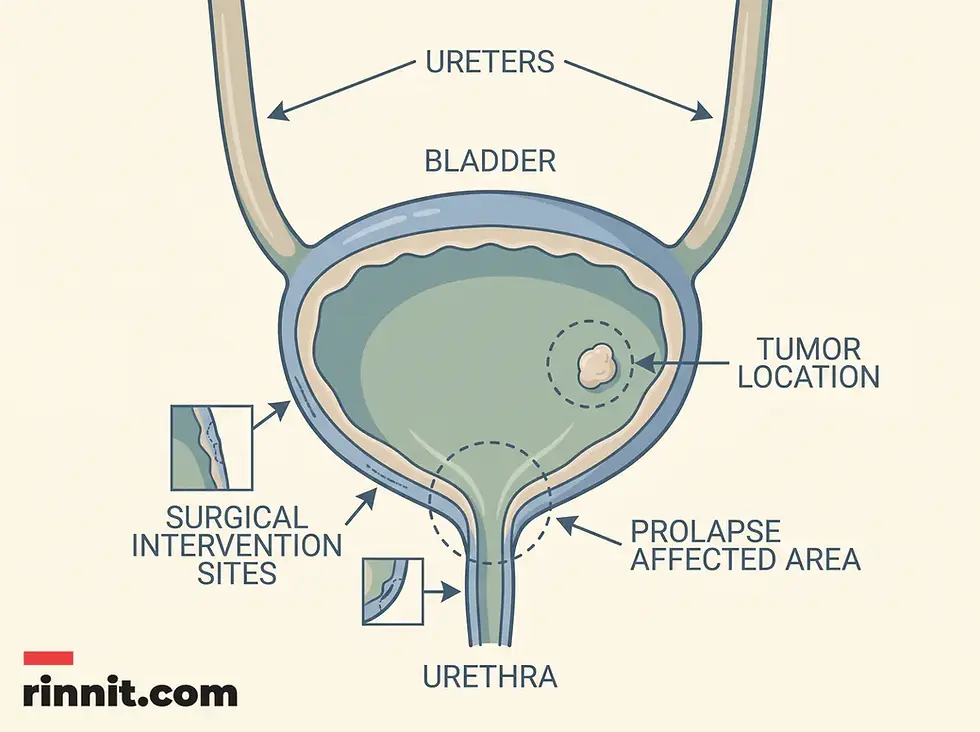
Figure 1: Illustration of the urinary bladder anatomy and common sites for surgical intervention.
What are the common types of bladder surgery?
Common types of bladder surgery include cystectomy, transurethral resection of bladder tumor (TURBT) and retropubic suspension, each serving a specific purpose. A cystectomy is one of the most significant procedures, involving the removal of either a portion (partial) or the entire bladder (radical). [1] When a radical cystectomy is performed, surgeons must also conduct urinary reconstruction and diversion to create a new pathway for the body to store and eliminate urine.
Another common procedure is the Transurethral Resection of Bladder Tumor (TURBT). During a TURBT, a surgeon inserts a cystoscope through the urethra to locate and remove tumors without external incisions. [1] For patients experiencing a sagging bladder or incontinence, a retropubic suspension may be performed. This "bladder lift" surgery repositions the bladder and urethra to their anatomical locations to improve urinary control. [1]
What surgical approaches and techniques are used in bladder surgery?
Modern medicine offers three primary approaches to bladder surgery, each with different levels of invasiveness. Robotic-assisted surgery is currently the most common method, utilizing small incisions and specialized ports that allow robotic arms to perform precise movements. [1] Cleveland Clinic notes that this minimally invasive technique can reduce healing time and scarring; in randomized trials for bladder cancer, however, robotic and open cystectomy showed similar cancer control, complication rates and hospital stays. [1] [2] [3]
In contrast, open surgery involves a larger abdominal incision to provide the surgeon with direct access to the bladder. While once the standard, open surgery is now relatively rare. [1] The third approach, endoscopic surgery, requires no external incisions at all; instead, the surgeon accesses the bladder through the urethra using an endoscope, which is the standard method for procedures like TURBT. [1]
Approach | Technique | Primary Advantage |
|---|---|---|
Robotic | Small incisions with robotic assistance. | Reduced recovery time and scarring. |
Endoscopic | Access through the natural urethral opening. | No external incisions or scars. |
Open | Large abdominal incision for direct access. | Direct surgeon access to the bladder. |

Figure 2: Comparison of minimally invasive robotic and endoscopic techniques for bladder treatment.
How do you prepare for and recover from bladder surgery?
Preparing for bladder surgery involves a comprehensive health review, physical examinations, and diagnostic tests, including blood work and urinalysis to rule out pre-existing infections. [1] Patients are often advised to stop taking certain medications, such as aspirin, NSAIDs, or blood thinners, to minimize bleeding risks. [1] Additionally, tobacco cessation is strongly recommended, as smoking can significantly slow the healing process and weaken the immune system. [1]
Recovery varies depending on the surgery's complexity. While some procedures are outpatient, major surgeries like a radical cystectomy usually require a hospital stay of about a week, and sometimes longer. [1] During the initial recovery phase, patients may experience side effects such as increased urinary frequency, urgency, or blood in the urine (hematuria). [1] Urologists provide specific post-operative instructions, including wound care and activity restrictions, to ensure a safe transition back to daily life.

Figure 3: Essential steps and tips for patient recovery following a bladder procedure.
What are the risks and complications of bladder surgery?
Like all major medical interventions, bladder surgery carries inherent risks. General complications include reactions to anesthesia, bacterial infections, internal tissue damage, and blood clots. [1] However, bladder-specific surgeries may also lead to long-term changes in gastrointestinal, reproductive, or hormonal health, particularly if adjacent organs like the prostate or uterus are involved in the treatment plan. [1]
Patients should be aware of the possibility of persistent urinary problems, such as leaking or the need to use a catheter. [1] It is crucial to monitor for "red flag" symptoms during recovery, such as fever or chills, an inability to urinate, blood in the urine, severe pain (especially when urinating), or pus, discoloration or heavy bleeding around the incision sites. [1] Promptly contacting a healthcare provider when these symptoms occur is vital for preventing serious complications.
Conclusion
Bladder surgery is a critical tool for treating serious urological conditions, most notably bladder cancer. With the advancement of robotic-assisted and endoscopic techniques, many patients can benefit from smaller incisions and less scarring. While the prospect of surgery can be daunting, understanding the types of procedures available and following strict preparation and recovery protocols can lead to successful long-term outcomes. If you are experiencing symptoms such as persistent urinary urgency or blood in your urine, consult a urologist to discuss your treatment options.
Frequently Asked Questions
1. What is the most common reason for bladder surgery?
The most common reason for bladder surgery is the treatment of bladder cancer. It is often the primary method for removing tumors or the entire organ if the cancer has spread.
2. Who performs bladder surgery?
Bladder surgeries are performed by urologists, who are medical doctors specializing in the urinary system and the male and female reproductive tracts.
3. Is bladder surgery considered major surgery?
Yes, many bladder procedures, especially a radical cystectomy (removal of the entire bladder), are considered major surgeries that require general anesthesia and a hospital stay.
4. What are the main surgical approaches?
The three main approaches are robotic-assisted (minimally invasive), endoscopic (through the urethra), and open surgery (abdominal incision).
5. What is a TURBT procedure?
TURBT stands for Transurethral Resection of Bladder Tumor. It is an endoscopic procedure used to remove tumors from the bladder lining without making external incisions.
6. How long is the hospital stay after bladder surgery?
For major inpatient procedures, patients may need to stay in the hospital for up to one week for monitoring and pain management.
7. What are common side effects immediately after surgery?
Common side effects include urinary urgency, increased frequency of urination, and the presence of blood in the urine (hematuria).
8. Which medications should I stop before surgery?
Patients are typically advised to stop taking aspirin, NSAIDs (like ibuprofen), and blood thinners, as these can increase the risk of bleeding during the procedure. Do not stop any medication unless your provider tells you to.
9. Is general anesthesia used for bladder surgery?
Yes, most bladder surgeries are performed under general anesthesia, meaning the patient is fully asleep and feels no pain during the operation.
10. Can bladder surgery affect reproductive health?
Yes, in some cases, bladder surgery may involve adjacent organs like the prostate or uterus, which can lead to changes in reproductive function or hormonal balance.
11. How do I prepare for bladder surgery?
A pre-surgery visit covers your health history, a physical exam and vital signs, plus a blood test and urinalysis to rule out infection [1]. Tell your provider about all prescriptions, over-the-counter drugs and herbal supplements, since you may be asked to stop blood thinners, aspirin, NSAIDs and certain supplements, but do not stop any medication unless the provider tells you to, and report drug, latex and food allergies and any reactions to skin cleaners such as iodine or isopropyl alcohol [1]. You may be asked to stop smoking, which slows healing, and to follow a clear-liquid diet of pulp-free juice, broth and gelatin for 8 to 12 hours before surgery; ask whether your operation is outpatient or will mean a stay of one day to a week [1].
12. When should I call my doctor after bladder surgery?
Contact your provider for severe pain, especially when urinating, an inability to urinate, or blood in your urine [1]. Also call for signs of infection, including fever, chills, or red, purple, brown or black discoloration or pus around the incisions, and for heavy bleeding around the incisions [1].
Related Reading
Cystectomy (Bladder Removal Surgery): Types, Procedure, Risks and Recovery explains partial and full bladder removal and how urine is rerouted.
Transitional Cell Cancer: A Comprehensive Guide to Urothelial Carcinoma covers the most common bladder cancer and its treatment options.
Augmentation Cystoplasty: Bladder Augmentation Surgery describes how bowel tissue is used to enlarge a small bladder.
Cystoscopy: Purpose, Procedure, Recovery and Risks explains the camera exam used to look inside the bladder.
References
Cleveland Clinic. Bladder Surgery: Purpose, Procedure, Risk & Recovery. Cleveland Clinic. Feb. 27, 2024. https://my.clevelandclinic.org/health/procedures/16786-bladder-surgery
Parekh DJ, Reis IM, Castle EP, et al. Robot-assisted radical cystectomy versus open radical cystectomy in patients with bladder cancer (RAZOR): an open-label, randomised, phase 3, non-inferiority trial. Lancet. 2018;391(10139):2525-2536. PMID 29976469. https://doi.org/10.1016/S0140-6736(18)30996-6
Bochner BH, Dalbagni G, Sjoberg DD, et al. Comparing open radical cystectomy and robot-assisted laparoscopic radical cystectomy: a randomized clinical trial. Eur Urol. 2015;67(6):1042-1050. PMID 25496767. https://doi.org/10.1016/j.eururo.2014.11.043
Medical Disclaimer
This article is for informational purposes only and does not constitute medical advice. Always seek the advice of your physician or other qualified health provider with any questions you may have regarding a medical condition. Never disregard professional medical advice or delay in seeking it because of something you have read here.



Comments