Sweet Syndrome: Understanding Acute Febrile Neutrophilic Dermatosis

Updated: 2 days ago
Medically reviewed by Dr. Baraa Alnahhal, MD · Last reviewed: October 2026
Quick Answer
Sweet syndrome is a rare inflammatory disorder that causes sudden fever and painful, discolored bumps or blisters, usually on the arms, face, neck and trunk. It is triggered by an overactive immune response, often after infection, certain medications or an underlying condition such as cancer. A skin biopsy aids diagnosis, and corticosteroids usually bring rapid relief.
What the research says
Classical Sweet syndrome often follows an infection and can come back. A comprehensive review reports that classical (idiopathic) Sweet syndrome usually affects women aged 30 to 50, is often preceded by an upper respiratory infection, and recurs in about one-third of patients (Cohen, Orphanet J Rare Dis, 2007) [1].
Steroids work fast, and a skin rash can be the first clue to cancer. The same review found that systemic corticosteroids are the therapeutic gold standard with a prompt response, and that the cancer-associated form, most often linked to acute myeloid leukemia, can appear before, with, or after the cancer diagnosis (Cohen, Orphanet J Rare Dis, 2007) [1].
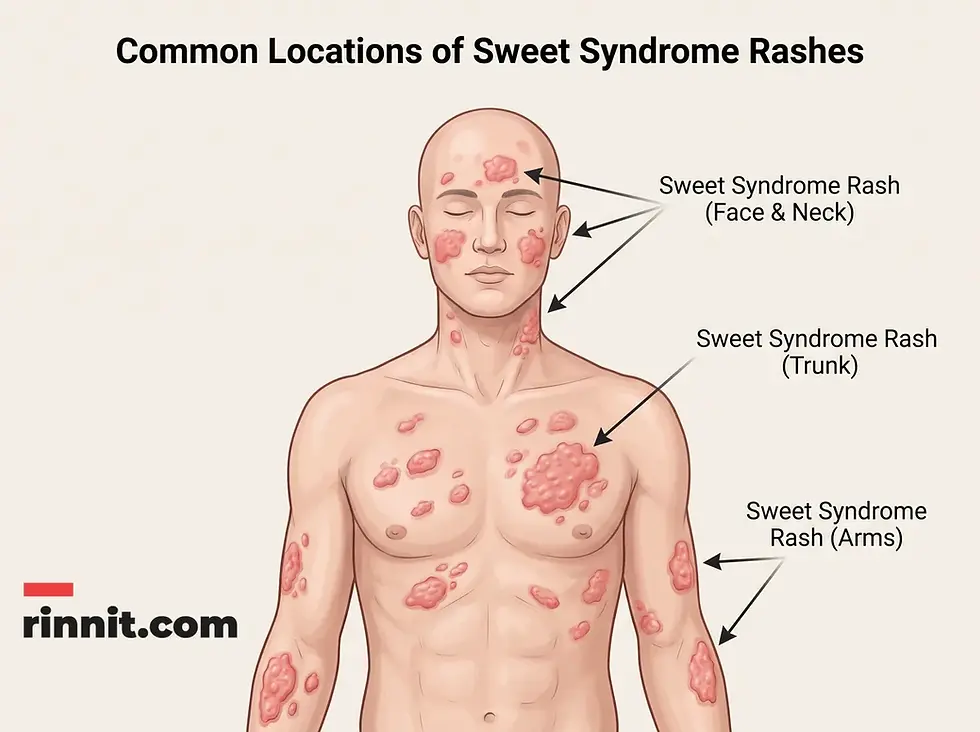
The rash has typical locations and a typical look under the microscope. A 2016 review describes painful, tender red papules, nodules, and plaques, often asymmetric, most often on the face, neck, and upper limbs, with a neutrophil infiltrate in the upper dermis (Villarreal-Villarreal et al., Actas Dermosifiliogr, 2016) [2].
What Is Sweet Syndrome?
Sweet syndrome, medically called acute febrile neutrophilic dermatosis, is a rare inflammatory skin condition. It is defined by the sudden onset of fever and painful skin lesions. [1] [2] The rash appears most often on the upper body, including the arms, face, neck, and trunk, but it can form anywhere on the skin.
The condition is not an infection. It is a reactive process in which an overactive immune system sends a type of white blood cell called neutrophils into the skin. [1] [2] This buildup causes the painful bumps, swelling, and whole-body symptoms such as fatigue and joint pain.

What are the types and triggers of Sweet syndrome?
Doctors describe three main types of Sweet syndrome, based on the trigger or associated condition. [1] Identifying the type matters because it guides the work-up and treatment priorities.
Classification | Potential Triggers and Associations |
|---|---|
Classical (idiopathic) | Often follows an upper respiratory or gastrointestinal infection; may also occur with inflammatory bowel disease or during pregnancy. [1] |
Malignancy-associated | Linked to an underlying cancer, most often a blood cancer such as acute myeloid leukemia (AML). [1] |
Drug-induced | Most often linked to granulocyte colony-stimulating factor (G-CSF); other medicines, including some antibiotics, can also trigger it. [1] |
What are the symptoms and warning signs of Sweet syndrome?
Symptoms usually appear with little warning. The rash is the most prominent feature, often bumpy, blistering, or lumpy lesions that are tender or painful. They may look red, purple, or darker than your natural skin tone. Most people also have whole-body symptoms, with fever as the hallmark, often along with a general feeling of being unwell.
Symptom Category | Common Experiences and Features |
|---|---|
Skin appearance | Painful bumps or blisters; discolored plaques; lesions that may break open into ulcers. [1] |
Systemic reactions | Fever above 100.4°F (38°C); fatigue; headaches. [1] |
Physical discomfort | Joint pain; muscle aches; eye pain or blurred vision. |
Onset | Sudden development; bumps that can feel deep under the skin, like bruises. |
How is Sweet syndrome diagnosed, and what are the criteria?
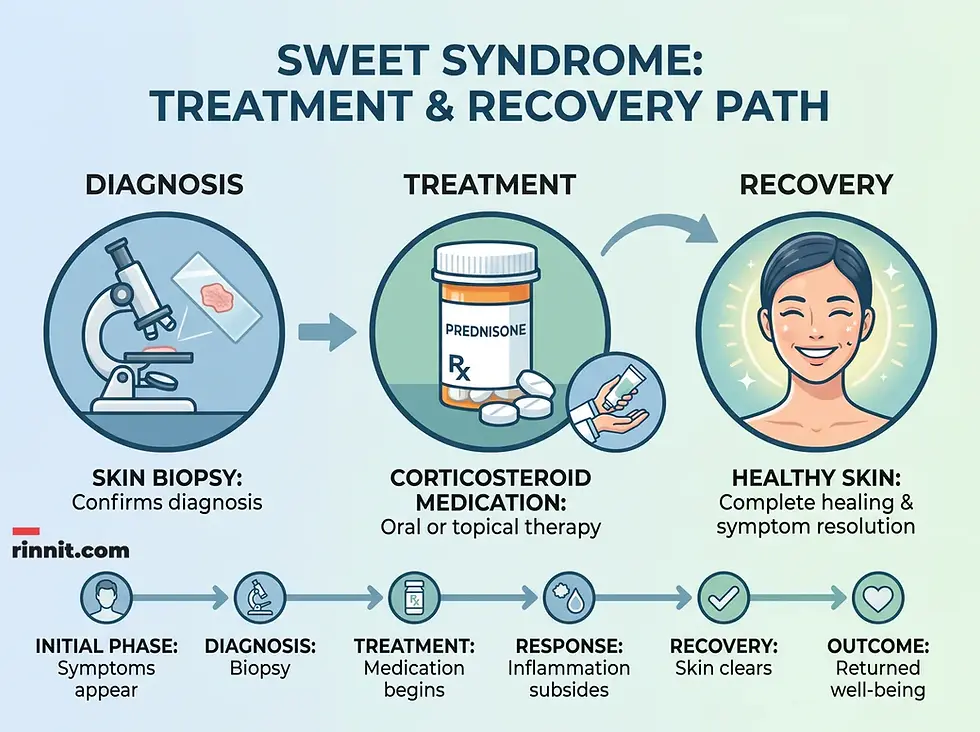
Diagnosis combines a physical exam, your history, and laboratory tests. Providers look for typical features and rule out other skin conditions that look similar, such as infections like cellulitis. A skin biopsy is the key test because it shows the characteristic buildup of neutrophils in the skin. [1] [2]
To confirm the diagnosis, doctors look for two major criteria: a sudden outbreak of painful, discolored skin bumps, and a biopsy showing neutrophils without inflammation of the blood vessel walls. They also look for at least two supporting (minor) features, such as high fever, a preceding infection, or a rapid response to steroid treatment. [1]
How is Sweet syndrome managed and treated?
Treatment aims to reduce inflammation and calm the overactive immune response. Corticosteroids such as prednisone are the standard first-line treatment. [1] [2] They may be given by mouth, by injection into lesions, or as creams, depending on the severity and location of the rash. [1] If a medication or another illness is the trigger, managing that cause is a priority. Many people improve quickly once treatment starts. [1]
Treatment Approach | Description and Goal |
|---|---|
Corticosteroids | First-line treatment to calm inflammation and relieve symptoms quickly. |
Alternative medications | Colchicine or potassium iodide may be used as other first-line options; dapsone, cyclosporine, and others are used if symptoms resist or return. [1] |
Trigger management | Stopping suspected medications or treating an underlying cancer or illness. |
Supportive care | Managing skin discomfort and watching for infection if lesions break open. |
What is the outlook and long-term recovery for Sweet syndrome?
The long-term outlook is generally very good. With treatment, the rash typically heals completely, often without permanent scarring. [1] Some temporary skin discoloration may remain but usually fades. Sweet syndrome can also clear up on its own, but it may return in some people [1], so keep in touch with your healthcare provider to identify triggers and manage flare-ups. Most people return to normal activities once the inflammation is controlled.
What are the next steps for Sweet syndrome?
If you develop a sudden, painful rash with fever, see a healthcare provider promptly. Early diagnosis and treatment are the keys to managing Sweet syndrome and recovering fully. Because the condition can sometimes be linked to an underlying illness, your provider may also check for other causes.
Frequently Asked Questions
1. What is Sweet syndrome?
Sweet syndrome is a rare inflammatory skin condition, also known as acute febrile neutrophilic dermatosis.
2. What are the main symptoms?
A sudden fever and a painful, discolored skin rash are the primary signs.
3. Where does the rash usually appear?
The rash most commonly affects the arms, face, neck, and trunk.
4. What causes the condition?
An overactive immune system sends too many white blood cells (neutrophils) into the skin. The exact cause is not fully understood.
5. Is it contagious?
No. Sweet syndrome is an inflammatory reaction, not a contagious infection.
6. What triggers the immune response?
Triggers include infections, certain medications, pregnancy, inflammatory bowel disease, and underlying cancers.
7. Which cancers are most associated with it?
Blood cancers, especially acute myeloid leukemia (AML), are the most frequent links.
8. How is it diagnosed?
Doctors use a physical exam, blood tests, and a skin biopsy to confirm the diagnosis.
9. What is the first-line treatment?
Corticosteroids, such as prednisone, are the standard first-line treatment.
10. How fast does treatment work?
Symptoms often improve quickly once corticosteroid treatment begins.
11. Are there alternative treatments?
Yes. Medicines such as colchicine, potassium iodide, or dapsone may be used if steroids are not suitable or symptoms return.
12. Will the rash leave scars?
Most people heal without scarring, though temporary discoloration is common.
13. Can the condition come back?
Yes. Recurrence is possible, and providers help patients identify and manage potential triggers.
14. What complications can occur?
Rarely, inflammation can affect internal organs such as the lungs, heart, or bones, or the eyes.
15. When should I see a doctor?
Contact a provider promptly if a painful rash develops suddenly, especially with a fever.
Trusted External Resources
Related Reading
Pyoderma Gangrenosum: Complete Guide to the Rapid, Painful Skin Condition explains another neutrophil-driven skin condition that causes painful ulcers.
Erythema Nodosum: Symptoms, Causes, Diagnosis, Treatment and Outlook — What You Need to Know explains tender red lumps on the shins often triggered by infection.
Skin Biopsy: Types, What to Expect, Results and Aftercare explains how a small skin sample is taken to confirm a diagnosis.
What Is Myelodysplastic Syndrome? A Plain-Language Guide to Symptoms, Causes, and Treatment explains a bone marrow disorder that can be linked to Sweet syndrome.
References
Cohen PR. Sweet's syndrome: a comprehensive review of an acute febrile neutrophilic dermatosis. Orphanet J Rare Dis. 2007;2:34. PMID 17655751. https://doi.org/10.1186/1750-1172-2-34
Villarreal-Villarreal CD, Ocampo-Candiani J, Villarreal-Martínez A. Sweet syndrome: a review and update. Actas Dermosifiliogr. 2016;107(5):369-378. PMID 26826881. https://doi.org/10.1016/j.ad.2015.12.001
Medical Disclaimer
This article is for informational purposes only and does not constitute medical advice. Always seek the advice of your physician or other qualified health provider with any questions you may have regarding a medical condition. Never disregard professional medical advice or delay in seeking it because of something you have read in this article. If you think you may have a medical emergency, call your doctor or your local emergency number immediately.



Comments