Understanding Shoulder Arthroscopy: A Minimally Invasive Approach to Joint Repair

Updated: 3 days ago
Medically reviewed by Dr. Baraa Alnahhal, MD · Last reviewed: October 2026
Quick Answer: What is shoulder arthroscopy?
Shoulder arthroscopy is a minimally invasive procedure in which a surgeon uses a small camera and specialized instruments to repair shoulder joint problems through tiny incisions. It is commonly used for rotator cuff tears, cartilage damage and chronic tendonitis when non-surgical treatments fail. It is usually done on an outpatient basis, and full recovery requires several months of physical therapy. [3]
What the research says
Arthroscopic repair performs as well as mini-open repair. In a randomized trial across 9 centers (274 patients completing follow-up), shoulder function scores (WORC) rose from about 40 before surgery to 89 after all-arthroscopic repair and 93 after mini-open repair at 2 years, a difference that was not statistically significant (adjusted mean difference 3.4; 95% CI −0.4 to 7.2). Opioid use fell from 21% to 5% after surgery, and a pooled meta-analysis also found no significant difference between the two approaches (MacDermid et al., Am J Sports Med, 2021). Of 954 patients screened, 276 were ineligible because they recovered with physical therapy alone, which supports trying non-surgical care first. [1]
Starting motion early appears safe. A meta-analysis of 13 randomized trials (1,082 patients) found that early passive or active motion after arthroscopic rotator cuff repair was associated with modestly better range of motion than delayed motion, with no difference in retear rate. The authors concluded that early motion was safe for small to large tears (Hu et al., BMC Musculoskelet Disord, 2023). Your surgeon will still set the timing that fits your repair. [2]

When is shoulder arthroscopy recommended?
Shoulder arthroscopy becomes an option when conservative treatments such as rest, physical therapy or medication do not provide adequate relief. Surgeons may recommend this minimally invasive approach for a wide variety of structural issues within the shoulder.
Condition category | Examples of specific issues |
Tendon injuries | Rotator cuff tears, biceps tendon tears or chronic tendonitis. |
Cartilage damage | SLAP tears, Bankart lesions or general labral tears. |
Structural issues | Complicated fractures, severe shoulder separation or sprains. |
Degenerative changes | Severe shoulder arthritis or bone spurs requiring removal. |
What happens during shoulder arthroscopy surgery?
The process is highly standardized to support patient safety and good outcomes. Most procedures are performed in an outpatient setting, meaning patients can typically return home within a few hours of the surgery’s completion.
The procedure begins with anesthesia, often a regional nerve block combined with sedation to ensure the arm is completely numb. Once the patient is positioned, the surgeon injects a sterile fluid into the joint to expand the space and improve visibility. A small incision, usually about an inch long, is made to insert the arthroscope. If repairs are needed, additional tiny incisions are created for specialized surgical tools.
Procedure phase | Key activities |
Preparation | Patient positioning, skin cleaning and fluid injection to inflate the joint. |
Access | Creation of small incisions for the arthroscope and surgical instruments. |
Repair | Visualization of the joint on a monitor and execution of necessary repairs. |
Closing | Removal of instruments, closing of incisions with sutures and bandaging. |

What are recovery and rehabilitation like after shoulder arthroscopy?
Recovery from shoulder arthroscopy occurs in distinct stages, starting with the initial healing of the surgical sites and progressing to long-term strength building. Patience and adherence to the healthcare team’s instructions are vital during this period.
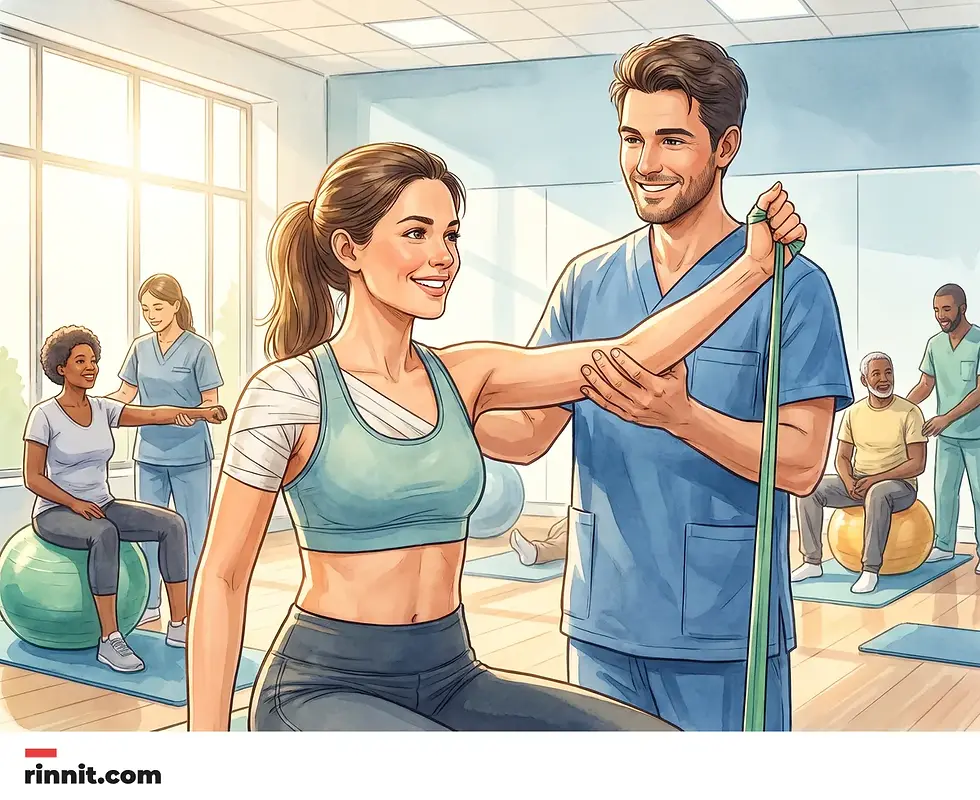
Initial incision healing typically takes one to two weeks, during which the arm is kept in a protective sling. Regaining full range of motion and strength, however, requires a dedicated physical therapy program that can last three to six months or longer. During the early stages, patients are encouraged to rest frequently, walk short distances to maintain circulation and avoid any heavy lifting with the affected arm. [3]
What are the risks of shoulder arthroscopy, and how safe is it?
Although shoulder arthroscopy is considered very safe, it is still a surgical procedure with inherent risks. Patients should discuss these possibilities with their surgical team before the operation to make an informed decision.
Potential complications, while rare, can include blood clots, excessive bleeding at the incision sites or localized infections. There is also a small risk of accidental damage to surrounding blood vessels or nerves. Contact a healthcare provider immediately if symptoms like fever, abnormal wound discharge or severe swelling occur during recovery.
Conclusion
Shoulder arthroscopy provides an effective, minimally invasive option for many people struggling with chronic joint pain or injury. By reducing the physical impact of surgery, this technique allows for a smoother transition into rehabilitation and a faster return to daily activities. With the guidance of a skilled surgical team and a commitment to physical therapy, patients can achieve significant relief and restored mobility.
If you are experiencing persistent shoulder pain, consult a healthcare professional to determine whether you are a candidate for arthroscopy. Prepare for your consultation by documenting your symptoms, previous treatments and any questions about recovery. After surgery, make sure you have a support system in place for the initial weeks and stay consistent with your prescribed rehabilitation exercises.
Frequently Asked Questions
Is shoulder arthroscopy considered major surgery?
While it is minimally invasive, it is still a significant procedure that requires anesthesia and several months of recovery.
How long does the surgery take?
Most arthroscopic shoulder procedures are completed within one to two hours.
Will I need to stay in the hospital overnight?
No. Shoulder arthroscopy is typically an outpatient procedure, allowing you to go home the same day.
When can I stop wearing the sling?
The initial healing phase usually requires a sling for one to two weeks, but your surgeon will provide specific timing.
How soon can I start physical therapy?
Rehabilitation often begins shortly after the incisions have healed, typically within two weeks.
Can arthroscopy treat shoulder arthritis?
Yes, it can be used to treat severe arthritis, though it is not used for full shoulder replacements.
What kind of anesthesia is used?
Most patients receive a regional nerve block, often supplemented with sedation or general anesthesia.
Are the scars from shoulder arthroscopy large?
No. The incisions are very small, usually about an inch long, resulting in minimal scarring.
When can I return to work?
This depends on the nature of your job; desk work may be possible sooner than manual labor involving lifting.
Is the procedure painful?
Minimally invasive techniques generally result in less post-operative pain than open surgery, though some discomfort is expected.
Can I drive after the surgery?
You cannot drive while wearing a sling or taking certain pain medications; your provider will advise when it is safe.
What are the most common risks?
Rare risks include blood clots, infection and minor nerve or blood vessel damage.
How should I sleep after shoulder surgery?
Propping your arm up on a pillow while reclining is often recommended for comfort during the first few days.
Does the surgeon use fluid during the procedure?
Yes. Sterile fluid is injected to inflate the joint and provide a clearer view for the camera.
What happens if I don’t do physical therapy?
Physical therapy is essential for regaining strength and preventing the joint from becoming stiff or contracted.
Related Reading
Shoulder Replacement Surgery: Types, Recovery and Restrictions explains shoulder replacement surgery and recovery.
SLAP Tear Surgery: Procedure, Recovery and Success Rate explains SLAP tear surgery and recovery.
References
MacDermid JC, Bryant D, Holtby R, et al. Arthroscopic versus mini-open rotator cuff repair: a randomized trial and meta-analysis. Am J Sports Med. 2021;49(12):3184-3195. PMID: 34524031. DOI: 10.1177/03635465211038233
Hu CW, Tsai SHL, Chen CH, et al. Early versus delayed mobilization for arthroscopic rotator cuff repair (small to large sized tear): a meta-analysis of randomized controlled trials. BMC Musculoskelet Disord. 2023;24(1):938. PMID: 38049792. DOI: 10.1186/s12891-023-07075-5
Cleveland Clinic. Shoulder Arthroscopy (Shoulder Surgery): Recovery Time. Cleveland Clinic. Last updated February 3, 2026. https://my.clevelandclinic.org/health/treatments/21785-shoulder-arthroscopy
Disclaimer
This article is for general educational purposes and is not a substitute for professional medical advice, diagnosis or treatment. Always consult a qualified healthcare professional for diagnosis and treatment of medical conditions.



Comments