Scrotal Lymphedema: Understanding Lymphatic Swelling and Care

Updated: 3 days ago
Medically reviewed by Dr. Baraa Alnahhal, MD · Last reviewed: October 2026
Quick Answer: What is scrotal lymphedema?
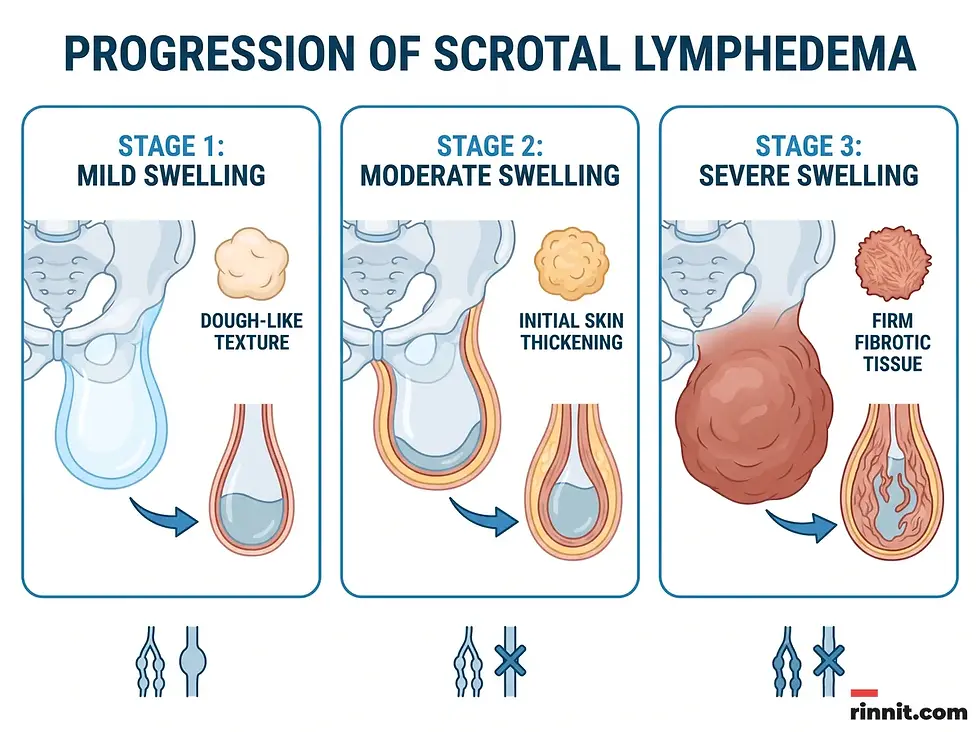
Scrotal lymphedema is a rare, chronic buildup of lymph fluid in the soft tissues of the scrotum, and sometimes the penis and nearby areas, caused by a blockage or breakdown of the lymphatic system. [1] Early on the tissue feels soft or doughy, but it can become firm over time as fibrosis develops. [1] Treatment may include complex decongestive therapy or surgery. [1]
What the research says
Chronic skin disease can lead to genital lymphedema. A systematic review of 27 people with lymphedema caused by hidradenitis suppurativa found it most often affected the scrotum (16 patients, 59%) and penis (12 patients, 44%). Fourteen patients (52%) were treated with radical surgical excision combined with medical therapy and had favorable outcomes (Micieli & Alavi, Int J Dermatol, 2018 [2]).
Compression and skin care may quickly reduce swelling in some people. In a case report of one 58-year-old man with penile and scrotal lymphedema after pancreas and spleen surgery and chemotherapy, a compression garment plus careful skin hygiene reduced swelling significantly within a week and improved pain and difficulty walking and urinating. This is a single case, so results may not apply to everyone (de Godoy et al., Urol Ann, 2014 [3]).
What Is Scrotal Lymphedema?
The lymphatic system is part of your immune system. [1] It helps remove waste and toxins and balance your body fluids. [1] Lymph is the clear fluid that circulates through it, carrying white blood cells and removing waste, bacteria, and excess proteins from tissues. [1] Lymph vessels carry the fluid, and lymph nodes store white blood cells and filter lymph. [1] When this system is blocked or damaged around the genitals, lymph cannot drain and the scrotum swells.
Providers are not sure how often scrotal lymphedema occurs. [1] Damage to the lymphatic system often relates to cancer treatment or surgery, filariasis, or congenital urinary abnormalities. [1] For a related topic, see our guide to genital lymphedema and our overview of lymph nodes.
Symptoms and Clinical Presentation
The most apparent symptom is an enlarged scrotum, which can swell to many times its normal size. [1]
Physical changes: Tissue may first feel soft or doughy and then firmer over time as fibrosis develops. [1]
Pain and infections: Chronic pain in the affected areas and repeated infections. [1]
Function: Difficulty walking or a complete inability to walk, difficulty urinating, and trouble with sexual function. [1]
Buried penis: In severe cases, swelling causes scrotal tissue to envelop the penis, making it look hidden or absent. [1]
Causes and Risk Factors
In the US, most cases occur because a blockage or breakdown of the lymphatic system in the genital area stops lymph from draining. [1] Outside the US, lymphatic filariasis, a parasitic infection that mosquitoes transmit, is the most common cause. [1]
Learn more about weight and health in our obesity guide.
Potential Complications
Complication | Description |
|---|---|
Repeated cellulitis | Inflammation of the soft tissue beneath the skin that can make skin lose elasticity. [1] |
Elephantiasis | Skin that becomes large, thick, and hard. [1] |
Erysipelas | A superficial skin infection causing sudden fever, discoloration, and swelling. [1] |
Slower healing | Wounds in the genital area may take longer to heal. [1] |
Psychological effects | Low self-esteem, anxiety, depression, and stress. [1] |
Read more in our guide to cellulitis.
Diagnosis and Testing
A provider starts with a physical exam and your medical history. [1] Imaging helps show the extent of the blockage and rule out other causes of scrotal swelling (see our guide to scrotal masses). [1]
Lymphoscintigraphy: A small amount of a radioactive substance is injected and tracked through the lymph system with a scanner. A blockage stops it and shows where the problem is. [1]
MRI: Uses a magnet, radio waves, and a computer to produce detailed images of the soft tissues and help identify a blockage. [1]
CT scan: Uses a series of X-rays to image the genital area and show where a lymph vessel is blocked. [1]
Management and Treatment
There is no cure for scrotal lymphedema, but treatment can reduce symptoms and prevent swelling from getting worse. [1]
Complex Decongestive Therapy (CDT)
Providers usually recommend CDT first. [1] It may reduce mild to moderate swelling, especially in the early stages, and swelling may go down within a week or two. [1]
Skin care: Cleaning the skin with antibacterial soap, warm water, and a skin cleaner such as iodine or isopropyl alcohol. [1]
Manual drainage: A lymphedema therapist lightly massages the area to move lymph toward functioning vessels. [1]
Compression: Wearing special garments to reduce fluid buildup. [1]
Exercise: A therapist designs a plan to help lymph circulate. [1]

Surgical Intervention
Surgery may be recommended for severe cases that do not respond to CDT. [1] The surgical team may include a urologist and a plastic surgeon. [1] Under general anesthesia, the team generally:
Places a catheter in the urethra to protect it and stabilize the penis. [1]
Separates the penis from tough (fibrotic) scrotal tissue and removes damaged lymphedematous skin and tissue. [1]
If needed, performs liposuction, a panniculectomy (removal of excess skin and fatty tissue), or an escutcheonectomy (removal of the fat pad above the pubic area). [1]
Replaces damaged skin with healthy skin from another area, usually the thigh. [1]
Most people respond well, but possible complications include swelling, pain, reduced sensitivity in the scrotum, penis, or nearby areas, and an unsuccessful skin graft. [1] Recovery takes about six weeks. [1]

Things You Can Do
Eat well: Choose plenty of fruits, vegetables, lean protein, and whole grains. [1]
Limit salt: Salt can increase the fluid in your body. [1]
Stay hydrated: Aim for about 64 fluid ounces (eight 8-ounce glasses) daily. [1]
Talk about it: The condition can affect you emotionally, so consider a therapist or support group. [1]
Outlook and Prevention
There is currently no way to reverse the lymphatic damage, so scrotal lymphedema is long term. [1] Proper treatment can reduce symptoms and help you keep your quality of life. [1] It may not be possible to prevent lymphedema caused by cancer treatment, but these steps can lower risks and complications:
Tell a provider at the first signs of swelling. Waiting can lead to problems that are harder to control. [1]
Keep your skin clean and moisturized to help prevent infection. [1]
Call a provider at the first signs of infection, such as discoloration, pain, swelling, fever, or colored streaks under the skin. [1]
Avoid pressure on the lower abdomen and groin, and avoid tight clothing and elastic bandages. [1]
Limit or avoid heat on the genitals, including hot showers and saunas. [1]
Follow a slow, controlled exercise plan designed by a lymphedema therapist. [1]
Maintain a healthy weight for you. [1]
Go to the emergency room if you have signs of infection: a fever over 100.4 F (38 C), increased pain, warmth in the area, or discoloration including streaks leading away from the area. [1]
Conclusion
Scrotal lymphedema is a long-term condition that needs specialized care. Starting treatment early, with complex decongestive therapy and good skin care, can reduce swelling and the risk of complications, and surgery can help people with severe symptoms who do not respond to therapy.
Next Steps
If you have persistent scrotal swelling or changes in the feel of your genital skin, especially after cancer treatment, schedule an appointment with a healthcare provider such as a urologist or lymphedema specialist. Ask what is causing the swelling, how severe it is, and which treatment and lifestyle changes they recommend.
Frequently Asked Questions
Is scrotal lymphedema contagious?
No. It is not contagious and it is not a sexually transmitted infection.
Can obesity cause scrotal swelling?
Obesity is a risk factor. People with a body mass index (BMI) greater than 30 have a higher risk of developing scrotal lymphedema.
What is a buried penis?
In severe cases, swelling makes the scrotal tissues envelop the penis so it looks hidden or absent.
How large can the scrotum get?
The scrotum can swell to many times its normal size, reaching the size of a grapefruit, a basketball, or larger. This is sometimes called giant scrotal lymphedema.
Does radiation therapy cause it?
Cancer treatment, including radiation therapy and surgery, can damage the lymphatic system and raise the risk.
What is manual lymph drainage?
A lymphedema therapist lightly massages the area to move lymph out of the swollen tissue and toward working lymph vessels.
Is there a cure for scrotal lymphedema?
No cure exists yet. Treatment can reduce symptoms and keep the swelling from getting worse.
What are compression garments?
Special garments that help move lymph toward functioning lymph vessels and reduce fluid buildup.
Can surgery fix the swelling?
In severe cases that do not respond to therapy, surgery removes the mass and affected tissue and covers the area with healthy skin. Most people respond well, but swelling, pain, reduced sensation, or a failed skin graft can occur.
What is lymphatic filariasis?
A parasitic infection spread by mosquitoes. Outside the US it is the most common cause of scrotal lymphedema.
How is the condition diagnosed?
With a physical exam, a review of your history, and sometimes imaging such as lymphoscintigraphy, MRI, or CT.
What is cellulitis?
Inflammation of the soft tissue beneath the skin, which can occur repeatedly with lymphedema and can make the skin lose elasticity.
Can exercise help?
Yes. A lymphedema therapist can design an exercise plan that helps lymph circulate through your lymph vessels.
Is scrotal lymphedema painful?
Scrotal lymphedema can cause chronic pain in the affected areas, along with difficulty walking, urinating, or with sexual function.
Which specialists treat it?
Often a urologist and a plastic surgeon, along with a lymphedema therapist. Go to the emergency room for infection signs such as a fever over 100.4 F (38 C), increased pain, warmth, or discolored streaks.
References
Cleveland Clinic. Scrotal Lymphedema. Cleveland Clinic. April 21, 2025. https://my.clevelandclinic.org/health/diseases/scrotal-lymphedema
Micieli R, Alavi A. Lymphedema in patients with hidradenitis suppurativa: a systematic review of published literature. Int J Dermatol. 2018;57(12):1471-1480. PMID 30105858. https://doi.org/10.1111/ijd.14173
de Godoy JM, Facio FN, de Carvalho EC, et al. New compression mechanism in penile-scrotal lymphedema and sexual rehabilitation. Urol Ann. 2014;6(1):88-90. PMID 24669133. https://doi.org/10.4103/0974-7796.127025
Medical Disclaimer
This article is for informational purposes only and does not constitute medical advice. Always seek the guidance of a qualified healthcare provider regarding any genital swelling or medical conditions. Never disregard professional medical advice or delay in seeking it because of something you have read in this article.



Comments