Understanding Lymph Nodes: Your Body's Essential Filtration System

Updated: 1 hour ago
Medically reviewed by Dr. Baraa Alnahhal, MD · Last reviewed: September 2026
TL;DR
Lymph nodes are small, bean-shaped structures that act as the primary filtration system for your body's immune network. Located in clusters throughout the body, they filter lymph fluid to remove harmful bacteria, viruses, and damaged cells. Swelling in these nodes is often a natural sign that your immune system is actively fighting an infection, though persistent or unusual changes should always be evaluated by a healthcare professional.
Quick Answer
Lymph nodes are small tissue structures that filter a clear fluid called lymph for harmful substances like germs and cancer cells. As part of the lymphatic and immune systems, they house specialized white blood cells that destroy foreign invaders before the fluid returns to the bloodstream. While everyone has between 400 and 800 nodes, they are most noticeable when they swell in response to illness, serving as vital indicators of your body's current immune activity.
The Biological Function of Lymph Nodes
Lymph nodes serve as the "security checkpoints" of the human body. These small, oval structures are part of the lymphatic system, which works in tandem with the immune system to maintain fluid balance and defend against disease. Their primary role is to filter lymph—a fluid that leaks from blood vessels and collects proteins, nutrients, and waste from around the body's cells. As this fluid passes through the nodes, it is scrutinized by immune cells for any signs of danger.
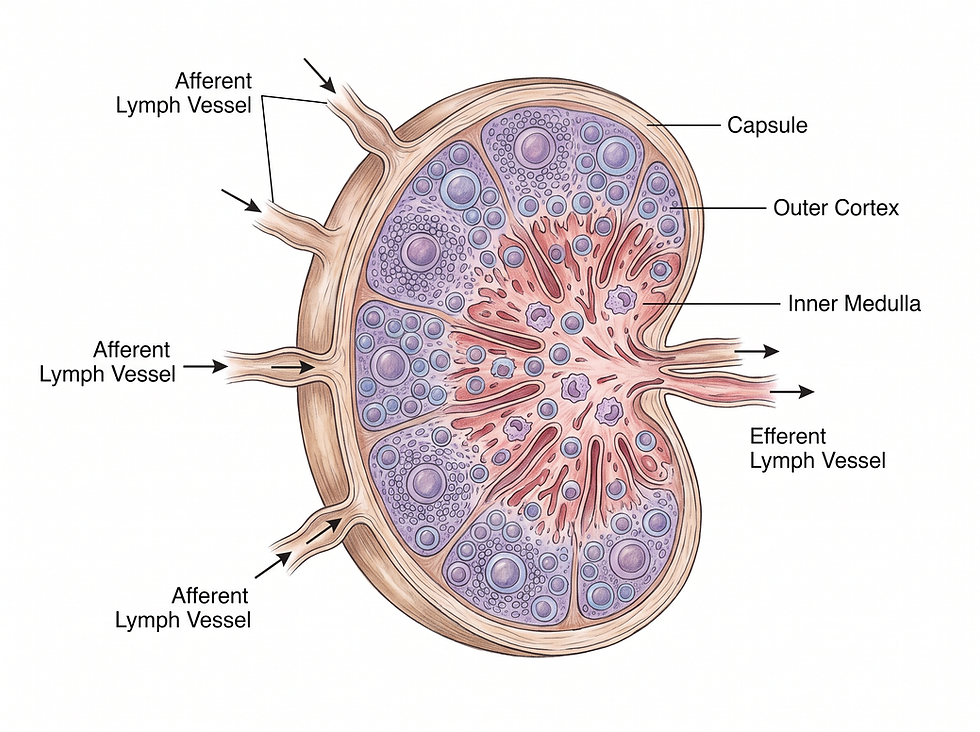
Inside each node, a specialized team of white blood cells, including B cells, T cells, and macrophages, works to identify and neutralize threats. These cells destroy viruses, bacteria, fungi, and parasites, while also removing abnormal or cancerous cells. Once the lymph has been "cleaned," it exits the node and continues through the lymphatic vessels until it eventually returns to the bloodstream. This continuous cycle ensures that pathogens are intercepted before they can spread widely through the body.
Structural Component | Biological Role |
Capsule | The protective outer shell that maintains the node's integrity. |
Cortex | The outer layer housing B cells and T cells for immune defense. |
Medulla | The innermost region where filtering and immune activity conclude. |
Lymphatic Vessels | The tubes that transport fluid into (afferent) and out of (efferent) the node. |
Anatomical Distribution and Clusters
While the exact number varies from person to person, most individuals possess between 400 and 800 lymph nodes. These nodes are not distributed randomly but are organized into strategic clusters throughout the body to monitor specific regions. For example, nodes in the neck (cervical) monitor the head and throat, while those in the armpits (axillary) and groin (inguinal) oversee the limbs and pelvic region. Notably, lymph nodes are absent from the brain and spinal cord, which rely on different protective mechanisms.
The strategic placement of these clusters allows the immune system to respond rapidly to localized threats. When an infection occurs in a specific area, the nearest lymph node cluster often swells as it ramps up production of immune cells to combat the invaders. This localized response is why a sore throat often leads to tender lumps in the neck, providing a visible and tangible sign that the body's internal defense system is hard at work.
Lymph Node Cluster | Body Region Monitored |
Cervical (Neck) | Head, throat, and oral cavity. |
Axillary (Armpit) | Arms, chest wall, and breasts. |
Mediastinal (Chest) | Lungs and heart region. |
Mesenteric (Abdomen) | Digestive tract and abdominal organs. |
Inguinal (Groin) | Legs and pelvic area. |

Clinical Significance and Health Conditions
The most common sign of a lymph node issue is swelling, medically known as lymphadenopathy. In most cases, this swelling is a healthy response to a common infection, such as a cold, strep throat, or an ear infection. However, persistent or painless swelling can sometimes indicate more serious underlying conditions. Cancers such as lymphoma or leukemia, as well as autoimmune disorders, can also cause changes in the size or texture of lymph nodes.
Healthcare providers use various methods to assess lymph node health, beginning with a physical examination to check for tenderness, size, and mobility. If an issue is suspected, imaging tests like ultrasounds or CT scans may be used to get a clearer view of the internal structures. In some cases, a biopsy—the removal of a small tissue sample—is necessary to rule out serious diseases. While the nodes themselves are rarely treated, addressing the underlying cause of the swelling is the primary goal of clinical care.
Condition Category | Examples | Typical Symptoms |
Infections | Strep throat, HIV, Mononucleosis | Tender swelling, fever, fatigue. |
Cancers | Lymphoma, Leukemia | Persistent, often painless swelling. |
Other Disorders | Castleman disease, Lupus | Growths or chronic inflammation. |

Supporting Your Lymphatic Health
Maintaining a healthy lymphatic system is essential for a robust immune response. Because the lymphatic system does not have a central pump like the heart, it relies on body movement and muscle contraction to keep fluid circulating. Regular physical activity, staying hydrated, and a balanced diet can all support the efficient movement of lymph through your nodes.
It is important to pay attention to changes in your body. While most swollen lymph nodes resolve on their own as an infection passes, you should seek medical advice if you notice nodes that are hard, fixed in place, or growing rapidly. Additionally, swelling accompanied by unexplained weight loss, persistent fever, or night sweats warrants a professional evaluation. By understanding the role of these vital filters, you can better monitor your health and support your body's natural defenses.
Frequently Asked Questions
What are lymph nodes?
Lymph nodes are small, bean-shaped structures that filter fluid for harmful substances as part of the immune system.
Why do lymph nodes swell?
They swell when the immune system is actively fighting an infection, injury, or disease.
Are lymph nodes the same as glands?
No. Glands release chemicals like hormones or sweat, while lymph nodes filter fluid. However, they are often colloquially called "swollen glands."
Where are the most common places to feel lymph nodes?
You can most easily feel them in the neck, armpits, and groin when they are enlarged.
How many lymph nodes are in the body?
Most people have between 400 and 800 lymph nodes.
Can stress cause swollen lymph nodes?
While stress doesn't directly cause swelling, it can weaken the immune system, making you more susceptible to infections that cause swelling.
Are there lymph nodes in the brain?
No, there are no lymph nodes in the brain or spinal cord.
What does a "hard" lymph node mean?
A hard, painless, or fixed lymph node can sometimes be a sign of a more serious issue and should be checked by a doctor.
How long does it take for swelling to go down?
Swelling usually subsides within a few weeks after an infection has cleared.
Can any infection cause swelling?
Yes, almost any viral or bacterial infection can trigger a response in the nearby lymph nodes.
What is a lymph node biopsy?
A biopsy is a procedure where a small piece of tissue or the entire node is removed for laboratory testing.
Does exercise help the lymphatic system?
Yes, because the lymphatic system relies on muscle movement to circulate fluid, regular exercise is very beneficial.
What is lymphoma?
Lymphoma is a type of cancer that begins in the cells of the lymphatic system.
Should I worry if only one lymph node is swollen?
Localized swelling usually indicates a nearby infection (like an infected tooth or scratch), but persistent swelling should be evaluated.
Can you live without lymph nodes?
Yes, but removing them (often during cancer surgery) can sometimes lead to lymphedema, a type of chronic swelling.
References
Medical Disclaimer
This content is for informational purposes only and does not constitute medical advice. Always seek the guidance of a qualified healthcare professional regarding any medical condition or treatment.
Comments