Genital Lymphedema: Symptoms, Causes, Diagnosis, Treatment, and Outlook — What You Need to Know

Updated: 2 days ago
Medically reviewed by Dr. Baraa Alnahhal, MD · Last reviewed: September 2026
MEDICAL ATTENTION REQUIRED Genital lymphedema increases the risk of serious skin infections. Contact a healthcare provider immediately if you experience signs of cellulitis or erysipelas: a sudden increase in pain, redness, or warmth in the genital area; fever or chills; skin that appears red, purple, brown, or black and feels tender; or rapidly spreading discoloration or swelling.
TL;DR
Genital lymphedema is a rare but chronic condition in which lymph fluid builds up in the soft tissues of the genital area. It happens when the lymphatic system, the network that balances body fluids and supports immune defense, is blocked or damaged. Whether it is caused by abnormal development (primary) or by external factors such as cancer treatment or infection (secondary), the swelling can lead to pain, difficulty urinating, and significant emotional distress. There is no cure, but the condition is manageable with complex decongestive therapy (CDT), which combines manual lymph drainage, compression, skin care, and exercise. Early treatment helps prevent advanced complications such as elephantiasis and severe bacterial skin infections.
Quick Answer: What Is Genital Lymphedema?
Genital lymphedema is the accumulation of lymph fluid in the soft tissues of the genital (crotch) area, caused by a malfunction of the lymphatic system. It is a chronic condition that accounts for less than 1% of all lymphedema cases worldwide. The lymphatic system normally filters waste and balances body fluids. When its vessels or nodes are damaged, fluid leaks into surrounding tissue and causes persistent swelling. The condition can affect anyone and is classified as primary (present from birth or developing later because of genetics) or secondary (caused by surgery, radiation, or infection). Management focuses on reducing swelling with specialized massage and compression and on preventing skin infections.
What Is Genital Lymphedema?
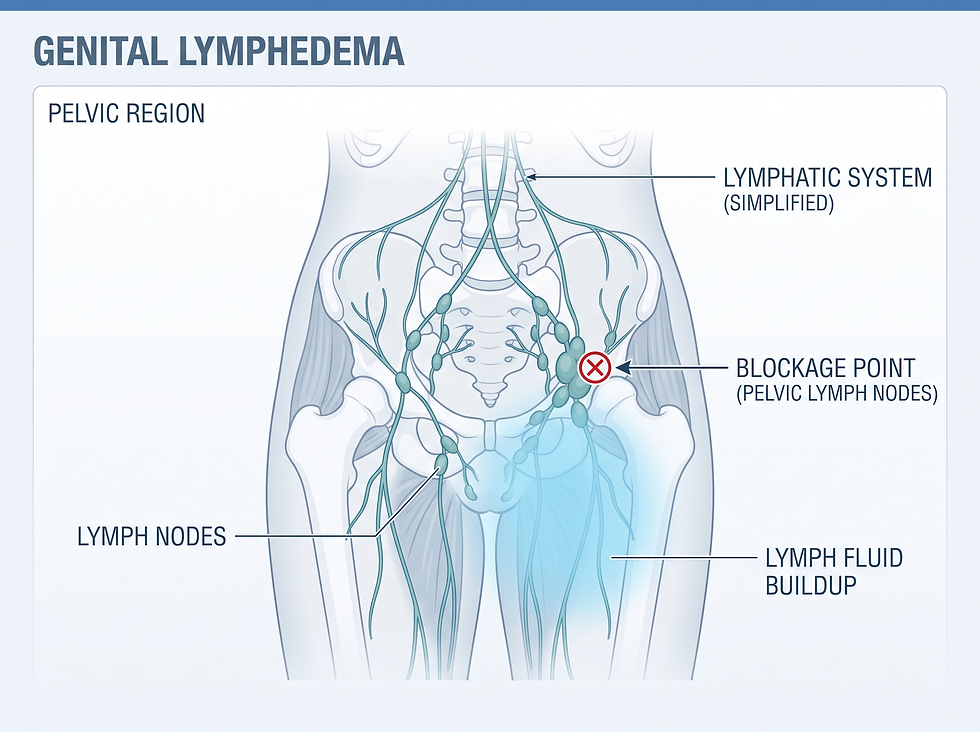
Genital lymphedema involves a breakdown in the transport of lymph, a clear or yellowish fluid that contains white blood cells and helps the body fight infection and remove waste. When lymph cannot drain properly from the genital region, it collects in the tissues and causes swelling that does not go away on its own.
Lymph: the fluid that builds up in soft tissues when drainage fails.
Lymph vessels: the tubes that carry lymph; a blockage here causes fluid to leak into tissue.
Lymph nodes: filtering structures that, if removed or damaged, can halt fluid flow.
Prevalence: less than 1% of all lymphedema cases worldwide.
Types and Causes of Genital Lymphedema
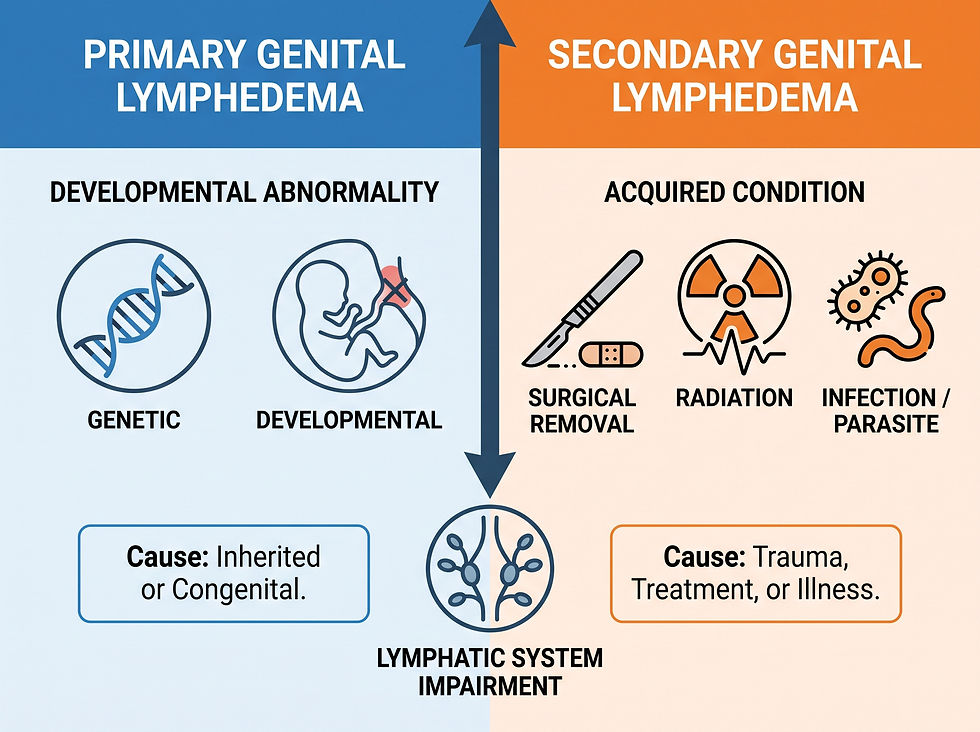
The condition is classified by its origin, which guides long-term management.
Primary Genital Lymphedema
Primary lymphedema results from abnormal development of the lymphatic system. It is often rooted in genetics, and symptoms may be present at birth or appear later in life.
Secondary Genital Lymphedema
Secondary lymphedema is the more common form. It is caused by an external event that damages a lymphatic system that was otherwise healthy. Common causes include:
Cancer treatment: surgery or radiation for prostate, bladder, penile, or ovarian cancer.
Surgical procedures: removal of lymph nodes (lymphadenectomy).
Infections: bacterial, viral, or parasitic infections such as filariasis.
Inflammatory conditions: Crohn's disease, sarcoidosis, or vasculitis.
Injuries: direct trauma to the groin or pelvic region.
Symptoms of Genital Lymphedema
The physical changes can affect movement, hygiene, and sexual health.
Persistent swelling: fluid buildup in the labia (females) or the penis and scrotum (males).
Skin changes: thickening, hardening, or loss of elasticity.
Urinary issues: difficulty or pain when urinating, or dribbling.
Sexual dysfunction: painful intercourse, erection problems, or low libido caused by physical discomfort.
Lower limb swelling: genital lymphedema is commonly accompanied by swelling in the legs.
Emotional distress: anxiety, depression, and low self-esteem related to changes in appearance.
Potential Complications
Without consistent management, genital lymphedema can progress to more severe states.
Cellulitis and erysipelas: serious bacterial infections of the skin and soft tissue that can cause systemic illness.
Elephantiasis: an advanced stage in which the skin becomes extremely enlarged, thickened, and hardened.
Scarring: repeated infections can cause permanent scarring of underlying tissue.
Reduced quality of life: chronic pain and mobility problems can limit daily activities.
Diagnosis of Genital Lymphedema
Diagnosis starts with a physical exam and a review of your medical history, especially any past surgeries or radiation treatments. Your provider may order imaging tests:
Lymphoscintigraphy: a specialized scan that uses a radiotracer to map lymph flow and identify blockages.
MRI (magnetic resonance imaging): provides detailed images of soft tissue to assess the extent of fluid buildup and rule out other causes of swelling.
Treatment and Management: Complex Decongestive Therapy (CDT)
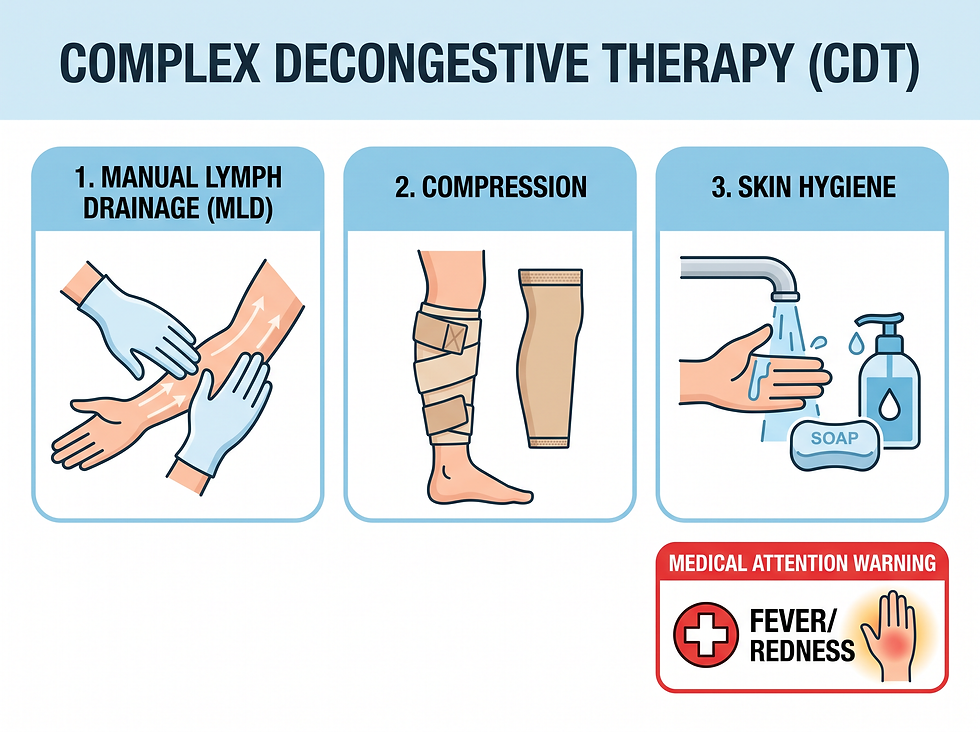
There is no cure, but the standard of care is complex decongestive therapy (CDT), a multi-part approach to reducing and managing swelling.
Skin hygiene: rigorous cleaning and sanitizing to prevent bacteria from entering the skin.
Manual lymph drainage: specialized massage that moves lymph fluid toward functioning vessels.
Compression: bandages, pumps, or specialized garments that maintain reduced swelling.
Exercise: specific movements that help pump lymph through the vessels.
Outlook and Prognosis
Genital lymphedema is a lifelong, chronic condition. It cannot be cured, but most people can lead full lives by following a consistent CDT routine and practicing careful skin care. In advanced cases where conservative therapy is not enough, surgery may be considered to remove excess tissue or improve lymphatic drainage.
When to See a Healthcare Provider
Early diagnosis is essential to prevent progression.
Contact a provider if:
You notice new swelling in the genital area.
You have difficulty or pain when urinating.
You experience new sexual dysfunction.
You have a history of pelvic cancer treatment.
Seek immediate care if:
You have a high fever and chills.
The skin becomes red, hot, or painful.
Swelling increases rapidly over a few hours.
You see dark or discolored patches on the skin.
A Note from the Care Team
Genital lymphedema is a buildup of fluid that causes swelling in the soft tissues of the genital area. A blockage or breakdown of the lymphatic system lets fluid leak into surrounding tissue. Treatment uses complex decongestive therapy, a combination of drainage, compression garments, pumps, and exercise, to ease swelling. There is no cure, but treatment can help you manage symptoms and protect your skin.
Frequently Asked Questions (FAQ)
Is genital lymphedema a sexually transmitted infection (STI)?
No. Genital lymphedema is not contagious and is not an STI. It is a malfunction of the lymphatic system.
Can surgery cure genital lymphedema?
Surgery is not a cure, but in advanced cases it can reduce the volume of the affected area or attempt to repair lymphatic pathways.
Why does genital lymphedema cause skin thickening?
Chronic fluid buildup and repeated infections lead to fibrosis, a process in which the skin loses elasticity and becomes hard and thick.
What is filariasis?
Filariasis is an infection caused by threadlike worms that block the lymphatic system. It is a common cause of secondary lymphedema in certain parts of the world.
Can I perform manual lymph drainage myself?
Yes. A lymphedema therapist can teach you techniques to use at home, but you should not perform them if the skin is broken or infected.
Is it normal for my legs to swell too?
Yes. Many people with genital lymphedema also have swelling in the lower limbs (generalized lymphedema).
What are the psychological effects of this condition?
Because of the location and appearance of the swelling, many people experience anxiety, depression, and significant stress about body image.
How does radiation therapy cause lymphedema?
Radiation can scar and damage lymph nodes and vessels, which prevents them from draining fluid properly from the pelvic region.
Can Crohn's disease cause genital swelling?
Yes. Chronic inflammation from Crohn's disease can rarely lead to secondary genital lymphedema.
What is the crotch area called in medical terms?
Healthcare providers call this the genital or inguinal region.
Does compression therapy hurt?
Compression should be firm but not painful. If a garment or bandage causes sharp pain, a professional should adjust it.
How rare is genital lymphedema?
It is very rare, accounting for less than 1% of all lymphedema cases worldwide.
What is lymphoscintigraphy?
It is a nuclear medicine test that tracks the flow of a radioactive tracer through the lymphatic system to find blockages.
Can I exercise with genital lymphedema?
Yes. Specific exercises are a core part of treatment because they help pump lymph fluid through the vessels.
What should I use to clean my skin?
Providers typically recommend antibacterial soap and warm water, sometimes followed by iodine or alcohol for sanitization. Follow your care team's specific instructions.
References
Medical Disclaimer: The information provided in this article is for educational purposes only and should not be considered medical advice. Always seek the advice of a qualified healthcare provider with any questions you may have regarding a medical condition. If you are experiencing a medical emergency, call 911 or your local emergency services immediately.
Comments