Scalp Pimples and Acne: Causes, Symptoms, and Treatment

Updated: 2 days ago
Medically reviewed by Dr. Baraa Alnahhal, MD · Last reviewed: October 2026
Quick Answer: What is scalp acne?
Scalp acne is a skin condition with breakouts of whiteheads, papules or cysts on the hair-bearing part of the head, caused by clogged hair follicles from sebum, sweat, dead skin cells and hair products. It is more common in adults than teens. Oil-free hair care and regular washing often help, and persistent cases may need antibiotics or antifungal shampoos. [1]

What the research says
Benzoyl peroxide works better than placebo, but it can irritate. In a Cochrane review of 120 trials (29,592 randomized participants, mostly with acne on the face or trunk), participants were more likely to report improvement with benzoyl peroxide than with placebo or no treatment (risk ratio 1.27, 95% CI 1.12 to 1.45; low-certainty evidence). People were also about twice as likely to stop treatment because of side effects such as redness, itching, and burning (risk ratio 2.13) (Yang et al., Cochrane Database Syst Rev, 2020). [2]
Oral isotretinoin is the most effective option for severe acne. A network meta-analysis of 179 randomized trials (about 35,000 observations) found that for moderate-to-severe acne, oral isotretinoin at a total course dose of 120 mg/kg or more cut total lesion counts by an average of 58% more than placebo. For mild-to-moderate acne, a combined retinoid and benzoyl peroxide product was the most effective topical option (26% greater reduction) (Mavranezouli et al., Br J Dermatol, 2022). [3]
Some scalp “acne” is really a yeast folliculitis. A review reported that Malassezia folliculitis affects 1% to 17% of people worldwide, can be hard to tell apart from acne vulgaris, and needs proper testing so that the right antifungal treatment can be started (Henning et al., Ugeskr Laeger, 2020). [4]
What is scalp acne?
Scalp acne, often called scalp pimples, happens when the hair follicles on the head become blocked. Follicles are the canals through which hair grows, and when they are clogged by debris or oils, inflammation and breakouts follow. Pimples are a symptom of acne, and you can have an occasional breakout without having acne. Acne itself is a condition that can be short term or long term. [1]
Acne is most often linked with the face, chest, and back, and pimples on the scalp are less common. Acne affects nearly 80% of people between the ages of 11 and 30, but scalp acne is not limited to one age group and is more common in adults. The pimples can be itchy or painful, and they sometimes form clusters that make brushing or washing your hair uncomfortable. For a broader overview, see our complete guide to acne. [1]
What are the symptoms of scalp acne, and how severe can it be?
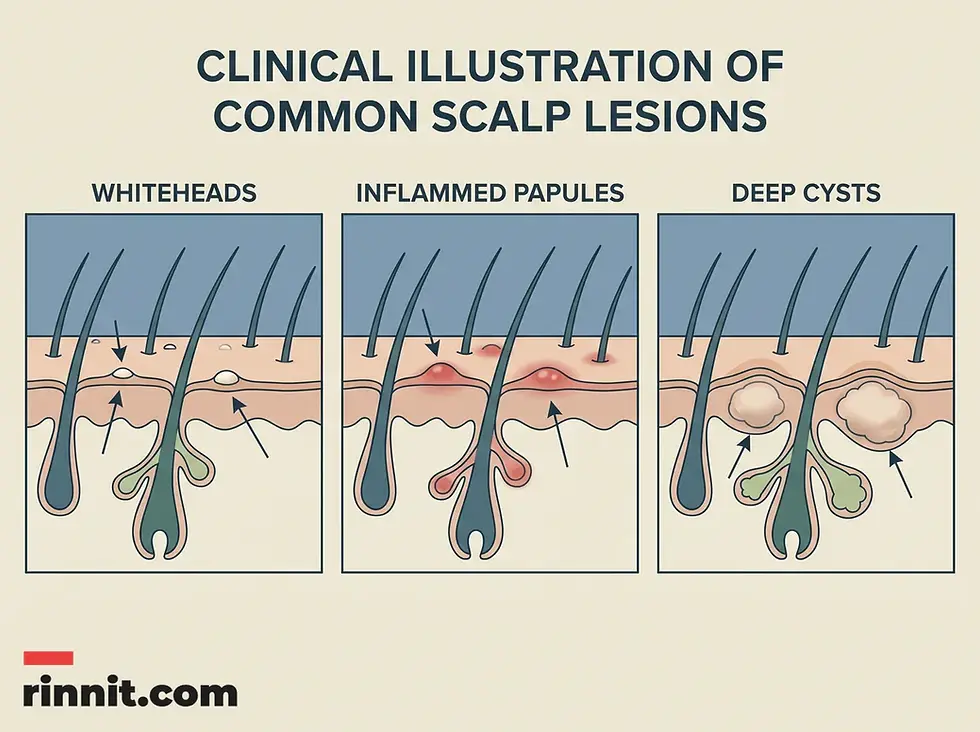
Breakouts can appear along the hairline or deeper in the hair-bearing areas of the scalp. Symptoms include pimples on the scalp or hairline, pus-filled whiteheads, inflamed or swollen bumps (acne papules), deep pus-filled cysts, and pain, soreness, or itching. Recognizing the type of lesion is the first step in choosing a treatment. [1]
Severity | Common Symptoms | Potential Complications |
Mild | Occasional whiteheads and small red bumps. | Minor itchiness and localized redness. |
Moderate | Clusters of inflamed papules and itchy pustules. | Persistent soreness and increased sensitivity. |
Severe | Deep pus-filled cysts and painful nodules. | Scabbing, scarring, and hair loss. |
What causes scalp pimples and acne, and who is at risk?
The main cause of scalp pimples and acne is clogged hair follicles on the scalp. They can become clogged because of: [1]
Other contributors include changing hormone levels, friction from hats, helmets, or headbands, stress, a genetic tendency, and a reaction to certain medicines. You may be at higher risk if you often wear hats, helmets, or headgear, use oil-based hair products, or work around greasy products, such as near a kitchen fryer. [1]
Conditions that can look like scalp acne
Pimples on the scalp can also be a sign of another condition, so it is worth having them checked if they do not improve. Examples include: [1]
Scalp folliculitis, including fungal (Malassezia) folliculitis and folliculitis decalvans. [1] [5]
Seborrheic dermatitis. [1]
Squamous cell carcinoma, a type of skin cancer, which is why a sore or bump that does not heal should always be examined. [1]
Breakouts at the back of the hairline and neck can also be acne keloidalis nuchae.
Which shampoos and active ingredients help treat scalp acne?
Managing scalp acne often means switching to hair products that clear the follicles without adding oil. Many effective shampoos contain active ingredients that target a specific cause, such as fungus or bacteria. [1]
Active Ingredient | Primary Function | Best For |
Salicylic Acid | Exfoliates dead skin cells. | Clogged pores and whiteheads. |
Benzoyl Peroxide | Kills acne-causing bacteria. | Inflamed papules and pustules. |
Ketoconazole or Ciclopirox | Antifungal agents. | Breakouts linked to yeast or fungus. |
Selenium Sulfide | Anti-dandruff agent that reduces oil and flaking. | Seborrheic-related scalp problems. |
Antibacterial soaps and oil-free products can also help. Use one product at a time unless your provider tells you otherwise, and check with them before combining treatments. [1]
How is scalp acne treated professionally?
Scalp acne that does not improve with home care and over-the-counter shampoos can be treated by a provider with stronger prescription options. Options for persistent, moderate, or severe cases include: [1]
Do not pop or scratch the pimples. It can cause more pimples, infection, pain, and scarring (see our guide to acne scars). Talk to your provider about side effects before starting any medicine, and tell them about every supplement and medicine you take. [1]
How can scalp acne be prevented with good scalp hygiene?
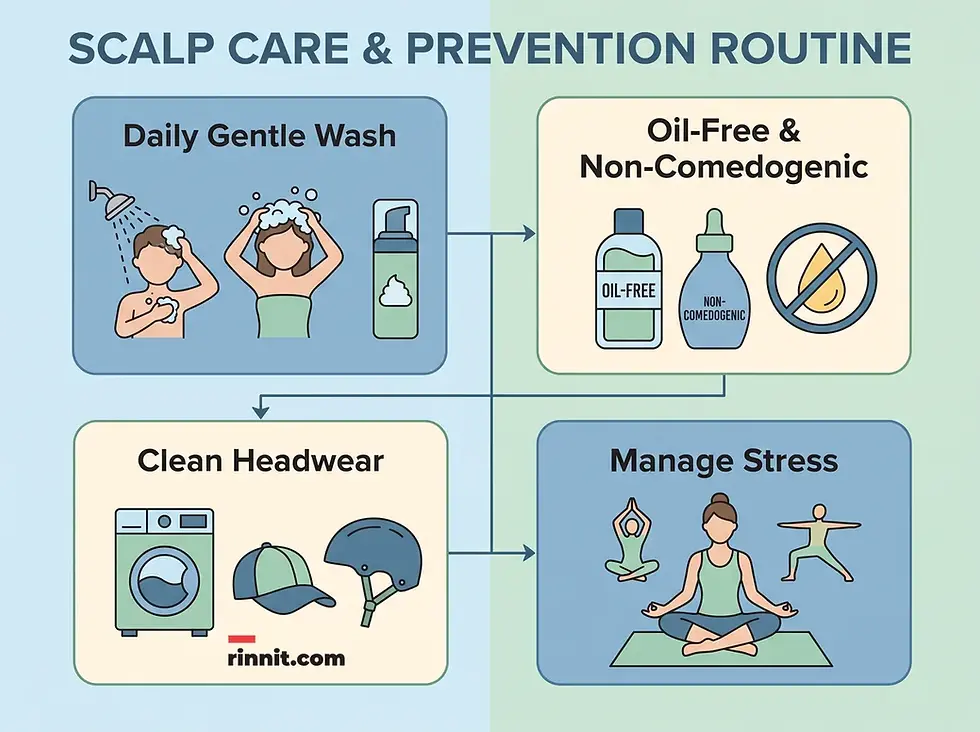
Preventing scalp acne focuses on keeping hair follicles clean, such as washing hair when greasy, choosing oil-free products and regularly washing hats and pillowcases. [1]
Wash your hair daily or whenever it gets greasy, especially after exercising or sweating. [1]
Choose hair products labeled oil-free, noncomedogenic, or non-acnegenic. [1]
Wash hats, helmets, headbands, and pillowcases regularly so product residue does not transfer back to your skin. Choose well-fitted helmets with ventilation. [1]
Manage stress and eat a healthy, balanced diet. [1]
Keep a daily log of the hair products you use and how your scalp reacts to them. [1]
When to see a provider
Contact your healthcare provider if your acne gets worse, your skin does not improve after six weeks, or you have severe pain, swelling, or a fever. [1]
Conclusion
Scalp acne is a manageable condition. By finding the specific triggers and using the right products or medicines, many people see their scalp clear within about six weeks of starting treatment. If symptoms persist or cause significant pain, a dermatologist can help you protect your scalp and prevent long-term complications.
What are the next steps if you have scalp pimples or acne?
If you have persistent scalp breakouts that do not respond to over-the-counter treatment, make an appointment with a healthcare professional. A personalized plan can help you feel comfortable and confident again while protecting your hair.
Trusted resources: Cleveland Clinic: Scalp Pimples and Acne, DermNet: Scalp folliculitis.
Frequently Asked Questions
What is scalp acne?
Scalp acne is a condition in which hair follicles on the head become clogged, leading to pimples or cysts. [1]
Is scalp acne common in adults?
Yes. Acne is most common between the ages of 11 and 30, but scalp acne is not limited to one age group and is more common in adults. [1]
What causes pimples on the scalp?
Clogged follicles from oil, sweat, dead skin cells, hair product buildup, or microorganisms such as bacteria, yeast, and mites. Hormones, friction, stress, genetics, and some medicines can also play a part. [1]
Can hair products cause scalp acne?
Yes. A buildup of products such as shampoo, gel, or hairspray, and oil-based products, can clog follicles. [1]
Are scalp pimples painful?
Scalp pimples can be itchy and painful, especially when inflamed or in clusters. [1]
Can I pop a pimple on my scalp?
No. Popping can cause more pimples, scarring, and infection. [1]
What is the best shampoo for scalp acne?
Options include shampoos with salicylic acid, benzoyl peroxide, antifungals such as ketoconazole or ciclopirox, or selenium sulfide, as well as antibacterial soaps and oil-free products. The best choice depends on the cause, so ask your provider. [1]
Does sweat trigger scalp breakouts?
Yes. Sweat, oil, and dead skin cells can clog follicles, so wash your hair after you exercise or sweat. [1]
Can scalp acne lead to hair loss?
Severe scalp acne can cause hair loss or scabbing around the pimples. [1]
How long does it take for scalp acne to clear?
Once the cause is found and treatment starts, it can take up to six weeks for all the pimples to clear. You may notice less itching and fewer new pimples within a few days. [1]
Are hats bad for scalp acne?
Friction from hats, helmets, and headbands can contribute to breakouts. Avoid tight headwear and choose well-fitted, ventilated helmets. [1]
Is scalp acne contagious?
No. Acne is not contagious.
Can stress cause scalp pimples?
Yes. Stress is one of the factors that can contribute to scalp acne, so managing stress can help. [1]
When should I see a doctor?
See a provider if the acne gets worse, does not improve after six weeks, or comes with severe pain, swelling, or a fever. [1]
Related Reading
Acne: Complete Guide to Symptoms, Causes, Diagnosis, and Treatment explains how acne forms and which treatments work best.
Fungal Acne (Malassezia Folliculitis): Symptoms, Causes, Diagnosis, Treatment and Outlook — What You Need to Know explains a yeast-related lookalike of acne that needs different treatment.
Seborrheic Dermatitis (Dandruff): Symptoms, Causes, Diagnosis & Treatment — Complete Guide explains flaky, itchy scalp rashes and how to treat them.
Tinea Capitis: Symptoms, Causes, Treatment and Prevention explains a fungal scalp infection that can cause bumps and hair loss.
References
Cleveland Clinic. Scalp Pimples and Acne. Cleveland Clinic. October 30, 2022. https://my.clevelandclinic.org/health/diseases/24397-scalp-pimples-acne
Yang Z, Zhang Y, Lazic Mosler E, et al. Topical benzoyl peroxide for acne. Cochrane Database Syst Rev. 2020;3(3):CD011154. PMID 32175593. https://doi.org/10.1002/14651858.CD011154.pub2
Mavranezouli I, Daly CH, Welton NJ, et al. A systematic review and network meta-analysis of topical pharmacological, oral pharmacological, physical and combined treatments for acne vulgaris. Br J Dermatol. 2022;187(5):639-649. PMID 35789996. https://doi.org/10.1111/bjd.21739
Henning MA, Jemec GB, Saunte DM. [Malassezia folliculitis]. Ugeskr Laeger. 2020;182(47):V08200572. PMID 33215579. https://pubmed.ncbi.nlm.nih.gov/33215579/
DermNet New Zealand. Scalp folliculitis. DermNet. Accessed October 7, 2026. https://dermnetnz.org/topics/scalp-folliculitis
Medical Disclaimer
This article is for informational purposes only and does not constitute medical advice. Always seek the advice of your physician or other qualified health provider with any questions you may have regarding a medical condition. Never disregard professional medical advice or delay in seeking it because of something you have read in this article.



Comments