Fungal Acne (Malassezia Folliculitis): Symptoms, Causes, Diagnosis, Treatment and Outlook — What You Need to Know

Updated: 2 days ago
Medically reviewed by Dr. Baraa Alnahhal, MD · Last reviewed: September 2026
TL;DR
Fungal acne, medically known as Malassezia folliculitis, is a common skin condition caused by an overgrowth of yeast in the hair follicles. Unlike common acne (acne vulgaris), which is caused by bacteria and oil, fungal acne is a fungal infection that often presents as clusters of small, itchy, red bumps. It is frequently misdiagnosed because it looks similar to traditional breakouts, but it requires completely different treatments. Antifungal medications, both topical and oral, are highly effective at clearing the infection. Maintaining good hygiene, such as showering immediately after exercise and wearing loose clothing in humid climates, can help prevent the yeast from thriving. While persistent, fungal acne is treatable with the right approach and guidance from a dermatologist. [1]
Quick Answer: What is Fungal Acne (Malassezia Folliculitis)?
Fungal acne is a hair follicle infection caused by Malassezia yeast, a fungus that naturally lives on almost everyone's skin. It becomes a problem when the yeast gets trapped inside damaged or blocked follicles, leading to clusters of small, uniform, itchy red bumps or whiteheads. It most commonly affects the forehead, chest, back, and shoulders. The defining characteristic that separates it from common acne is intense itching. Diagnosis often involves a skin exam or Wood's lamp test, and treatment centers on antifungal creams, shampoos, or oral medications to eliminate the yeast overgrowth. [1]

What Is Fungal Acne?
Fungal acne is a common inflammatory skin condition that occurs when hair follicles become infected with Malassezia yeast. Despite its name, it is not actually a form of acne; it is a type of folliculitis. The yeast involved, Malassezia, is a natural part of the skin's microbiome, but environmental factors or changes in the body can trigger an overgrowth.
When the yeast enters a damaged follicle, it causes small, red bumps called papules to form. In some cases, these develop into pustules, which are small pockets of white or yellow pus. Because it looks so similar to traditional acne, many people mistakenly use bacterial acne treatments, which can sometimes make fungal acne worse by disrupting the skin's natural balance of bacteria and yeast. [1]
Key Characteristic | Description |
Medical Name | Malassezia folliculitis (or Pityrosporum folliculitis) |
Primary Cause | Overgrowth of Malassezia yeast in hair follicles |
Defining Symptom | Intense itching (pruritus) |
Common Locations | Forehead, chest, back, shoulders, and upper arms |
Appearance | Clusters of small, uniform, red bumps or whiteheads |
Diagnosis Tool | Clinical exam, Wood's lamp, or skin biopsy |
How Common is Fungal Acne?
Anyone can develop fungal acne, but it is most frequently seen in adolescents and young adult males. This demographic often has higher oil (sebum) production, which provides the ideal environment for yeast to grow. It is also highly prevalent in individuals living in hot, humid climates where sweat and moisture are constant. [1]
Symptoms of Fungal Acne
The most significant clue that you are dealing with fungal acne rather than common acne is the presence of itching. Fungal acne typically appears as a sudden breakout of small pimples that may resemble a rash.
Symptom | Description |
Itching | Intense, persistent itching is the primary symptom. |
Uniformity | Bumps are usually the same size and appear in clusters. |
Redness | Each pimple may have a red border or ring around it. |
Pustules | Small white or yellow pockets of pus may develop. |
Sensation | The affected skin may feel like it is burning or painful. |
Common Locations for Breakouts
Fungal acne thrives in areas with high oil production or where sweat tends to collect. Common areas include:
Face: Particularly the forehead and chin.
Upper Body: Chest, upper back, and shoulders.
Arms: Neck and upper arms. [1]

Causes and Risk Factors
Malassezia yeast is naturally present on the skin of almost everyone. However, the yeast can cause an infection if it gets inside a hair follicle that has been damaged or blocked.
How Follicles Get Damaged
Follicles can be compromised by various everyday activities, including:
Friction: Skin rubbing against skin or tight clothing.
Moisture: Leaving skin hot and damp for extended periods.
Hair Removal: Shaving, plucking, or waxing.
Habits: Frequent touching or rubbing of the skin.
Environment: Using hot tubs or whirlpools that are not properly maintained. [1]
Risk Factors for Overgrowth
Several factors can make you more susceptible to fungal acne:
Climate: Living in hot, humid environments.
Sweating: Having a condition like hyperhidrosis (excessive sweating).
Antibiotics: Long-term use can kill "good" bacteria that keep yeast in check.
Immune System: A weakened immune system makes it harder to control yeast growth.
Skin Care: Using heavy, oil-based moisturizers or sunscreens that block follicles. [1]
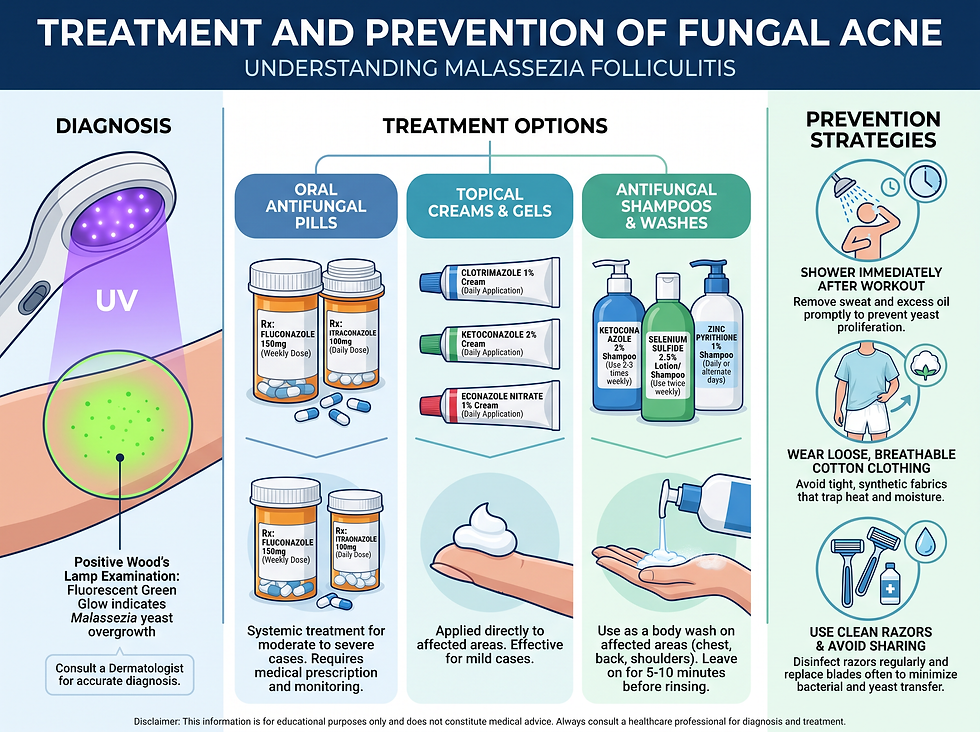
Diagnosis of Fungal Acne
Because it is so often confused with common acne, a professional diagnosis is crucial for effective treatment. A dermatologist can typically diagnose Malassezia folliculitis through several methods:
Clinical Exam: Reviewing symptoms (especially itching) and examining the skin.
Wood's Lamp: Using a specialized black light that causes areas of yeast to glow fluorescent yellow or green.
Skin Biopsy: Taking a small sample of the skin to look for yeast under a microscope. [1]
Treatment and Management of Fungal Acne
The goal of treatment is to eliminate the yeast overgrowth and prevent it from returning. Because it is a fungal issue, standard acne medications like benzoyl peroxide or antibiotics will not work. For a comparison, see our guide to common acne, which is caused by bacteria and oil rather than yeast.
Antifungal Medications
Treatment Type | Examples | Function |
Oral Antifungals | Fluconazole, Itraconazole | The most effective treatment for widespread cases. |
Topical Creams | Ketoconazole, Econazole | Applied directly to the skin to kill yeast locally. |
Antifungal Shampoos | Selenium sulfide, Ketoconazole | Used as a body wash to prevent and treat overgrowth. |
Advanced Options
For cases that do not respond to standard treatments, some providers may recommend photodynamic therapy (PDT). This treatment uses a combination of light and a photosensitizing drug to destroy the unhealthy yeast cells. [1]
Outlook and Prognosis
The outlook for fungal acne is generally excellent with the correct treatment. While topical and oral antifungals are usually effective at clearing the bumps, the condition can come back if the underlying environmental factors are not addressed. Many people find success by incorporating an antifungal shampoo into their weekly routine as a preventative measure. [1]
Prevention Strategies
Preventing fungal acne focuses on keeping the skin clean, dry, and free from excessive friction.
Post-Workout Care: Shower and change into clean, dry clothes immediately after sweating.
Loose Clothing: Wear breathable fabrics, especially in hot and humid weather.
Shaving Safety: Use clean razors and gentle techniques to avoid damaging follicles.
Hot Tub Hygiene: Only use well-maintained and properly chlorinated hot tubs.
Laundry: Wash bathing suits and workout gear thoroughly after every use. [1]
Living With Fungal Acne
If you are managing a breakout, some home remedies can help soothe the skin:
Warm Compresses: Apply to the affected area several times a day to relieve discomfort.
Skin Rest: Take a break from shaving or wearing tight clothing for about a month to allow follicles to heal.
Consult a Pro: Always talk to a healthcare provider before starting new home treatments. [1]
A Note from the Care Team
"Fungal acne, or Malassezia folliculitis, is an infection in your hair follicles that's often confused with common acne. It causes clusters of small, itchy, red bumps on your skin. Talk to your healthcare provider if you have any itchy breakouts that don't go away. Antifungal treatments and hygiene changes can help." [1]
FAQ: Frequently Asked Questions
Is fungal acne actually acne?
No. Despite the name, it is actually a type of folliculitis (hair follicle infection) caused by yeast, whereas common acne is caused by bacteria and clogged pores. [1]
How can I tell if my acne is fungal?
The most common sign is intense itching. Fungal acne bumps also tend to be uniform in size and appear in clusters, unlike common acne which varies in size and type (blackheads, whiteheads, cysts). [1]
Will my regular acne cream work on fungal acne?
No. In fact, some common acne treatments like antibiotics can make fungal acne worse by killing off the bacteria that normally keep yeast in check. [1]
Can I get fungal acne from someone else?
Fungal acne is not typically considered contagious. The yeast that causes it is already present on most people's skin; the condition happens when that yeast overgrows. [1]
Why does my fungal acne keep coming back?
It often recurs if the conditions that favor yeast growth, like heat, humidity, and sweat, remain. Long-term use of antifungal shampoos can help prevent recurrence. [1]
Can I use Head & Shoulders as a body wash for fungal acne?
Shampoos containing selenium sulfide or ketoconazole are often recommended as topical treatments for fungal acne. However, you should consult a doctor for the correct usage. [1]
Does diet affect fungal acne?
The yeast thrives on oil (sebum), so maintaining a healthy skin balance through proper hygiene and appropriate skincare is the primary focus of management. Ask your dermatologist whether any changes to your routine are worthwhile for you.
Is fungal acne dangerous?
Fungal acne is not dangerous, but it can be very uncomfortable and distressing. If left untreated, the itching and inflammation can lead to skin damage or secondary infections from scratching. [1]
Can I pop fungal acne bumps?
It is not recommended to pop or squeeze the bumps, as this can further damage the hair follicles and potentially lead to scarring or a bacterial infection. [1]
How long does it take for treatment to work?
Oral antifungal treatments are often very effective and can show results relatively quickly, but you must complete the full course as prescribed by your doctor. [1]
Related Reading on Rinnit
Acne: Complete Guide to Symptoms, Causes, Diagnosis, and Treatment: understand how common acne differs from fungal acne.
Tinea Versicolor: Complete Guide to Symptoms, Causes, and Treatment: another skin condition linked to yeast.
Hyperhidrosis: Symptoms, Causes & Treatment: managing excessive sweating that can trigger breakouts.
Further Reading
Cleveland Clinic: Fungal Acne (Malassezia Folliculitis)
American Academy of Dermatology: Folliculitis Guide
DermNet NZ: Malassezia Folliculitis
References
Cleveland Clinic. (2022). Fungal Acne. Retrieved from https://my.clevelandclinic.org/health/diseases/24341-fungal-acne
Medical Disclaimer: The information provided in this article is for educational purposes only and is not intended as medical advice. Always seek the advice of a qualified healthcare provider with any questions you may have regarding a medical condition. Never disregard professional medical advice or delay in seeking it because of something you have read in this article.
Comments