Folliculitis Decalvans: Symptoms, Causes, Diagnosis, Treatment and Outlook — What You Need to Know

Updated: 2 days ago
Medically reviewed by Dr. Baraa Alnahhal, MD · Last reviewed: September 2026
TL;DR
Folliculitis decalvans is a rare, chronic inflammatory condition that primarily affects the scalp, leading to permanent hair loss and scarring, a condition known as cicatricial alopecia. While the exact cause remains unknown, it is strongly linked to an unusual immune response to Staphylococcus aureus (Staph A) bacteria. Characterized by painful pustules and a unique "tufted" hair growth pattern—where multiple hairs emerge from a single follicle like toothbrush bristles—the condition eventually destroys hair follicles entirely. Although there is no cure, early intervention with antibiotics and anti-inflammatory treatments can manage symptoms and prevent further permanent damage.
Quick Answer: What is Folliculitis Decalvans?
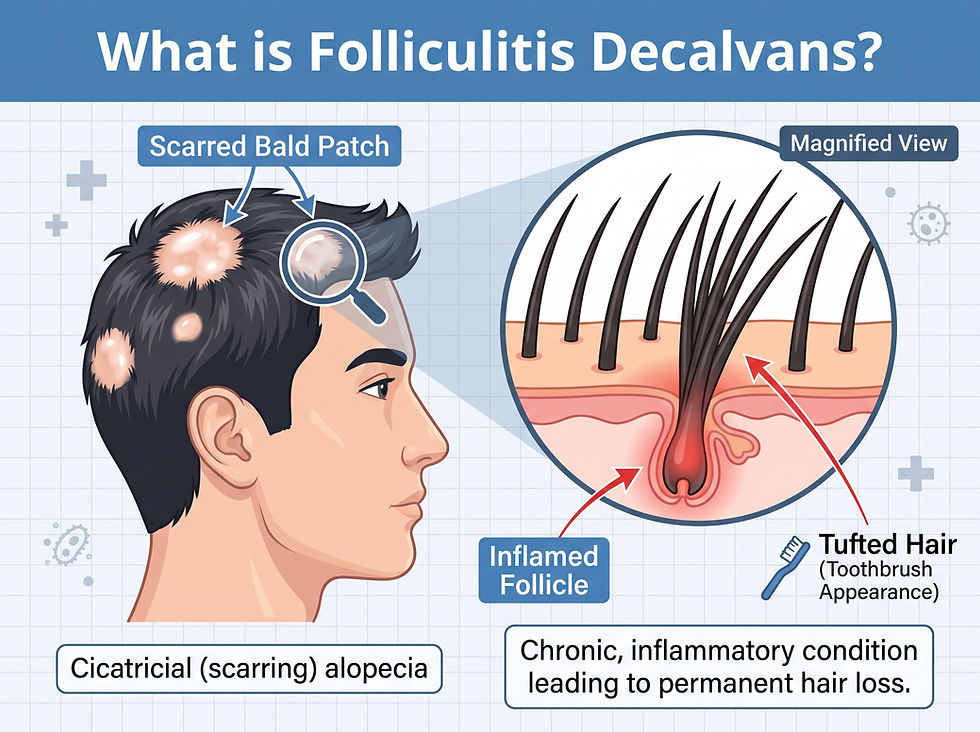
Folliculitis decalvans is a rare form of chronic inflammation that targets the hair follicles, specifically on the scalp. It leads to permanent hair loss accompanied by scarring, which prevents new hair from ever growing back. The condition is often recognized by the presence of red, pus-filled bumps (pustules) and circular bald patches. A hallmark sign is "tufted folliculitis," where multiple hair strands grow from one follicle, resembling the bristles of a toothbrush. While it most commonly affects men in their late teens or early adulthood, it can develop in anyone. Treatment focuses on controlling the inflammation and managing the underlying bacterial presence to minimize the extent of scarring. [1]
Understanding the Inflammatory Process
The core of folliculitis decalvans lies in the destruction of the hair follicle bulb, which anchors the hair and generates new growth. When this root is destroyed by chronic inflammation, the resulting scar tissue seals the follicle, making hair regrowth impossible.
Feature | Folliculitis Decalvans | Standard Folliculitis |
Inflammation Type | Chronic and Scarring | Often Acute and Non-scarring |
Hair Loss | Permanent (Cicatricial Alopecia) | Temporary in most cases |
Primary Physical Sign | Tufted hair and bald patches | Small red bumps or white-headed pimples |
Long-term Outlook | Requires ongoing management | Usually resolves with short-term care |
Symptoms of Folliculitis Decalvans
Symptoms often begin subtly but progress as the inflammation destroys more follicles. Many patients do not notice the condition until bald spots begin to appear.
Scalp and Hair Changes
Circular Bald Spots: Round or oval patches where hair has fallen out and the skin appears scarred or shiny. [1]
Tufted Hair Growth: Multiple hairs emerging from a single follicle, often called "toothbrush hair." [1]
Pustules: Red, pus-filled bumps that may ooze, crust over, and form scabs. [1]
Crusting and Scaling: Flaky or scaly skin on the scalp that may resemble severe dandruff. [1]
Sensory and Physical Discomfort
Scalp Pain: A feeling of tightness or general tenderness across the affected areas. [1]
Itching: Persistent scalp irritation that may be mistaken for seborrheic dermatitis. [1]
Oozing and Scabbing: The pustules can burst, leading to crusty scabs that are painful to the touch. [1]
Causes and Risk Factors
Medical experts are still investigating the precise cause of folliculitis decalvans. However, the prevailing theory involves an abnormal reaction to common bacteria found on the human body.
The Role of Staph A Bacteria
Staphylococcus aureus (Staph A) is a bacterium naturally found on the skin and inside the nose of most healthy individuals. In people with folliculitis decalvans, the immune system appears to have an unusual and aggressive reaction to this bacteria, triggering chronic inflammation that eventually kills the hair follicles. [1]
Who is Most at Risk?
Risk Factor | Common Presentation |
Gender | More frequently affects men than women. |
Age of Onset | Often begins during teen years or early adulthood. |
Genetics | Can affect multiple family members, though not strictly contagious. |
Location | Primarily affects the scalp, but rarely affects armpits or face. |

Diagnosis and Clinical Evaluation
A dermatologist typically diagnoses folliculitis decalvans through a physical examination and specialized testing. Because it can mimic other scalp conditions, accuracy is vital for starting the correct treatment.
Visual Examination: Using a magnifying device to inspect the follicles and pustules. [1]
Fluid Swab: Testing the pustule fluid to confirm the presence of Staph A bacteria. [1]
Skin Biopsy: Removing a small sample of scalp tissue to confirm scarring and rule out other types of alopecia. [1]
Fungal Testing: Plucking hairs or taking skin scrapings to rule out ringworm (tinea capitis). [1]
Treatment and Management Strategies
While there is no permanent cure, the condition can be managed to stop the progression of hair loss and ease discomfort. Treatment is usually an ongoing process to prevent flares.
Medical Interventions
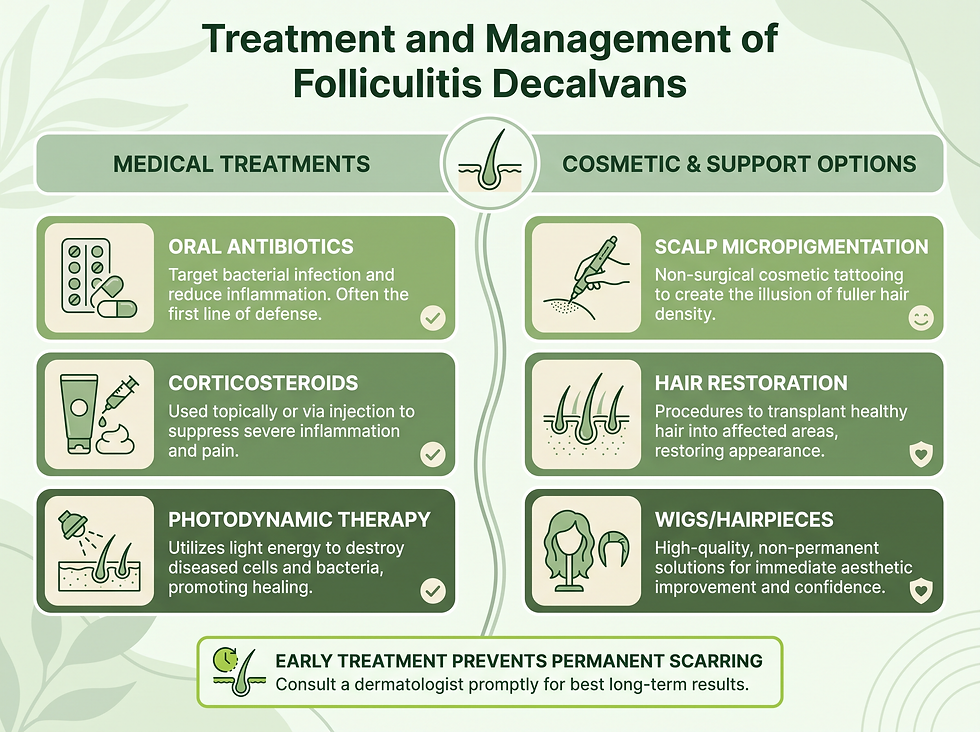
Oral Antibiotics: Used to kill the Staph A bacteria and reduce the inflammatory load. [1]
Corticosteroids: Oral or topical steroids help to quickly calm the immune response and reduce swelling. [1]
Isotretinoin: Sometimes used to clear severe pustules and reduce oil production on the scalp. [1]
Photodynamic Therapy (MAL-PDT): A specialized light treatment that uses chemicals to kill bacteria and target inflamed cells. [1]
Cosmetic and Psychological Support
Hair Restoration: Techniques like hair grafting or scalp micropigmentation can help hide bald spots. [1]
Head Coverings: Wigs, hairpieces, or scarves are common options for managing self-consciousness. [1]
Counseling: Managing the emotional impact of permanent hair loss is a critical part of the care plan. [1]
FAQ: Frequently Asked Questions
Is folliculitis decalvans contagious?
No. You cannot catch this condition from someone else, nor can you spread it to others through contact or shared items. [1]
Will my hair grow back?
Unfortunately, the hair loss caused by folliculitis decalvans is permanent because the follicles are destroyed and replaced by scar tissue. [1]
Is it a type of skin cancer?
No, it is an inflammatory condition and not a form of skin cancer. It also does not increase your risk of developing skin cancer. [1]
Can it be cured completely?
There is no known cure, but many patients achieve long periods of remission where symptoms are inactive through consistent treatment. [1]
Why is it called "tufted" folliculitis?
The name comes from the way multiple hairs grow out of one follicle, looking like the tufts of a toothbrush or doll's hair. [1]
Can it affect parts of the body other than the scalp?
While rare, it can occasionally affect the armpits, face, genitals, legs, or arms. [1]
Does stress cause folliculitis decalvans?
Stress is not the primary cause, but like many inflammatory conditions, it may potentially trigger or worsen a flare-up. [1]
Are there specific shampoos I should use?
Your doctor may recommend antiseptic shampoos or those containing tar to help manage bacteria and scaling on the scalp. [1]
How do I know if I have a flare-up?
Increased itching, pain, and the appearance of new red pustules or crusting usually signal that the condition has become active again. [1]
Is it the same as standard pink eye or acne?
No. While the pustules may look like acne, the underlying process involves permanent scarring of the hair follicles, which acne does not typically cause. [1]
What happens if I don't treat it?
Without treatment, the inflammation will continue to spread, leading to larger areas of permanent baldness and scarring. [1]
Can children get this condition?
It most often starts in the teen years, but it can technically develop at any age, including childhood. [1]
Does diet affect the condition?
There is currently no clinical evidence that specific foods cause or cure folliculitis decalvans. [1]
Can I still dye my hair?
You should consult your dermatologist before using harsh chemicals like hair dye, especially during an active flare-up, as it may cause further irritation. [1]
What is the most common treatment?
Oral antibiotics are the most frequently used first-line treatment to control the bacterial triggers and inflammation. [1]
References
Cleveland Clinic. Folliculitis Decalvans. (2022, April 14). https://my.clevelandclinic.org/health/diseases/22784-folliculitis-decalvans
American Academy of Dermatology. Folliculitis. (2022).
British Association of Dermatologists. Folliculitis Decalvans. (2022).
Medical Disclaimer: The information provided in this article is for educational purposes only and should not be considered medical advice. If you experience persistent scalp irritation, pustules, or hair loss, consult a qualified healthcare provider or dermatologist for diagnosis and treatment.
Comments