Sacrocolpopexy: A Guide to Treating Pelvic Organ Prolapse

Updated: 2 days ago
Medically reviewed by Dr. Baraa Alnahhal, MD · Last reviewed: October 2026
Quick Answer: What is sacrocolpopexy?
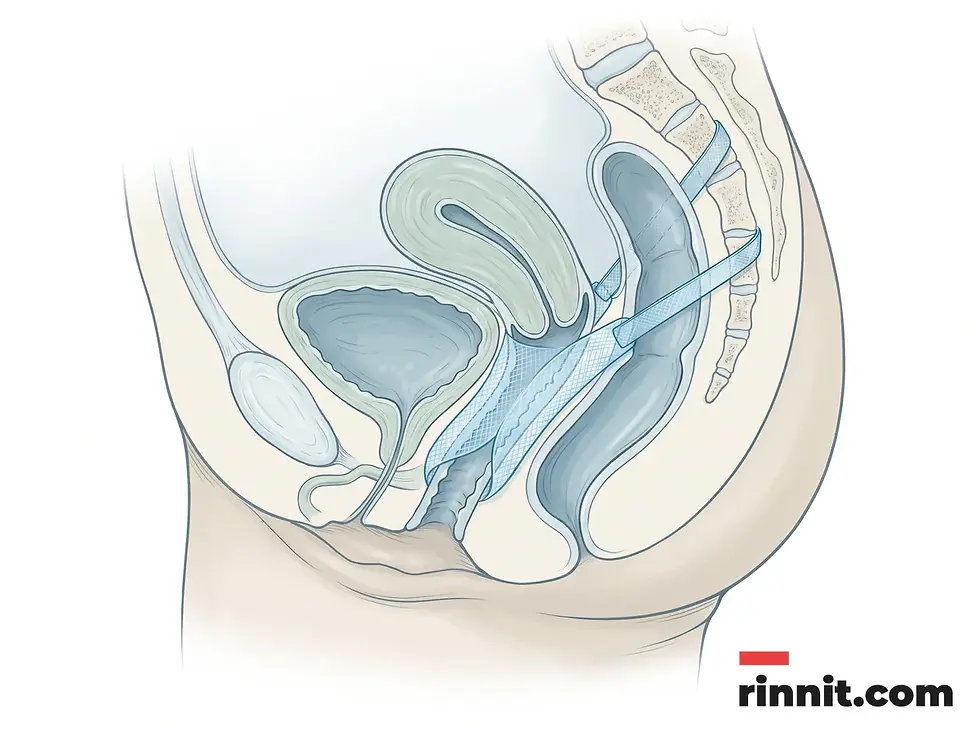
Sacrocolpopexy is a surgery that corrects pelvic organ prolapse, a condition in which pelvic organs slip out of their normal positions because of weakened support tissues. The surgeon attaches surgical mesh to the vaginal walls and secures it to the sacrum to provide a lasting lift. It restores anatomy and relieves bulging, pressure and leakage. [3]
What the research says
Results are durable but not risk-free. In the 7-year follow-up of the CARE randomized trial, the estimated probability of anatomic prolapse failure was 0.27 with a concomitant Burch urethropexy and 0.22 without one, and the estimated probability of mesh erosion at 7 years was 10.5% (Nygaard et al., JAMA, 2013). [1]
It has better long-term success for apical prolapse than vaginal techniques. A systematic review found better long-term success with sacrocolpopexy for apical prolapse, and two randomized trials showed equal efficacy between robotic and laparoscopic approaches. Trade-offs include longer operating times and more pain and cost compared with vaginal surgery (Alas & Anger, Curr Urol Rep, 2015). [2]
What is Sacrocolpopexy?
Sacrocolpopexy is a specialized surgical intervention aimed at repairing pelvic organ prolapse (POP). This condition occurs when the muscles and ligaments that support the pelvic organs, including the bladder, uterus, and vagina, become overstretched or damaged. When this support system fails, the organs can sag or bulge into the vaginal canal, leading to physical discomfort and functional issues. [3]
How does sacrocolpopexy work?
The primary goal of sacrocolpopexy is to create a synthetic "ligament" using surgical mesh. The surgeon attaches this mesh to the top and bottom walls of the vagina and then secures it to a ligament over the sacrum, which is the bone at the base of the spine. Because the sacrum is positioned higher than the vagina, this connection provides a durable lift that holds the organs in their correct anatomical places. [3]
Type of Prolapse | Description |
|---|---|
Uterine Prolapse | The uterus and cervix drop down the vaginal canal. |
Vaginal Vault Prolapse | The top of the vagina drops down (common after hysterectomy). |
Cystocele | The bladder bulges into the vaginal space. |
Rectocele | The rectum bulges against the vaginal wall. |
What happens during sacrocolpopexy surgery?
Most sacrocolpopexy procedures are performed laparoscopically, which involves making four to five small incisions in the abdomen rather than one large opening. This minimally invasive approach often leads to less pain and a faster initial recovery. The surgery is conducted under general anesthesia and typically lasts between two and four hours. In some cases, robotic assistance is used to provide the surgeon with enhanced precision. [3]

What is recovery like after sacrocolpopexy?
Recovery from sacrocolpopexy is a gradual process that usually spans six to eight weeks. Most patients are able to go home the same day, provided they pass a "voiding trial" to ensure they can empty their bladder independently. During the first few weeks, it is normal to experience some abdominal swelling, gas pains, and light vaginal spotting. Adhering to activity restrictions is critical for long-term surgical success. [3]
Recovery Phase | Duration | Key Restrictions |
|---|---|---|
Immediate Post-Op | 24–72 Hours | Manage gas pain and anesthesia grogginess. |
Early Healing | 1–2 Weeks | Follow-up appointment; keep incisions dry. |
Full Recovery | 6–8 Weeks | No heavy lifting (>10 lbs) or strenuous activity. |
Final Restrictions | Up to 6 Weeks | No sexual intercourse or tampon use. |
What are the long-term benefits of sacrocolpopexy?
The primary benefit of sacrocolpopexy is the significant improvement in quality of life. By restoring the organs to their proper positions, the surgery relieves the sensation of a vaginal bulge and reduces pelvic pressure. It can also resolve related issues such as urinary incontinence and discomfort during daily activities. While no surgery is without risk, sacrocolpopexy is a well-established and effective treatment for advanced prolapse. Possible risks include bleeding, infection, injury to the bladder or bowel, and mesh wearing through the vaginal wall (mesh erosion), which affected about 1 in 10 women by 7 years in a long-term study. [1] [3]

Conclusion
Sacrocolpopexy offers a durable solution for individuals suffering from the physical and emotional burden of pelvic organ prolapse. By utilizing modern surgical techniques and high-quality materials, this procedure provides a reliable way to restore pelvic support and function. Success requires a partnership between the patient and their healthcare team, particularly during the critical six-to-eight-week recovery window.
What are the next steps if you are considering sacrocolpopexy?
If you are experiencing symptoms of pelvic organ prolapse, the first step is to consult with a specialist, such as a urogynecologist, for a thorough evaluation. Before surgery, you will receive specific instructions regarding medication use and dietary restrictions. Ensuring you have a support system in place for the first few days of recovery at home will help facilitate a smooth transition back to your normal routine.
Related reading on Rinnit: Stress Incontinence, Robotic Surgery Guide, Robotic-Assisted Hysterectomy, Perineoplasty.
Frequently Asked Questions
What is the main goal of sacrocolpopexy?
To lift and secure prolapsed pelvic organs back into their normal positions using surgical mesh. [3]
Is the surgery performed through the vagina?
No, it is typically performed through small incisions in the abdomen (laparoscopically). [3]
How long does the surgery take?
The procedure usually lasts between two and four hours. [3]
Will I have to stay in the hospital overnight?
Most patients go home the same day, though some may stay one night for observation. [3]
What is a voiding trial?
A test performed after surgery to ensure you can urinate normally before being discharged. [3]
How long is the total recovery time?
Most people reach full recovery within six to eight weeks. [3]
Are there lifting restrictions after surgery?
Yes, you should avoid lifting anything heavier than 10 pounds for six weeks.
Can I use tampons after the procedure?
You must avoid tampons and sexual intercourse for at least six weeks. [3]
What kind of anesthesia is used?
General anesthesia is used so that you are asleep and feel no pain. [3]
Does the mesh stay in the body permanently?
Yes, the surgical mesh is designed to provide permanent support.
What are the common symptoms of prolapse?
A visible bulge in the vagina, pelvic pressure, and urinary leakage.
Will my incisions leave large scars?
Because the incisions are small (laparoscopic), scarring is usually minimal.
What causes pelvic organ prolapse?
Common causes include childbirth, aging, heavy lifting, and chronic coughing.
When can I return to work?
This depends on your job, but most people can return to light activities within a few weeks.
References
Nygaard I, Brubaker L, Zyczynski HM, et al. Long-term outcomes following abdominal sacrocolpopexy for pelvic organ prolapse. JAMA. 2013;309(19):2016-2024. PMID: 23677313. https://doi.org/10.1001/jama.2013.4919
Alas AN, Anger JT. Management of apical pelvic organ prolapse. Curr Urol Rep. 2015;16(5):33. PMID: 25874589. https://doi.org/10.1007/s11934-015-0498-6
Cleveland Clinic. Sarcolpopexy: Procedure, Risks, Results & Recovery. Cleveland Clinic. Last updated August 17, 2026. https://my.clevelandclinic.org/health/treatments/17939-sacrocolpopexy
Medical Disclaimer
This content is for informational purposes only and does not constitute medical advice. Always seek the advice of your physician or other qualified health provider with any questions you may have regarding a medical condition or treatment.



Comments