RICE Method for Injury

Updated: 3 days ago
Medically reviewed by Dr. Baraa Alnahhal, MD · Last reviewed: October 2026
The RICE method—Rest, Ice, Compression, and Elevation—is a longstanding protocol for treating acute musculoskeletal injuries like sprains and strains. [1] By following these four steps, you can effectively reduce pain, inflammation, and swelling in the immediate aftermath of an injury. While newer research emphasizes a gradual return to movement, the RICE method remains a foundational tool for managing soft tissue trauma and controlling bleeding or severe edema during the initial recovery phase. [1]
Quick Answer: What is the RICE method?
The RICE method is a first-aid strategy for soft tissue injuries that reduces inflammation and pain: rest the injured area, apply ice for 10-20 minute intervals, use a compression bandage to limit swelling and elevate the limb above heart level. [1] It works best when started immediately after injury, while awaiting a medical diagnosis or natural healing.
What the research says
The evidence for RICE as a whole is limited. A review of 11 trials involving 868 adults with acute ankle sprains found insufficient evidence from randomized controlled trials to determine the relative effectiveness of RICE therapy, and concluded that treatment decisions should be made individually, based on expert opinion and national guidelines (van den Bekerom et al., Journal of Athletic Training, 2012) [2].
Ice may add most when combined with exercise, but trial quality is low. A systematic review of 22 randomized trials of cryotherapy for acute soft-tissue injury (mean PEDro quality score 3.4 out of 10) found marginal evidence that ice plus exercise is most effective after ankle sprain and surgery, little evidence that adding ice to compression had a significant effect, and no evidence of an optimal mode or duration of treatment (Bleakley et al., The American Journal of Sports Medicine, 2004) [3].
What is the RICE method for injury?
Managing a sudden injury effectively requires a balance between immediate relief and long-term recovery. The RICE method serves as an accessible way to address the primary symptoms of soft tissue damage, such as throbbing pain and significant swelling. By constricting blood vessels and numbing the affected tissues [1], these steps help the body manage the initial trauma more efficiently.
While the protocol has been a staple in sports medicine for decades, modern healthcare providers often recommend it with specific caveats. The goal is no longer just to stop inflammation entirely, but to control it enough to allow for a comfortable transition to active recovery. Understanding how to apply each step correctly is key to ensuring that the treatment supports, rather than hinders, the body's natural repair cycle.
Component | Action | Primary Benefit |
Rest | Stop activity and avoid strain | Prevents further tissue trauma |
Ice | Apply cold for 10-20 minutes | Numbs pain and reduces bleeding |
Compression | Wrap with an elastic bandage | Controls swelling and stabilizes |
Elevation | Raise above heart level | Encourages drainage and lowers pressure |

How do you do the RICE method steps correctly?
Applying the RICE method requires attention to detail to avoid accidental harm. For instance, when using ice, it is essential to use a skin barrier like a thin towel to prevent frostbite. Ice is generally recommended only within the first eight hours following an injury, since it can interrupt the healing process [1], and should be applied in short intervals rather than continuously. This allows the blood vessels to react naturally without causing tissue damage from prolonged cold exposure.
Compression and elevation work together to manage the body's inflammatory response. A compression bandage should be snug enough to provide support and limit swelling, but not so tight that it causes numbness or tingling, which could indicate restricted blood flow. [1] Elevating the injured part above the level of the heart uses gravity to help excess fluid drain back toward the center of the body, reducing the pressure that often causes throbbing pain.
How have views on the RICE method for injury recovery changed?
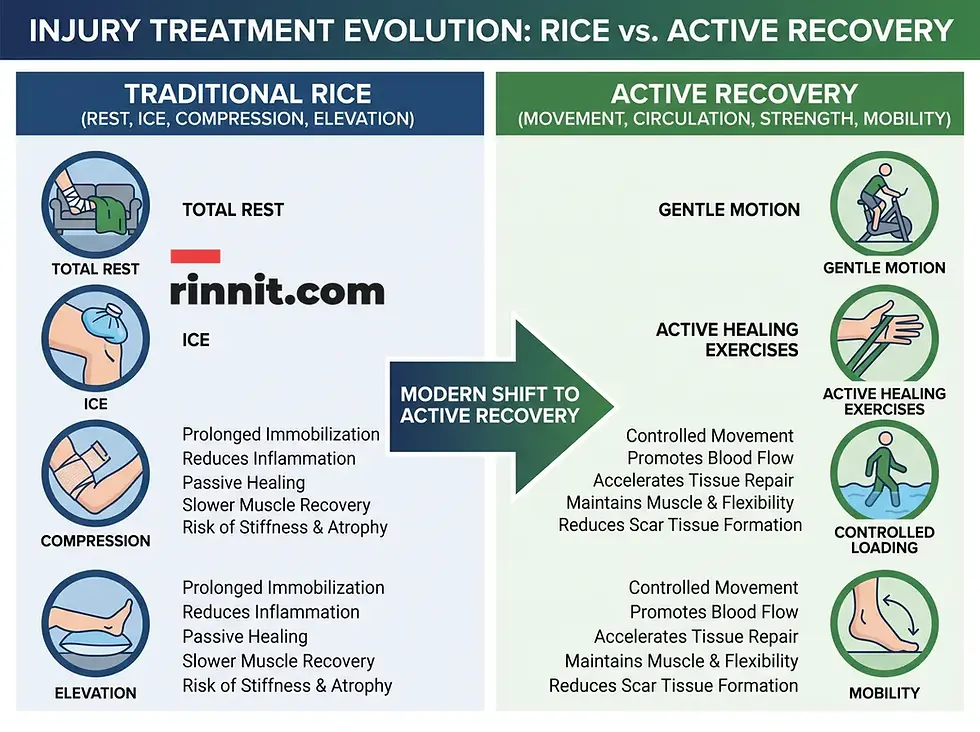
In recent years, the conversation around the RICE method has shifted toward a more active approach. Some experts now suggest alternatives like MICE, which replaces total rest with gentle motion. [1] The reasoning is that while some inflammation reduction is helpful for pain management, the inflammation process itself is a necessary part of healing. [1] Total immobilization for too long can sometimes lead to stiffness and a slower return to full function.
For athletes and active individuals, the focus is often on a "Recover Actively" (RACE) strategy. This involves resting the injury for only a few days before gradually introducing controlled movements. If pain occurs during these movements, it is a signal to slow down. [1] By combining the immediate relief of RICE with a structured return to activity, patients can often achieve a more durable and faster recovery from common musculoskeletal injuries.
When should you seek medical care instead of using the RICE method?
Although the RICE method is an excellent home treatment, certain symptoms indicate that an injury requires professional intervention. If you experience severe pain that does not improve with rest and ice, or if you find it impossible to put weight on the injured limb, you should see a healthcare provider immediately. [1] Visible deformities or a misshapen appearance can also be signs of a fracture or dislocation rather than a simple sprain.
Other warning signs include severe swelling accompanied by heat and redness [1], which could indicate an infection or a more significant vascular issue. Nerve-related symptoms, such as persistent numbness, tingling, or a "pins and needles" sensation, should never be ignored. [1] A primary care physician or orthopedic specialist can provide a definitive diagnosis and ensure that no underlying damage to bones or joints has occurred.
Symptom | Potential Concern | Action Required |
Inability to bear weight | Possible fracture | Seek immediate medical evaluation |
Visible deformity | Dislocation or break | Do not move; seek emergency care |
Numbness or tingling | Nerve compression | Consult a provider right away |
Heat and redness | Infection risk | Medical checkup recommended |

Conclusion
The RICE method remains a vital first-aid tool for managing the immediate pain and swelling of soft tissue injuries. By understanding how to balance rest with gradual movement and applying ice and compression safely, you can set the stage for a successful recovery. While medical perspectives continue to evolve, the core principles of RICE provide a reliable framework for anyone dealing with the sudden onset of a musculoskeletal injury.
What should you do next after an injury treated with the RICE method?
If you have sustained an injury and your symptoms are not improving after a few days of home care, schedule an appointment with a healthcare professional. Early diagnosis and a tailored recovery plan are essential for returning to your normal activities safely.
Frequently Asked Questions
How long should I keep ice on an injury?
You should apply ice for 10 to 20 minutes at a time, every hour or two, mainly during the first eight hours after an injury. Always use a cloth barrier between the ice pack and your skin to prevent cold-related skin damage or frostbite.
Can I use a regular bandage for compression?
While a regular cloth can work in an emergency, an elastic compression bandage (like an ACE wrap) is preferred. It provides the necessary tension to control swelling while remaining flexible enough to allow for some natural movement.
How high should I elevate my injury?
For the best results, try to elevate the injured area so that it is above the level of your heart. This position helps gravity assist in draining excess fluid away from the injury site, which helps reduce swelling and throbbing.
Is it better to rest completely or keep moving?
Current medical advice suggests avoiding stress on the injured part for the first few days to prevent further damage. After this initial period, you should begin gradually increasing gentle, pain-free movement to maintain flexibility and encourage blood flow, which aids the healing process.
Does the RICE method work for chronic pain?
RICE is primarily designed for acute injuries like sudden sprains or strains. For chronic conditions like tendinitis or bursitis, the protocol may provide temporary relief, but long-term management usually requires a different approach, such as physical therapy.
What should I do if my injury feels numb after wrapping it?
If you experience numbness, tingling, or increased pain after applying a compression bandage, it is likely too tight. Remove the wrap immediately and re-apply it more loosely to ensure that blood circulation is not being restricted.
Can I use heat instead of ice?
Early after an injury, ice is generally better because it reduces swelling and numbs pain. Heat is usually recommended later in the recovery process to relax muscles and improve blood flow once the initial swelling has subsided.
Why did the creator of RICE change his mind?
Dr. Gabe Mirkin, who coined the term, later recanted his recommendation, acknowledging that it was not originally based on clinical evidence. Some providers worry that reducing inflammation too much may delay healing, although there is observational evidence that the method reduces inflammation and pain.
How do I know if a sprain is actually a break?
It can be difficult to tell without an X-ray. If you heard a "pop" at the time of injury, cannot put any weight on the limb, or see a visible deformity, you should seek medical attention to rule out a bone fracture.
Is RICE effective for back pain?
While the principles of rest and ice can help with a sudden back strain, compression and elevation are more difficult to apply to the torso. For back injuries, focusing on gentle movement and proper support is often more effective than the full RICE protocol.
Related Reading
Sprains: Symptoms, Causes, Treatment, and Recovery — Complete Guide explains ligament sprains and how they heal.
What Is a Muscle Strain? A Plain-Language Guide to Pulled Muscles, How They Happen, and the P.R.I.C.E. Method covers pulled muscles and the related PRICE care method.
Sprained Ankle: Symptoms, Causes, Treatment & Complete Guide explains ankle sprains, home care and when to get checked.
Bone Fractures: What Happens When a Bone Breaks, and How It Heals describes signs of a broken bone that needs medical care.
References
Cleveland Clinic. RICE Method for Injury. Cleveland Clinic. January 24, 2025. https://my.clevelandclinic.org/health/treatments/rice-method
van den Bekerom MP, Struijs PA, Blankevoort L, et al. What is the evidence for rest, ice, compression, and elevation therapy in the treatment of ankle sprains in adults? Journal of Athletic Training. 2012;47(4):435-443. PMID 22889660. https://doi.org/10.4085/1062-6050-47.4.14
Bleakley C, McDonough S, MacAuley D. The use of ice in the treatment of acute soft-tissue injury: a systematic review of randomized controlled trials. The American Journal of Sports Medicine. 2004;32(1):251-261. PMID 14754753. https://doi.org/10.1177/0363546503260757
Medical disclaimer
The information provided in this article is for educational purposes only and should not be used as a substitute for professional medical advice, diagnosis, or treatment. Always seek the advice of your physician or other qualified health provider with any questions you may have regarding a medical condition.



Comments