Retroverted Uterus: Symptoms, Causes, and Impact on Health

Updated: 3 days ago
Medically reviewed by Dr. Baraa Alnahhal, MD · Last reviewed: October 2026
Quick Answer: What is a retroverted uterus?
A retroverted uterus is a common position in which the uterus tips backward toward the spine [1] and rectum rather than forward toward the bladder. People can be born with it or develop it from pelvic scarring, endometriosis, fibroids or weakened ligaments. [1] Most need no treatment; if it causes pain, options include pelvic exercises, a pessary or surgery. [1] [2]

What the research says
A retroverted uterus is common and usually causes no trouble. A review of 308 publications found that its prevalence is 16 to 18% (about 1 in 6 women), that it is most commonly without symptoms and needs no treatment, and that its most significant gynecological link is with uterine and pelvic organ prolapse (Haylen & Vu, Int Urogynecol J, 2025) [2].
It does not appear to raise the risk of pregnancy loss. In a study of 249 patients (83 with a retroverted uterus and 166 with an anteverted uterus), 98% of retroverted uteruses had shifted forward by the second trimester, and second-trimester pregnancy loss did not differ (0% vs 1.2%). Women with a retroverted uterus had more first-trimester vaginal bleeding (16.9% vs 4.2%, odds ratio 4.1) (Schneider et al., Am J Perinatol, 2024) [3].
It is linked with endometriosis. Among 110 patients delivered by cesarean section for placenta previa or low-lying placenta, a retroverted uterus was found in 46.9% (15 of 32) of those with endometriosis versus 21.8% (17 of 78) of those without (P = 0.01) (Harigane et al., J Nippon Med Sch, 2025) [4].
What Is a Retroverted Uterus?
The uterus is a hollow, pear-shaped organ that usually leans forward toward the belly. This typical position is called anteversion (see our guide to the anteverted uterus). In a retroverted uterus, the organ tilts in the opposite direction, toward your lower back and spine. [1] About 1 in 5 women have one. [1]
Many people never know they have a tilted uterus, because it often does not cause symptoms and rarely causes health complications. [1] It is considered a normal variation of pelvic anatomy rather than a disease.
What are the symptoms of a retroverted uterus?
Many people with a retroverted uterus have no symptoms. [1] [2] If you do have symptoms, they are often related to the position of the uterus. See our guides to menstrual cramps and painful intercourse for more on these symptoms.
Symptom Category | Common Experiences |
|---|---|
Menstrual | Pain or cramping during periods. |
Sexual Health | Pain or deep discomfort during sex. |
Urinary | Needing to urinate more often, urinary tract infections (UTIs), or loss of bladder control. |
Daily Life | Trouble using tampons. |
What causes a tilted (retroverted) uterus?
You may be born with a retroverted uterus, or it can develop later in life. Reasons it may develop include:
Scarring: Scar-like tissue from prior pelvic surgeries, or from pelvic inflammatory disease (PID) or another infection, can make the uterus stick to other organs and pull it backward. [1]
Fibroids: Uterine fibroids or other growths on the uterus can change its shape and position. [1]
Endometriosis: Extra tissue around the uterus can pull on it and make it tilt backward [1] [4] (see our article on retrograde menstruation and endometriosis risk).
Childbirth: Pelvic floor muscles and ligaments become weaker after childbirth, which can cause the uterus to tilt backward. [1]
Menopause: Lower estrogen levels weaken the pelvic muscles and ligaments that support the uterus, which can cause it to tilt backward. [1]
There is nothing you can do to prevent a retroverted uterus you are born with. [1] PID can sometimes cause one, and you can lower your risk of PID by practicing safe sex. [1]
How does a retroverted uterus affect pregnancy and fertility?
One of the most common concerns is how a retroverted uterus might affect the ability to get pregnant or carry a baby.
Fertility and Conception
A retroverted uterus should not affect your fertility. [1] You can still get pregnant and have a normal pregnancy. If you have infertility, another condition is most likely the cause. [1] A retroverted uterus also cannot cause a miscarriage. [1] [3]
Pregnancy and Delivery
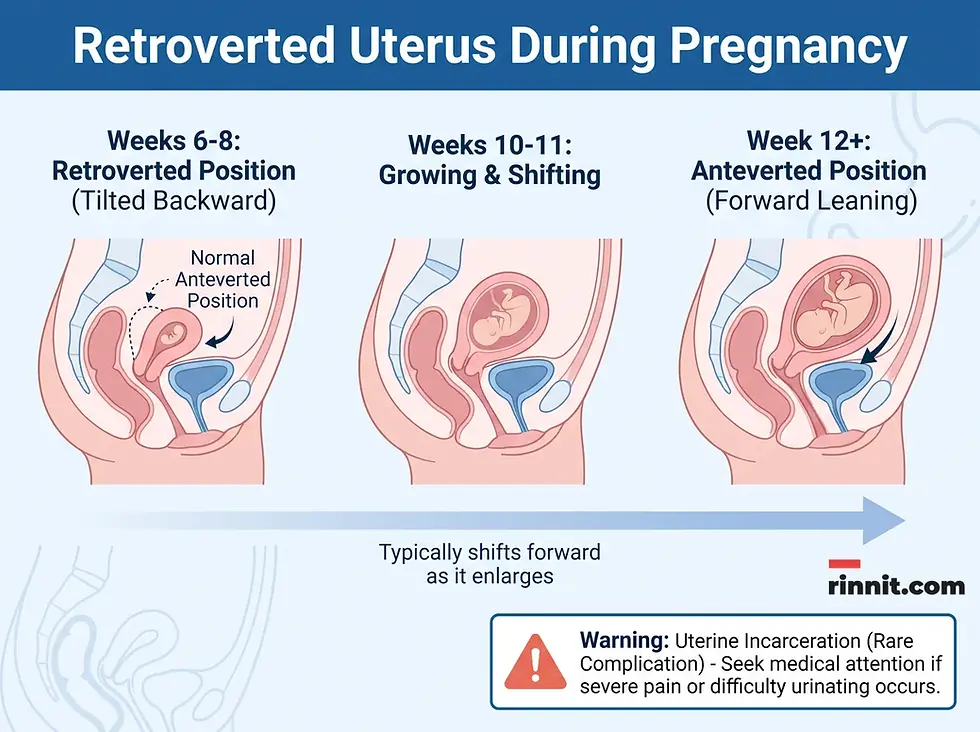
In most cases, a retroverted uterus does not affect pregnancy, labor, or delivery, and it should not affect your ability to have a vaginal delivery. [1] In a retroverted uterus that is still tilted backward early in pregnancy, the uterus usually shifts forward as it grows so the baby has room. [1] [3] Uterine incarceration is a rare but serious complication in which the uterus does not shift forward and becomes stuck in the pelvis. [1] Tell your provider promptly if you have severe pain or trouble urinating during pregnancy. Your provider is the best person to tell you about any risks with your own pregnancy.
How is a retroverted uterus diagnosed and treated?
Your healthcare provider can diagnose a retroverted uterus with a pelvic exam. During the exam, the provider can feel where your uterus and cervix are and which way they tilt. [1] An ultrasound can confirm it. [1]
Management Strategies
Treatment is needed only if the condition causes pain or interferes with your quality of life. [2] Your provider may recommend:
Treating the underlying condition: Treating the condition that is causing the tilt, such as endometriosis or fibroids. [1]
Exercises: Some providers can shift a retroverted uterus forward, and pelvic exercises such as Kegels may help keep it in place. [1]
Pessary: A small, plastic, donut-shaped device that goes inside the vagina and helps prop the uterus up. [1]
Surgery: Your provider can surgically change the position of the uterus. [1]
Contact your provider if pain and discomfort become too much to handle. Painful sex and painful periods are the two most common reasons people see a provider, who will want to rule out other conditions that may be causing your symptoms. [1]

Conclusion
A retroverted uterus is a common and usually harmless anatomical variation. Although it can cause discomfort for some people, it rarely threatens overall health or fertility. Understanding the causes and symptoms can help you have a productive conversation with your healthcare provider. If you have persistent pelvic pain or painful sex, a thorough evaluation by a gynecologist is recommended.
What are the next steps if you have a retroverted uterus?
If you think you have a tilted uterus, or you have been diagnosed with one, focus on keeping your pelvic floor healthy with regular pelvic exercises. If symptoms arise, talk with your provider about options such as pelvic exercises or a pessary to find the best solution for you.
Trusted resources: American Pregnancy Association, International Society for Sexual Medicine.
Frequently Asked Questions
Is a retroverted uterus the same as a prolapsed uterus?
No. A retroverted uterus describes the direction the uterus tilts. A prolapsed uterus is when the uterus drops lower into the vaginal canal because its support has weakened. They are different conditions, although one research review linked retroversion with prolapse.
Can a tilted uterus cause back pain?
The most common symptoms are painful periods, pain during sex, trouble using tampons, and urinary problems. If you have ongoing pelvic or back pain, see your provider so other causes can be checked.
Does a retroverted uterus make periods heavier?
Heavy bleeding is not a typical symptom of a tilted uterus. Painful periods are more common. See your provider if your periods are heavy or have changed.
Can I still use an IUD with a tilted uterus?
Yes. Healthcare providers can typically insert an IUD regardless of the uterine tilt, though they may need to adjust their technique slightly.
Does the position of the uterus change over time?
Yes. Childbirth, menopause, pelvic surgery, and conditions such as endometriosis can change the position of the uterus. During pregnancy, a retroverted uterus usually shifts forward as it grows.
Can a retroverted uterus cause infertility?
No. A retroverted uterus should not affect your fertility. If you have trouble getting pregnant, another condition is most likely the cause.
Can I fix a tilted uterus at home?
You cannot move the uterus yourself. Pelvic exercises such as Kegels may help keep it in place, and some providers can shift a retroverted uterus forward.
Will my doctor notice it during a Pap smear?
Your doctor might. A provider can feel which way the uterus and cervix tilt during the pelvic exam part of the visit, and an ultrasound can confirm it.
Does a retroverted uterus affect the baby during pregnancy?
In most cases, a retroverted uterus does not affect pregnancy, labor, or delivery. Your provider is the best person to tell you about any risks in your pregnancy.
Can a retroverted uterus cause a miscarriage?
No. A retroverted uterus cannot cause a miscarriage. If you have a miscarriage, another factor likely caused it.
Is a retroverted uterus common after childbirth?
A retroverted uterus can be. Pelvic floor muscles and ligaments become weaker after childbirth, which can cause the uterus to tilt backward.
Can safe sex prevent a retroverted uterus?
Safe sex lowers your risk of pelvic inflammatory disease (PID), which can sometimes cause pelvic scarring and pull the uterus backward.
Does menopause cause a tilted uterus?
Menopause can. Lower estrogen levels weaken the pelvic muscles and ligaments that support the uterus, which can make it tilt backward.
What is uterine incarceration?
Uterine incarceration is a rare but serious complication in which a retroverted uterus does not shift forward during pregnancy and gets stuck in the pelvis. It needs medical attention.
Should I be worried if I have a tilted uterus?
In most cases, no. It is a normal variation that rarely causes problems. Talk to your provider if you have pain or symptoms that worry you.
References
Cleveland Clinic. Retroverted Uterus. Cleveland Clinic. February 10, 2026. https://my.clevelandclinic.org/health/diseases/23426-retroverted-uterus
Haylen BT, Vu D. The retroverted uterus and pelvic floor dysfunction: 400 BC to 2025 AD. Int Urogynecol J. 2025;36(10):1951-1957. PMID 40498384. https://doi.org/10.1007/s00192-025-06167-1
Schneider ER, Kantorowska A, Clough JM, et al. Retroverted uterus in the first trimester and associated pregnancy outcomes. Am J Perinatol. 2024;42(9):1179-1185. PMID 39631743. https://doi.org/10.1055/a-2466-1155
Harigane E, Matsushima T, Watanabe A, et al. Cases of retroverted uterus involving placenta previa and low-lying placenta previa are significantly associated with endometriosis. J Nippon Med Sch. 2025;92(1):22-28. PMID 40058832. https://doi.org/10.1272/jnms.JNMS.2025_92-106
Medical Disclaimer
This article is for informational purposes only and does not constitute medical advice. Always seek the advice of your physician or other qualified health provider with any questions you may have regarding a medical condition. Never disregard professional medical advice or delay in seeking it because of something you have read in this article.



Comments