Retrograde Menstruation: Symptoms, Causes, and Endometriosis Risk

Updated: 2 hours ago
Medically reviewed by Dr. Baraa Alnahhal, MD · Last reviewed: September 2026
TL;DR: Retrograde menstruation occurs when menstrual blood flows backward through the fallopian tubes into the pelvic cavity instead of exiting the body through the vagina. While this phenomenon is a common and often asymptomatic part of the menstrual cycle, it is considered a primary risk factor for the development of endometriosis. Treatment is typically unnecessary unless the condition leads to chronic pelvic pain or reproductive health complications.
Quick Answer
What is Retrograde Menstruation?
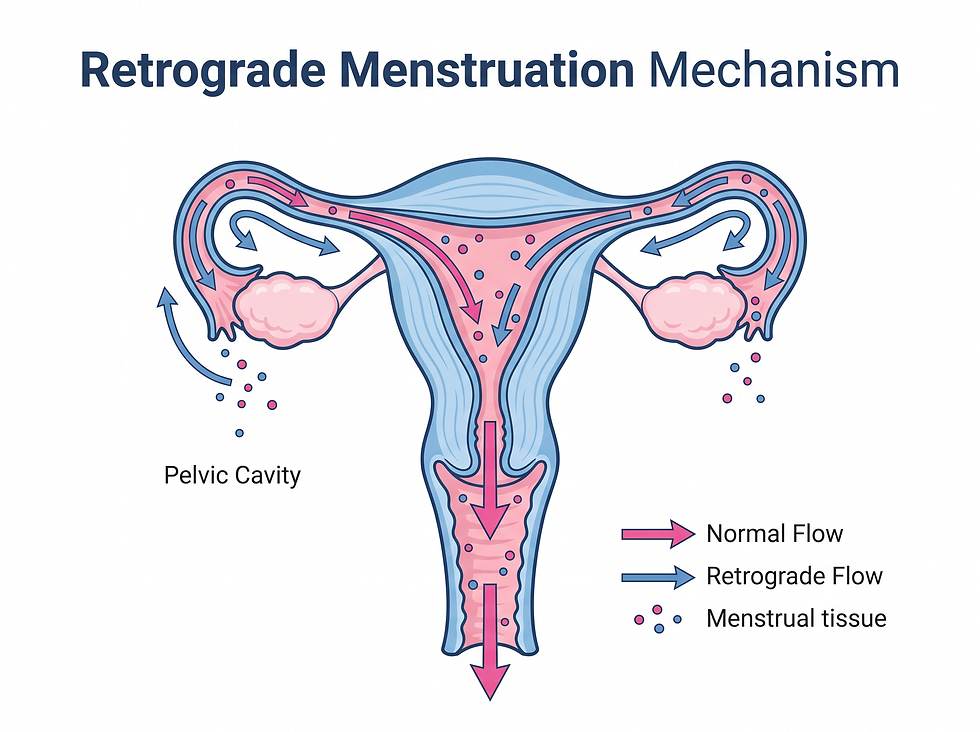
Retrograde menstruation is a condition where period blood and uterine lining tissue flow upward toward the abdomen rather than downward through the vagina. It is highly common and usually harmless; however, it can allow endometrial cells to implant on pelvic organs, potentially leading to endometriosis. Diagnosis is often incidental during other pelvic evaluations, and management focuses on hormone therapy to reduce menstrual flow if symptoms like severe pain arise.
What is Retrograde Menstruation?
In a standard menstrual cycle, the uterine lining sheds and flows out of the body through the cervix and vagina. Retrograde menstruation occurs when a portion of this flow travels in the opposite direction, moving through the fallopian tubes and entering the abdominal and pelvic cavity. Once in the pelvis, these cells may attach to the peritoneum (the lining of the abdominal wall) or other organs such as the ovaries and intestines.
Although the term may sound concerning, healthcare providers consider retrograde menstruation a common occurrence. It is not considered a disease in itself but rather a physiological process that can, in some individuals, contribute to more complex health issues.
Symptoms and Potential Indicators
The majority of people who experience retrograde menstruation do not have any noticeable symptoms. When symptoms do occur, they are often subtle or overlap with other menstrual concerns.
Symptom | Description |
Painful Periods | Dysmenorrhea or significant cramping during the menstrual cycle. |
Lighter Flow | A perceived reduction in vaginal bleeding because blood is flowing internally. |
Pelvic Pain | General discomfort in the pelvic region, often linked to internal irritation. |
Incidental Findings | Discovery of blood in the abdomen during a laparoscopy for other conditions. |
The Link to Endometriosis
One of the most significant aspects of retrograde menstruation is its correlation with endometriosis. Endometriosis is a condition where tissue similar to the uterine lining grows outside the uterus, often causing severe pain and fertility challenges.
Researchers believe that when endometrial cells enter the pelvic cavity via retrograde flow, they may fail to be cleared by the body's immune system. If these cells implant and grow on pelvic organs, they can form the lesions characteristic of endometriosis. Factors such as genetics or a small cervical opening may influence how much blood flows backward and how the body responds to these internal cells.

Diagnosis and Management
Retrograde menstruation is rarely the primary reason for a medical visit. Instead, it is typically diagnosed during evaluations for pelvic pain or endometriosis.
Diagnostic Procedures
Laparoscopy: A minimally invasive surgery that allows a provider to view the internal abdominal and pelvic organs. Finding blood or endometrial cells in these areas during the procedure can confirm retrograde flow.
Physical Examination: A standard pelvic exam to rule out other causes of pain or obstruction.
Treatment and Prevention
Treatment is only required if retrograde menstruation causes pain or leads to endometriosis.
Hormone Therapy: Medications that lighten the menstrual period can reduce the volume of retrograde flow.
Symptom Management: Addressing associated pelvic pain through standard medical protocols.
Hysterectomy: In extreme cases where other treatments fail and the condition is medically necessary, surgical removal of the uterus eliminates the source of the flow.

Conclusion
Retrograde menstruation is a frequent and usually benign part of the menstrual experience. While it is the leading theory for how endometriosis begins, it does not guarantee the development of the condition. Most individuals live with retrograde flow without ever knowing it occurs. However, if you experience significant changes in your period or new pelvic pain, consulting a healthcare provider is essential for maintaining your reproductive health.
Next Steps
If your periods have become increasingly painful or if you notice a significant change in your flow, contact a gynecologist. Discuss your symptoms openly, especially if you have concerns about endometriosis, to ensure you receive the appropriate screening and care.
Trusted resources: American College of Obstetricians and Gynecologists, Endometriosis Foundation of America, and Mayo Clinic.
Frequently Asked Questions
Is retrograde menstruation dangerous?
No, it is not typically dangerous or life-threatening. It is a common occurrence that only becomes a concern if it leads to endometriosis.
Does everyone have retrograde menstruation?
Many people who menstruate experience some degree of retrograde flow, though it varies in volume and frequency.
Can I still get pregnant with retrograde menstruation?
Yes. Retrograde menstruation itself does not cause infertility, although if it leads to severe endometriosis, that condition may affect fertility.
Why does my period flow backward?
Researchers aren't entirely sure, but factors like genetics and the physical structure of the cervix may play a role.
Can I feel the blood flowing backward?
No, you cannot feel the physical movement of the blood through the fallopian tubes.
Does retrograde menstruation cause endometriosis in everyone?
No. Most people's bodies clear the internal cells naturally without them implanting or causing endometriosis.
Can exercise cause my period to flow backward?
There is no clinical evidence to suggest that standard physical activity causes or worsens retrograde menstruation.
Is there a cure for retrograde menstruation?
It is not a disease to be cured, but hormone therapy can reduce the flow, and a hysterectomy can eliminate it entirely if necessary.
How is it different from a normal period?
A normal period flows entirely out the vagina. Retrograde menstruation involves some of that flow moving into the pelvic cavity.
Can a gynecologist see it during a regular exam?
No. It can usually only be seen during internal procedures like laparoscopy.
Does it cause heavy periods?
Actually, it might make your period seem lighter because some of the blood is staying inside the body.
Can it cause dizziness or vomiting?
These are not direct symptoms of retrograde menstruation, but they can be signs of severe menstrual pain or other conditions that should be evaluated.
Are there medications to stop it?
Hormonal medications that lighten or stop periods can effectively reduce or prevent retrograde flow.
Is it hereditary?
Genetics may play a role in how a person's body handles menstrual flow and their risk for associated conditions like endometriosis.
Should I be worried if I have a light period?
A light period is usually normal, but if it is a new change accompanied by pain, you should consult a doctor.
References
Medical Disclaimer
This article is for informational purposes only and does not constitute medical advice. Always seek the advice of your physician or other qualified health provider with any questions you may have regarding a medical condition. Never disregard professional medical advice or delay in seeking it because of something you have read in this article.
Comments