Dysmenorrhea (Menstrual Cramps): The 2 Types, Symptoms, Causes, Diagnosis, Treatment and When to See Your Provider

Updated: 3 hours ago
Medically reviewed by Dr. Baraa Alnahhal, MD · Last reviewed: September 2026

Quick answer
Dysmenorrhea is the medical term for painful periods or menstrual cramps. It happens because a chemical called prostaglandin makes the uterus contract to shed its lining, and the pain typically begins just before the period and eases after a few days. There are two types: primary dysmenorrhea (recurrent pain with no identifiable cause) and secondary dysmenorrhea (pain caused by a reproductive condition such as endometriosis). First-line relief usually comes from NSAID pain relievers like ibuprofen or naproxen taken at the start of cramping, along with non-medication options such as heat, rest, massage and regular exercise. See a provider if cramps are severe, last more than three days, or stop you from doing normal tasks.
TL;DR
Dysmenorrhea is the medical term for painful periods (menstruation) or menstrual cramps, and in most cases it is not a warning sign of disease. Pain is caused by prostaglandins, which make the uterus contract to shed its lining; levels are higher right before and during a period, then drop, which is why cramping usually eases within a few days. The two types are primary dysmenorrhea, the more common form with no identifiable underlying cause, and secondary dysmenorrhea, caused by a condition or infection affecting the reproductive organs, such as endometriosis or pelvic inflammatory disease.
What this guide can and cannot tell you: The statistics below reflect only what is reported in the underlying clinical literature cited by the source page. Prevalence figures differ across studies, and healthcare providers believe severe period pain is underreported, so these numbers may underestimate the true impact.
Key fact | What the evidence shows |
Mild cramps | About 60% of people with a uterus have mild cramps during their period |
Severe pain | About 5% to 15% report period pain severe enough to affect daily activities |
Likely true rate | Providers believe the severe-pain figure is higher because many people do not report menstrual pain |
Pain timing | Usually begins 24 to 48 hours before the period; subsides within 48 hours of the period starting |
Outlook | Painful periods usually become less painful with age and may improve after giving birth |
What is dysmenorrhea?
Dysmenorrhea is the medical term for painful periods or menstrual cramps. It happens because the uterus contracts to shed its lining, the blood and tissue that comes out of the vagina during a period. In addition to cramping, people may experience other symptoms such as nausea, fatigue and diarrhea. It is most common to have menstrual cramps the day before or the day the period starts, and for most people symptoms subside after about two or three days. (For a practical companion guide, see our article on menstrual cramps: causes, treatment and relief.)
Mild to moderate menstrual cramping is normal. But some people have such severe pain during their period that it interferes with day-to-day life and prevents them from doing things they enjoy. Medication and other treatments can help with painful periods.
Is having dysmenorrhea normal?
It is normal to have some pain during menstruation. About 60% of people with a uterus have mild cramps during their period. About 5% to 15% of people report period pain that is so severe that it affects their daily activities. This number is likely higher, as healthcare providers believe many people do not report menstrual pain.

What are the symptoms of dysmenorrhea?
Symptoms include aching, throbbing abdominal pain that may be severe at times; a feeling of pressure in the abdomen; pain in the hips, lower back and inner thighs; and other symptoms like nausea, dizziness and headaches.
Primary vs secondary dysmenorrhea: what is the difference?
There are two types of dysmenorrhea: primary and secondary. Knowing which type you may have shapes both the diagnosis and the treatment.
Feature | Primary dysmenorrhea | Secondary dysmenorrhea |
Definition | Menstrual cramps that recur with every period but are not due to another medical condition | Painful periods caused by a condition or infection in the reproductive organs |
How common | The more common type | Less common |
Pain onset | One or two days before the period or when bleeding starts | Begins earlier in the menstrual cycle than typical cramps |
Pain duration | Usually subsides within two or three days | Lasts longer; may continue until bleeding completely stops |
Cause | Prostaglandins driving uterine contractions (no underlying condition found) | Underlying reproductive conditions such as endometriosis, adenomyosis or fibroids |
What is primary dysmenorrhea?
Primary dysmenorrhea refers to menstrual cramps that come back every period but are not due to another medical condition. Pain usually begins one or two days before the period or when the bleeding actually starts. People may feel pain ranging from mild to severe in the lower abdomen, back or thighs. The pain usually subsides within two or three days.
What is secondary dysmenorrhea?
If painful periods are caused by a condition or an infection in the reproductive organs, it is secondary dysmenorrhea. Pain usually begins earlier in the menstrual cycle and lasts longer than typical menstrual cramps. For example, cramping may begin several days before the period, and the pain may last until the bleeding completely stops.
What causes painful periods?
The prostaglandin mechanism: why do periods hurt?
Menstrual cramps happen when a chemical called prostaglandin makes the uterus contract, or tighten up. During menstruation, prostaglandin levels are higher, which means the uterus contracts more strongly. This is the cramping and discomfort that is felt. These contractions help shed the uterine lining. Prostaglandin levels rise right before menstruation begins and decrease once the period starts, which is why cramping tends to ease up after a few days.
Experts are not entirely sure why some people have more painful periods, but they think it may be because of higher prostaglandin levels. There also may not be a clear explanation other than everyone's body being different.
What conditions cause secondary dysmenorrhea?
Menstrual pain from secondary dysmenorrhea results from a condition affecting the reproductive organs. The recognized causes include six conditions:
Cause | What it is | How it contributes to pain |
Endometriosis | Tissue lining the uterus (the endometrium) grows outside the uterus | These tissue pieces bleed during the period, causing swelling, scarring and pain |
The uterine lining grows into the muscle of the uterus | Can make the uterus much bigger than it should be, along with abnormal bleeding and pain | |
Uterine fibroids (benign tumors) | Noncancerous growths on the inside, outside or in the walls of the uterus | Growths within or on the uterus cause cramping |
A bacterial infection that starts in the uterus and can spread to other reproductive organs | Can cause pain in the stomach or pain during sex | |
Cervical stenosis | The cervix narrows due to surgery, treatment or another condition | Narrowing contributes to painful menstruation |
Congenital conditions | Conditions present from birth | May include an irregularly shaped uterus or other conditions affecting the ovaries or fallopian tubes |
Who is more likely to have dysmenorrhea?
Several factors make painful periods more likely. You may be more likely to have dysmenorrhea if your first menstrual period came before age 12, if you are younger than 20, if your periods are heavy or last longer than seven days, if you smoke cigarettes, or if you have a biological parent who has dysmenorrhea.
Can painful periods cause complications?
Menstrual cramps themselves usually do not cause complications, other than disrupting daily life. But if a medical condition is causing painful periods, there can be complications. Conditions like endometriosis or pelvic inflammatory disease can lead to infertility or ectopic pregnancy. This is why it is important to see a healthcare provider so they can rule out an underlying cause for period pain.
How is dysmenorrhea diagnosed?
If you have severe or unusual menstrual cramps, or cramps that last for more than three days, contact a healthcare provider. Both primary and secondary menstrual cramps are treatable, so it is important to get checked.
First, the provider will ask you to describe your symptoms and menstrual cycles. They will then perform a pelvic exam by placing gloved fingers into the vagina. During this exam, the provider will also insert a speculum into the vagina, allowing them to get a better look at the vagina and cervix. They may take a small sample of vaginal fluid for testing. The goal of the exam is to determine whether a medical condition is causing painful periods. If there is not an apparent cause, the provider will diagnose primary dysmenorrhea.
If the provider suspects secondary dysmenorrhea, imaging and other diagnostic tests allow them to get a better look at the uterus and other reproductive organs. Your provider may recommend any of the following:
Diagnostic test | What it involves |
Pelvic ultrasound | Sound waves create images of the uterus, ovaries and other reproductive organs |
Hysteroscopy | A thin, lighted device sees inside the uterus and transmits images to a screen |
Laparoscopy | Tiny incisions are made in the abdomen and a laparoscope (a thin tube with a light and camera) views the pelvic organs |
If those tests show a medical condition is causing painful menstruation, the healthcare provider will discuss treatment with you.
How are menstrual cramps treated?
What is the first-line treatment for dysmenorrhea?
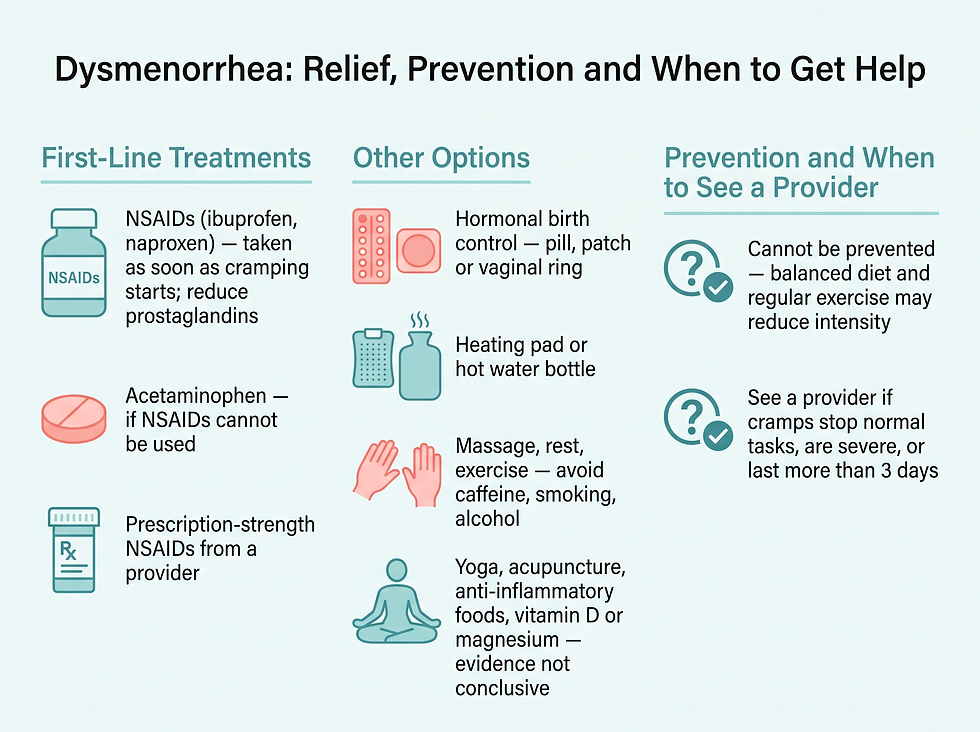
Pain relievers called nonsteroidal anti-inflammatory drugs (NSAIDs) are often the first treatment for dysmenorrhea. These include medications like ibuprofen or naproxen, which can be bought at a local drug or grocery store. They work by reducing the amount of prostaglandins in the body. It is best to take these as soon as cramping begins. If you cannot take NSAIDs, another pain reliever like acetaminophen is an option.
A healthcare provider can also prescribe medications, including ibuprofen or another anti-inflammatory medication at a higher dose than is available over the counter.
Do hormonal medications help period pain?
A healthcare provider might also suggest hormonal birth control as a treatment. People who take hormonal medications tend to have less menstrual pain. This could include birth control options like the pill, patch or vaginal ring.
What non-medication options reduce cramps?
There are several treatments for menstrual cramps that do not involve medication:
Use a heating pad or hot water bottle on the lower back or abdomen when having cramps
Get extra rest
Avoid foods that contain caffeine
Avoid smoking cigarettes and drinking alcohol
Massage the lower back and abdomen
Exercise regularly, since people who exercise tend to have less menstrual pain
If testing shows secondary dysmenorrhea, the provider will discuss treatment for the condition causing the pain. This might mean oral contraceptives, other types of medications or surgery.
What alternative therapies are tried for period cramps?
People who have painful periods often try natural ways of dealing with the pain. Studies on alternative or complementary methods have not been conclusive about results. Some natural methods for relieving period pain include yoga; acupuncture and acupressure; relaxation or breathing exercises; eating anti-inflammatory foods like leafy green vegetables, ginger and nuts, and drinking green tea; and taking supplements like vitamin D or magnesium, which may help reduce inflammation.
Can dysmenorrhea be prevented?
No, dysmenorrhea cannot be prevented. However, eating a balanced diet and getting regular exercise may help stop cramps from being as intense. Painful periods usually become less painful with age and may also improve after giving birth.
When should you see your provider about menstrual cramps?
Contact your healthcare provider if you have painful periods that prevent you from doing your normal tasks. Mild cramps are normal. But severe cramping and pain that prevent you from going to school or work may mean you need treatment.
It may be helpful to keep track of your periods and the days on which pain is the worst so you can tell your provider. If you notice other symptoms, like headaches or heavy bleeding, you should keep track of those too. Your provider will probably ask when you started getting your period, how long your symptoms last, if you are sexually active, and if other people in your biological family have problems with their periods.
Situation | What to do |
Cramps that stop you from doing normal tasks (school, work, daily activities) | Contact a healthcare provider for evaluation and treatment |
Severe or unusual menstrual cramps | Contact a healthcare provider; both types are treatable |
Cramps lasting more than three days | Contact a healthcare provider |
Cramping that begins several days before the period and lasts until bleeding stops | This pattern suggests secondary dysmenorrhea; get checked for an underlying cause |
Questions to ask your provider
Is my period pain primary or secondary dysmenorrhea?
Could an underlying condition such as endometriosis or fibroids be causing my pain?
What diagnostic tests do I need, such as an ultrasound or laparoscopy?
Which NSAID and dose should I take, and when should I take it?
Would hormonal birth control (pill, patch or vaginal ring) help reduce my pain?
Are there conditions that could affect my fertility if left untreated?
How can I track my symptoms to bring better information to appointments?
Conclusion: why painful periods shouldn't be dismissed
Dysmenorrhea is common, understandable and treatable. Most people have mild cramps that fade within two or three days, but a meaningful minority experience pain severe enough to disrupt school, work and daily life. Because cramps themselves are driven by prostaglandins and the underlying causes of secondary dysmenorrhea respond to treatment, there is rarely a reason to simply live with the pain. Getting checked matters especially when pain starts early in the cycle, lasts longer than a few days, or is new or worsening, since conditions like endometriosis or pelvic inflammatory disease can have fertility consequences if ignored.
Minor aches and pains during menstruation are normal. If you get extremely painful periods (dysmenorrhea), you don't have to suffer silently. There are ways to make menstrual cramps less painful. Make sure you talk to your healthcare provider about painful periods so they can help you.
Your next step: If cramps are stopping you from your normal tasks, contact a healthcare provider. Bring a log of your periods and pain days so treatment, whether NSAIDs, hormonal options or care for an underlying condition, can start promptly.
Frequently asked questions
What does dysmenorrhea mean?
Dysmenorrhea is the medical term for painful periods or menstrual cramps. It occurs because the uterus contracts to shed its lining during menstruation.
Is having some period pain normal?
Yes. Mild to moderate menstrual cramping is normal, and about 60% of people with a uterus have mild cramps during their period.
How common is severe period pain?
About 5% to 15% of people report period pain severe enough to affect daily activities, though this figure is likely an underestimate because many people do not report menstrual pain.
What is the difference between primary and secondary dysmenorrhea?
Primary dysmenorrhea is recurrent period pain with no identifiable underlying condition, while secondary dysmenorrhea is caused by a condition or infection affecting the reproductive organs.
Which type is more common?
Primary dysmenorrhea is the more common type; secondary dysmenorrhea is less common.
What causes menstrual cramps?
Cramps happen when prostaglandins make the uterus contract to shed its lining. Higher prostaglandin levels during menstruation mean stronger contractions and more discomfort.
Why do cramps usually fade after a few days?
Prostaglandin levels rise right before menstruation begins and decrease once the period starts, so cramping tends to ease up after a few days.
When does period pain typically start?
In most cases, the pain begins 24 to 48 hours before the period and subsides within 48 hours of the period starting.
Why are some people's periods more painful than others?
Experts are not entirely sure, but they think higher prostaglandin levels may be responsible, and for some people there may be no clear explanation beyond natural body differences.
What does secondary dysmenorrhea pain feel like?
Pain from secondary dysmenorrhea usually begins earlier in the menstrual cycle and lasts longer than typical cramps, sometimes starting several days before the period and lasting until bleeding completely stops.
What conditions cause secondary dysmenorrhea?
Recognized causes include endometriosis, adenomyosis, uterine fibroids, pelvic inflammatory disease, cervical stenosis and congenital conditions such as an irregularly shaped uterus.
How does endometriosis cause painful periods?
In endometriosis, the tissue lining the uterus grows outside the uterus; these tissue pieces bleed during the period and can cause swelling, scarring and pain.
Who is at higher risk of dysmenorrhea?
Risk is higher if your first period came before age 12, if you are under 20, if periods are heavy or last longer than seven days, if you smoke cigarettes, or if a biological parent has dysmenorrhea.
Can period pain cause infertility?
The cramps themselves do not, but underlying conditions that cause secondary dysmenorrhea, such as endometriosis or pelvic inflammatory disease, can lead to infertility or ectopic pregnancy.
How is dysmenorrhea diagnosed?
Diagnosis starts with a symptom history and pelvic exam (with a speculum and possible vaginal fluid sample). If an underlying condition is suspected, tests such as pelvic ultrasound, hysteroscopy or laparoscopy may be used.
What is the best treatment for period cramps?
NSAIDs such as ibuprofen or naproxen are often the first treatment because they reduce prostaglandins. Taking them as soon as cramping begins works best; acetaminophen is an alternative if NSAIDs cannot be used.
Can a doctor prescribe stronger medication for cramps?
Yes. A provider can prescribe ibuprofen or another anti-inflammatory medication at a higher dose than is available over the counter.
Does hormonal birth control help period pain?
People who take hormonal birth control (pill, patch or vaginal ring) tend to have less menstrual pain.
What home remedies help with menstrual cramps?
Helpful non-medication options include a heating pad or hot water bottle on the lower back or abdomen, extra rest, avoiding caffeine, avoiding smoking and alcohol, massaging the lower back and abdomen, and regular exercise.
Do alternative therapies like yoga or acupuncture work for cramps?
Studies on alternative methods have not been conclusive about results, but people commonly try yoga, acupuncture, acupressure, relaxation or breathing exercises, anti-inflammatory foods and green tea, and vitamin D or magnesium supplements.
Can I prevent dysmenorrhea?
No, it cannot be prevented, though eating a balanced diet and getting regular exercise may help reduce the intensity of cramps.
Do painful periods improve over time?
In most cases, painful periods become less painful with age and may also improve after giving birth.
When should I call a doctor about period pain?
Contact a provider if cramps prevent normal tasks, if pain is severe or unusual, or if cramps last more than three days.
How should I prepare for a period pain appointment?
Track your periods and the days pain is worst, and note other symptoms like headaches or heavy bleeding, so you can share clear information with your provider.
External references
References
Disclaimer: This article provides general educational information and is not a substitute for professional medical advice, diagnosis, or treatment. Always seek the advice of a qualified healthcare provider with any questions about a medical condition.
Comments