Chronic Pelvic Pain: Symptoms, Causes & Treatment — A Clear Guide

Updated: 2 days ago
Medically reviewed by Dr. Baraa Alnahhal, MD · Last reviewed: September 2026
Chronic pelvic pain is pain in the area below the bellybutton and between the hips that lasts six months or longer. It is a complex condition: it can be a symptom of another disease — such as endometriosis, fibroids, painful bladder syndrome, irritable bowel syndrome, or a nerve injury — or it may stem from more than one condition at once. In some cases, tests never find a clear cause. If a cause is found, treating it may remove the pain; if not, the goal shifts to easing pain, easing other symptoms, and improving quality of life. Treatment ranges from over-the-counter pain relievers, hormonal medicines, and certain antidepressants, to physical therapy, talk therapy, trigger point injections, and — rarely — surgery.
Quick Answer: What Is Chronic Pelvic Pain?
Chronic pelvic pain is pain in the area below the bellybutton and between the hips that lasts six months or longer.
It often has more than one cause; common contributors include endometriosis, fibroids, painful bladder syndrome, irritable bowel syndrome, and nerve or muscle problems.
Symptoms can include steady or cramping pain, pressure or heaviness in the pelvis, pain during sex, and pain with urination or bowel movements.
Diagnosis involves a pelvic exam, lab tests, ultrasound, and sometimes CT, MRI, or laparoscopy; a pain journal helps the team understand the pattern.
If a clear cause is found, treatment focuses on that cause; if no cause is found, treatment focuses on easing pain and improving daily life.
Many approaches can be combined — medicines, physical therapy, talk therapy, injections, and lifestyle changes — until the right mix is found.

What Is Chronic Pelvic Pain?
Chronic pelvic pain is pain in the area below the bellybutton and between the hips that lasts six months or longer. The label "chronic" is what separates it from the pelvic pain that comes with a passing infection, a bad period, or a temporary stomach bug.
The condition is genuinely complex. In some people, tests point to a single disease as the cause. In many others, the pain stems from more than one condition at the same time — for example, endometriosis and painful bladder syndrome together. And sometimes, even careful testing does not find a clear reason.
Key point: If chronic pelvic pain is caused by another health condition, treating that problem may get rid of the pain. If tests do not find a cause, the treatment goal becomes easing the pain and other symptoms and improving quality of life.
Definition: pain below the bellybutton and between the hips lasting 6+ months
Nature: may be a symptom of another disease, or a condition in its own right
Causes: often more than one; sometimes no single cause is found
Goal with a cause: treat the underlying condition
Goal without a cause: ease pain and symptoms; improve quality of life
What Are the Symptoms of Chronic Pelvic Pain?
The pain can be felt in different parts of the pelvic area, not just one spot. People describe it in several ways. The pain may be serious and steady, or it may come and go. Some describe a dull ache; others describe sharp pains or cramping. A pressure or heaviness deep within the pelvis is another common description.
The timing patterns are just as varied. Pain may happen during sex, while having a bowel movement or urinating, or when sitting or standing for a long time.
Steady pain: serious and constant, not just a passing ache
Intermittent pain: comes and goes in waves
Dull pain: a persistent aching in the pelvic area
Sharp pain: brief pains or cramping sensations
Deep pressure: a feeling of heaviness deep within the pelvis
The intensity also varies widely. For some, the pain is mild. For others, it is intense enough that work is missed and sleep and exercise are disrupted. Pain can accompany other symptoms as well, including an urgent or frequent need to urinate, bloating, an upset stomach, and constipation or diarrhea.
When to See a Doctor
A healthcare professional should be consulted if the pain disrupts daily life or symptoms get worse. There is no reason to simply live with pain that is steadily eroding sleep, work, exercise, and relationships — that is exactly the threshold that moves pelvic pain into the "chronic" category where a proper evaluation makes sense.
What Causes Chronic Pelvic Pain?
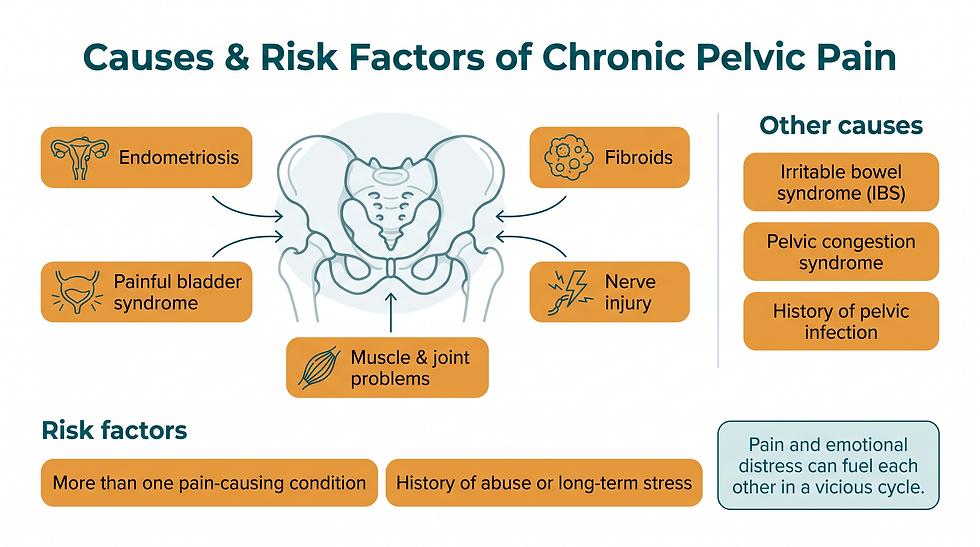
The causes are complex and often multiple. Tests may find that a single disease is the cause, but often the pain stems from more than one condition. Each of the following conditions can contribute to chronic pelvic pain on its own, and several can stack together in the same person.
Endometriosis: tissue like the uterine lining grows outside the uterus — grows and bleeds with the menstrual cycle; may cause pain or infertility
Muscle and bone problems: conditions affecting bones, joints, and connective tissues — fibromyalgia, tension in pelvic floor muscles, swelling of the pubic joint, hernia — strained or tense muscles and joints generate aching and pressure
Nerve injury: injured or trapped nerves in the pelvis or lower stomach area; may follow surgery such as a C-section, or repetitive activity like cycling, horse riding, or long sitting — damaged nerves misfire pain signals; cycling-related cases are called pudendal neuralgia
Chronic pelvic inflammatory disease: long-term infection, often sexually spread, that causes scarring involving pelvic organs — scarring and inflammation persist after the original infection
Ovarian remnant: a small piece of ovary left by mistake after ovary removal surgery — the remnant later forms painful cysts
Fibroids: growths inside, on, or attached to the uterus; not cancer — may cause pressure or heaviness in the lower stomach or lower back; rarely sharp pain
Irritable bowel syndrome (IBS): a digestive disorder with bloating, constipation, or diarrhea — bloating and bowel changes create pelvic pain and pressure
Painful bladder syndrome (interstitial cystitis): a condition of recurring bladder pain — frequent need to urinate; pelvic pain as the bladder fills, which may ease after emptying
Pelvic congestion syndrome: enlarged, varicose-type veins around the uterus and ovaries — congested veins create a persistent ache
The mind matters too, and not as a dismissal of the pain. Depression, long-term stress, and a history of sexual or physical abuse may raise the risk of chronic pelvic pain. Emotional distress can make pain worse, and long-term pain can fuel emotional distress — a vicious cycle that deserves care alongside any physical cause.
Who Is Most at Risk?
Two risk factors stand out. Having more than one pain-causing condition — for example, endometriosis together with fibroids — raises the risk of chronic pelvic pain. And a history of sexual or physical abuse may raise risk as well.
Can Chronic Pelvic Pain Cause Complications?
The main "complication" of untreated chronic pelvic pain is the toll it takes on life itself: disrupted sleep, missed work, abandoned exercise, strained relationships, and the anxiety and depression that can follow. That toll feeds back into the pain, since stress and anxiety can make pain feel worse. The cycle is one of the strongest reasons to seek care rather than simply endure.
On the physical side, some underlying causes carry their own complications if left unmanaged — endometriosis can contribute to infertility, painful bladder syndrome can severely disrupt sleep, and chronic pelvic inflammatory disease reflects scarring that does not reverse on its own. Addressing the underlying condition matters.
How Is Chronic Pelvic Pain Diagnosed?
Diagnosis is a process, and it can take time. A clear reason may never be found — the healthcare team should work with the patient along the way rather than leave them waiting in the dark.
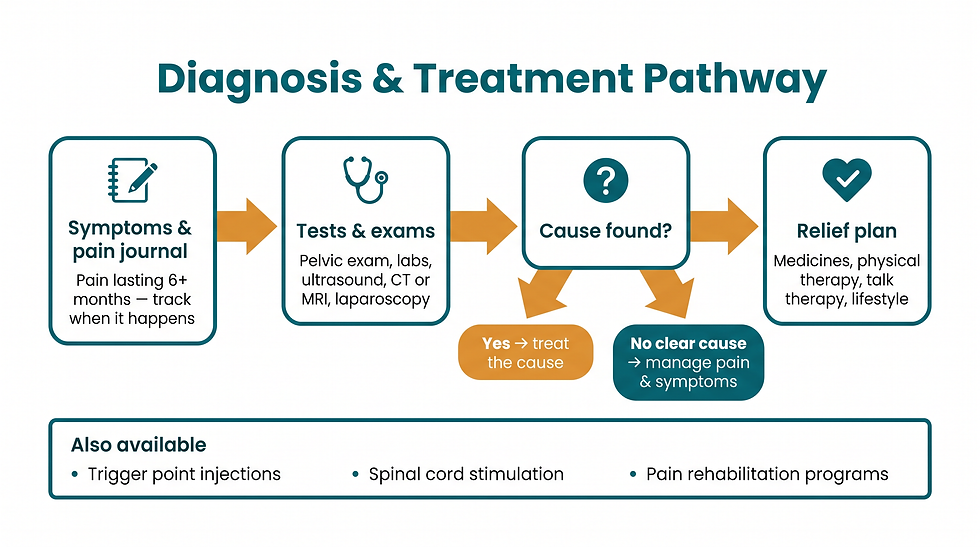
The process typically starts with a conversation. The team asks about symptoms and family health history. Keeping a pain journal — a record of when pain happens, how strong it is, and what it affects — helps describe the condition's effect on daily life.
A pelvic exam can reveal signs of illness, unusual growths, and tense pelvic floor muscles, and it can check for tender areas. Patients should speak up if the exam causes pain similar to the pain they have been experiencing — and the exam can be stopped at any time if anxiety becomes overwhelming.
Lab tests may check for chlamydia or gonorrhea, measure blood cells, and test the urine for a urinary tract infection.
Symptom discussion and pain journal: maps pain patterns, triggers, and daily-life impact — when pain occurs, what affects it
Pelvic exam: physical examination of the pelvic area — signs of illness, unusual growths, tense pelvic floor muscles, tender areas
Lab tests: chlamydia/gonorrhea screening, blood count, urine test — sexually spread infections, anemia, urinary tract infection
Ultrasound: sound waves make pictures of tissues and organs — growths or cysts in the ovaries, uterus, or fallopian tubes
CT scan or MRI: detailed internal imaging — growths or unusual structures
Laparoscopy: surgery: a small cut in the stomach area; a thin tube with a camera views the pelvic organs — unusual tissues or infections; can find and treat endometriosis and chronic pelvic inflammatory disease
How Is Chronic Pelvic Pain Treated?
The overall goal is to ease symptoms and improve quality of life. If a specific cause is found, treatment focuses on that cause. If no cause is found, treatment focuses on managing the pain and other symptoms. More than one treatment is often needed.
Medications
Several medication categories can help, and they are often used in combination.
Pain relievers: over-the-counter aspirin, ibuprofen (Advil, Motrin IB), acetaminophen (Tylenol); sometimes a strong prescription pain reliever — eases pain; note that pain medicine alone rarely gets rid of chronic pain
Hormone treatments: birth control pills or other hormonal medicines — may relieve pelvic pain when pain days overlap a phase of the period
Antibiotics: prescribed for a bacteria-caused illness — treats an infection that is the source of the pain
Antidepressants: tricyclics (amitriptyline, nortriptyline/Pamelor); SNRIs (duloxetine/Cymbalta, venlafaxine/Effexor XR) — some depression medicines help chronic pain — and may help even without depression
Muscle relaxers: cyclobenzaprine (Amrix), for example — relaxes muscles linked with pelvic pain
Physical Therapy and Procedures
Physical therapy for chronic pelvic pain goes well beyond stretches, relaxation, and massage. It includes specific pain-treating procedures. In myofascial release, a therapist finds stiff tissue areas linked with pain, then stretches and applies pressure to loosen them. Transcutaneous electrical nerve stimulation (TENS) uses a medical device that sends low-voltage electric currents to nearby nerves at specific pain points. Biofeedback is a psychology technique that helps the patient become aware of tight muscles so they can learn to relax them. Dry needling places very thin needles into and around trigger points — stiff, sensitive areas tied to pain.
Other procedures may also be part of the plan. Trigger point injections place numbing medicine at tight, sensitive spots to block pain. Spinal cord stimulation (neuromodulation) involves an implanted device that blocks nerve pathways so the pain signal cannot reach the brain; it may help depending on the cause of the pain.
Talk Therapy
Some people with chronic pelvic pain also live with depression, anxiety, a personality disorder, or lasting trauma from sexual or emotional abuse. A psychologist or psychiatrist can help both body and mind — easing stress and teaching coping skills. Cognitive behavioral therapy (CBT) involves learning to be mindful of negative and faulty thoughts. Sex therapy teaches couples to have sex without pain, which may in turn ease the pelvic pain itself.
Surgery
Surgery plays a defined, limited role. If endometriosis is found, laparoscopy can treat it: a slender viewing tool is placed through a small cut near the bellybutton, and the painful tissue outside the uterus is removed through one or more other small cuts.
In rare cases, a hysterectomy — surgery to remove the uterus — may be performed, sometimes along with removal of one or both ovaries (oophorectomy). These carry key health consequences, so it is essential to ask a healthcare professional to explain the benefits and risks in detail before deciding.
What Can Be Done at Home?
Long-term pain affects daily life — sleep, exercise, everyday tasks — and can cause anxiety and stress that may worsen the pain. Several lifestyle steps can help interrupt that cycle.
Relaxation techniques: meditation and deep breathing release tension, ease pain, calm emotions, and help sleep
Good posture: reduces strain on the pelvic area
Losing extra weight: lowers the risk of straining pelvis joints and muscles
Regular exercise: choose an enjoyable activity and pace yourself; talk to a doctor first if working out causes pain
Acupuncture: some research suggests it may help some causes of pelvic pain; generally safe — discuss with the healthcare team first
Pain Rehabilitation Programs
It may take a combination of approaches before finding what works best. A pain rehabilitation program — a structured, multidisciplinary approach to chronic pain — is worth considering when multiple treatments have not yet delivered relief.
Preparing for an Appointment
Appointments for chronic pelvic pain often start with a primary healthcare professional or a gynecologist — a doctor trained to find and treat conditions affecting female reproductive health. Depending on the suspected cause, other specialists may join the team: a gastroenterologist for digestive problems, a urogynecologist for urinary and female reproductive problems, or a physiatrist or physical therapist for muscle and skeletal pain.
Before the appointment, make a list of symptoms — including ones that seem unrelated — and note key medical information such as stresses and recent life changes. List every medicine, vitamin, and supplement with doses. Consider taking a family member or friend along.
What could be causing my symptoms?: frames the diagnostic thinking
What tests are needed?: clarifies the plan
What are the treatments if a cause is found — and if one is not?: sets expectations for both outcomes
Do I need to make lifestyle changes?: guides daily self-care
Should I see a specialist?: routes to the right expertise
Is there a generic alternative to the prescribed medicine?: lowers cost
Are there brochures or websites you recommend?: supports learning between visits
The healthcare professional is likely to ask detailed questions. Being ready to answer them — about when the pain first started and how it has changed; whether it comes in waves or is constant; how bad it is and how long it lasts; where it is felt; whether urinating, bowel movements, or the menstrual period affect it; what makes it better or worse; and whether it limits everyday tasks — makes the visit far more productive. Questions may also cover past pelvic surgery, pregnancies, past infections, previous treatments and how they worked, and whether there has been any history of being touched against one's will, or of feeling down, depressed, or hopeless. Answering honestly matters: each detail helps the team narrow the possibilities.
Conclusion
Chronic pelvic pain is frustrating — partly because its causes are so often multiple, and partly because tests do not always find a clear answer. But "no single cause found" is not "nothing can be done." The goal shifts to easing pain, easing other symptoms, and rebuilding quality of life, and the toolkit for doing that is broad: pain relievers, hormonal and nerve-targeting medicines, physical therapy with hands-on procedures, talk therapy, injections, neuromodulation, targeted surgery when a cause like endometriosis is confirmed, and everyday steps from relaxation to exercise.
If pelvic pain has lasted six months or longer, is disrupting daily life, or is getting worse, the next step is an evaluation. Bring a pain journal, bring honest answers, and be prepared for the process to take time — but also for the very real possibility of meaningful relief.
Frequently Asked Questions
How long does pain have to last before it is called "chronic"?
Six months or longer. Pain in the area below the bellybutton and between the hips that lasts six months or more meets the definition of chronic pelvic pain.
Can chronic pelvic pain have more than one cause?
Yes, often. A person may have endometriosis and painful bladder syndrome at the same time, for example, and the pain stems from both. Having more than one pain-causing condition also raises the overall risk.
Can tests find no cause at all?
Yes. In some cases, even careful evaluation does not find a clear reason. When that happens, treatment focuses on easing the pain and other symptoms and improving quality of life rather than targeting a single disease.
What does a pelvic exam check for in chronic pelvic pain?
A pelvic exam can find signs of illness, unusual growths, and tense pelvic floor muscles, and can identify tender areas. If the exam causes pain similar to the pain being treated, patients should say so — and the exam can be stopped at any time.
Why would a doctor prescribe an antidepressant for pain?
Some antidepressants — tricyclics like amitriptyline and SNRIs like duloxetine — help chronic pain directly, and may help even when the person is not depressed. They are part of the standard pain-management toolkit.
What is a laparoscopy, and when is it used?
Laparoscopy is a procedure in which a small cut is made in the stomach area and a thin tube with a camera is passed through to view the pelvic organs. It can find and treat endometriosis and chronic pelvic inflammatory disease.
Can talk therapy really help physical pain?
It can. Emotional distress makes pain worse, and long-term pain fuels distress. Cognitive behavioral therapy helps patients manage negative thought patterns, and sex therapy teaches couples to have sex without pain, which may ease the pelvic pain itself.
Is hysterectomy a common treatment for chronic pelvic pain?
No — it is used in rare cases. Because removing the uterus (and possibly the ovaries) carries key health consequences, benefits and risks should be explained in detail before any decision.
References
This article is for general informational purposes and is not a substitute for professional medical advice, diagnosis, or treatment. Always consult a qualified healthcare professional about any medical condition.
Comments