Pulmonary Toilet: Techniques for Airway Clearance

Updated: 3 days ago
Medically reviewed by Dr. Baraa Alnahhal, MD · Last reviewed: October 2026
Quick Answer
Pulmonary toilet is a comprehensive approach to airway clearance that uses physical exercises and medical procedures to remove excess mucus from the lungs. [1] It is essential for people whose respiratory conditions hinder natural coughing, helping prevent respiratory failure and atelectasis. [1] Techniques include deep breathing, chest percussion, incentive spirometers and airway clearance vests, all improving oxygen exchange.
What the research says
After lung surgery, incentive spirometry was linked to fewer complications and shorter hospital stays. A meta-analysis of 8 studies (5 randomized trials and 3 retrospective cohorts; 10,322 patients) found that people who used incentive spirometry after pulmonary resection stayed 1.8 days less in hospital (95% CI 0.65 to 2.95 days shorter), had a 32% lower risk of postoperative pulmonary complications (OR 0.68; 95% CI 0.51 to 0.90), and had lower odds of postoperative pneumonia (OR 0.821; 95% CI 0.677 to 0.995) (PubMed: Chang et al., Asian J Surg, 2023 [2]).
The benefit is not the same in every setting. A meta-analysis of 21 randomized trials and one quasi-randomized trial (1,677 participants) after cardiac surgery concluded that incentive spirometry was not superior to standard respiratory care for pulmonary complications or clinical outcomes. For oxygen levels (PaO2) it was inferior (mean difference −4.48; 95% CI −8.32 to −0.63), and the authors advised against wide use until higher-quality studies are available (PubMed: Silva et al., Braz J Cardiovasc Surg, 2024 [3]).
Evidence for nebulized hypertonic saline is still thin. A Cochrane review of mucolytics in children with chronic suppurative lung disease found only one eligible trial (52 children with bronchiectasis) comparing 3% nebulized hypertonic saline before chest physiotherapy with physiotherapy alone. Exacerbations were lower with saline (2.50 vs 7.80 per child-year; mean difference −5.30; 95% CI −5.77 to −4.83), but the certainty was very low and the trial was at high risk of bias, so it remains uncertain whether the treatment truly helps (PubMed: O'Farrell et al., Cochrane Database Syst Rev, 2025 [4]).
What Is Pulmonary Toilet?
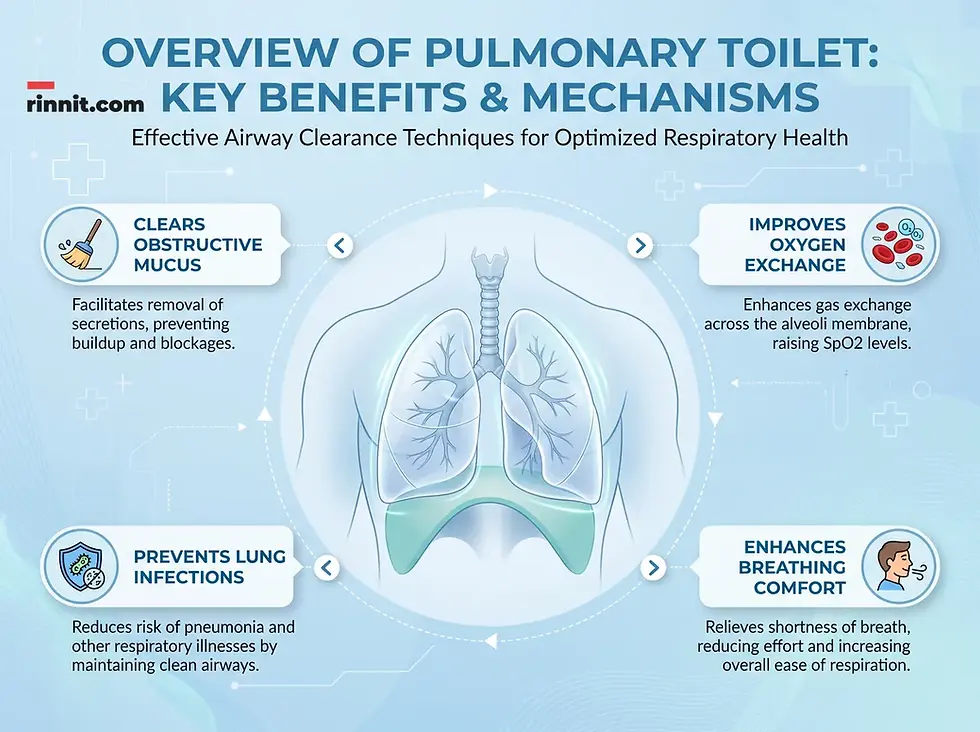
Pulmonary toilet, or pulmonary hygiene, refers to a collection of clinical techniques and self-care exercises designed to maintain clear airways by mobilizing and removing secretions. [1] The term originates from the French word “toilette,” meaning to wash or clean, reflecting the primary goal of “cleaning” the lungs of obstructive mucus. This practice is particularly critical for individuals suffering from chronic respiratory diseases or those recovering from surgery who may have a weakened ability to clear their own airways.
Common Conditions Requiring Pulmonary Hygiene
Several medical conditions can lead to an accumulation of secretions that the body cannot easily expel. Pulmonary toilet serves as a primary intervention for managing these issues and preventing secondary infections.
Condition | Impact on Respiratory System |
Asthma | Causes inflammation and excess mucus production in the airways. |
COPD | Leads to chronic airway obstruction and difficulty expelling secretions. |
Cystic Fibrosis | Results in thick, sticky mucus that clogs the lungs and pancreas. |
Bronchiectasis | Causes permanent enlargement of parts of the airways, leading to mucus buildup. |
Pneumonia | An infection that fills the air sacs with fluid or pus. |
Core Techniques for Airway Clearance
The effectiveness of pulmonary toilet lies in its variety of methods, ranging from simple breathing exercises to the use of advanced medical equipment. Healthcare providers often recommend a combination of these techniques based on the specific needs of the patient. [1] As Cleveland Clinic describes it, pulmonary toilet covers exercises and procedures that clear mucus and other secretions from the airways, such as deep breathing, huff coughing, and chest or back percussion. [1]
Manual and Physical Exercises
Huff Coughing: Unlike a standard cough, this technique involves taking a deep breath and exhaling forcefully through an open mouth, similar to fogging a mirror. This helps move mucus from smaller to larger airways.
Chest and Back Percussion: A caregiver or therapist uses cupped hands to rhythmically clap against the patient's chest or back, which physically breaks up stubborn mucus deposits. [1]
Postural Drainage: This involves placing the body in specific positions that use gravity to help drain secretions toward the central airways for easier expulsion.
Device-Assisted Methods
Incentive Spirometry: A handheld device that encourages slow, deep breaths to expand the lungs and clear secretions. It is frequently used post-surgery to prevent lung collapse.
Airway Clearance Vests: These inflatable vests use high-frequency vibrations to loosen mucus throughout the chest wall, allowing it to be coughed up more effectively. [1]
Nebulized Saline: Inhaling a fine mist of hypertonic saline helps thin out thick mucus, making it easier to mobilize during other clearance exercises.
Safety and Contraindications
While generally safe, certain pulmonary toilet techniques may be harmful under specific circumstances. It is vital to consult with a healthcare provider before beginning a new regimen, especially if you have pre-existing injuries or acute cardiac issues.
Contraindication | Reason for Precaution |
Pulmonary Embolism [1] | Physical mobilization could dislodge a blood clot further. |
Rib Fractures [1] | Percussion or forceful coughing can cause severe pain or further injury. |
Coughing Up Blood [1] | May indicate active bleeding that could be worsened by clearance efforts. |
Increased Intracranial Pressure [1] | Forceful breathing maneuvers can further elevate pressure within the skull. |
Recovery and Long-Term Outlook
The immediate goal of pulmonary toilet is to provide relief from shortness of breath by clearing obstructive secretions. Most individuals notice an improvement in their breathing comfort immediately after a session. For those with chronic conditions, consistent practice over several weeks typically leads to increased exercise tolerance and a better overall quality of life. [1]
Conclusion
Pulmonary toilet is a fundamental component of respiratory care that empowers individuals to manage their lung health proactively. By mastering airway clearance techniques, patients can significantly reduce their risk of serious complications and maintain a more active lifestyle. Regular consultation with a respiratory therapist ensures that the chosen methods remain effective and safe over time.
Call to Action
If you or a loved one are struggling with persistent mucus or shortness of breath, speak with your healthcare provider about incorporating pulmonary toilet into your daily routine. Early intervention and consistent practice are the keys to maintaining clear, healthy lungs.
Frequently Asked Questions
1. What is pulmonary toilet?
Pulmonary toilet is a set of exercises and medical procedures designed to help clear mucus and other secretions from the airways to improve breathing and lung function.
2. Is pulmonary toilet the same as pulmonary hygiene?
Yes, pulmonary toilet and pulmonary hygiene are interchangeable terms for the same set of airway clearance techniques.
3. What is huff coughing?
Huff coughing is a controlled breathing technique where you exhale forcefully through an open mouth to move mucus from the deep parts of your lungs to the upper airways.
4. How does chest percussion work?
Chest percussion involves rhythmic clapping on the chest or back with cupped hands to vibrate the lungs and break up thick mucus so it can be coughed out.
5. What is postural drainage?
Postural drainage is a technique where you sit or lie in specific positions to let gravity help drain mucus from different parts of your lungs toward your throat.
6. Who needs pulmonary toilet?
Pulmonary toilet is typically recommended for people with conditions that cause excess mucus or difficulty coughing, such as COPD, asthma, cystic fibrosis, or those recovering from surgery.
7. Can I do pulmonary toilet at home?
Many techniques, such as huff coughing and incentive spirometry, can be performed at home after receiving proper instruction from a healthcare provider.
8. What are the benefits of pulmonary hygiene?
The main benefits include easier breathing, reduced risk of lung infections, improved oxygen levels, and a better ability to perform physical activities.
9. Are there any risks to pulmonary toilet?
While generally safe, some techniques may cause temporary muscle soreness. It is contraindicated for people with certain conditions like rib fractures or pulmonary embolisms.
10. How often should I practice these techniques?
The frequency depends on your specific condition, but many people find relief by practicing for 5 to 10 minutes several times a day.
Related Reading
Chest Physiotherapy (Chest PT): Techniques, Uses and Benefits explains percussion and positioning techniques that loosen mucus.
Postural Drainage: Techniques for Airway Clearance describes body positions that help drain mucus from the lungs.
Huff Cough: What It Is and How to Do It Step by Step teaches a gentle cough method that clears mucus with less effort.
Atelectasis: Symptoms, Causes, Diagnosis & Treatment — Complete Guide explains collapsed lung areas that airway clearance helps prevent.
References
Cleveland Clinic. Pulmonary Toilet. Cleveland Clinic. Last updated Feb. 17, 2026. https://my.clevelandclinic.org/health/treatments/pulmonary-toilet
Chang PC, Chen PH, Chang TH, et al. Incentive spirometry is an effective strategy to improve the quality of postoperative care in patients. Asian J Surg. 2023;46(9):3397-3404. doi:10.1016/j.asjsur.2022.11.030. PMID: 36437210.
Silva HVC, Lunardi AC, Pinto ACPN, et al. Is incentive spirometry superior to standard care in postoperative cardiac surgery on clinical outcomes and length of hospital and intensive care unit stay? A systematic review with meta-analysis. Braz J Cardiovasc Surg. 2024;39(3):e20220319. doi:10.21470/1678-9741-2022-0319. PMID: 38629953.
O'Farrell HE, McElrea ER, Chang AB, et al. Mucolytics for children with chronic suppurative lung disease. Cochrane Database Syst Rev. 2025;3(3):CD015313. doi:10.1002/14651858.CD015313.pub2. PMID: 40152354.
Medical Disclaimer
This article is for informational purposes only and does not constitute medical advice. Always seek the advice of your physician or other qualified health provider with any questions you may have regarding a medical condition. Never disregard professional medical advice or delay in seeking it because of something you have read here.



Comments