Pseudomembranous Colitis: Symptoms, Causes, Treatment & Complete Guide

Updated: 2 days ago
Medically reviewed by Dr. Baraa Alnahhal, MD · Last reviewed: October 2026
Quick Answer
Pseudomembranous colitis is advanced inflammation of the colon that can cause serious or life-threatening diarrhea, usually from a C. diff infection during or after antibiotic use. If you develop watery diarrhea after recent antibiotics, especially with fever or blood in the stool, contact a healthcare professional right away. Treatment, including a C. diff-targeting antibiotic, usually works.
What the research says
Bezlotoxumab lowered the chance of C. diff coming back. In two double-blind randomized trials of 2,655 adults receiving standard antibiotics for C. difficile infection, recurrence within 12 weeks was 17% with bezlotoxumab versus 28% with placebo in MODIFY I and 16% versus 26% in MODIFY II (P<0.001 for both), with similar adverse-event rates. (Wilcox et al., N Engl J Med, 2017) [3]
The route of a fecal transplant matters. A meta-analysis of 26 studies (1,309 patients) with recurrent C. difficile infection found pooled cure rates of 94.8% with colonoscopy, 92.1% with capsules, 87.2% with enema and 78.1% with a nasogastric tube; colonoscopy was superior to enema and tube delivery, and comparable to capsules. (Ramai et al., Dig Dis Sci, 2021) [4]
Fecal transplant works well but fails in roughly 1 in 6 patients. In a meta-analysis of 12 studies including 2,671 patients with recurrent C. difficile infection, transplant failure occurred in 16.9%, and risks included antibiotics other than for C. difficile, inflammatory bowel disease, poor bowel preparation, hospitalization for the infection before transplant, inpatient transplant, and severe infection. (Tariq et al., Eur J Clin Microbiol Infect Dis, 2021) [5]
At a Glance
Aspect | Summary |
What it is | Advanced inflammation of the colon causing serious or life-threatening diarrhea |
What pseudomembranes are | Patches of irregular tissue (mucus, dead-cell debris, blood-clotting material, immune cells) lining the colon |
Most common cause | Serious Clostridioides difficile (C. diff) infection |
Typical trigger | Antibiotic treatment, during or after — mostly within 2 weeks, rarely up to 10 weeks |
Where C. diff lives | Feces, surfaces, unwashed hands, soil, water, food — it can survive outside the body for a long time |
Main symptoms | Watery diarrhea, pus/mucus/blood in stool, severe belly cramps, fever, nausea, dehydration |
Primary test | Stool sample detecting C. diff bacteria or toxins |
Standard treatment | IV fluids, stop the triggering antibiotic, targeted antibiotic (e.g., vancomycin) |
Recurring cases | Bezlotoxumab and fecal microbiota transplantation |
Rare severe cases | Surgery for toxic megacolon or bowel perforation |
What Is Pseudomembranous Colitis?
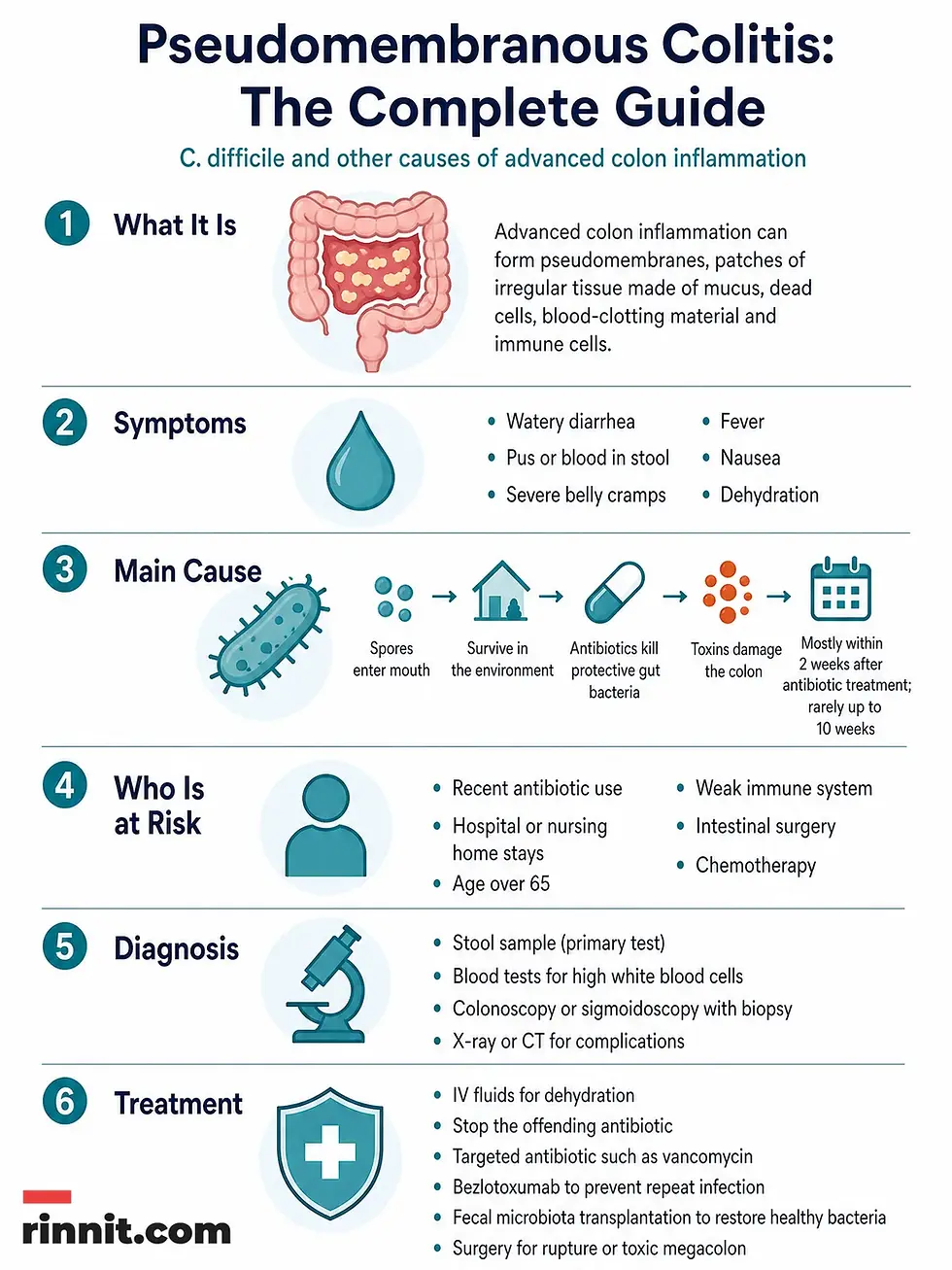
Pseudomembranous (soo-doe-mem-bruh-nus) colitis is advanced inflammation of the colon that can cause serious or life-threatening diarrhea. It is most often caused by bacteria that produce tissue-damaging toxins.
Colitis simply means inflammation of the colon — the large intestine, a long tube-like organ that carries waste out of the body, with the rectum making up its last several inches. Inflammation is the immune system's reaction to disease or injury; it is part of healing, but over time it can also damage tissues.
When the inflammation in the colon becomes advanced, it can sometimes form pseudomembranes — patches of irregular tissue lining the colon. These patches are made up of mucus, debris from dead cells, blood-clotting material, and immune system cells.
The most common cause is a serious infection with Clostridioides difficile, also called C. diff. The illness often affects people who are in the hospital for other conditions, and C. diff-related diarrhea often happens during or after the use of antibiotics. Treatment includes an antibiotic that targets C. diff and steps to restore body fluids, with other treatments that help restore the healthy bacteria protecting the colon.

What are the symptoms of pseudomembranous colitis?
Pseudomembranous colitis symptoms often begin during or after antibiotic treatment, most often within two weeks of taking antibiotics.
Symptom | What to Look For |
Watery diarrhea | The defining sign |
Pus, mucus, or blood in the stool | A warning that requires prompt attention |
Severe belly cramps, pain, or tenderness | Intense abdominal discomfort |
Fever | Sign of infection |
Nausea | Digestive upset |
Dehydration signs | Thirst, dry mouth, and other symptoms of low body fluids |
The timing matters. The beginning of symptoms is often related to recent antibiotic treatment, and symptoms may start during or after treatment. Most often, symptoms appear within two weeks of antibiotic treatment — and rarely, after ten weeks.
When should you see a doctor about pseudomembranous colitis?
Two simple rules cover when to act. First, if you are currently taking or have recently taken antibiotics and you develop diarrhea, contact your healthcare professional. Second, see your healthcare professional anytime you have severe diarrhea with a fever, painful stomach cramps, or blood or pus in your stool — whether or not antibiotics are involved.
What causes pseudomembranous colitis?
Pseudomembranous colitis is most commonly caused by the bacterium Clostridioides difficile (C. diff), which releases toxins in the colon that damage tissue and cause watery diarrhea.
The C. difficile Bacterium
The most common cause of pseudomembranous colitis is Clostridioides difficile (C. diff). Some C. diff infections are mild to moderate; pseudomembranous colitis is a sign of more serious disease.
C. diff bacteria enter the body through the mouth. When they reach the colon, the spores turn into active bacteria that release toxins that damage tissues. These toxins destroy cells, disrupt colon function, and cause watery diarrhea.
Outside the colon, the bacteria are not active — but they can live for a long time in:
Human or animal feces
Surfaces in a room
Unwashed hands
Soil
Water
Food
When the bacteria find their way back into a person's digestive system, they become active again and cause infection. Because C. diff can survive outside the body, the bacteria spread easily.
The Role of Antibiotics
Normally, the colon hosts many types of bacteria that aid digestion and keep each other in check. Antibiotics can kill the good bacteria and change other protective factors. If a person already has C. diff or is newly exposed to it, the germs have a chance to thrive and cause disease.
Any antibiotic may create conditions that allow C. diff to grow, but broad-spectrum antibiotics — those that fight many different types of bacteria — are most often linked to C. diff-related diarrhea:
Antibiotic Family | Examples |
Fluoroquinolones | Ciprofloxacin (Cipro), levofloxacin |
Penicillins | Amoxicillin, ampicillin |
Lincosamides | Clindamycin (Cleocin) |
Cephalosporins | Cefixime (Suprax) |
Other Factors in C. diff Infection
Other conditions can create an environment in the colon that makes infection more likely, including chemotherapy for cancer, inflammatory bowel disease, cancers or other diseases that affect the immune system, kidney disease, and medicines that reduce stomach acid, called proton pump inhibitors.
Other Causes
Less common causes of pseudomembranous colitis include:
Category | Examples |
Other bacteria | Klebsiella oxytoca, Staphylococcus aureus |
Viruses | Cytomegalovirus, coronavirus |
Parasites | Various parasitic infections |
Inflammatory bowel disease | Chronic intestinal inflammation |
Drugs | Cocaine |
Medical procedures | Chemicals used in some procedures |
Circulation problems | Reduced blood supply to the colon from blood vessel disease |
What are the risk factors for pseudomembranous colitis?
Pseudomembranous colitis is more likely to develop when certain risk factors are present.
Risk Factor | Detail |
Antibiotic use | The central trigger |
Long hospital or nursing home stays | More exposure and less natural gut diversity |
Older age | Especially over 65 years |
Weakened immune system | Less ability to fight the infection |
Intestinal surgery | Disrupts the colon's environment |
Chemotherapy | Changes colon conditions in ways that favor C. diff |
What complications can pseudomembranous colitis cause?
Pseudomembranous colitis treatment is usually successful, but the condition can be life-threatening and may return days or weeks after treatment. However, even with prompt diagnosis and treatment, it can be life-threatening. Possible complications include:
Complication | What Happens |
Dehydration | Diarrhea causes serious loss of fluids and essential minerals, making it difficult for the body to function and causing dangerously low blood pressure. Serious dehydration can cause the kidneys or other organs to lose their ability to work. |
Toxic megacolon | In this rare condition, the colon cannot get rid of gas and stool and becomes greatly enlarged. Untreated, it may rupture and spread bacteria, requiring emergency surgery and possibly causing death. |
Bowel perforation | A rare hole in the large intestine, resulting from extensive lining damage or after toxic megacolon. It can spread bacteria and lead to a life-threatening infection. |
Death | Even mild to moderate C. difficile infections can quickly progress to fatal disease if not treated quickly. |
One more point deserves attention: pseudomembranous colitis may sometimes return, days or even weeks after apparently successful treatment. Recurrence is a well-known feature of C. diff infections, and there are treatments specifically designed to prevent it.
How can you prevent pseudomembranous colitis?
Hospitals and other healthcare facilities follow strict infection-control guidelines to prevent the spread of C. difficile. If you have a friend or family member in a hospital or nursing home, follow hygiene guidelines and ask questions if you see someone not following them.
Preventive Measure | What to Do |
Handwashing | Healthcare workers practice good hand hygiene before and after treating each person. During a C. difficile outbreak, soap and warm water work better than alcohol-based hand sanitizers, because alcohol does not effectively destroy C. diff spores. Visitors should wash hands with soap and warm water before and after leaving the room or using the bathroom. |
Contact precautions | Hospitalized patients have a private room or share with someone who has the same illness. Staff and visitors wear disposable gloves and isolation gowns while in the room until at least 48 hours after diarrhea ends. |
Thorough cleaning | All surfaces should be carefully disinfected with a product containing chlorine bleach, which kills C. diff spores. |
Use antibiotics only when necessary | Antibiotics are sometimes prescribed for viral illnesses they cannot treat. Take a wait-and-see attitude with simple ailments. If you do need an antibiotic, ask your healthcare professional whether you can take one less likely to increase the risk of C. diff-related diarrhea. |
How is pseudomembranous colitis diagnosed?
Pseudomembranous colitis is diagnosed using tests and procedures that look for the cause of diarrhea.
Test | What It Does |
Stool sample | The primary test for a C. diff infection. Different stool tests detect C. diff bacteria or their toxins, or other disease-causing germs or parasites that can cause pseudomembranous colitis. |
Blood tests | May reveal an unusually high white blood cell count (leukocytosis), which may indicate an infection such as C. difficile if you also have diarrhea. |
Colonoscopy or flexible sigmoidoscopy | A tube with a miniature camera examines the inside of the colon; a biopsy may be taken and tested to identify causes other than C. diff. A colonoscopy examines the entire colon; a flexible sigmoidoscopy examines part of it. |
Imaging tests | An X-ray or CT scan looks for serious complications such as toxic megacolon or bowel perforation. |
How is pseudomembranous colitis treated?
Pseudomembranous colitis is usually treated with antibiotics, and if they do not work, options include fecal microbiota transplantation or, for serious colon damage, surgery.
Treatment Step | How It Works |
Treating dehydration | Fluids and essential minerals are delivered through a tube inserted in a vein (IV), restoring typical fluid levels. |
Stopping the triggering antibiotic | If the illness is linked to an antibiotic, use of that medicine is stopped unless it is critical for treating another condition. Other likely-linked medicines may also be stopped. |
A targeted antibiotic | You will likely take an antibiotic that targets C. diff but not the broad range of bacteria in the colon. This treats the infection while allowing other bacteria to recover. More than one round of treatment may be needed. Vancomycin is commonly used. |
Preventing recurrences | Bezlotoxumab, an antibody that was used with antibiotics to lower the risk of repeat infection, was discontinued by its maker in 2025 and is no longer available. |
When antibiotic treatments do not work, your healthcare team may look for other possible causes of the colitis or try other treatments.
Restoring Healthy Bacteria
Sometimes treatments are used to restore the healthy bacteria in the colon. Stool from a healthy donor — often from stool banks — is screened to make sure it carries no harmful germs. This stool, rich in healthy bacteria, is transplanted into the diseased colon to restore typical gut bacteria. The procedure is called fecal microbiota transplantation, and the material can be delivered in four ways: with a scope through the anus, through a tube passed through the nose down to the stomach, with an enema into the rectum, or as a pill containing inactive bacteria that activate once they reach the intestines.
Surgery
Serious damage to the colon, rupture, or toxic megacolon may require surgery. Possible procedures include removing all of the colon so that stool empties from the small intestine through an opening in the belly wall into a bag; removing a diseased section and connecting the remaining healthy portions; or redirecting stool into a belly-wall opening, cleaning the diseased colon through a second opening while treating it with antibiotics — with the possibility of restoring the colon to its original form if the diseased portion heals.
How should you prepare for a pseudomembranous colitis appointment?
Pseudomembranous colitis is often diagnosed while you are already under care in a hospital or nursing home, in which case diagnosis and treatment continue as part of your current care. You may also see your primary healthcare professional first.
Before the appointment, write down your symptoms (including any that seem unrelated), key personal information such as major stresses and family medical history, all medicines, vitamins, and supplements with doses, and your questions. A family member or friend can help you remember what you are told.
Questions to ask your healthcare professional may include: What is the most likely cause of my symptoms? What tests do I need? Is my condition temporary or long-lasting? What treatments are available and which do you recommend? How can I manage my other health conditions alongside this one? Are there restrictions? Should I see a specialist?
Expect your doctor to ask when symptoms began, whether you have diarrhea, whether there is blood or pus in your stools, whether you have a fever or stomach pain, whether symptoms have stayed the same or worsened, whether you have taken antibiotics, had surgery, or been hospitalized in recent weeks, whether anyone at home is sick with diarrhea, whether you have ever had C. diff or antibiotic-related diarrhea, whether you have inflammatory bowel disease, and whether you have recently traveled to an area with an unsafe water supply.
In the meantime, drink plenty of fluids to help prevent dehydration. Sports drinks, oral rehydration solutions (Pedialyte, Ceralyte, others), noncaffeinated soft drinks, broths, and fruit juices are good options.
Frequently Asked Questions
What is pseudomembranous colitis?
Pseudomembranous colitis is advanced inflammation of the colon that can cause serious or life-threatening diarrhea. In severe cases it forms pseudomembranes — patches of irregular tissue made of mucus, dead-cell debris, blood-clotting material, and immune cells — lining the colon. It is most often caused by a serious infection with Clostridioides difficile (C. diff).
Why do antibiotics cause pseudomembranous colitis?
The colon normally hosts many healthy bacteria that keep each other in check. Antibiotics — especially broad-spectrum ones — can kill these protective bacteria, giving C. diff, which produces tissue-damaging toxins, a chance to thrive and cause disease.
How soon after antibiotics do symptoms appear?
Symptoms most often begin during antibiotic treatment or within two weeks after it, and rarely up to ten weeks later. Any new watery diarrhea during or after a course of antibiotics deserves a call to your healthcare professional.
What are the symptoms to watch for?
Watery diarrhea, pus or mucus or blood in the stool, severe belly cramps or pain, fever, nausea, and signs of dehydration such as thirst and dry mouth. See a doctor promptly for any severe diarrhea with fever, painful cramps, or blood or pus in the stool.
How is pseudomembranous colitis diagnosed?
The primary test is a stool sample that detects C. diff bacteria or toxins. Blood tests can show a high white blood cell count, a colonoscopy or flexible sigmoidoscopy can examine the colon and take biopsies, and X-ray or CT scans look for complications like toxic megacolon or bowel perforation.
How is it treated?
Treatment usually includes IV fluids to restore dehydration, stopping the triggering antibiotic if possible, and a targeted antibiotic such as vancomycin. For recurring infections, doctors may add a fecal microbiota transplant or another treatment that restores healthy gut bacteria. Rare severe cases with rupture or toxic megacolon require surgery.
Can pseudomembranous colitis come back?
Yes. It may return days or even weeks after apparently successful treatment. When there is a risk of repeat infection, fecal microbiota transplantation and related microbiome treatments are used to prevent recurrences.
Is pseudomembranous colitis contagious?
The C. diff germ that usually causes it can spread through spores left on hands and surfaces. Washing hands with soap and water helps, because alcohol hand gel does not kill the spores well. Cleaning bathrooms with a bleach-based product also helps protect others at home.
Should I take anti-diarrhea medicine?
Do not take anti-diarrhea medicine unless your provider tells you to. Slowing the bowel can keep toxins in the colon and may make the illness worse. Drink plenty of fluids and call your provider instead.
Do probiotics prevent C. diff colitis?
The evidence is mixed, and probiotics are not a proven way to prevent or treat it. If you want to try one, ask your provider first, especially if you have a weak immune system.
Conclusion
Three lessons anchor this guide. First, the colon's healthy bacteria are a defense system — antibiotics save lives, but by wiping out protective gut flora they can open the door for C. diff to release toxins that cause serious colon inflammation. Second, timing is a diagnostic clue: diarrhea that starts during antibiotic treatment or within two weeks afterward — rarely up to ten weeks — should always be reported promptly, not dismissed as a side effect. Third, the illness is serious but usually treatable, with a clear ladder from fluids and targeted antibiotics to bezlotoxumab, fecal microbiota transplantation, and surgery for the rare worst cases — the key is acting early, because even with prompt care this condition can be life-threatening.
This guide walked through what pseudomembranous colitis is, the symptoms and timing, the C. diff mechanism and the antibiotic link, the risk factors, the four complications, prevention in hospitals and at home, the diagnostic tests, and the complete treatment path including how healthy bacteria are restored.
Medical disclaimer: This article is for informational purposes only and is not a substitute for professional medical advice, diagnosis, or treatment. Always seek the advice of a qualified healthcare professional with any questions you may have regarding a medical condition.
Related Reading
Antibiotic-Associated Diarrhea: Symptoms, Causes, Treatment & Complete Guide explains diarrhea that starts during or after antibiotics.
Fecal Microbiota Transplantation (FMT): Restoring Gut Health explains how donor stool restores gut bacteria after repeat C. diff.
Stool Test: Types, How to Collect a Sample and What Results Mean explains the stool tests used to detect C. diff and other germs.
Colonoscopy: Purpose, Prep, Procedure, Results and Risks explains the camera exam that can show pseudomembranes in the colon.
References
Mayo Clinic Staff. Pseudomembranous colitis - Symptoms & causes. Mayo Clinic. September 3, 2025. https://www.mayoclinic.org/diseases-conditions/pseudomembranous-colitis/symptoms-causes/syc-20351434
Mayo Clinic Staff. Pseudomembranous colitis - Diagnosis & treatment. Mayo Clinic. September 3, 2025. https://www.mayoclinic.org/diseases-conditions/pseudomembranous-colitis/diagnosis-treatment/drc-20351439
Wilcox MH, et al. Bezlotoxumab for Prevention of Recurrent Clostridium difficile Infection. N Engl J Med. 2017;376(4):305-317. PMID 28121498. https://doi.org/10.1056/NEJMoa1602615
Ramai D, et al. Fecal Microbiota Transplantation (FMT) with Colonoscopy Is Superior to Enema and Nasogastric Tube While Comparable to Capsule for the Treatment of Recurrent Clostridioides difficile Infection: A Systematic Review and Meta-Analysis. Dig Dis Sci. 2021;66(2):369-380. PMID 32166622. https://doi.org/10.1007/s10620-020-06185-7
Tariq R, et al. Predictors of failure after fecal microbiota transplantation for recurrent Clostridioides difficile infection: a systematic review and meta-analysis. Eur J Clin Microbiol Infect Dis. 2021;40(7):1383-1392. PMID 33496893. https://doi.org/10.1007/s10096-021-04163-z



Comments