Postherpetic Neuralgia: Symptoms, Causes, Diagnosis, and Treatment

Updated: 3 days ago
Medically reviewed by Dr. Baraa Alnahhal, MD · Last reviewed: October 2026
Postherpetic neuralgia is the most common complication of shingles. It causes burning pain in the nerves and skin that lasts three months or longer after the shingles rash has healed, and it most often affects people older than 60. There is no cure, but treatments such as lidocaine or capsaicin skin preparations, anticonvulsants, antidepressants, injections, and nerve stimulation can ease symptoms, and the pain often improves over time. Prevention centers on the shingles vaccine: in the U.S., adults 50 and older can get Shingrix, which with two doses is more than 90% effective at preventing shingles and postherpetic neuralgia. Seek care at the first sign of shingles, since antiviral medicines started within 72 hours of the rash lower the risk of this complication.
Quick Answer
Postherpetic neuralgia is the most common complication of shingles, causing burning nerve pain that lasts three months or longer after the rash heals. It mainly affects people older than 60 and has no cure, though it often improves. Treatments include lidocaine, gabapentin and antidepressants. The Shingrix vaccine is more than 90% effective at preventing it in adults 50 and older. [1] [2]
What the research says
The Shingrix (herpes zoster subunit) vaccine cut postherpetic neuralgia risk by about 89% in adults 70 and older. In pooled analyses of two randomized trials (16,596 participants aged 70 or older), vaccine efficacy against postherpetic neuralgia was 88.8% (95% CI 68.7 to 97.1) and efficacy against shingles was 91.3% (95% CI 86.8 to 94.5). Injection-site and systemic reactions within 7 days were more frequent with the vaccine than with placebo (79.0% vs 29.5%) (Cunningham et al., N Engl J Med, 2016).
The risk of postherpetic neuralgia rises with age. A systematic review reported that about 10% of people with shingles have persisting pain 1 month after the rash, and that postherpetic neuralgia develops in about 20% of people aged 60 to 65 who had acute shingles and in more than 30% of those older than 80. Up to 2% still have pain 5 years or more later (Watson, BMJ Clin Evid, 2010).
Evidence that oxycodone helps neuropathic pain is very low quality. A Cochrane review of 5 randomized studies (687 participants, 50 of them with postherpetic neuralgia) rated the evidence for oxycodone as very low quality, and adverse events were common: 86% with oxycodone versus 63% with placebo (Gaskell et al., Cochrane Database Syst Rev, 2016).
Research summaries are based on article abstracts retrieved from PubMed.
What Is Postherpetic Neuralgia?
Postherpetic neuralgia is the most common complication of shingles. It causes a burning pain in nerves and skin. The pain lasts long after the rash and blisters of shingles have gone away.
Postherpetic neuralgia mainly affects people older than 60. There is no cure, but treatments can ease symptoms. For many people, postherpetic neuralgia gets better over time.
What are the symptoms of postherpetic neuralgia?
Postherpetic neuralgia symptoms usually happen in the same area of skin where you had a shingles breakout. Often, a shingles rash looks like a band on one side of the body, typically on the torso.
Symptom | How It Typically Feels |
Long-lasting pain | Pain that lasts three months or longer after the shingles rash has healed. The pain may feel like sharp burning or jabbing, or it may feel deep and aching. |
Sensitivity to touch | People with postherpetic neuralgia often cannot bear even the touch of clothing on the area of skin that had the rash. |
Itching or numbness | Less often, postherpetic neuralgia can cause an itchy feeling or loss of feeling. |
When should you see a doctor about postherpetic neuralgia?
See a healthcare professional at the first sign of shingles. The pain of postherpetic neuralgia may start before you notice a rash.
Starting antiviral medicines within 72 hours of getting the shingles rash lowers the risk of having postherpetic neuralgia. Early treatment is one of the most important steps you can take.
What causes postherpetic neuralgia?
The chickenpox virus causes shingles. If you have had chickenpox, the virus stays in your body for the rest of your life. The virus can become active again and cause shingles. This risk goes up with age. The risk also rises if something weakens the body's immune system, such as chemotherapy medicines used to treat cancer.
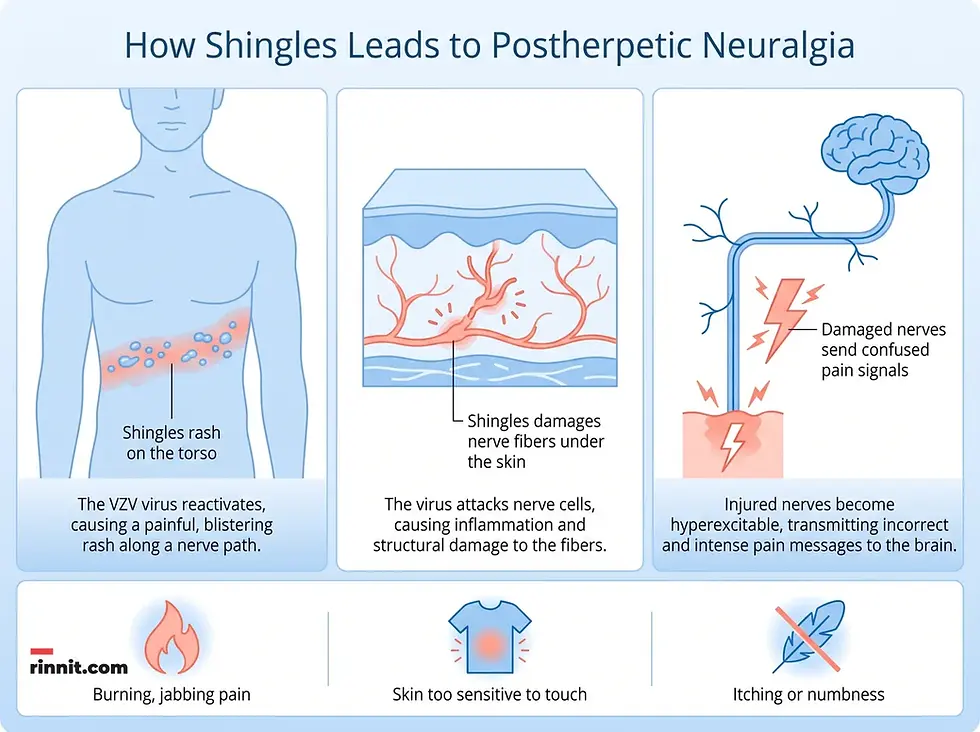
Postherpetic neuralgia happens if nerve fibers are damaged during a breakout of shingles. The shingles rash is associated with an inflammation of nerves beneath the skin. Damaged nerve fibers cannot send messages from the skin to the brain as they usually do. As a result, the messages become confused, and the body cannot manage pain signals and pain levels. Pain can last months or even years.
Cause | How It Leads to Postherpetic Neuralgia |
Chickenpox virus reactivation | The virus stays in your body after chickenpox, can reactivate with age or a weakened immune system, and causes shingles |
Nerve fiber damage | Nerves damaged during a shingles breakout cannot send normal messages from skin to brain |
Confused pain signals | The body cannot manage pain signals and pain levels, so pain can last months or even years |
What are the risk factors for postherpetic neuralgia?
Postherpetic neuralgia is more likely to develop after shingles when certain risk factors are present.
Risk Factor | Details |
Age 60 or older | The complication mainly affects older adults |
Weakened immune system | Health conditions, treatments for an illness, or medicines that make the immune system weak raise the risk |
Severe shingles rash | A rash severe enough to keep you from doing daily activities raises the risk |
Other long-term health issues | Conditions such as diabetes or lung or heart conditions raise the risk |
Rash location | Shingles rash on the face or torso raises the risk |
Delayed antivirals | Not taking antiviral medicine within 72 hours of the rash appearing raises the risk |
No shingles vaccination | Not being vaccinated for shingles raises the risk |
How can you prevent postherpetic neuralgia?
Shingles vaccines can help prevent shingles. You can only get postherpetic neuralgia if you have had shingles, so preventing shingles prevents this complication.
In the U.S., people age 50 and older can get a shingles vaccine called Shingrix. Adults who have weakened immune systems due to disease or treatment also may get the shingles vaccine.
Shingrix is given in two doses, typically 2 to 6 months apart. With two doses, Shingrix is more than 90% effective in preventing shingles and postherpetic neuralgia.
Even if you have had shingles, being vaccinated can help prevent future breakouts.
If you have had the older shingles vaccine, Zostavax, you should still get the Shingrix vaccination. Zostavax is no longer available in the United States. Other shingles vaccines also are offered outside of the United States.
Ask your healthcare professional when you should get a vaccine and for more information on how to prevent shingles and postherpetic neuralgia.
Prevention Step | Key Fact |
Get the Shingrix vaccine | Two doses, typically 2 to 6 months apart |
Know the effectiveness | More than 90% effective with two doses at preventing shingles and postherpetic neuralgia |
Eligibility | Adults 50+ in the U.S., and adults with weakened immune systems |
Even after shingles | Vaccination can still help prevent future breakouts |
Had Zostavax? | You should still get Shingrix; Zostavax is no longer available in the U.S. |

What complications can postherpetic neuralgia cause?
People with postherpetic neuralgia can develop other concerns that are common with long-term pain. It depends on how long postherpetic neuralgia lasts and how painful it becomes.
Complication | Description |
Depression | Long-term pain can affect mood and lead to depression |
Trouble sleeping | Ongoing pain can make it difficult to sleep |
Tiredness | Persistent pain often causes fatigue |
Reduced appetite | People may not feel as hungry as usual |
How is postherpetic neuralgia diagnosed?
To diagnose postherpetic neuralgia, a healthcare professional may first ask if you have had shingles and if your pain has lasted three months or more.
Postherpetic neuralgia may be diagnosed by checking for pain in the area where you had shingles. For most people, no other tests are needed.
How is postherpetic neuralgia treated?
Treatment is used to ease postherpetic neuralgia pain and to make it go away sooner. Treatment also helps prevent other issues and improve quality of life.
Postherpetic neuralgia has no cure, but it often gets better over time. No single treatment relieves postherpetic neuralgia for everyone. It may take a mix of treatments to ease the pain.
Skin Preparations
Lidocaine. Lidocaine is a treatment you put on the skin for short-term relief of mild postherpetic neuralgia pain. It comes in different forms, including creams, gels, and small bandagelike patches. Your healthcare professional may prescribe lidocaine, or you can buy it without a prescription at lower doses.
Capsaicin. Capsaicin is a medicine put on the skin to relieve mild postherpetic neuralgia pain. You can buy it without a prescription for short-term relief.
It also comes in a high-dose skin prescription patch called Qutenza. You can only get Qutenza from your healthcare professional, who applies the patch to your skin. The process may take about two hours, as your healthcare team needs to watch for any side effects after the patch goes on. The patch may help relieve pain for up to three months. If it works, you can get a new patch every three months.
Anticonvulsants
Some medicines for seizures also may be used to ease moderate to severe pain from postherpetic neuralgia. Anticonvulsants calm injured nerves and may help with pain even if you do not have seizures. These medicines include gabapentin and pregabalin.
Side effects may include feeling sleepy, weight gain, feeling dizzy, and not feeling steady when walking.
Antidepressants
Some depression medicines also may be used to ease moderate to severe pain from postherpetic neuralgia. These medicines affect key brain chemicals that play a role in how the body feels pain. In smaller doses, they may help with pain even when you do not have depression. These medicines include nortriptyline, amitriptyline, duloxetine, and venlafaxine.
Side effects may include weight gain, feeling sleepy, dry mouth, and feeling groggy or faint.
Opioid Pain Relief
Opioids are very strong medicines that a healthcare professional may prescribe for postherpetic neuralgia pain. These may include tramadol, oxycodone, and morphine.
Opioids can cause side effects such as constipation, nausea, feeling sleepy, difficulty breathing, itching, and hormone issues.
An opioid may be prescribed for postherpetic neuralgia only if safer treatments have not worked. Before you start taking an opioid, your healthcare professional may explain the medicine's benefits and risks, set up treatment goals for pain relief, and make a plan to help you safely stop opioids.
Driving while taking opioids is dangerous. And it is not safe to take an opioid along with alcohol or other medicines. Talk with your healthcare professional if you are taking other medicines. Take the lowest possible dose of an opioid, and get checkups as often as your healthcare professional suggests.
Keep all prescription medicines and medicines you buy without a prescription out of the reach of children.
Injections
Postherpetic neuralgia may be treated with nerve blocks or shots, also called injections, into the spine and other painful areas. These treatments are used when medicines you take by mouth do not do enough to relieve pain. Shots may include cortisol hormone, onabotulinumtoxinA, or an epidural nerve block.
Other Treatments
Some treatments send electrical pulses to your nerves to help control postherpetic neuralgia pain levels. These are called pulsed radio frequency and spinal cord stimulators. Acupuncture also may offer some pain relief, but additional research is needed.
Treatment Type | Options | How It Helps |
Skin preparations | Lidocaine (creams, gels, patches); capsaicin (OTC); Qutenza high-dose patch | Short-term relief of mild pain; Qutenza may relieve pain for up to three months, applied by a healthcare professional |
Anticonvulsants | Gabapentin, pregabalin | Calm injured nerves for moderate to severe pain |
Antidepressants | Nortriptyline, amitriptyline, duloxetine, venlafaxine | Affect brain chemicals involved in feeling pain |
Opioids | Tramadol, oxycodone, morphine | Reserved for when safer treatments have not worked; used at the lowest dose with close checkups |
Injections | Cortisol hormone, onabotulinumtoxinA, epidural nerve block | Used when oral medicines do not do enough |
Nerve stimulation | Pulsed radio frequency, spinal cord stimulators | Electrical pulses help control pain levels |
Acupuncture | Needle-based therapy | May offer some relief; more research needed |

How should you prepare for a postherpetic neuralgia appointment?
You might start by seeing your family healthcare professional. You may be referred to a nerve specialist called a neurologist. Or your healthcare professional may suggest you see a doctor who specializes in treating long-term pain.
What You Can Do
When you make the appointment, ask if there is anything you need to do in advance. For instance, you may need to stop eating for a certain amount of time before you take a medical test. Make a list of:
Preparation Item | What to Include |
Your symptoms | Including any that do not seem related to the reason for your checkup; note when symptoms began |
Key personal information | Major stresses, recent life changes, and family medical history |
All medicines | Medicines, vitamins, and other supplements you take, including doses |
Questions to ask | Written list for your healthcare professional |
Take a family member or friend along if you can. This person can help you remember the information you are given.
Questions to Ask Your Care Team
For postherpetic neuralgia, questions to ask your care team include:
How long might my symptoms last?
What treatment do you suggest? And are there other choices?
I have other health problems. How can I best manage them together?
Is there anything I shouldn't do while I recover?
Should I see a specialist?
Are there brochures or other printed materials I can have? What websites do you recommend?
Feel free to ask any other questions you may have.
What to Expect from Your Doctor
Your healthcare professional is likely to ask you questions such as:
Do your symptoms happen some or all the time?
How bad are your symptoms?
Have you had chickenpox? When?
Have you had a shingles vaccine?
What, if anything, seems to make your symptoms better?
What, if anything, seems to make your symptoms worse?
Conclusion
Postherpetic neuralgia is the most common complication of shingles, causing burning nerve and skin pain that lasts three months or longer after the rash heals. It mainly affects people older than 60, and while there is no cure, the pain often improves over time and treatments ranging from skin preparations to anticonvulsants, antidepressants, injections, and nerve stimulation can ease symptoms. The best defense is prevention: the Shingrix vaccine is more than 90% effective with two doses, and starting antiviral medicines within 72 hours of a shingles rash lowers your risk of developing this complication.
See a healthcare professional at the first sign of shingles. Early evaluation and treatment, along with vaccination at the right age, are your strongest tools for preventing long-term nerve pain.
Frequently Asked Questions
What is postherpetic neuralgia?
Postherpetic neuralgia is the most common complication of shingles. It causes a burning pain in nerves and skin that lasts long after the rash and blisters of shingles have gone away. It mainly affects people older than 60. There is no cure, but treatments can ease symptoms, and for many people it gets better over time.
What does postherpetic neuralgia feel like?
Symptoms usually happen in the same area of skin where you had a shingles breakout. The pain lasts three months or longer after the rash has healed and may feel like sharp burning or jabbing, or deep and aching. Skin may be so sensitive that even the touch of clothing is unbearable. Less often, it can cause itching or numbness.
What causes postherpetic neuralgia?
The chickenpox virus causes shingles and stays in your body for life. If it reactivates, it causes shingles and can damage nerve fibers. Damaged fibers cannot send normal messages from the skin to the brain, so pain signals become confused and pain can last months or even years.
Who is at risk for postherpetic neuralgia?
Risk factors include being 60 or older, having a weakened immune system, a severe shingles rash, other long-term health issues like diabetes, a rash on the face or torso, not taking antiviral medicine within 72 hours of the rash, and not being vaccinated for shingles.
Can postherpetic neuralgia be prevented?
You can only get postherpetic neuralgia if you have had shingles, so preventing shingles is key. In the U.S., adults 50 and older can get the Shingrix vaccine in two doses, typically 2 to 6 months apart. With two doses, it is more than 90% effective at preventing shingles and postherpetic neuralgia. Starting antiviral medicines within 72 hours of the rash also lowers the risk.
Is there a cure for postherpetic neuralgia?
No. There is no cure, but treatments can ease symptoms, and the pain often gets better over time. No single treatment works for everyone, so it may take a mix of treatments.
What treatments are available?
Options include lidocaine and capsaicin skin preparations, a high-dose capsaicin patch (Qutenza), anticonvulsants like gabapentin, antidepressants like duloxetine, opioid pain relief when safer treatments have not worked, injections such as nerve blocks, and nerve stimulation like pulsed radio frequency or spinal cord stimulators.
How does the Qutenza patch work?
Qutenza is a high-dose capsaicin prescription patch applied to your skin by a healthcare professional. The process takes about two hours as your team watches for side effects. It may relieve pain for up to three months, and if it works, a new patch can be applied every three months.
When are opioids used for postherpetic neuralgia?
Opioids such as tramadol, oxycodone, or morphine are very strong and may be prescribed only if safer treatments have not worked. Before starting, your healthcare professional should explain risks and benefits, set treatment goals, and plan how to safely stop them. Driving while taking opioids is dangerous.
How is postherpetic neuralgia diagnosed?
A healthcare professional asks whether you have had shingles and whether your pain has lasted three months or more. It may be diagnosed by checking for pain in the area where you had shingles. For most people, no other tests are needed.
Can postherpetic neuralgia cause other problems?
Yes. Long-term pain can lead to depression, trouble sleeping, tiredness, and reduced appetite. Treatment helps prevent these issues and improve quality of life.
Related Resources
Shingles (Herpes Zoster) — Centers for Disease Control and Prevention
Shingrix Vaccine Information — U.S. Food and Drug Administration
Related Reading
Intercostal Nerve Block: Uses, Procedure and Side Effects explains intercostal nerve blocks.
Shingles Vaccine (Shingrix): Who Needs It, Doses and Side Effects explains who should get the shingles vaccine and how well it works.
References
Mayo Clinic Staff. Postherpetic neuralgia: symptoms and causes. Mayo Clinic. July 10, 2026. https://www.mayoclinic.org/diseases-conditions/postherpetic-neuralgia/symptoms-causes/syc-20376588
Mayo Clinic Staff. Postherpetic neuralgia: diagnosis and treatment. Mayo Clinic. July 10, 2026. https://www.mayoclinic.org/diseases-conditions/postherpetic-neuralgia/diagnosis-treatment/drc-20376593
Cunningham AL, Lal H, Kovac M, et al. Efficacy of the herpes zoster subunit vaccine in adults 70 years of age or older. N Engl J Med. 2016;375(11):1019-1032. PMID: 27626517. DOI: https://doi.org/10.1056/NEJMoa1603800
Watson PN. Postherpetic neuralgia. BMJ Clin Evid. 2010;2010:0905. PMID: 21418680. PubMed: https://pubmed.ncbi.nlm.nih.gov/21418680/
Gaskell H, Derry S, Stannard C, et al. Oxycodone for neuropathic pain in adults. Cochrane Database Syst Rev. 2016;7(7):CD010692. PMID: 27465317. DOI: https://doi.org/10.1002/14651858.CD010692.pub3
Medical disclaimer
This article is for informational purposes only and is not a substitute for professional medical advice, diagnosis, or treatment. Always seek the advice of your physician or other qualified health provider with any questions you may have about a medical condition.



Comments