Polyclonal Antibodies: How They Work, Uses, Benefits and Limits

Updated: 2 days ago
Medically reviewed by Dr. Baraa Alnahhal, MD · Last reviewed: October 2026
Quick Answer: What are polyclonal antibodies?
Polyclonal antibodies are a collection of antibodies made by different B-cell lineages. Each antibody can recognize a different epitope on the same antigen, giving the immune system multiple ways to bind and identify that antigen. They help the immune system respond to infections and help detect antigens in tests and research. [1]
Core idea | Plain-language meaning |
Source | Different B-cell lineages. |
Target | Different epitopes on the same antigen. |
Natural role | Help the immune system respond to infections. |
Laboratory role | Help detect antigens in tests and research. |
Medical role | Used in selected treatments and preventive care. |
Main limitation | Batch consistency and cross-reactivity can be concerns. |
What the research says
Convalescent plasma, a polyclonal antibody treatment, did not lower deaths in people with moderate to severe COVID-19. A Cochrane living systematic review of 33 randomized trials with 24,861 participants found that convalescent plasma did not reduce all-cause mortality at up to day 28 compared with placebo or standard care (risk ratio 0.98, 95% CI 0.92–1.03; 21 trials, 19,021 participants; high-certainty evidence). In plain terms, plasma from recovered patients did not improve survival in this setting (Iannizzi et al., Cochrane Database Syst Rev, 2023). [2]
Body weight may affect how well Rho(D) immune globulin works in pregnancy. A systematic review and meta-analysis of 10 studies (3 included in the meta-analysis) found a significant negative correlation between high body mass index or weight and serial anti-D levels in Rh(D)-negative pregnant women with Rh(D)-positive fetuses (r = −0.59, 95% CI −0.83 to −0.35, p = 0.007). The authors caution that study limitations mean more research is needed to confirm the finding (Ngan et al., Vox Sang, 2024). [3]
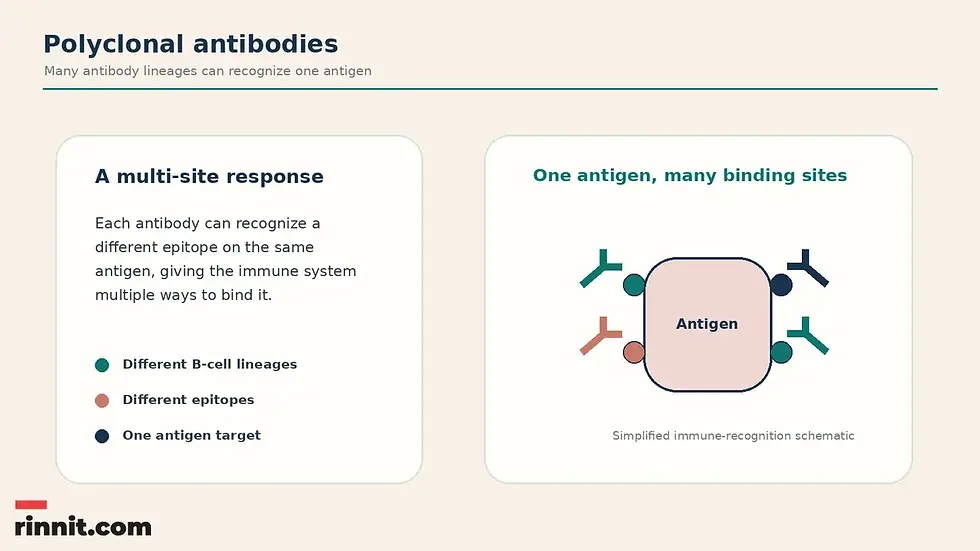
What are polyclonal antibodies?
Polyclonal antibodies are proteins that come from different lineages of plasma B cells. Each antibody recognizes and attaches to a different part of the same antigen. [1]
An antigen is a type of label on the surface of substances such as germs, pollen or proteins. It helps the immune system recognize whether a substance is part of the body or not. [1]
Humans and other animals naturally produce polyclonal antibodies when fighting infections. Polyclonal antibodies used in research and medicine commonly come from mammals such as rabbits or sheep, or from people who recovered from certain infections. [1]
How do polyclonal antibodies work?
When a virus, bacterium or other pathogen enters the body, the immune system makes antibodies. Antigens sit on the pathogen’s surface, and antibodies recognize and bind to them. This helps the immune system identify the antigen and the pathogen attached to it. [1]
An antigen can have multiple epitopes, which are specific areas where antibodies attach. A polyclonal response includes several antibody lineages, so different antibodies can bind to different epitopes on the same antigen. [1]
A simple analogy is a set of keys and locks. A single antibody acts like a key that fits a particular site. A polyclonal collection contains many kinds of keys that can fit different sites on the same antigen. [1]
Term | Meaning |
Antibody | A protein used by the body to fight infection. |
B-cell lineage | A distinct immune-cell line that can produce antibodies. |
Antigen | A recognizable label on a substance such as a germ, pollen or protein. |
Epitope | A specific part of an antigen where an antibody attaches. |
Polyclonal response | Multiple antibody lineages recognizing multiple epitopes on one antigen. |
What are polyclonal antibodies used for?
Polyclonal antibodies are used naturally by the body, in laboratory testing, in research and in selected medical treatments or preventive care. [1]
Disease testing
Laboratory tests such as ELISA and immunohistochemistry can use polyclonal antibodies to help diagnose infectious diseases and cancer. [1]
Scientific research
Researchers use polyclonal antibodies to study how the body works and how diseases affect it. [1]
Selected treatments and preventive care
Some medical uses include antivenoms for snake bites, convalescent plasma during outbreaks of infectious disease, digoxin immune fab for digoxin overdose, and Rho(D) immune globulin for people with Rh-negative blood in specific pregnancy-related and blood-disorder contexts. [1]

How are polyclonal antibodies different from monoclonal antibodies?
Both types of antibody target antigens, but they are not identical. Polyclonal antibodies come from different immune-cell lineages and recognize multiple epitopes. Monoclonal antibodies are exact copies of the same antibody and recognize one epitope. [1]
For medical purposes, polyclonal antibodies often come from the blood of mammals such as rabbits, goats or sheep, and sometimes humans. Monoclonal antibodies are made in a laboratory from a single line of identical antibody-producing cells. Monoclonal antibodies are used more often than polyclonal antibodies in medical treatments. [1]
Feature | Polyclonal antibodies | Monoclonal antibodies |
Lineage | Different immune-cell lineages. | Copies of one antibody. |
Epitope recognition | Multiple epitopes on the same antigen. | One epitope. |
Medical source or production | Often from mammal or human blood. | Made in a laboratory from a single cloned cell line. |
Medical treatment frequency | Used in selected treatments. | Used more often in medical treatments. |
Main recognition pattern | Broader recognition. | More narrowly targeted recognition. |
What are the advantages of polyclonal antibodies?
Polyclonal antibodies have three main advantages. First, they are inexpensive to create. Second, they can detect low levels of antigens in a sample. Third, they provide broader antigen recognition because multiple antibodies can bind different epitopes. [1]
These strengths can make polyclonal antibodies useful in testing and research, but their advantages must be weighed against consistency and cross-reactivity concerns.
What are the disadvantages of polyclonal antibodies?
Polyclonal antibodies come from a natural source, such as human or animal blood. Because of this, they are not as consistent from batch to batch as medications or laboratory-made treatments, and their effectiveness can vary. [1]
They also have a higher chance of cross-reactivity. Cross-reactivity means an antibody binds to a similar antigen rather than only the intended target. In testing or research, this can contribute to false-positive results. For very serious infectious diseases, healthcare professionals may need multiple tests to confirm a positive result. [1]
Animal-derived polyclonal antibodies have a higher risk of allergic reactions or other side effects when used in medical treatments. [1]
Limitation | Why it matters |
Batch variability | Natural-source batches may not be as consistent as laboratory-made treatments. |
Cross-reactivity | Binding to a similar antigen can create testing or research problems, including false positives. |
Confirmation needs | Serious infectious-disease results may require multiple tests. |
Animal-source reactions | Animal-derived products have a higher risk of allergic reactions or other side effects in treatment. |
Which treatments use polyclonal antibodies?
Polyclonal antibodies are used in several treatments, including convalescent plasma made from people who recovered from a disease. These examples do not mean a particular treatment is appropriate for an individual person. Treatment decisions depend on the condition, the product and professional evaluation.
Treatment or use | Context |
Some antivenoms | Used for snake bites. |
Convalescent plasma | May be used during infectious-disease outbreaks; it comes from people who recovered from the disease. |
Digoxin immune fab | An injection used to treat digoxin overdose. |
Rho(D) immune globulin | Given to pregnant women with Rh-negative blood to prevent rhesus isoimmunization; also used for chronic immune thrombocytopenia. |
Convalescent plasma contains polyclonal antibodies made by people who recovered from the disease.
How are polyclonal antibodies used in testing?
In ELISA and immunohistochemistry, polyclonal antibodies can help detect antigens associated with infectious diseases and cancer. [1]
Because polyclonal antibodies can recognize multiple epitopes, they may detect low levels of an antigen and may provide broader recognition. However, cross-reactivity can make interpretation more complex, and false-positive results are possible. [1]
Testing results should be interpreted by a qualified healthcare professional or laboratory team. A positive result is not automatically a diagnosis without the appropriate clinical context and, when needed, confirmatory testing.

What does “polyclonal” mean in the immune system?
“Polyclonal” refers to multiple antibody-producing lineages rather than one identical antibody copy. Each lineage may recognize a different epitope on the same antigen. [1]
This is different from “monoclonal,” which refers to an exact copy of one antibody that recognizes a single epitope. [1]
When should you discuss polyclonal antibodies with a professional?
Ask a qualified healthcare professional about polyclonal antibody treatment if you are being evaluated for a severe infection, snake bite, digoxin overdose, chronic immune thrombocytopenia or a pregnancy-related Rh incompatibility concern.
Discuss unexpected or potentially serious test results with the clinician or laboratory team responsible for interpreting them. Because cross-reactivity can contribute to false positives, some serious infectious-disease results may need more than one test.
Call 911 or go to the emergency room right away for a suspected venomous snake bite, a possible medication overdose or a serious allergic reaction; you can also call Poison Control at 1-800-222-1222 for an overdose. This educational article cannot determine the urgency of an individual situation.
Conclusion: Many antibody lineages, one antigen
Polyclonal antibodies are collections of antibodies from different B-cell lineages. They recognize different epitopes on the same antigen, allowing broader recognition than a single antibody copy. [1]
They support laboratory testing and research and have selected medical uses, including some antivenoms, convalescent plasma, digoxin immune fab and Rho(D) immune globulin. [1]
Their strengths include sensitivity, broader recognition and relatively low creation cost. Their limitations include batch variability, cross-reactivity, possible false positives and a higher risk of allergic reactions with animal-derived products. [1]
Use this guide to prepare questions for a qualified healthcare professional or laboratory team. Clear information is a starting point for better care—not a diagnosis. [1]
Frequently Asked Questions
What are polyclonal antibodies?
Polyclonal antibodies are antibodies from different B-cell lineages that recognize different epitopes on the same antigen.
What is an antigen?
An antigen is a label on a substance such as a germ, pollen or protein that helps the immune system recognize it.
What is an epitope?
An epitope is a specific part of an antigen where an antibody attaches.
How do polyclonal antibodies work?
Different antibody lineages bind to different epitopes on one antigen, giving the immune system multiple ways to recognize it.
Where do polyclonal antibodies come from?
The body makes them naturally. Research and medical preparations often come from mammals such as rabbits or sheep or from people who recovered from certain infections.
What are polyclonal antibodies used for?
Polyclonal antibodies are used in laboratory tests, research and selected treatments or preventive care.
Can polyclonal antibodies help diagnose disease?
Tests such as ELISA and immunohistochemistry can use them to help diagnose infectious diseases and cancer.
What is the difference between polyclonal and monoclonal antibodies?
Polyclonal antibodies come from different lineages and recognize multiple epitopes. Monoclonal antibodies are identical copies that recognize one epitope.
What are the advantages of polyclonal antibodies?
Polyclonal antibodies are inexpensive to create, can detect low antigen levels and recognize multiple epitopes.
What are the disadvantages of polyclonal antibodies?
Polyclonal antibody batches may vary, they have a higher chance of cross-reactivity and animal-derived products have a higher risk of allergic reactions or other side effects in treatment.
Can polyclonal antibodies cause a false-positive test?
Cross-reactivity can cause testing problems such as false positives. Serious infectious-disease results may need multiple tests for confirmation.
What treatments use polyclonal antibodies?
Examples include some snake-bite antivenoms, convalescent plasma, digoxin immune fab and Rho(D) immune globulin.
What is convalescent plasma?
Convalescent plasma is plasma from people who recovered from a disease and contains the polyclonal antibodies their bodies made against it.
What is Rho(D) immune globulin used for?
Rho(D) immune globulin is given to pregnant women with Rh-negative blood to prevent rhesus isoimmunization and is also used as a treatment for chronic immune thrombocytopenia.
Are polyclonal antibodies used more often than monoclonal antibodies in treatment?
No. Monoclonal antibodies are used more often than polyclonal antibodies in medical treatments.
When should I discuss a polyclonal-antibody treatment?
Discuss it with a qualified healthcare professional when it is being considered for a severe infection, venomous bite, digoxin overdose, chronic immune thrombocytopenia or an Rh-related pregnancy context.
Related guides
References
Cleveland Clinic. Polyclonal Antibodies (PAbs): Function & What They Are. Cleveland Clinic. Updated June 11, 2024. https://my.clevelandclinic.org/health/body/polyclonal-antibodies
Iannizzi C, Chai KL, Piechotta V, et al. Convalescent plasma for people with COVID-19: a living systematic review. Cochrane Database Syst Rev. 2023;5(5):CD013600. PMID 37162745. https://doi.org/10.1002/14651858.CD013600.pub6
Ngan CBM, Kaur R, Jackson DE. Does high body mass index (>25 kg/m²) or weight (>80 kg) reduce the effectiveness of anti-D prophylaxis in Rh(D)-negative pregnant women? A systematic review and meta-analysis. Vox Sang. 2024;119(9):902-911. PMID 38889996. https://doi.org/10.1111/vox.13693
Disclaimer
This article is for general educational purposes and is not a substitute for professional medical advice, diagnosis or treatment. Always seek the advice of a qualified healthcare professional with any questions about a medical condition or treatment.



Comments