The Human Immune System: Your Body's Defense Network

Updated: 3 days ago
Medically reviewed by Dr. Baraa Alnahhal, MD · Last reviewed: October 2026
The immune system is a network of organs, white blood cells, proteins and chemicals that protects the body from germs and other invaders and helps tissues heal. [1] Innate immunity responds immediately, while acquired immunity learns to recognize specific threats through exposure and vaccines. [1] Allergies, autoimmune diseases and immunodeficiencies arise when the system is overactive or weakened. [1] Nutritious food, exercise and enough sleep help keep it working well. [1]
Quick Answer
The human immune system is the body's first-line defense against germs and other invaders, made up of organs such as the spleen, thymus and bone marrow, white blood cells and protective proteins. [1] It works through innate immunity, which gives immediate non-specific protection, and acquired immunity, which learns to recognize and remember specific threats over time. [1]
What the research says
Vitamin D supplements slightly reduce the risk of acute respiratory infections. A meta-analysis of 46 randomized trials (75,541 participants) found that 61.3% of people taking vitamin D had at least one respiratory infection compared with 62.3% on placebo (odds ratio 0.92, 95% CI 0.86 to 0.99). The benefit was small and clearest with daily doses of 400 to 1,000 IU (Jolliffe et al., Lancet Diabetes Endocrinol, 2021) [2].
Short sleep around vaccination is linked to a weaker antibody response. In a meta-analysis, objectively measured short sleep was associated with a large decrease in antibody response to vaccination (pooled effect size 0.79, 95% CI 0.40 to 1.18; 304 adults aged 18 to 60) (Spiegel et al., Curr Biol, 2023) [3].
What Is the Immune System?
The immune system is a large, integrated network of organs, white blood cells, proteins and chemicals spread throughout the body. [1] Its primary purpose is to tell the difference between your own healthy cells ("self") and foreign invaders ("non-self") such as bacteria, viruses, fungi, parasites and cancer cells. [1]
Core Functions of Defense
The immune system protects your health through several key actions:
Prevention: Keeping germs and toxins out of the body. [1]
Neutralization: Identifying and destroying invaders that manage to get inside. [1]
Mitigation: Limiting the harm invaders can do during an infection. [1]
Healing: Repairing tissues and organs after an injury or illness. [1]
Adaptation: Adapting to new challenges and threats. [1]

The Anatomy of Immunity
Many parts of the body work together to provide protection. They fall into organs and tissues, cells, and chemical messengers.
Key Organs and Tissues
Component | Primary Function |
Bone marrow | The "factory" that makes blood cells, including white blood cells. [1] |
Spleen | Filters the blood and stores white blood cells that defend the body from invaders. [1] |
Lymph nodes | Small, bean-shaped organs that filter waste products from lymph fluid while keeping useful components such as nutrients. [1] |
Thymus | A small organ where T-cells, a type of white blood cell, mature. [1] |
Tonsils and adenoids | Located in the throat and nasal passage, they can trap bacteria and viruses as soon as they enter the body. [1] |
Skin and mucosa | Barriers that stop germs at entry points. Mucosa also secretes mucus that captures invaders. [1] |
Specialized Cells and Proteins
White blood cells are the soldiers of the immune system. They attack and eliminate harmful germs, and each type has a specific mission. They are supported by antibodies, proteins that bind to invaders and start their destruction; cytokines, chemical messengers that tell immune cells where to go and what to do, including regulating inflammation; and the complement system, a group of proteins that teams up with other cells to defend the body and promote healing. [1]
Types of Immunity: Innate vs. Acquired
The body uses two strategies to defend itself, depending on the nature of the threat and on previous exposure.
Innate (Natural) Immunity
Innate immunity is the protection you are born with. It is part of the body's first-line defense and responds right away, attacking any organism that should not be in the body. The innate system does not remember specific germs and does not offer increased protection against them in the future. [1]
Acquired (Adaptive) Immunity
Acquired immunity, also called adaptive or specific immunity, develops over time through exposure to germs or through vaccines. Cells called lymphocytes remember specific invaders. If the same germ tries to enter again, they can quickly spring into action and work with other cells to eliminate the threat. Vaccines support acquired immunity by training its cells to identify and destroy invaders before they make you sick. [1]

Common Immune System Disorders
When the immune system is overactive or weakened, it can lead to a range of health conditions.
Overactive Responses
Weakened Responses
Immunodeficiency: Inherited primary immunodeficiency diseases, and infections such as HIV, can weaken the immune system and increase vulnerability to infection. [1]
Cancer: Cancers such as leukemia and lymphoma can weaken the immune system because cancer cells in the bone marrow interfere with the production of the blood cells needed to fight infection. [1]
Signs of an Immune System Problem
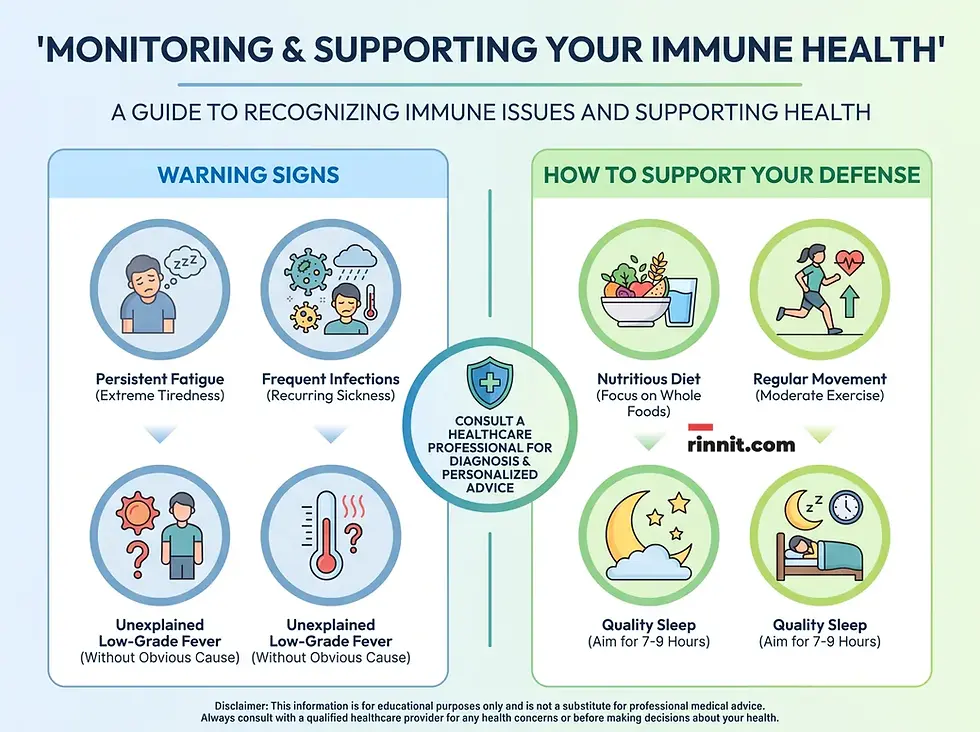
Signs and symptoms vary with the condition and may include:
How to Support Your Immune System
Because the immune system is complex, no single fast fix works for everyone, so it is best to talk to a healthcare provider for individualized advice. [1] These general habits help keep it running smoothly:
Eat healthy foods. Fruits, vegetables, lean sources of protein and whole grains support immune function. [1]
Exercise regularly. Exercise helps many aspects of health, including immune function. [1]
Get enough sleep. Not getting enough sleep can prevent the immune system from working as it should. [1]
Keep a weight that is healthy for you. A body mass index (BMI) above 30 has been linked to poorer immune function. [1]
Stay up to date on vaccines. Vaccines train your body to fight off germs that can make you sick. [1]
Avoid tobacco. Tobacco use raises the risk of conditions that can harm the immune system, such as rheumatoid arthritis. [1]
Conclusion
The immune system is an extraordinary defense network that works constantly to keep us healthy. Understanding how its parts, from the skin to the bone marrow, work together helps us appreciate the value of supporting it. A balanced diet, regular physical activity and enough sleep are among the best tools for keeping that defense strong.
Next step: If you have persistent fatigue, unexplained fevers or frequent infections, consult a healthcare professional to evaluate your immune health and discuss whether testing is appropriate.
Frequently Asked Questions
What is the immune system?
The immune system is a network of organs, white blood cells, proteins and chemicals that protects the body from germs and other invaders and helps it heal.
How can I strengthen my immune system?
Support it by eating nutritious foods, exercising regularly, getting enough sleep, staying up to date on vaccines and avoiding tobacco.
What is the difference between innate and acquired immunity?
Innate immunity is the protection you are born with and responds right away. Acquired immunity is gained over time through exposure to germs or vaccines and remembers specific invaders.
What do white blood cells do?
White blood cells attack and eliminate harmful germs. There are many types, and each has a specific mission in the body's defense.
What is an autoimmune disease?
An autoimmune disease is a condition in which the immune system mistakenly attacks the body's own healthy cells, as in lupus and rheumatoid arthritis.
Where are immune cells made?
Bone marrow, the soft, fatty tissue inside the bones, makes the blood cells the body needs, including the white blood cells that support immunity.
What role does the spleen play?
The spleen filters the blood, recycles old and damaged cells, and stores white blood cells that defend the body from invaders.
What are antibodies?
Antibodies are proteins that bind to invaders and start their destruction.
How do vaccines help the immune system?
Vaccines train the acquired immune system to identify and destroy specific germs before they make you sick.
What is inflammation?
Inflammation happens when immune cells are warding off invaders or healing damage to your tissues.
Related Reading
Understanding the Lymphatic System: Your Body's Silent Guardian explains how lymph vessels and nodes help the body fight infection.
Understanding the Spleen: Your Body’s Natural Filter and Defense Shield describes how the spleen filters blood and supports immunity.
Autoimmune Diseases: Why Your Immune System Turns on Your Body and How It's Managed explains what happens when the immune system attacks healthy tissue.
Immunocompromised: Understanding a Weakened Immune System covers causes of a weakened immune system and ways to stay safe.
References
Cleveland Clinic. Immune System. Cleveland Clinic. Last updated October 20, 2023. https://my.clevelandclinic.org/health/body/21196-immune-system
Jolliffe DA, Camargo CA, Sluyter JD, et al. Vitamin D supplementation to prevent acute respiratory infections: a systematic review and meta-analysis of aggregate data from randomised controlled trials. Lancet Diabetes Endocrinol. 2021;9(5):276-292. PMID 33798465. https://doi.org/10.1016/S2213-8587(21)00051-6
Spiegel K, Rey AE, Cheylus A, et al. A meta-analysis of the associations between insufficient sleep duration and antibody response to vaccination. Curr Biol. 2023;33(5):998-1005.e2. PMID 36917932. https://doi.org/10.1016/j.cub.2023.02.017
Medical disclaimer
The information provided in this article is for educational purposes only and should not be used as a substitute for professional medical advice, diagnosis, or treatment. Always seek the advice of your physician or other qualified health provider with any questions you may have regarding a medical condition.



Comments