Pericardium: Anatomy, Function, Conditions, Symptoms and Care

Updated: 3 days ago
Medically reviewed by Dr. Baraa Alnahhal, MD · Last reviewed: October 2026
Quick Answer: What is the pericardium?
The pericardium is a protective, fluid-filled sac around the heart and the roots of its major blood vessels. It cushions the heart, holds it in place, limits overexpansion, reduces friction and offers protection from infection. Conditions such as pericarditis and cardiac tamponade can cause chest pain and breathlessness, and sudden or severe chest symptoms need prompt medical attention. [1]
What the research says
Pericarditis is usually presumed viral or has no clear cause, and it can come back. A JAMA systematic review of 30 studies (5 meta-analyses, 10 randomized trials and 16 cohort studies; 7,569 adults) reported that idiopathic or presumed viral causes account for 80% to 90% of cases in developed countries, and that recurrences may occur in about 30% of patients who do not receive preventive therapy (Imazio et al., JAMA, 2015). [3]
Colchicine added to standard treatment lowers the chance that pericarditis returns, with more side effects. A meta-analysis of 10 randomized trials (1,981 patients; average follow-up 13.6 months) found that colchicine reduced pericarditis recurrence and postpericardiotomy syndrome (pooled RR 0.57, 95% CI 0.44–0.74), while adverse events were more frequent (RR 1.42, 95% CI 1.05–1.92), mainly gastrointestinal. Whether a medicine is appropriate is a decision for a treating clinician (Lutschinger et al., BMC Cardiovascular Disorders, 2019). [4]

What is the pericardium?
The pericardium is a protective, fluid-filled sac that surrounds the heart and helps it function properly. It also covers the roots of the major blood vessels that extend from the heart. [1]
These vessels are sometimes called the great vessels. They include the aorta, the main pulmonary artery, the pulmonary veins and the superior and inferior vena cava. [1]

What does the pericardium do?
The pericardium is more than a covering. It provides mechanical support, lubrication and a degree of protection for the heart. [1]
Function | What it involves |
Cushioning | Helps protect the heart from outside forces and pressure. |
Positioning | Helps hold the heart in place within the chest. |
Expansion control | Helps limit excessive expansion and filling with blood. |
Protection | Helps protect the heart from infection. |
Lubrication | Pericardial fluid reduces friction as the heart beats against surrounding tissues. |
The pericardium normally needs to be flexible enough to accommodate the heart as it fills and contracts. Conditions that make it inflamed, stiff or crowded by excess fluid can interfere with heart filling or pumping. [1]
Where is the pericardium located?
The pericardium is in the chest around the heart. The heart is normally toward the front of the chest and slightly to the left of the breastbone, or sternum. [1]
A person with dextrocardia has the heart slightly to the right of the sternum. The pericardium still surrounds the heart, but its position follows the location of the heart. [1]
What are the layers of the pericardium?
The pericardium has two main layers: the fibrous pericardium and the serous pericardium. The serous layer has two parts of its own. [1]
Layer | Description |
Fibrous pericardium | Tough outer connective tissue that limits excessive expansion and attaches to the great vessels, diaphragm and breastbone through connective bands. |
Serous pericardium | Inner layer that produces the fluid that lubricates the heart. |
Parietal serous layer | Outer part of the serous layer, firmly attached to the fibrous pericardium. |
Visceral serous layer | Innermost layer, directly covering the heart and the roots of the great vessels. |
Pericardial cavity | Space between the parietal and visceral serous layers that contains pericardial fluid. |
The part of the visceral layer covering the heart is also called the epicardium. [1]
Which conditions affect the pericardium?
Pericardial conditions differ in cause, mechanism, severity and treatment. The major categories include inflammation, stiffness, excess fluid and cysts.
Condition | What it means |
Pericarditis | Inflammation of the pericardium; it is often acute but can also be chronic. |
Constrictive pericarditis | The pericardium becomes too thick or stiff and restricts normal heart movement or filling. |
Pericardial effusion | More fluid than usual builds up in the pericardial space. |
Cardiac tamponade | Fluid pressure around the heart prevents it from filling properly; this is dangerous and requires urgent medical care. |
Pericardial cyst | A growth that may cause no problem but can sometimes press on the heart or lungs. |
What happens when the pericardium is damaged or diseased?
A healthy pericardium is flexible and can expand with the heart as it fills with blood. It then moves with the heart as it contracts and pumps blood to the body. [1]
A diseased pericardium may become inflamed, thickened, stiff or crowded by excess fluid. These changes can limit the heart’s ability to fill or pump efficiently. Severe complications can include heart failure or cardiogenic shock. [1]
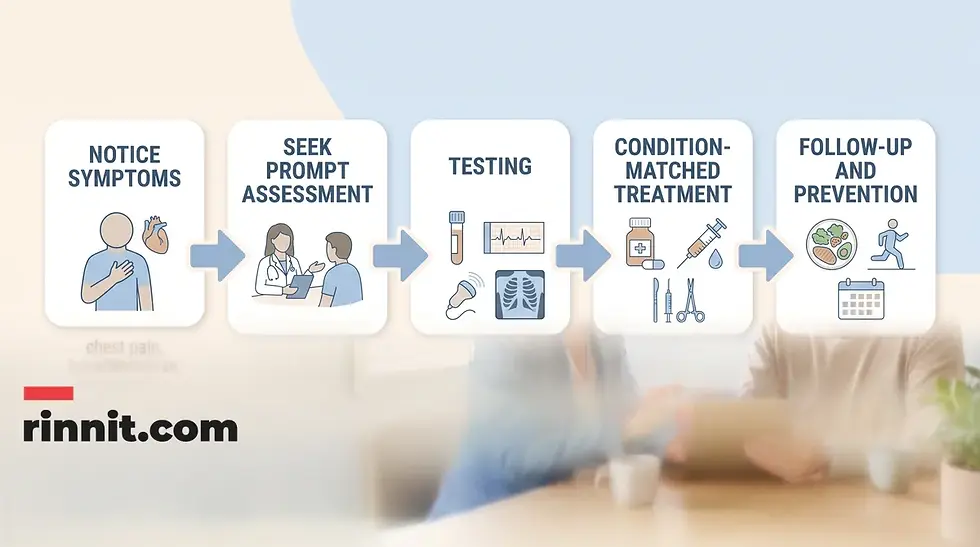
The seriousness depends on the specific condition, how quickly it developed and how much it affects heart function. Symptoms alone cannot determine the cause or urgency with certainty.
What are symptoms of pericardial problems?
Symptoms vary by condition. Chest pain, shortness of breath and palpitations are common reasons people seek evaluation, but other symptoms can also occur. [1]
Possible symptom | How it may present |
Chest pain | May feel sharp, radiate to the arm, back or neck, and worsen with coughing, swallowing, deep breathing or lying flat. |
Shortness of breath | Breathing may feel difficult, especially when a condition affects heart filling or causes pressure around the heart. |
Palpitations or fast heartbeat | Awareness of a racing, pounding or irregular heartbeat may occur. |
Dizziness or fainting | Can signal reduced circulation or another urgent cardiovascular problem. |
Dry cough | May occur with some pericardial or nearby chest conditions. |
Fatigue | May accompany inflammation or reduced cardiac efficiency. |
Fever | Can occur when inflammation or infection is involved. |
Back, neck or shoulder pain | Pain may be felt away from the chest. |
Swelling | Fluid buildup may cause swelling in the abdomen or lower legs. |
Trouble swallowing | Pressure or inflammation in the chest can sometimes affect swallowing. |
Chest pain and breathing symptoms can have many causes, including problems that are not related to the pericardium. New, severe or unexplained symptoms should be medically assessed.
When are pericardial symptoms urgent?
Call emergency services for sudden or severe chest pain, fainting, severe or rapidly worsening shortness of breath, new confusion, blue or gray lips, marked weakness or symptoms that feel life-threatening. Do not wait for an article to determine whether a serious condition is present. For a general overview of heart attack warning signs, see the American Heart Association’s guidance.
A person with known pericardial disease should follow the urgent-care plan provided by their clinician. When symptoms are less severe but new, persistent or concerning, contact a healthcare professional promptly.
How are pericardial problems evaluated?
A healthcare professional may use more than one test because the pericardium, heart muscle, valves, lungs and blood vessels can produce overlapping symptoms.
Test | What it may help evaluate |
Blood tests | Infection, immune-system conditions and markers of inflammation. |
Chest X-ray | Heart size, surrounding chest structures and some signs of fluid or other disease. |
Cardiac CT | Detailed anatomy, fluid, thickening or nearby structures. |
Echocardiogram | Heart movement, filling, fluid around the heart and pressure-related effects. |
ECG/EKG | Electrical patterns that may help identify cardiac stress or inflammation-related changes. |
Heart catheterization | Pressures and blood flow when more detailed hemodynamic information is needed. |
Test selection depends on the symptoms, medical history, examination and concern for an urgent condition.
How are pericardial conditions treated?
Treatment depends on the diagnosis and severity. A healthcare professional may treat an infection, reduce inflammation, manage fluid overload, remove fluid around the heart or address a stiff or damaged pericardium. [1]
Treatment approach | General purpose |
Antibiotics or antifungal medicines | Treat certain underlying infections. |
Rheumatologic medicines | Address disorders such as lupus or rheumatoid arthritis that contribute to pericardial disease. |
Anti-inflammatory or immune-modulating medicines | Reduce inflammation and swelling when appropriate. |
Diuretics | Remove excess fluid from the body in selected situations. |
Pericardiocentesis | Use a needle-based procedure to remove excess fluid around the heart. |
Pericardiectomy | Remove part or all of the pericardium in selected conditions. |
Video-assisted thoracic surgery | Use minimally invasive chest surgery for selected fluid or pericardial problems. |
Treatment is not one-size-fits-all. Do not start, stop or change a heart medicine, anti-inflammatory, diuretic or supplement without individualized advice.
How can someone care for heart and pericardial health?
A heart-healthy lifestyle can reduce the risk of conditions that may contribute to pericardial problems, including heart attack and heart failure. It cannot prevent every pericardial disease, and it is not a substitute for evaluation of symptoms.
Helpful habits may include eating a heart-healthy diet, exercising regularly with appropriate professional guidance, managing high blood pressure, high cholesterol and diabetes, taking prescribed medicines as directed and attending check-ups and follow-up appointments.
People with cancer, lupus, rheumatoid arthritis, scleroderma, HIV, hypothyroidism, ovarian hyperstimulation syndrome, kidney disease or tuberculosis should ask their healthcare team how the condition may affect cardiovascular or pericardial health. Heart surgery and radiation therapy can also affect risk.
Questions to ask a healthcare professional
Could my chest pain or breathing symptoms involve the pericardium, heart muscle, lungs or another structure?
Which tests are most appropriate for my symptoms?
Is there fluid, thickening or inflammation around the heart?
What symptoms should prompt emergency care?
How should I modify exercise while symptoms are being evaluated?
Could an infection, autoimmune condition, cancer, kidney problem or recent procedure be relevant?
What follow-up testing will I need?
Which medicines should I take, and which should I avoid?
Conclusion: A protective sac worth understanding
The pericardium is a fluid-filled protective sac that surrounds the heart and the roots of the major blood vessels. Its layers help cushion and hold the heart, limit excessive expansion, protect against infection and reduce friction as the heart beats. [1]
Pericarditis, constrictive pericarditis, pericardial effusion, cardiac tamponade and pericardial cysts can affect this structure. Chest pain, shortness of breath, palpitations, fainting, swelling or rapidly worsening symptoms deserve professional attention, and severe or sudden symptoms require emergency care. [1]
Frequently Asked Questions
What is the pericardium?
The pericardium is a protective, fluid-filled sac around the heart and the roots of the great vessels. It helps protect, position and lubricate the heart.
What are the main layers of the pericardium?
The two main layers are the outer fibrous pericardium and the inner serous pericardium. The serous layer has parietal and visceral parts, with fluid in the cavity between them.
Is the epicardium part of the pericardium?
The epicardium is the portion of the visceral serous pericardium that directly covers the heart.
What is pericarditis?
Pericarditis is inflammation of the pericardium. It can be acute or chronic and may cause chest pain or other symptoms.
What is a pericardial effusion?
A pericardial effusion is an excess buildup of fluid in the space around the heart. Its importance depends on the amount, speed of buildup and effect on heart function.
What is cardiac tamponade?
Cardiac tamponade is a dangerous condition in which fluid pressure around the heart prevents it from filling properly. It requires urgent medical attention.
Can pericardial disease cause chest pain?
Yes. Pericardial problems can cause sharp chest pain that may radiate to the arm, back or neck and may worsen with coughing, swallowing, deep breathing or lying flat. Chest pain has many causes, so evaluation is important.
Can pericardial disease cause shortness of breath?
Yes. Shortness of breath can occur when a pericardial condition affects heart filling or creates pressure around the heart. Severe or worsening breathing difficulty is urgent.
What tests check the pericardium?
Evaluation may include blood tests, chest X-ray, cardiac CT, echocardiogram, ECG/EKG or heart catheterization. The appropriate combination depends on symptoms and clinical findings.
How are pericardial problems treated?
Treatment depends on the specific condition and severity. Options may include medicines, diuretics, procedures to remove fluid or surgery involving the pericardium.
How can I support pericardial health?
Heart-healthy eating, appropriate exercise, management of blood pressure, cholesterol and diabetes, taking prescribed medicines and attending follow-up visits can support cardiovascular health. These habits do not replace evaluation for symptoms.
Related Reading
Pericarditis Chest Pain: Symptoms, Causes & Treatment of This Heart Problem explains why the pericardium becomes inflamed and how pericarditis is treated.
Cardiac Tamponade: The Emergency When Fluid Squeezes Your Heart — Signs, Causes, and Rapid Treatment covers the emergency when fluid around the heart squeezes it.
Constrictive Pericarditis: What It Is, Symptoms, Causes, and Treatment describes how a stiff, scarred pericardium limits heart filling.
Pericardiocentesis: Procedure, Risks, and Recovery walks through draining fluid from around the heart with a needle.
References
Cleveland Clinic. Pericardium: Function and Anatomy. Cleveland Clinic. Last updated July 19, 2022. https://my.clevelandclinic.org/health/body/23561-pericardium
Mayo Clinic Staff. Pericarditis: Symptoms and causes. Mayo Clinic. April 9, 2024. https://www.mayoclinic.org/diseases-conditions/pericarditis/symptoms-causes/syc-20352510
Imazio M, Gaita F, LeWinter M. Evaluation and treatment of pericarditis: a systematic review. JAMA. 2015;314(14):1498-1506. PMID 26461998. https://doi.org/10.1001/jama.2015.12763 Erratum in: JAMA. 2015;314(18):1978. PMID 26547475. https://doi.org/10.1001/jama.2015.14847; JAMA. 2016;315(1):90. PMID 26746469. https://doi.org/10.1001/jama.2015.16998.
Lutschinger LL, Rigopoulos AG, Schlattmann P, et al. Meta-analysis for the value of colchicine for the therapy of pericarditis and of postpericardiotomy syndrome. BMC Cardiovasc Disord. 2019;19(1):207. PMID 31477020. https://doi.org/10.1186/s12872-019-1190-4 Erratum in: BMC Cardiovasc Disord. 2019;19(1):227. PMID 31627720. https://doi.org/10.1186/s12872-019-1195-z.
American Heart Association. Warning Signs of a Heart Attack. American Heart Association. Last reviewed December 12, 2024. https://www.heart.org/en/health-topics/heart-attack/warning-signs-of-a-heart-attack
Disclaimer
This article is for general educational purposes and is not a substitute for professional medical advice, diagnosis or treatment. Always seek the advice of a qualified health provider with any questions you may have regarding a medical condition.
It explains pericardial anatomy, function, common conditions, symptoms, evaluation and general care. It does not diagnose pericarditis, pericardial effusion, cardiac tamponade, constrictive pericarditis or another cardiovascular condition; prescribe medicines or exercise; or replace individualized medical care. Seek urgent help for severe chest pain, fainting, severe breathing difficulty, confusion, blue or gray lips or rapidly worsening symptoms.



Comments