Obesity Hypoventilation Syndrome: Understanding Pickwickian Syndrome

Updated: 3 days ago
Medically reviewed by Dr. Baraa Alnahhal, MD · Last reviewed: October 19, 2026
Quick Answer: What is OHS?
Obesity hypoventilation syndrome (OHS) is a respiratory condition in which the body fails to move enough air in and out of the lungs, causing poor gas exchange. It results from excess weight pressing on the chest and abdomen, possible hormonal effects and sometimes a breathing-control defect. It is defined by a BMI of 30 or greater plus daytime high CO2.
What the research says
CPAP and noninvasive ventilation work similarly for most people with OHS. A systematic review for the American Thoracic Society guideline found no differences in mortality, cardiovascular events, or healthcare use between the two, and both improved gas exchange, daytime sleepiness, and quality of life; about 70% of people with OHS also have severe sleep apnea (Soghier et al., Ann Am Thorac Soc, 2019). DOI [1]
Even without severe sleep apnea, ventilation improves blood gases. In a randomized trial of 98 people with OHS, noninvasive ventilation improved PaCO2, pH, bicarbonate, quality of life, and daytime sleepiness compared with lifestyle modification, though hospitalization days per year were similar (2.71 vs 2.60) over a median follow-up of 4.98 years (Masa et al., Chest, 2020). DOI [2]
The starting level of CO2 doesn’t decide the device. In a 3-year analysis of 204 patients with OHS and severe sleep apnea, CPAP and noninvasive ventilation improved daytime hypercapnia similarly regardless of baseline severity (Masa et al., Arch Bronconeumol, 2022). DOI [3]
Key Takeaways: OHS at a Glance
Feature | Details |
Common Name | Pickwickian Syndrome. |
Core Issue | High carbon dioxide and low oxygen in the blood. |
Prevalence | Approximately 1 in 260 American adults. |
Primary Causes | Obesity, hypoventilation, and sleep-disordered breathing. |
Main Treatments | Significant weight loss and mechanical ventilation (CPAP/BiPAP). |
Risk Groups | More common in males and Black populations. |

How does obesity hypoventilation syndrome (OHS) work?
The condition is often described as a “triple threat” involving three interconnected factors: obesity, hypoventilation, and sleep-disordered breathing. About 90% of individuals with OHS also suffer from obstructive sleep apnea.
Why Breathing Becomes Difficult
Researchers believe several factors contribute to the development of OHS. The physical weight of excess fat on the chest wall makes it harder for the respiratory muscles to expand the lungs deeply or quickly enough. Additionally, fat deposits in the abdomen and neck may produce hormones that disrupt normal breathing patterns. In some cases, a defect in the brain's respiratory control center prevents the body from automatically adjusting breathing rates to maintain healthy gas levels.
What are the symptoms of obesity hypoventilation syndrome (OHS)?
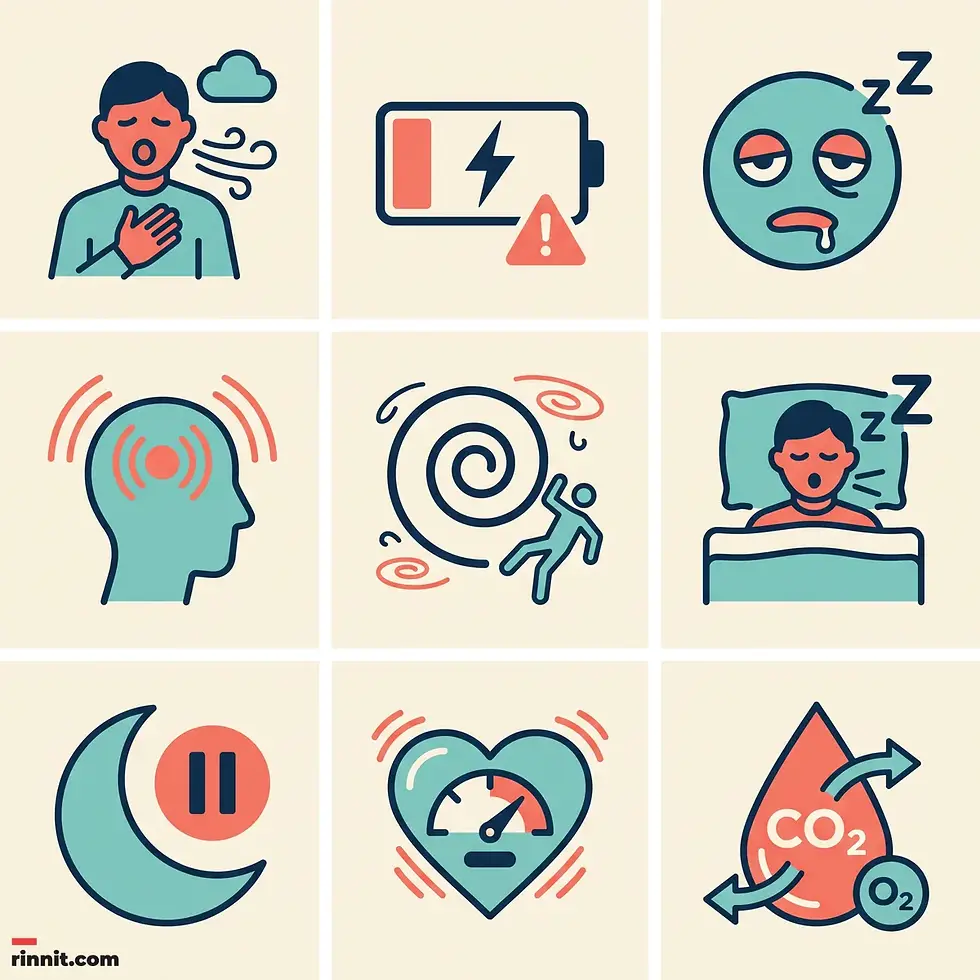
Symptoms of OHS are often subtle at first and are frequently linked to poor sleep quality and chronic low oxygen levels (hypoxemia).
Daytime Symptoms
Chronic Fatigue: Feeling constantly tired or lacking energy despite resting.
Shortness of Breath: Difficulty breathing during minimal physical activity.
Sluggishness: A general feeling of mental and physical heaviness.
Headaches and Dizziness: Often caused by the buildup of carbon dioxide.
Depression: Chronic respiratory strain and sleep deprivation can impact mental health.
Nighttime Symptoms (Often Noticed by Partners)
Loud Snoring: A hallmark of the associated sleep apnea.
Choking or Gasping: Sudden awakenings due to lack of air.
Breathing Pauses: Periods where the individual stops breathing entirely during sleep.
How is obesity hypoventilation syndrome (OHS) diagnosed?
A healthcare provider will typically begin by calculating the patient's BMI. A BMI of 30 or higher is the baseline for an OHS diagnosis. Further clinical tests are required to confirm the presence of hypercapnia.
Arterial Blood Gas (ABG): This is the most accurate test, involving a blood sample from an artery to measure exact oxygen and CO2 levels.
Sleep Study (Polysomnography): Conducted overnight to determine the presence and severity of sleep apnea.
Pulmonary Function Tests: Used to rule out other lung diseases like COPD or asthma.
Pulse Oximetry: A finger sensor used for quick oxygen checks, though it cannot measure carbon dioxide levels.
Imaging: Chest X-rays are often performed to ensure the breathing difficulty isn't caused by other structural issues.
How is obesity hypoventilation syndrome (OHS) treated and managed?
The goal of treatment is to normalize blood gas levels and reduce the strain on the heart and lungs.
The Power of Weight Loss
Weight loss is the most effective long-term treatment for OHS. For many, losing a significant amount of weight can resolve the symptoms entirely.
Lifestyle Changes: Adopting a heart-healthy diet, such as the Mediterranean diet, and aiming for 30 minutes of daily activity.
Medical Intervention: In severe cases, weight loss surgery (like gastric bypass) may be recommended to achieve the necessary weight reduction.
Breathing Assistance
Mechanical ventilation is often necessary, especially at night, to keep the airways open and ensure proper oxygenation.
CPAP (Continuous Positive Airway Pressure): Provides a steady stream of air pressure.
BiPAP (Bilevel Positive Airway Pressure): Offers higher pressure during inhalation and lower pressure during exhalation, which is often more effective for OHS patients.
Tracheostomy: In extremely rare cases where noninvasive machines fail, a surgical opening in the windpipe may be required.

For more health guides and respiratory infographics, explore our infographic templates.
Frequently Asked Questions
What is obesity hypoventilation syndrome?
Obesity hypoventilation syndrome is a breathing disorder in people with obesity that causes high CO2 and low oxygen levels.
What is another name for OHS?
OHS is also known as Pickwickian syndrome.
What is hypoventilation?
Breathing at an abnormally slow or shallow rate that doesn't meet the body's needs.
How does obesity affect breathing?
Excess weight on the chest and abdomen makes it harder for the lungs to expand fully.
What is hypercapnia?
A condition where there is too much carbon dioxide in the blood.
Is OHS the same as sleep apnea?
No, but about 90% of people with OHS also have obstructive sleep apnea.
Who is most at risk for OHS?
OHS is more common in males and the Black population.
How common is the condition?
OHS affects roughly 1 in 260 American adults.
What are the main daytime symptoms?
Shortness of breath, fatigue, headaches, and daytime sleepiness.
Why do OHS patients get headaches?
Headaches are often caused by high levels of carbon dioxide in the blood.
Can a partner spot OHS?
Yes, by noticing loud snoring, gasping, or breathing pauses during sleep.
What BMI is associated with OHS?
A BMI of 30 or greater is typically required for a diagnosis.
What is an ABG test?
An arterial blood gas test that measures oxygen and CO2 directly from an artery.
Why is a sleep study necessary?
To see if sleep apnea is contributing to the breathing problems.
Can a pulse oximeter diagnose OHS?
A pulse oximeter can check oxygen, but it cannot measure the carbon dioxide levels needed for a diagnosis.
Is OHS life-threatening?
Yes, if left untreated, it can lead to heart failure and other serious issues.
What is the primary treatment for OHS?
Weight loss is the first and most important step.
What diet is recommended for OHS?
A heart-healthy diet like the Mediterranean diet is often suggested.
How much exercise is needed?
Aiming for 30 minutes of physical activity daily is a common goal.
Is surgery ever used for weight loss in OHS?
Yes, gastric bypass or other weight loss surgeries may be recommended.
What is a CPAP machine?
A device that provides constant air pressure to keep airways open during sleep.
What is a BiPAP machine?
A device that provides different pressures for breathing in and out, often preferred for OHS.
When is a tracheostomy used?
Only in very rare cases where other breathing machines are not effective.
Can OHS cause heart problems?
Yes, it can lead to high blood pressure and right-sided heart failure.
What is pulmonary hypertension?
High blood pressure in the blood vessels of the lungs, a potential complication of OHS.
Does OHS affect mental health?
Yes, it can lead to depression and irritability due to chronic sleep and oxygen issues.
Can losing weight cure OHS?
For many people, significant weight loss can make symptoms disappear completely.
How does OHS affect life expectancy?
Untreated OHS typically leads to a shortened life expectancy.
Does early treatment help?
Yes, early use of breathing devices can reduce mortality rates by 10%.
Can I fly if I have OHS?
You should consult your doctor first, as flying can increase the risk of complications.
Is OHS related to hormones?
Yes, excess fat may produce hormones that affect the brain's breathing signals.
What is the Pickwickian character?
A character from a Charles Dickens novel who displayed classic symptoms of the syndrome.
Can OHS cause accidents?
Yes, extreme daytime sleepiness increases the risk of car or work accidents.
Does it affect intimacy?
Yes, the condition can lead to issues with sex and intimacy.
What is hypoxemia?
A condition of low oxygen levels in the blood.
Are there neurological causes?
Some researchers believe a brain defect may affect how the body controls breathing.
Can OHS be prevented?
Maintaining a healthy weight is the best way to prevent the condition.
Should I use my CPAP every night?
Yes, it is crucial to follow your provider's instructions for breathing assistance.
Can surgery be dangerous for OHS patients?
Yes, surgery increases the risk of complications, so doctors must be informed.
What is a pulmonary function test?
A test that measures how well your lungs are working.
Is OHS common in children?
OHS is primarily a condition diagnosed in adults.
Does OHS cause dizziness?
Yes, dizziness is a common symptom linked to poor gas exchange.
Can OHS cause swelling?
Severe OHS can lead to heart issues that cause fluid buildup and swelling.
Is OHS the same as COPD?
No, OHS is related to obesity and breathing control, while COPD is lung damage usually from smoking.
Can OHS be misdiagnosed?
OHS can be mistaken for other lung or heart conditions if blood gas tests aren't done.
What is daytime hypercapnia?
Having high carbon dioxide levels while awake, a key marker of OHS.
Does OHS affect oxygen during the day?
Yes, unlike simple sleep apnea, OHS involves poor breathing while awake.
How does fat on the neck affect breathing?
Fat on the neck can physically narrow the airway, contributing to sleep apnea and hypoventilation.
Can OHS symptoms go away?
Yes, with prompt and successful treatment, symptoms can decrease or vanish.
When should I see a doctor?
If you have obesity and experience shortness of breath, extreme fatigue, or loud snoring.
Related Reading
Obstructive Sleep Apnea: Symptoms, Causes, and What Actually Helps explains the sleep breathing disorder most people with this condition also have.
BiPAP Machine: Uses, How It Works and Side Effects explains the breathing machine often used to treat hypoventilation at night.
Understanding Hypercapnia: Causes, Symptoms, and Management explains high carbon dioxide levels in the blood and their risks.
Sleep Study (Polysomnography): What It Tests, What to Expect and Results explains the overnight test used to check breathing during sleep.
References
Soghier I, Brożek JL, Afshar M, et al. Noninvasive ventilation versus CPAP as initial treatment of obesity hypoventilation syndrome. Ann Am Thorac Soc. 2019;16(10):1295-1303. PMID 31365842. https://doi.org/10.1513/AnnalsATS.201905-380OC
Masa JF, Benítez I, Sánchez-Quiroga MÁ, et al. Long-term noninvasive ventilation in obesity hypoventilation syndrome without severe OSA: the Pickwick randomized controlled trial. Chest. 2020;158(3):1176-1186. PMID 32343963. https://doi.org/10.1016/j.chest.2020.03.068
Masa JF, Benítez ID, Sánchez-Quiroga MÁ, et al. Effectiveness of CPAP vs. noninvasive ventilation based on disease severity in obesity hypoventilation syndrome and concomitant severe obstructive sleep apnea. Arch Bronconeumol. 2022;58(3):228-236. PMID 35312607. https://doi.org/10.1016/j.arbres.2021.05.019
Disclaimer
The information provided in this article is for educational purposes only and should not be considered medical advice. Always consult with a qualified healthcare professional for diagnosis and treatment of any medical condition.
Medical disclaimer
The information provided in this article is for educational purposes only and should not be used as a substitute for professional medical advice, diagnosis, or treatment. Always seek the advice of your physician or other qualified health provider with any questions you may have regarding a medical condition.



Comments