Neck Dissection Surgery: Types, Risks, and Recovery Expectations

Updated: 3 days ago
Medically reviewed by Dr. Baraa Alnahhal, MD · Last reviewed: October 2026
Neck dissection is surgery that removes lymph nodes in the neck and tests them for cancer. It shows whether cancers that start in the head and neck, thyroid, or skin have spread, which helps your care team choose the best treatment [1].
Quick Answer: What is a neck dissection?
A neck dissection is a major operation that removes cervical lymph nodes to check for and sometimes treat cancer spread, ranging from selective to radical removal. Done under general anesthesia, it usually requires a hospital stay of two to five days. Risks mainly involve nerves, such as numbness or a drooping shoulder, and many complications are temporary. [1]
What the research says
Early neck dissection improved survival in early-stage oral cancer. In a randomized trial of 500 patients with early-stage oral squamous cell carcinoma, elective neck dissection at the time of surgery gave a 3-year overall survival of 80.0%, compared with 67.5% for watchful waiting followed by dissection if the cancer returned (hazard ratio for death 0.64) (D'Cruz et al., N Engl J Med, 2015).
Sparing some lymph node levels may protect the shoulder. A meta-analysis of 13 studies (937 patients with oral cancer and a clinically negative neck) found hidden cancer in level 2b nodes in only 0.8% of patients, leading the authors to conclude that this level can be safely spared, lowering the risk of shoulder dysfunction (Ferreli et al., Oral Oncol, 2021).
What Is a Neck Dissection?
Neck dissection is surgery that removes the lymph nodes in your neck (cervical lymph nodes). Lymph nodes are small organs throughout the body that filter substances from lymph, a fluid that drains from your cells and tissues. If you have cancer, cancer cells can travel in lymph and get trapped in nearby lymph nodes [1].
Providers perform neck dissections to see whether head and neck cancers, thyroid cancer, or skin cancer has spread to the cervical lymph nodes. This information helps stage the cancer, meaning how advanced it is. Neck dissection may also be part of treatment: removing cancerous lymph nodes during diagnosis can prevent spread, reduce the chance of separate surgeries, and sometimes avoid the need for radiation or chemotherapy [1].
What are the types of neck dissection surgery?
The type depends on how far the cancer is suspected to have spread [1].
Type | What is removed | What is spared |
Radical | All lymph nodes on the affected side, plus the spinal accessory nerve, SCM muscle, and internal jugular vein | Nothing in this group of structures |
Extended radical | A radical dissection plus additional nerves, blood vessels, or muscles | Nothing in this group of structures |
Modified radical | Lymph nodes as in a radical dissection | One or more of the spinal accessory nerve, SCM muscle, or internal jugular vein |
Selective | Only the lymph nodes where cancer is most likely to spread | Most surrounding structures |

The scope of neck dissection types in relation to the SCM muscle, internal jugular vein, and spinal accessory nerve.
Radical and Extended Radical Dissection
In a radical neck dissection, the surgeon removes all lymph nodes from the affected side of the neck, along with the spinal accessory nerve (which helps with arm movements), the sternocleidomastoid (SCM) muscle (which helps with head and neck movements), and the internal jugular vein (which drains blood). An extended radical dissection also removes additional nerves, blood vessels, or muscles [1].
Modified Radical and Selective Dissection
A modified radical neck dissection is like a radical one, but the surgeon spares one or more of those structures. A selective neck dissection removes only the lymph nodes where cancer is most likely to spread [1].
How should you prepare for neck dissection surgery?
Neck dissection surgery is a major operation, so preparing carefully before the procedure matters. Your provider will give specific instructions and you should ask any questions you have. Before the procedure, find out [1]:
Which behaviors to adjust beforehand, including smoking and alcohol use
If and when to stop certain medications, herbs, or supplements
When to stop eating and drinking
What to wear and what to avoid (jewelry, deodorants, creams)
What to pack for an overnight hospital stay
How much time you will likely need off work
How much caregiving support you will need during recovery
What happens during neck dissection surgery?
The surgery takes place in a hospital operating room. You receive general anesthesia, which puts you to sleep, and a breathing tube. The surgeon removes lymph nodes on the left side of your neck, the right side, or both, and may need to remove additional neck structures to reach them [1].
Afterward, the surgeon inserts one or more drains to draw fluid away from the wound, which helps it heal faster, and closes the incision with stitches or staples. The lymph nodes go to a lab for a lymph node biopsy, and most people get results within a week or two [1].
A radical neck dissection may take two to four hours, and longer in some situations. For example, if your thyroid is removed at the same time because of thyroid cancer, total operating time is longer [1].
What are the benefits and risks of neck dissection surgery?
Providers recommend neck dissection only when the benefits greatly outweigh the risks. It provides information that guides treatment and allows removal of cancerous tissue. As with any surgery, risks include bleeding, infection, and reactions to anesthesia [1].
Complications unique to neck dissection mostly involve nerve damage in the face and neck [1]:
Permanent or temporary numbness at the surgery site
Trouble swallowing, eating, or speaking
A drooping face on the side where surgery was done
A drooping shoulder or trouble lifting your shoulder on the surgery side
Risks vary by the type of neck dissection. Complications are frequently temporary or improve with physical therapy, so ask your provider to explain your own risks.
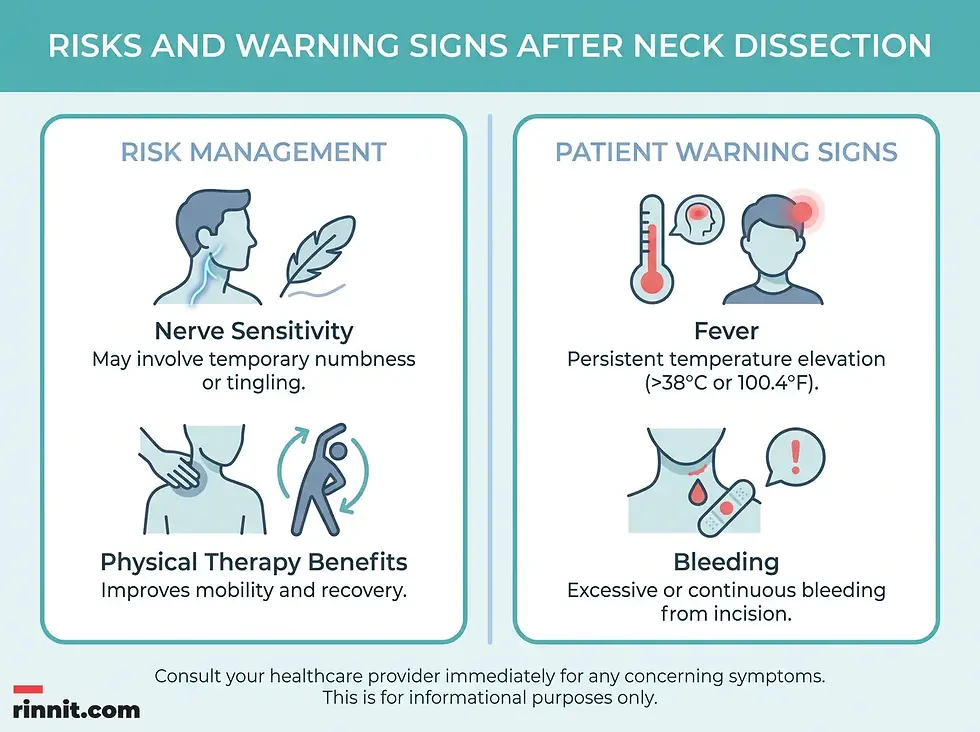
Possible nerve-related effects, the role of physical therapy, and warning signs that need prompt attention.
What is recovery like after neck dissection surgery?
Recovery after neck dissection usually starts with a hospital stay of two to five days, and you can expect to feel weak for at least the first few weeks.
In the Hospital
Most people stay two to five days. Your care team will check vital signs, give medications to prevent infection and manage pain (stiffness and numbness at the surgery site are common at first and gradually improve), help you walk to prevent blood clots and constipation, move you from IV feedings to eating by mouth, and care for your drain [1].
At Home
Care area | What to expect |
Wound care | Keep the wound clean to prevent infection; you may need antibiotic ointment on the stitches until a provider removes them at a follow-up visit |
Drain care | Clean and empty the drain if you wear one at home, and track how much fluid it collects each day |
Showering | Likely avoided until the drain is removed; afterward, cleanse the area gently instead of scrubbing |
Eating | Transition from clear liquids to solid foods; your provider may recommend foods to support healing |
Activity | Regular exercises for stiff, sore neck and shoulder muscles, plus breathing exercises to keep the lungs clear |
Most people return for a follow-up visit within about a week of leaving the hospital [1].
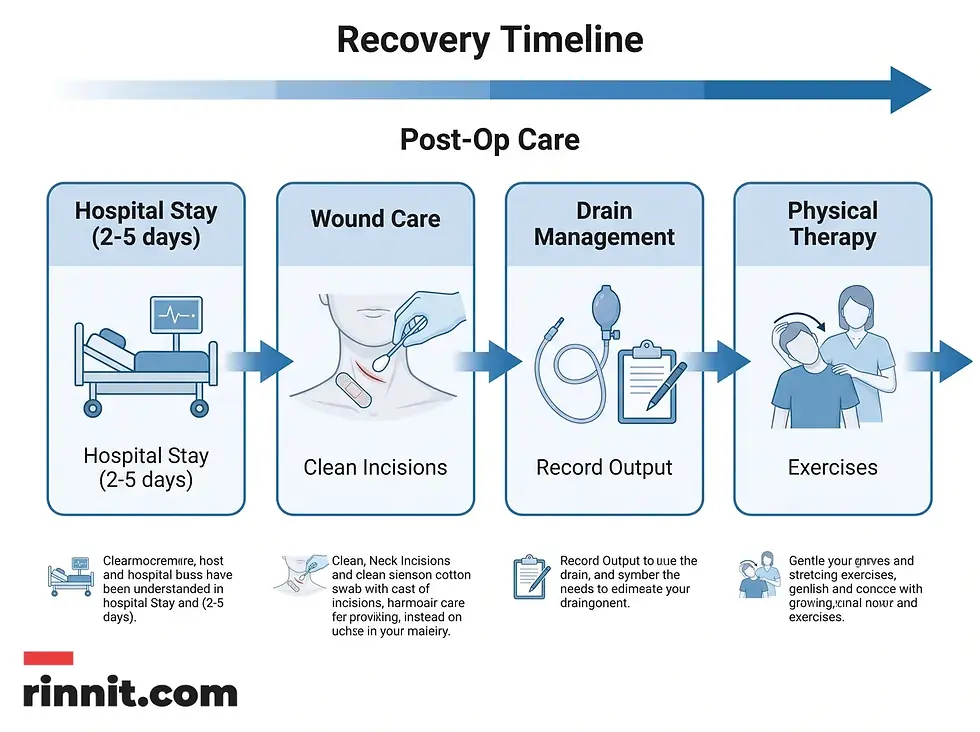
The recovery path: hospital stay, wound care, drain management, and physical therapy exercises.
How Long Does Recovery Take?
Recovery depends on how much tissue was removed, your health before surgery, and any cancer treatment you receive afterward. Neck dissection, of any type, is a major surgery: expect to feel weak for at least the first few weeks, and recovery may take much longer [1].
When should you call your healthcare provider after neck dissection surgery?
Call your provider immediately if you notice [1]:
Signs of infection: fever and redness, warmth, pain, or pus at the incision site
New bleeding at the incision site
Trouble swallowing
Trouble breathing
What is the bottom line on neck dissection surgery?
Neck dissection is a major operation that checks for, and can help treat, the spread of head and neck, thyroid, and skin cancers. It is recommended only when the benefits outweigh the risks. Understanding the type of surgery, how to plan for recovery, and what follow-up care you may need will help you prepare [1].
Frequently Asked Questions
Why do I need a neck dissection?
Your provider may recommend it to check whether cancer that started in your head and neck, thyroid, or skin has spread to the lymph nodes in your neck. The results help stage the cancer and choose the best treatments, and removing cancerous nodes can also be part of treatment.
How long will I be in the hospital?
Most people stay in the hospital for two to five days. Your care team checks your vital signs, manages pain, helps you walk, moves you from IV feedings to eating by mouth, and cares for your drain.
Will the surgery leave a scar?
Neck dissection requires an incision in the neck, so a scar is expected. Ask your surgeon where the incision will be placed and how it is expected to heal.
What are the main risks of the procedure?
Risks include bleeding, infection, and reactions to anesthesia. Complications unique to neck dissection mostly involve nerve damage and can include numbness, trouble swallowing, eating, or speaking, a drooping face on the surgery side, and a drooping shoulder or trouble lifting it.
When will I get my biopsy results?
The lymph nodes are sent to a lab to be tested for cancer cells. Most people receive results within a week or two.
Can I talk and swallow normally after surgery?
Some people have trouble swallowing, eating, or speaking after neck dissection. These complications are often temporary or improve with physical therapy, and the risk depends on the type of neck dissection.
What is the purpose of surgical drains?
Drains draw fluid away from the wound, which helps it heal faster. If you go home with a drain, you will need to clean and empty it and may need to track how much fluid it collects each day.
How soon can I return to work?
Recovery depends on how much tissue was removed, your health before surgery, and any cancer treatment after surgery. Expect to feel weak for at least the first few weeks, and recovery may take much longer. Ask your surgeon for a timeline that fits your situation.
Are the nerve-related side effects permanent?
The nerve-related side effects can be temporary or permanent. Numbness at the surgery site may be either, and complications frequently improve with physical therapy. Your risk varies with the type of neck dissection.
What warning signs should I look for at home?
Call your healthcare provider immediately for signs of infection (fever and redness, warmth, pain, or pus at the incision), new bleeding at the incision, trouble swallowing, or trouble breathing.
How do I prepare for neck dissection surgery?
Your provider will give you specific instructions. Before the procedure, find out which habits to adjust (including smoking and alcohol), whether and when to stop any medications, herbs or supplements, when to stop eating and drinking, what to wear and avoid (jewelry, deodorants, creams), what to pack for an overnight hospital stay, how much time off work you will need and how much caregiving support you will need during recovery [1].
Does neck dissection hurt, and what anesthesia is used?
The surgery is done under general anesthesia, so you are asleep, with a breathing tube in place. Afterward, stiffness and numbness at the surgery site are common at first and gradually improve; your care team gives medications to manage pain during your hospital stay [1].
Related Resources
Related reading on Rinnit:
External resource for deeper reading:
Related Reading
References
Cleveland Clinic. Neck dissection. Cleveland Clinic Health Library. Medically reviewed; last updated February 7, 2025. https://my.clevelandclinic.org/health/procedures/neck-dissection
D'Cruz AK, Vaish R, Kapre N, et al. Elective versus therapeutic neck dissection in node-negative oral cancer. N Engl J Med. 2015;373(6):521-529. PMID: 26027881. DOI: 10.1056/NEJMoa1506007
Ferreli F, Festa BM, Costantino A, et al. Prevalence of occult level 2b nodal metastases in cN0 squamous cell carcinoma of the oral cavity: a systematic review and meta-analysis. Oral Oncol. 2021;122:105540. PMID: 34598036. DOI: 10.1016/j.oraloncology.2021.105540
Medical disclaimer
This article is for informational purposes only and is not a substitute for professional medical advice, diagnosis, or treatment. Always seek the advice of your physician or other qualified health provider with any questions you may have about a medical condition.



Comments