Ingrown Hair Cyst: Causes, Symptoms, and Effective Treatment Options

Updated: 2 days ago
Medically reviewed by Dr. Baraa Alnahhal, MD · Last reviewed: October 2026
Quick Answer: What is an ingrown hair cyst?
An ingrown hair cyst is a sac of fluid or skin cells that forms a lump under the skin at the site of an ingrown hair. Unlike a standard ingrown hair, the cyst forms deeper and can become a distinct firm or soft lump. It needs a provider's care if it becomes infected, keeps growing or does not go away. [1]
What the research says
Research on ingrown hair cysts specifically is limited, so these reviews look at the closely related condition of ingrown hairs, known as pseudofolliculitis barbae (PFB).
Shaving and plucking can set off the problem. A review explained that shaving or plucking leaves sharp hair tips that can grow into nearby skin and trigger an inflammatory reaction, and that stopping shaving or removing the affected follicles usually ends the condition. It also noted a hair-follicle keratin gene variant linked to a six-fold higher chance of developing PFB (Ogunbiyi, Clinical, Cosmetic and Investigational Dermatology, 2019 [3]).
Several treatment options exist, and topical care is the mainstay. A literature review of PubMed and the Cochrane Library (1987 onward) found that effective treatment uses a multi-step approach that can include preventive measures, antibiotics, corticosteroids, keratolytics, chemical depilatories, and lasers. Topical therapies are the mainstay, while laser hair removal is a possible long-term option that needs more study (Dalia et al., Clinical and Experimental Dermatology, 2023 [4]).
Mild cases often respond to grooming changes. A review of PFB in the U.S. military found that grooming techniques and topical medications can be effective for mild-to-moderate disease, while more severe cases responded best to laser therapy, and limits on shaving helped during flares (Tshudy & Cho, Military Medicine, 2021 [5]).
Key Takeaways
Feature | Details |
|---|---|
Primary Cause | A hair that grows back into the skin, often after shaving, waxing, or tweezing. |
Common Symptoms | Itching, warmth, burning or stinging pain, swelling, and a firm or soft raised bump. |
Warning Signs | A growing cyst, pus, increasing pain or swelling, or a fever (possible infection). |
Home Care | Warm compresses and pausing hair removal in the area until it heals. |
Medical Treatment | Steroid injection or cream, antibiotics for infection, or drainage or removal of the cyst. |
Understanding Ingrown Hair Cysts
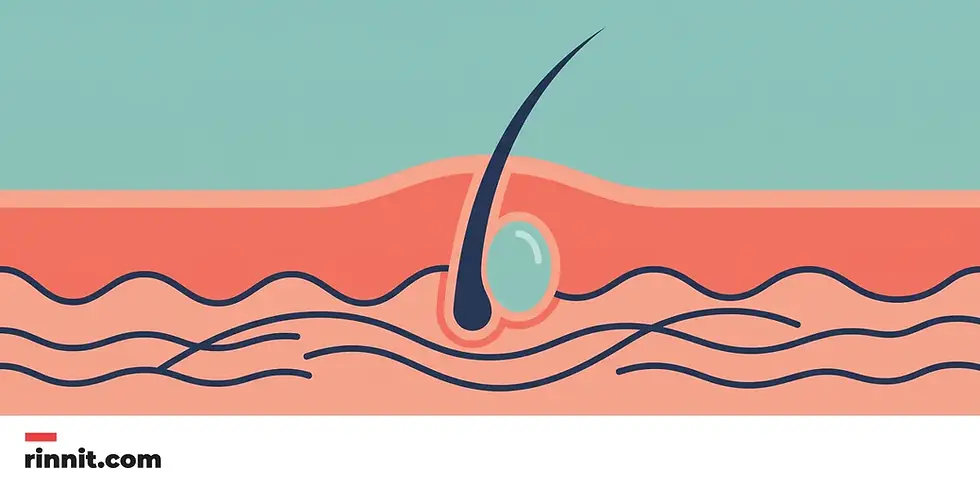
An ingrown hair cyst occurs when a strand of hair grows back into the skin instead of outward. When an ingrown hair develops, the immune system reacts by sending fluid to the hair follicle. The fluid gets trapped there by the ingrown hair, and a small sac-like lump forms. The cyst may cause irritation such as itchy skin or a stinging sensation, along with swelling [1].
An ingrown hair can also clog the follicle. Because there is a space between the clogged surface and the base of the follicle, a pocket forms, and substances like skin cells or keratin collect in it to form a cyst. These cysts tend to develop deep under the skin where hair is removed, including the armpits, back, chest, face (especially the chin or beard), legs, neck, pubic area, and scalp [1].
Common Symptoms and Appearance
Spotting an ingrown hair cyst early can help you avoid complications like infection or scarring. These bumps can vary in texture and color.
Physical Characteristics
Size: They are often small at first but can get bigger. [1]
Texture: The lump may feel firm or hard, like a pimple, or soft, like a blister.
Color: The area may look lighter or darker than your natural skin tone, or red, white, purple, yellow, or brown.
Sensation: Itching, warmth, and a burning or stinging pain are common, although some cysts do not hurt unless they become infected.
Signs of Infection
An infected cyst needs medical attention. See a provider if you notice that the cyst: [1]
Is getting larger.
Is leaking pus.
Is causing more pain and swelling.
Comes with a fever. Contact your provider right away if you have these symptoms with a fever.

Causes and Risk Factors
A blocked hair follicle caused by an ingrown hair is what leads to an ingrown hair cyst [1].
Hair Removal Methods
Shaving, waxing, and tweezing remove the hair and leave the follicle behind. An ingrown hair develops when the hair grows back from the follicle and curls under the skin instead of growing straight out. Shaving against the direction of hair growth and using a blunt razor can make ingrown hairs more likely [1] [2].
Hair Texture
Anyone can get an ingrown hair cyst, but they are more common if you have thick or curly hair because the direction of hair growth is less predictable. Your risk also goes up if you often get ingrown hairs [1].
Treatment and Management Options
Most ingrown hair cysts are harmless and go away on their own. If one is bothersome and not going away, a provider can help [1].
Home Care Strategies
A warm compress is the main home treatment. Stop shaving, waxing, or tweezing the area until the cyst heals. Do not pop or pick at the cyst, because popping can increase pain and swelling and raises the risk of infection, scarring, and the cyst coming back. When you feel the urge to pop it, place a warm compress on the skin instead. After softening the skin, you can gently exfoliate the area around the cyst and apply a gentle moisturizer without harsh fragrances [1].
Professional Medical Treatments
If a cyst is persistent, painful, or infected, a healthcare provider may recommend:
Steroid Injection or Cream: To reduce swelling and irritation. [1] [2]
Antibiotics: Creams or tablets to treat an infection. Take them as directed even if you start to feel better. [1] [2]
Drainage or Removal: A provider may drain or surgically remove the cyst, and then treat it with antibiotics. [1]
Skin-Care Products: Over-the-counter or prescription products that contain benzoyl peroxide, glycolic acid, hydrocortisone, or retinoids. [1]

What to Do If a Cyst Pops
Clean the skin with soap and warm (not hot) water.
Pat the skin dry.
Apply a small amount of over-the-counter antibiotic ointment.
Place a bandage over the area.
Contact a healthcare provider or dermatologist, and do not try to squeeze out the cyst yourself. [1]
Prevention Techniques
You cannot prevent every ingrown hair cyst, but you can lower your risk by reducing skin irritation and giving hair a clear path to grow outward [1] [2].
Strategy | Actionable Tip |
|---|---|
Timing | Allow time between waxing sessions so your hair can grow back. |
Shaving prep | Wet your skin with warm water, use shaving gel, and use as few razor strokes as possible. |
Direction | Shave or tweeze in the same direction as hair growth, not against it. |
Razor | Do not use a blunt razor, or switch to an electric razor. |
Closeness | Avoid shaving too close. Leaving about 1 mm of stubble can help. |
Skin care | Gently exfoliate and moisturize your skin regularly. |
Alternatives | Try depilatory (hair-removal) creams, or ask about a long-term option such as laser treatment. |
When to See a Healthcare Provider
Call your provider if you have a popped cyst, signs of infection such as severe pain, pus, or fever, or a new or unexplained skin bump, especially one that itches, hurts, or grows in size. Ingrown hair cysts can look like cystic acne, and near the genitals they can look like genital herpes, so a provider can confirm what it is [1].
Conclusion
Ingrown hair cysts are common and usually manageable. Gentler hair removal and a steady skin-care routine can lower your risk. If you are dealing with a painful or persistent bump, resist the urge to pop it, use a warm compress, and talk to a healthcare professional if it gets worse or does not go away.
Frequently Asked Questions
What is an ingrown hair cyst?
A small sac of fluid or skin cells that forms around a hair trapped beneath the skin when the hair grows back into the skin instead of outward.
How is it different from a regular ingrown hair?
An ingrown hair is the hair itself growing back into the skin. A cyst forms when that hair blocks the follicle and fluid or skin cells collect in a pocket, creating a deeper, sometimes larger lump.
Can I pop an ingrown hair cyst?
No. Popping can increase pain and swelling, raise the risk of infection and scarring, and make the cyst more likely to come back.
What causes these cysts?
A blocked hair follicle from an ingrown hair. Shaving, waxing, and tweezing are the most common triggers.
Are they painful?
Sometimes. They can cause itching, warmth, and a burning or stinging pain, but some cysts do not hurt unless they become infected.
Where do they usually appear?
Where hair is removed, including the armpits, back, chest, face (especially the chin or beard), legs, neck, pubic area, and scalp.
How do I treat one at home?
Apply a warm compress, stop shaving, waxing, or tweezing the area until it heals, and avoid picking at it.
When should I see a doctor?
If the cyst gets larger, leaks pus, or causes more pain or swelling, or if you have a fever. Also if a cyst has popped or a new, unexplained bump appears.
Can a dermatologist help?
Yes. A provider can diagnose the cyst, give a steroid injection or cream, treat an infection, or drain or remove the cyst.
Do I need antibiotics?
Only if the cyst becomes infected. If you are prescribed antibiotics, take them as directed even if you start to feel better.
How long do they take to heal?
From a couple of days to a couple of weeks, depending on the size of the cyst, the treatment used, and whether there is an infection.
Is curly hair a risk factor?
Yes. Thick or curly hair is more likely to grow back into the skin because its direction of growth is less predictable.
Can shaving against the grain cause them?
Shaving against the grain can make ingrown hairs more likely. Shave in the same direction the hair grows.
What is the best way to shave?
Wet the skin with warm water, use shaving gel, shave in the direction of hair growth with as few strokes as possible, and avoid shaving too close.
Should I use shaving cream?
Yes. Shaving gel or cream on warm, wet skin helps reduce irritation.
Does exfoliation help?
Gentle exfoliation can help release trapped hairs, and it is part of a skin-care routine that can lower your risk.
What should I do if a cyst pops on its own?
Clean the skin with soap and warm (not hot) water, pat it dry, apply a small amount of over-the-counter antibiotic ointment, cover it with a bandage, and contact a healthcare provider. Do not squeeze to drain it.
Can an ingrown hair cyst cause a scar?
Yes, especially if you scratch, irritate, or pop it. Skin discoloration can also follow.
Are they contagious?
No. A cyst is a reaction in the hair follicle, not an infection you can pass on to someone else. An infected cyst should still be checked by a provider.
Can I use an electric razor?
Yes. Switching to an electric razor is one way to lower your risk of ingrown hairs.
What are depilatory creams?
Hair-removal products that dissolve hair instead of cutting it. They are an alternative to shaving.
Is laser hair removal an option?
Permanent hair removal, such as laser treatment, is a long-term option that can reduce ingrown hairs. Ask a provider whether it is right for you.
What is keratin?
A protein that helps hair grow. Along with skin cells, it can collect in the pocket behind a blocked follicle and form a cyst.
Do these cysts go away on their own?
Most are harmless and do. See a provider if a cyst is bothersome and not going away.
Can I use a steroid cream?
A provider may recommend a steroid cream or injection to reduce swelling and irritation.
Is it a sign of an STI?
Not usually, but a cyst near the genitals can look like genital herpes, so a healthcare provider should confirm what it is.
How can I tell if it is infected?
Look for a cyst that is getting larger, leaking pus, or causing more pain and swelling. Contact a provider right away if you also have a fever.
What is a warm compress?
A clean cloth soaked in warm water and held against the skin.
How often should I apply a compress?
There is no fixed schedule, so ask your provider how often to do this. Use a clean cloth and warm, not hot, water.
Can I use tweezers to pull the hair out?
It is best not to. Avoid tweezing the area until the cyst heals. A provider can safely remove a trapped hair if needed.
What if the cyst feels very hard?
Ingrown hair cysts can feel firm, like a pimple. If it is bothersome, growing, or not going away, see a provider.
Are there over-the-counter treatments?
Providers may recommend over-the-counter or prescription products that contain benzoyl peroxide, glycolic acid, hydrocortisone, or retinoids. Ask before choosing one for your skin type.
Can I shave over the cyst?
No. Avoid shaving, waxing, or tweezing the area until it has healed.
What is the difference between a cyst and folliculitis?
An ingrown hair cyst is a fluid-filled sac within a hair follicle. Folliculitis is an infection of the root of a hair at the follicle.
What if I have many cysts at once?
See a dermatologist to discuss treatment and long-term prevention, especially if you get ingrown hairs often.
Can I get them on my head?
Yes. The scalp is one place they can form, especially where hair is removed.
Can I use a bandage?
A bandage can protect the area, especially after a cyst pops, once the skin has been cleaned.
Is it okay to use a blunt razor?
No. Use a sharp blade or an electric razor.
What other conditions look like an ingrown hair cyst?
Cystic acne, and near the genitals, genital herpes. A provider can review your symptoms and tell the difference.
How is an ingrown hair cyst diagnosed?
A healthcare provider or dermatologist examines the skin and asks about your symptoms. You usually do not need any tests.
What is the long-term outlook?
Most ingrown hair cysts are harmless and go away on their own. Careful hair removal and good skin care can lower the chance of new ones.
Related Reading
Ingrown Hair: A Comprehensive Guide to Prevention and Treatment explains why hairs grow back into skin and how to prevent it.
Sebaceous Cysts (Epidermal Inclusion Cysts): What They Are, When to Treat Them, and When to Leave Them Alone — A Complete Guide explains other common skin cysts and how they are removed.
Ingrown Pubic Hair: Prevention, Symptoms, and Treatment covers ingrown hairs in the pubic area after shaving or waxing.
Understanding Razor Burn: Causes, Relief, and Prevention explains shaving irritation and simple ways to prevent it.
References
Cleveland Clinic. Ingrown Hair Cyst. Cleveland Clinic. December 18, 2024. https://my.clevelandclinic.org/health/diseases/ingrown-hair-cyst
National Health Service (UK). Ingrown hairs. NHS. September 1, 2026. https://www.nhs.uk/conditions/ingrown-hairs/
Ogunbiyi A. Pseudofolliculitis barbae; current treatment options. Clinical, Cosmetic and Investigational Dermatology. 2019;12:241-247. PMID 31354326. https://doi.org/10.2147/CCID.S149250
Dalia Y, Khatib J, Odens H, Patel T. Review of treatments for pseudofolliculitis barbae. Clinical and Experimental Dermatology. 2023;48(6):591-598. PMID 36840647. https://doi.org/10.1093/ced/llad075
Tshudy MT, Cho S. Pseudofolliculitis barbae in the U.S. military, a review. Military Medicine. 2021;186(1-2):e52-e57. PMID 33128565. https://doi.org/10.1093/milmed/usaa243
This article is for informational purposes only and is not a substitute for professional medical advice, diagnosis, or treatment. Always consult a qualified healthcare professional for diagnosis and treatment of any skin condition. The clinical information in this guide reflects source material last reviewed between December 2024 and September 2026.



Comments