Understanding Razor Burn: Causes, Relief, and Prevention

Updated: 3 days ago
Medically reviewed by Dr. Baraa Alnahhal, MD · Last reviewed: October 2026
Definition: A common skin irritation with a red, blotchy rash that develops shortly after shaving.
Cause: A razor blade causes tiny cracks in the skin's surface, leading to inflammation and loss of hydration.
Relief: It typically resolves within a few days; cool compresses, aloe vera, and moisturizing emollients help.
Prevention: Use sharp blades and shave in the direction of hair growth.
Quick Answer
Razor burn is a red, irritated skin rash that appears after shaving, caused by dry shaving, a dull blade or shaving too quickly. Unlike razor bumps, which come from ingrown hairs and look like small pimples, razor burn appears as blotchy or streaky red patches. Most cases clear within hours to days, and aloe vera or cool compresses help. [1]
What the research says
Skin problems after hair removal are common, and few people seek care. In a survey of 333 women at two public clinics, 87% currently removed at least some pubic hair and 60% had experienced at least one complication, most commonly epidermal abrasion and ingrown hairs, yet only 4% had seen a health care provider about it (DeMaria et al., Am J Obstet Gynecol, 2014).
Razor bumps respond best to better shaving habits combined with topical care. A review of treatment options for pseudofolliculitis barbae (razor bumps) reports that it is more likely in people with curly hair, can cause hyperpigmentation and scarring that are more noticeable in darker skin, and is most effectively managed with a multifaceted approach that pairs behavioral changes in shaving habits with topical therapies (Nussbaum and Friedman, J Drugs Dermatol, 2019).
What is razor burn?
Razor burn is a localized skin irritation that can occur on any part of the body where hair is removed with a razor, including the face, neck, legs, armpits, and pubic area. It typically manifests as a blotchy red rash or streaky red patches a few minutes after the shaving process. While it is a temporary condition, the stinging, itching, and tenderness it causes can be significant.
It is important to distinguish razor burn from razor bumps, also known as pseudofolliculitis barbae. While both conditions involve red, irritated skin, razor bumps are specifically caused by ingrown hairs that curl back into the skin. Razor bumps often look like small pimples and are significantly more common in individuals with curly hair, particularly Black males, affecting up to 83% of that population. [1]
Feature | Razor Burn | Razor Bumps (Pseudofolliculitis Barbae) |
Primary Appearance | Blotchy or streaky red rash | Small, pimple-like bumps |
Underlying Cause | Skin irritation from blade friction | Ingrown hairs curling into the skin |
Onset | Minutes after shaving | Days after shaving as hair regrows |
Common Areas | Anywhere shaved | Beard, neck, and pubic area |
What causes razor burn irritation?
Razor burn is mainly caused by the interaction between the razor blade, the hair and the top layer of skin, and factors like dry shaving and dull blades make it worse. When a blade moves across the skin, it can create microscopic cracks in the epidermis, leading to a loss of essential hydration and subsequent inflammation. Several factors can exacerbate this process:
Dry Shaving: Shaving without the use of water, soap, or specialized shaving creams and gels.
Dull Blades: Using an old or rusted razor blade that pulls on the hair rather than cutting it cleanly.
Improper Technique: Shaving too quickly or moving the razor against the natural direction of hair growth.
Skin Sensitivity: Individuals with naturally sensitive skin or those using products containing harsh fragrances and alcohol are more prone to irritation. [1]

How can razor burn be relieved and managed?
Most cases of razor burn are mild and will resolve on their own within a few days. However, several management strategies can accelerate the healing process and provide immediate comfort. The most effective first step is to avoid shaving the affected area until the skin has fully recovered.
Home Remedies and OTC Treatments
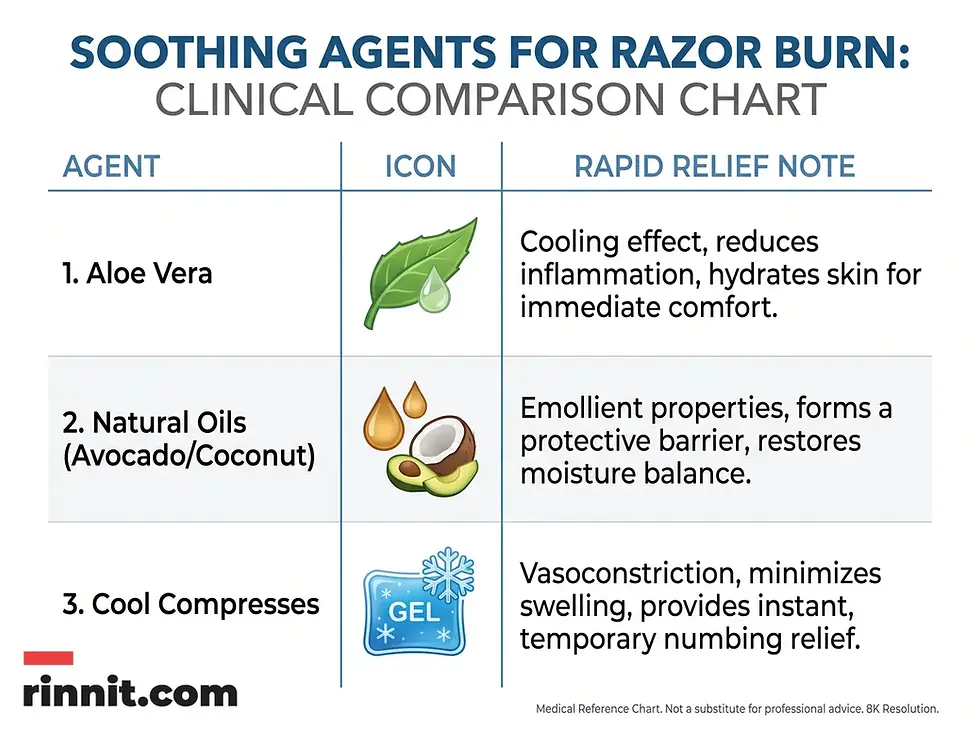
Applying a cool washcloth or a fragrance-free moisturizer can soothe the stinging sensation. Aloe vera gel is particularly effective, often providing noticeable relief in an hour or less by moisturizing and healing the skin simultaneously. Other beneficial natural options include avocado oil, coconut oil, and olive oil.
For more persistent inflammation, over-the-counter hydrocortisone creams may be used. Some individuals also find relief through home remedies such as oatmeal baths or diluted applications of witch hazel and tea tree oil. If the rash does not improve within a few days or shows signs of infection, such as increased swelling or pus, it is important to consult a healthcare provider for potential antibiotic treatment. [1]
How can you prevent razor burn for a smoother shave?
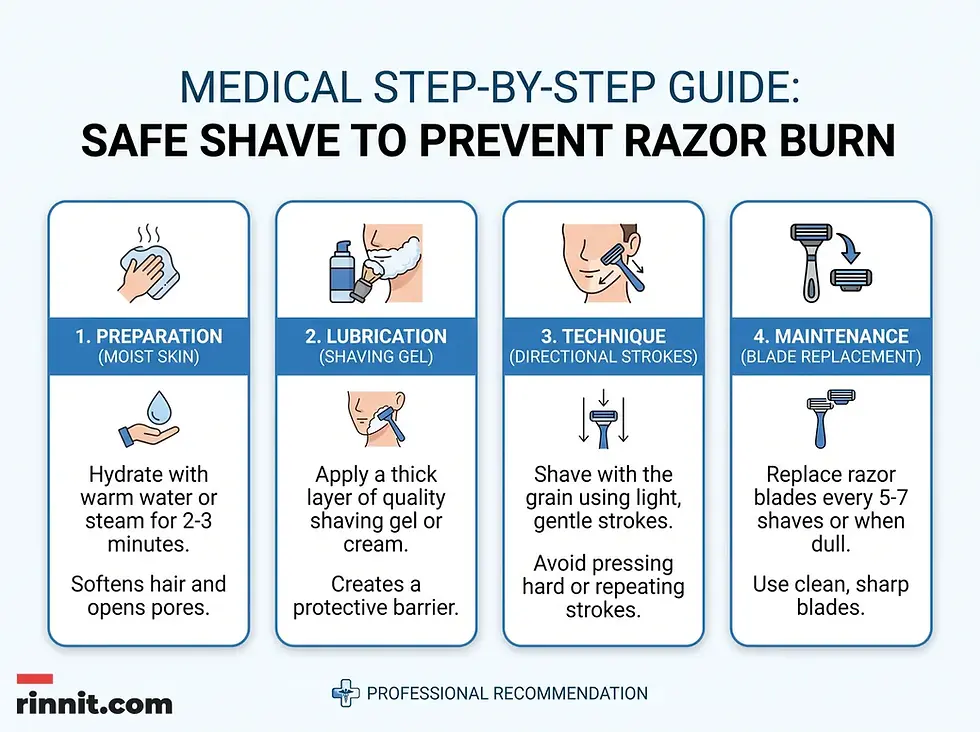
Preventing razor burn begins with proper skin preparation. Shaving immediately after a shower is ideal, as the heat and moisture soften the hair and clear away dead skin cells that can clog razor blades. Using a high-quality lubricant—such as shaving gel or cream—creates a necessary barrier between the blade and the skin.
Best Shaving Practices
Directional Shaving: Always shave in the direction of hair growth to minimize inflammation.
Short, Light Strokes: Avoid applying excessive pressure and do not shave over the same section of skin multiple times.
Blade Maintenance: Rinse the razor frequently during use to remove hair and soap buildup. Replace blades every five to seven uses to ensure they remain sharp and hygienic.
Post-Shave Care: Rinse the skin with cold water to close pores and apply a hydrating, alcohol-free lotion. Store the razor in a dry place to prevent bacterial growth. [1]
Conclusion
Razor burn is a nearly universal experience for those who shave, but it does not have to be a recurring problem. By adopting better shaving habits and utilizing soothing treatments when irritation does occur, you can maintain healthy, comfortable skin. If home treatments are ineffective, professional dermatological advice can help identify underlying sensitivities or alternative hair removal methods like waxing.
Frequently Asked Questions
How long does razor burn typically last?
Razor burn usually lasts from a few hours to a few days. It often clears up on its own, especially if you avoid shaving the affected area until the skin has fully healed.
Can aloe vera get rid of razor burn fast?
Yes. Aloe vera gel is one of the most effective treatments for razor burn. It moisturizes and soothes the skin, often reducing redness and irritation in an hour or less.
What is the difference between razor burn and herpes?
Razor burn appears as a blotchy red rash that clears up quickly. Herpes typically presents as clusters of fluid-filled sores or blisters and may be accompanied by a fever or headache. If you are unsure, you should consult a healthcare provider.
Is it better to shave with or against the grain?
It is much better to shave with the grain (in the direction of hair growth). Shaving against the grain increases the risk of skin irritation, micro-cuts, and razor burn.
How often should I change my razor blade?
To prevent irritation and bacterial growth, you should replace your razor blade every five to seven uses. Always ensure the blade is sharp and free of rust before shaving.
Can apple cider vinegar help with razor burn?
Yes. Diluted apple cider vinegar is a common home remedy that can help reduce the inflammation associated with razor burn. Other options include witch hazel or tea tree oil mixed with water.
Does dry shaving cause razor burn?
Dry shaving is a leading cause of razor burn. Shaving without water, soap, or cream removes the protective barrier between the blade and the skin, leading to increased friction and irritation.
Why do I get razor burn even with a new razor?
Even with a new razor, you can get razor burn if you shave too fast, apply too much pressure, or fail to use a proper shaving lubricant. Sensitive skin can also be a contributing factor.
Should I wear tight clothing after shaving?
No. It is best to avoid tight clothing or underwear immediately after shaving. Loose clothing allows the skin to breathe and prevents further friction that can lead to irritation.
What is the difference between razor burn and razor bumps?
Razor burn is a red, blotchy irritation that shows up soon after shaving and usually fades within hours to days. Razor bumps are caused by ingrown hairs, look like small pimples and are more common in people with curly hair.
Related Reading
Ingrown Hair: A Comprehensive Guide to Prevention and Treatment explains ingrown hairs, the cause of razor bumps.
Ingrown Pubic Hair: Prevention, Symptoms, and Treatment covers ingrown hairs after shaving or waxing the bikini area.
Contact Dermatitis: Symptoms, Causes, Diagnosis & Treatment — Complete Guide explains skin rashes caused by irritating or allergy-causing products.
Laser Hair Removal: How It Works, Sessions and Results describes a longer-lasting hair removal option for people prone to shaving irritation.
References
Cleveland Clinic. Razor Burn. Cleveland Clinic Health Library. Accessed October 11, 2026. https://my.clevelandclinic.org/health/diseases/23583-razor-burn
DeMaria AL, Flores M, Hirth JM, Berenson AB. Complications related to pubic hair removal. Am J Obstet Gynecol. 2014;210(6):528.e1-528.e5. PMID: 24486227. DOI: https://doi.org/10.1016/j.ajog.2014.01.036
Nussbaum D, Friedman A. Pseudofolliculitis barbae: a review of current treatment options. J Drugs Dermatol. 2019;18(3):246-250. PMID: 30909328. https://pubmed.ncbi.nlm.nih.gov/30909328/
Medical disclaimer
This article is for informational purposes only and is not a substitute for professional medical advice, diagnosis, or treatment. Always seek the advice of your physician or other qualified health provider with any questions you may have about a medical condition.



Comments