Ingrown Pubic Hair: Prevention, Symptoms, and Treatment

Updated: 3 days ago
Medically reviewed by Dr. Baraa Alnahhal, MD · Last reviewed: October 2026
Quick Answer
An ingrown pubic hair is a hair that curves and gets trapped under the skin after shaving, waxing or plucking, causing itchy, sore, raised bumps. Friction from clothes, shaving against the grain and dull razors raise the risk. A pus-filled, swollen, painful bump suggests infection; with a fever, see a provider right away. Shaving with the grain helps prevent it. [1]
What the research says
Complications are common, though mostly minor. In a survey of 400 women in Jeddah, Saudi Arabia, 75.5% reported complications from pubic hair removal. Most were minor injuries, but treatment was sought for 17.9% of complications. The non-electric razor was the most common single method (33.5%). (Rouzi et al., BMC Womens Health, 2018)
Itching and bumps top the list of side effects. Among 1,218 women in KwaZulu-Natal, South Africa, 58.2% reported removing pubic hair; of those, 77.1% reported itching and 43.9% pimples and blisters. Women who had hair removal-related complications had 1.26 times the odds of testing positive for chlamydia or gonorrhea (95% CI 1.03 to 1.54). This is an association in a cross-sectional study, and the authors suggest the injuries could raise infection risk. (Beksinska et al., Int J STD AIDS, 2020)
Treatment is multi-part, and lasers are still being studied. A review of treatments for razor bumps found that preventive measures, antibiotics, corticosteroids, keratolytics, chemical depilatories and laser treatment all play a role. Topical therapy is the mainstay, and laser hair removal is a potential long-term option that needs more study. The review focused on razor bumps of the beard area. (Dalia et al., Clin Exp Dermatol, 2023)
What is an ingrown pubic hair?

Ingrown pubic hairs are hairs in the pubic area that grow back in the wrong direction after you shave, wax or pluck them. Instead of growing out of the hair follicle through the surface of the skin, they get trapped under the skin. [1] They may cause discomfort and itching and are not usually a big deal, but they are at risk of infection and may need treatment from a healthcare provider. [1]
Recognizing the symptoms
The symptoms of an ingrown pubic hair may include: [1]
Itchy skin
Soreness
Irritation when wearing clothing
Skin discoloration
Swelling
The bump is elevated, higher than the surrounding skin, and discolored (darker than your natural skin tone, brown, purple or red). You may be able to see the trapped hair in the bump. [1]
Ingrown hair or a sexually transmitted infection?
It can be hard to tell an ingrown pubic hair from genital herpes, a sexually transmitted infection (STI). They can look similar, but there are key differences: [1]
Feature | Ingrown pubic hair | Genital herpes |
Timing | Usually shows up one to two days after hair removal. | Blisters appear about four days after exposure to a person with the infection. |
Appearance | Bumps typically do not break open. | Blisters break open several days later and leave painful sores that last several weeks. |
Other symptoms | No painful urination; rarely causes fever unless infected. | Can cause fever, body aches and painful urination. |
Do not be afraid to talk to your provider about skin concerns; they can diagnose the cause. [1]
Causes and risk factors
Removing hair by shaving, waxing or plucking can cause ingrown hairs. As the hair grows back, it may not grow straight out of the skin and can instead curve and become trapped. Pubic hair tends to be coarser and curlier than other body hair, so it is more likely to curve back into the skin. [1]
You may be at higher risk if you have: [1]
Friction from clothes rubbing on the pubic area
Shaving against the direction of hair growth
A dull razor
What is an ingrown pubic hair infection?
Ingrown pubic hairs are at risk of bacterial infection. Signs include a pus-filled bump that resembles a pimple, swelling, pain and skin discoloration. A provider can treat infections. If you develop these symptoms with a fever, see a provider right away. [1]
Home care and treatment
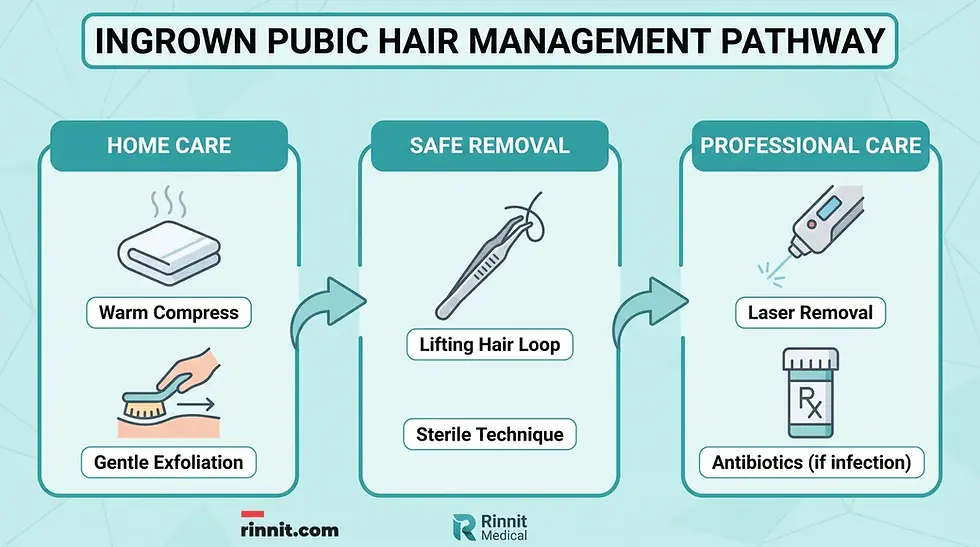
Most of the time you can treat an ingrown pubic hair at home, as long as you do not have an infection: [1]
Warm compresses: apply a warm, wet washcloth for 10 to 15 minutes, up to four times a day, to soften the skin over the hair.
Tweezing: if part of the hair is sticking out, carefully grasp it with clean tweezers and gently pull. Do not yank hard or try to break open the skin.
Gentle scrubbing: use a clean, warm washcloth to remove the top layer of skin so the hair can come out.
Pause hair removal: stop shaving or waxing the area until the ingrown hair has gone away.
What to put on an ingrown pubic hair
A regular skin care routine helps prevent ingrown hairs. Common ingredients that calm itchy skin or gently exfoliate the area include benzoyl peroxide, glycolic acid, hydrocortisone and retinoids (substances with vitamin A). Your provider may have specific recommendations for your skin type. [1]
Do not pop or pick at it
Picking at or popping an ingrown pubic hair can make pain worse and lets bacteria enter the skin, which can cause infection. It can also lead to scarring or skin discoloration after it heals. [1]
Professional treatment
A healthcare provider treats an infected ingrown pubic hair with antibiotics, either applied to the skin or taken by mouth. Follow all directions and keep using the antibiotic as directed even if you feel better. [1]
Ingrown pubic hair cysts
An ingrown hair can block the follicle and form a cyst, a fluid-filled sac that can turn the bump into a bigger lump. Cysts can go away without treatment, and a warm compress may ease discomfort. A provider can help faster, especially if it is irritating or infected, with a steroid cream, an antibiotic cream, or a procedure to drain or remove it. Avoid hair removal on the area until it clears. [1]
How long does it take to heal?
There is no set amount of time. It can take several days to a week or more for an ingrown pubic hair to reach the surface on its own, but at-home remedies can help it go away sooner, usually within a few days. An infection may take a little longer. [1]
How to prevent ingrown pubic hairs
Use shave cream or gel to reduce friction and irritation.
Use a sharp, clean razor every time; dull razors are more likely to cause ingrown hairs.
Be gentle: do not pull the skin or press down; glide the razor without force.
Shave in the direction of growth.
Wax properly: apply wax in the direction of hair growth and pull it off against the direction of growth.
Pluck with care: soften skin and hair first with a warm shower, bath or washcloth.
Moisturize: apply a non-greasy, lightweight moisturizer after hair removal.
Consider other methods: if you get them frequently, consider laser hair removal or electrolysis.
When to see a healthcare provider
See a provider if you repeatedly get ingrown hairs despite home remedies; they may prescribe a stronger medication to clear and prevent them. Also see a provider if you notice: [1]
Fluid or pus draining
Pain or swelling around the hair that is getting worse
Skin discoloration that spreads beyond the area of the hair
Skin that feels warm to the touch
Frequently Asked Questions
Can I pop an ingrown pubic hair like a pimple?
No. Picking at or popping an ingrown pubic hair can irritate it, make pain worse, let bacteria into the skin and cause infection, scarring or skin discoloration (hyperpigmentation) after it heals.
How long does an ingrown pubic hair take to go away?
There is no set time. It can take several days to a week or more to reach the surface on its own, but home remedies usually help it go away within a few days. An infection may take a little longer.
Why are pubic hairs prone to becoming ingrown?
Pubic hair tends to be coarser and curlier than other body hair, which makes it more likely to curve back into the skin instead of growing straight out.
Can tight clothing contribute to ingrown pubic hairs?
Friction from clothes rubbing on the pubic area is a risk factor, and it can also make irritation feel worse.
Should I see a provider for a single ingrown hair?
Usually not. See a provider if you repeatedly get ingrown hairs despite home remedies, or if you notice pus or fluid draining, worsening pain or swelling, discoloration that spreads, or skin that feels warm. See a provider right away if these symptoms come with a fever.
Can an ingrown pubic hair be mistaken for genital herpes?
It can be hard to tell the difference. Ingrown hairs usually appear one to two days after hair removal and typically do not break open, while herpes blisters appear about four days after exposure, break open and leave painful sores, and may come with fever, body aches and painful urination. If you are unsure, ask a provider.
Does glycolic acid help ingrown hairs?
Glycolic acid is one of several skin care ingredients used to gently exfoliate the area, which speeds up skin cell turnover and encourages ingrown hairs to come out. Others include benzoyl peroxide, hydrocortisone and retinoids.
Can I use hydrocortisone on an ingrown hair?
Hydrocortisone is a common ingredient that can calm itchy skin. Ask your provider about the best option for your skin type and for how long to use it.
What is an ingrown pubic hair cyst?
An ingrown pubic hair cyst is a fluid-filled sac under the skin caused by an ingrown hair blocking the follicle. It can turn a bump into a bigger lump. It may clear without treatment, but a provider can help with a steroid cream, an antibiotic cream for infection, or a procedure to drain or remove it.
How can I prevent ingrown pubic hairs when shaving?
Use shave cream or gel, a sharp clean razor every time, light strokes without pulling the skin, and shave in the direction of hair growth. Afterward, apply a non-greasy, lightweight moisturizer.
Does it matter how I wax or pluck?
Yes. When waxing, apply the wax in the direction of hair growth and pull it off against the direction of growth. Before plucking, soften the skin and hair with a warm shower, bath or warm washcloth.
Are there permanent options for frequent ingrown pubic hairs?
If you frequently get ingrown pubic hairs, you can consider permanent hair removal methods such as laser hair removal or electrolysis. Talk with your provider about what is right for you.
Why does my ingrown hair look purple?
Skin discoloration, which can look red, brown or purple depending on your natural skin tone, is a common sign of irritation around an ingrown hair.
Related Reading
Ingrown Hair Cyst: Causes, Symptoms, and Effective Treatment Options explains when an ingrown hair forms a cyst and how it is treated.
Boils and Carbuncles: Symptoms, Causes, and Treatment explains painful infected bumps that can look like ingrown hairs.
Laser Hair Removal: How It Works, Sessions and Results explains a hair removal option that can reduce ingrown hairs.
Hidradenitis Suppurativa: Symptoms, Causes, and Treatment Options explains recurring painful groin and armpit lumps that need medical care.
References
Cleveland Clinic. Ingrown Pubic Hair. Cleveland Clinic. Last updated December 18, 2024. https://my.clevelandclinic.org/health/diseases/ingrown-pubic-hair
Rouzi AA, et al. Practices and complications of pubic hair removal among Saudi women. BMC Womens Health. 2018;18(1):172. PMID 30348152. https://doi.org/10.1186/s12905-018-0661-6
Beksinska M, et al. Pubic hair grooming practices in KwaZulu-Natal, South Africa: prevalence, side effects and association with sexually transmitted infections. Int J STD AIDS. 2020;31(11):1034-1039. PMID 32753000. https://doi.org/10.1177/0956462420941709
Dalia Y, et al. Review of treatments for pseudofolliculitis barbae. Clin Exp Dermatol. 2023;48(6):591-598. PMID 36840647. https://doi.org/10.1093/ced/llad075
Medical disclaimer
This article is for general educational purposes only and is not a substitute for professional medical advice, diagnosis, or treatment. If you notice signs of infection or are unsure what a bump is, consult a healthcare professional.



Comments