Hypoxemia: Causes, Symptoms, and Emergency Management

Updated: 2 days ago
Medically reviewed by Dr. Baraa Alnahhal, MD · Last reviewed: October 17, 2026
Quick Answer
Hypoxemia is a condition in which oxygen levels in the blood are lower than normal. Symptoms include headache, shortness of breath, fast heart rate and confusion. A bluish or grayish tint to the skin, lips or nails is a reason to call emergency services. Causes include COPD, asthma, pneumonia and heart failure, and treatment is supplemental oxygen. [1]
What the research says
Pulse oximeters can miss low oxygen in some patients. A meta-analysis of 15 studies covering 732,505 paired measurements from 207,464 hospitalized patients found that hidden (occult) hypoxemia was more common in Black patients than in White patients (pooled prevalence ratio 1.67, 95% CI 1.47 to 1.90) and in Asian, Latinx, Indigenous, multiracial, or other patients (1.39, 95% CI 1.19 to 1.64). Oximeter accuracy also varied from patient to patient and even within the same patient. (Parr et al., J Gen Intern Med, 2024)
High-flow nasal oxygen did not change 28-day deaths in acute hypoxemic respiratory failure. In a multicenter trial of 1,110 patients, 28-day mortality was 14.6% in both the high-flow and standard oxygen groups, while intubation occurred in 42.4% with high-flow oxygen versus 48.4% with standard oxygen (difference -5.93 percentage points, 95% CI -11.78 to -0.08). (Frat et al., N Engl J Med, 2026)
More oxygen is not always better. A meta-analysis of 25 trials (16,037 acutely ill adults) found that a liberal oxygen strategy increased in-hospital mortality compared with a conservative one (RR 1.21, 95% CI 1.03 to 1.43). (Chu et al., Lancet, 201830479-3)) A later meta-analysis of 33 trials (17,780 participants) found no significant difference in 30-day mortality (RR 1.09, 95% CI 0.98 to 1.22), so the ideal oxygen target in acute illness is still debated. (Li et al., Int J Nurs Stud, 2021)
What Is Hypoxemia?
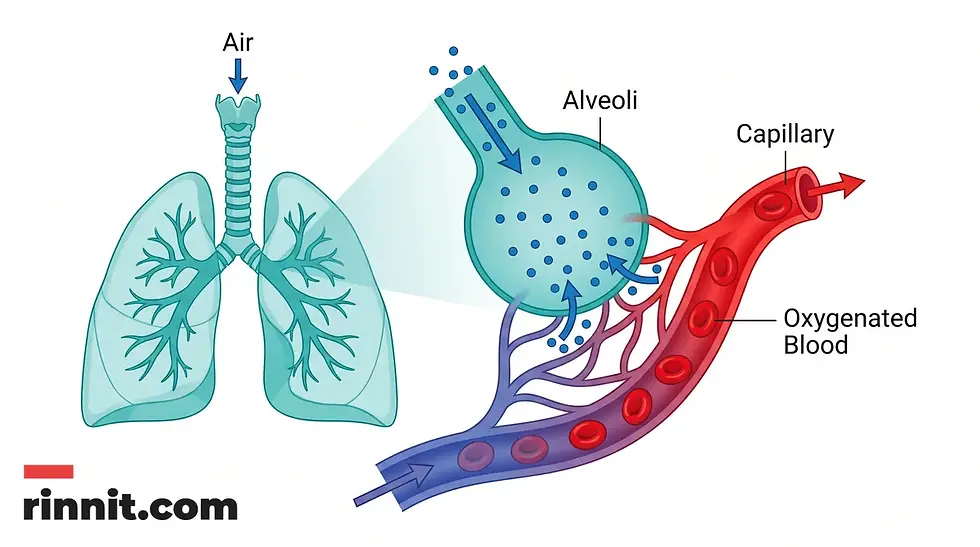
Hypoxemia is the medical term for blood oxygen levels that are lower than normal. In a healthy body, oxygen enters the lungs and moves into small air sacs called alveoli, where tiny blood vessels pick it up and carry it through the bloodstream to the tissues and organs that need energy. When this process is disrupted, the body may not work properly. [1]
Hypoxemia is not the same as hypoxia. Hypoxemia means low oxygen in the blood, while hypoxia is the broader state in which organs and tissues do not get enough oxygen. Low blood oxygen can lead to hypoxia, and if it goes on for a long time it can damage the heart or brain. Hypoxemia can happen suddenly (acute) or last for months or years, which is often called chronic respiratory failure. [1]
Recognizing the Symptoms of Low Oxygen
Symptoms can appear suddenly or build over weeks or months, depending on the cause. Severe hypoxemia can be fatal within minutes if it is not treated, so early recognition matters. [1]
Common warning signs
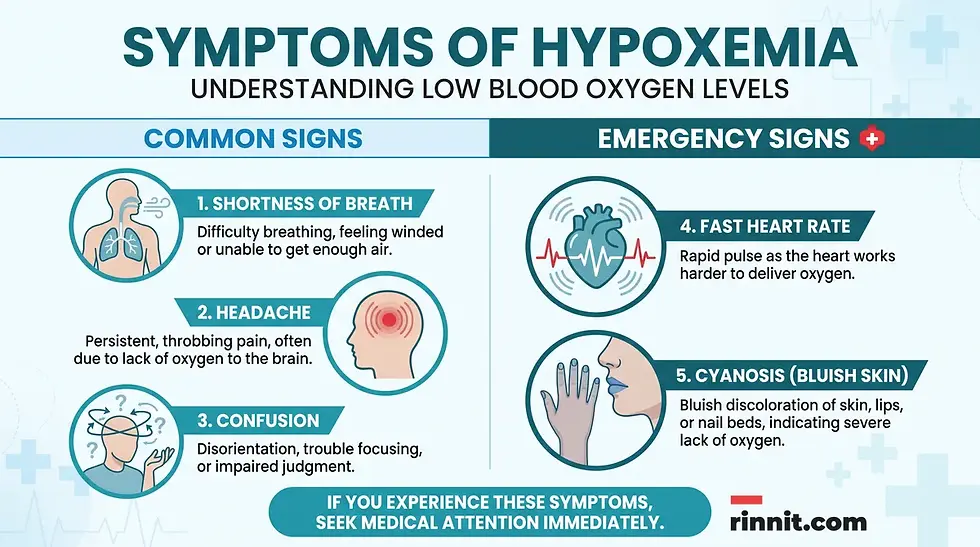
People with hypoxemia often notice a headache and difficulty breathing or shortness of breath. Other signs include a fast heart rate, tiredness, coughing, and wheezing. As oxygen levels keep falling, confusion can develop, which suggests the brain is not getting enough oxygen. [1]
The importance of cyanosis
One of the clearest signs of severe hypoxemia is cyanosis, a bluish or grayish tint to the skin, lips, or fingernails. If you or someone else has cyanosis or shortness of breath, or if others notice a sudden change in behavior or awareness such as restlessness or confusion, call emergency services or go to the nearest emergency room immediately. [1]
The Physiological Causes of Hypoxemia
The most common cause of hypoxemia is an underlying illness that affects breathing or blood flow, such as a heart or lung condition. Doctors usually group the causes into five categories that describe how oxygen transport fails. [1]
Category | What happens | Common triggers |
V/Q mismatch | Airflow (ventilation) and blood flow (perfusion) in the lungs are out of balance. | Heart or lung conditions such as COPD, asthma, and heart failure |
Diffusion impairment | Oxygen has difficulty passing from the lungs into the blood vessels. | Emphysema, lung scarring |
Hypoventilation | Breathing is too slow or too shallow to bring in enough oxygen. | Sedatives, severe muscle weakness, some brain diseases |
Low environmental oxygen | There is not enough oxygen in the air. | High altitude, flying |
Right-to-left shunting | Deoxygenated blood bypasses the lungs and travels on to the tissues. | Heart abnormalities |
Other conditions that can lead to hypoxemia include pneumonia, acute respiratory distress syndrome (ARDS), a blood clot in the lung (pulmonary embolism), a collapsed lung, fluid in the lungs, anemia, and sleep apnea, which can cause low oxygen at night. People with heart or lung disease are at higher risk, and infections such as the flu, pneumonia, and COVID-19 can raise the risk. [1]
Diagnosis and Clinical Testing
To diagnose hypoxemia, a healthcare provider listens to the heart and lungs and checks whether the skin, lips, or fingernails look bluish or grayish. Tests then measure the oxygen level in the blood and show how well the heart and lungs are working. [1]
Pulse oximetry, blood gas, and walk tests
Pulse oximetry is the most common test. A small sensor that slips over a finger measures the amount of oxygen in the blood, and it is painless and noninvasive. For a direct measurement, an arterial blood gas (ABG) test uses a needle to take a blood sample from an artery in the wrist, arm, or groin. A six-minute walk test (6MWT), which measures how far you can walk on a flat surface in six minutes, helps evaluate how well the heart and lungs work. [1]
Management and Treatment Strategies
The immediate goal is to raise the blood oxygen level to a safe range. The approach depends on whether the hypoxemia is acute or chronic and on its cause. [1]
Oxygen therapy and support

Supplemental oxygen is the most common treatment. Some people need it all the time, while others need it only during exertion or sleep. In severe cases, a ventilator, a machine that breathes for the person, may be needed. [1]
Addressing the underlying cause
Depending on the cause, treatment can include inhalers with bronchodilators or steroids for lung diseases such as COPD, diuretics to remove excess fluid from the lungs, antibiotics for pneumonia, and continuous positive airway pressure (CPAP) for sleep apnea. [1]
Reducing your risk
Managing underlying conditions is the best way to keep blood oxygen at safe levels. Do not ignore new symptoms, use prescribed oxygen as directed, take medications as prescribed, and quit smoking if you smoke. If you plan to travel to a high altitude, make a plan ahead of time and allow time to adjust. [1]
Learn more. For more evidence-based health guides, visit Rinnit.com.
Frequently Asked Questions
What is the difference between hypoxemia and hypoxia?
Hypoxemia is low oxygen in the blood, while hypoxia is a state in which the body's tissues and organs do not get enough oxygen. [1]
Can hypoxemia happen at high altitudes?
Yes. There is less oxygen in the air at high altitudes, and traveling to a high altitude or flying can cause anything from minor breathlessness to severe altitude sickness. [1]
Is cyanosis always blue?
Cyanosis typically looks like a bluish or grayish tint to the skin, lips, or fingernails, and how it looks can vary with a person's natural skin tone. Also watch for shortness of breath and confusion. [1]
What is a pulse oximeter?
A pulse oximeter is a small, painless sensor that clips onto a finger to estimate the oxygen level in your blood. Readings can be less accurate in some people, so symptoms matter as much as the number. [1]
Can medications cause hypoxemia?
Yes. Medications that slow breathing, such as sedatives, can cause hypoventilation and lower the oxygen level in the blood. [1]
What is V/Q mismatch?
It is an imbalance between airflow into the lungs and blood flow through them. You can have plenty of oxygen in the lungs but too little blood flow to pick it up, or the reverse. A heart or lung condition usually causes it. [1]
Is hypoxemia a disease?
No. Hypoxemia is a condition caused by an underlying problem, most often a heart or lung condition. [1]
How long does hypoxemia last?
It depends on the cause. Hypoxemia can happen suddenly and briefly, or it can last for months or years. Depending on the cause, you might need a one-time treatment or ongoing treatment. [1]
What is chronic respiratory failure?
This is the term often used for long-term hypoxemia that lasts months or years, such as with COPD. [1]
Can I monitor my oxygen at home?
If you have a heart or lung condition, ask your healthcare provider. They may recommend monitoring your oxygen level at home. [1]
Why does hypoxemia cause confusion?
The brain needs a constant supply of oxygen. When oxygen levels drop, thinking and awareness can be affected, which can show up as restlessness or confusion. A sudden change in behavior or awareness is a reason to seek emergency care. [1]
What is an arterial blood gas (ABG) test?
An ABG test uses a needle to take a blood sample from an artery in the wrist, arm, or groin to measure the oxygen level in the blood. [1]
Can pneumonia lead to hypoxemia?
Yes. Pneumonia is one of the conditions that can cause hypoxemia, because infection and fluid in the lungs make it harder for oxygen to reach the blood. [1]
What should I do if my oxygen level is low?
If you have symptoms such as shortness of breath, cyanosis, or sudden confusion, call emergency services or go to the emergency room right away. If you have a long-term heart or lung condition, talk with your healthcare provider about a plan. [1]
Is a ventilator the same as an oxygen mask?
No. An oxygen mask delivers extra oxygen for you to breathe in, while a ventilator is a machine that assists or takes over breathing. [1]
Related Reading
Arterial Blood Gas (ABG) Test: Purpose, Procedure, Normal Values and Results explains the blood test that measures oxygen, carbon dioxide and pH in this condition.
Learn more in our guide to Pulse Oximetry: Normal Oxygen Levels, How It Works and What Affects Accuracy.
Learn more in our guide to Blood Oxygen Level: Normal Range, How It's Tested and When to Worry.
References
Cleveland Clinic. Hypoxemia. Cleveland Clinic. Last updated April 2, 2026. https://my.clevelandclinic.org/health/diseases/17727-hypoxemia
Parr NJ, et al. Racial and Ethnic Disparities in Occult Hypoxemia Prevalence and Clinical Outcomes Among Hospitalized Patients: A Systematic Review and Meta-analysis. J Gen Intern Med. 2024;39(13):2543-2553. PMID 39020232. https://doi.org/10.1007/s11606-024-08852-1
Frat JP, et al. High-Flow or Standard Oxygen in Acute Hypoxemic Respiratory Failure. N Engl J Med. 2026;394(21):2095-2106. PMID 41841715. https://doi.org/10.1056/NEJMoa2516087
Chu DK, et al. Mortality and morbidity in acutely ill adults treated with liberal versus conservative oxygen therapy (IOTA): a systematic review and meta-analysis. Lancet. 2018;391(10131):1693-1705. PMID 29726345. https://doi.org/10.1016/S0140-6736(18)30479-3
Li L, et al. Conservative versus liberal oxygen therapy for acutely ill medical patients: A systematic review and meta-analysis. Int J Nurs Stud. 2021;118:103924. PMID 33774265. https://doi.org/10.1016/j.ijnurstu.2021.103924
Medical disclaimer
This article is for general educational purposes only and is not a substitute for professional medical advice, diagnosis, or treatment. Always seek the advice of your physician or other qualified health provider with any questions you may have regarding a medical condition.



Comments