Hypokalemia: A Comprehensive Guide to Managing Low Potassium Levels

Updated: 2 days ago
Medically reviewed by Dr. Baraa Alnahhal, MD · Last reviewed: October 2026
Quick Answer: Key Facts About Hypokalemia
Hypokalemia is low blood potassium, below the normal range of 3.5 to 5.2 mEq/L; levels lower than 3.0 mEq/L are severe. Common triggers include diarrhea, vomiting, diuretics and certain antibiotics. Symptoms include fatigue, muscle weakness, palpitations and constipation, while paralysis and abnormal heart rhythms are emergency signs. Treatment uses oral supplements or IV potassium.
Feature | Clinical Detail |
Normal Range | 3.5 to 5.2 mEq/L (3.5 to 5.2 mmol/L) |
Mild Hypokalemia | 3.0 to 3.5 mEq/L |
Severe Hypokalemia | Lower than 3.0 mEq/L |
Primary Triggers | Diarrhea, vomiting, diuretics, and certain antibiotics |
Major Symptoms | Fatigue, muscle weakness, heart palpitations, and constipation |
Emergency Signs | Paralysis, abnormal heart rhythms, and extreme thirst |
Standard Treatment | Oral supplements or intravenous (IV) potassium |
What the research says
Low potassium after a heart attack goes with worse outcomes. A systematic review of 23 articles, with 12 studies pooled in the meta-analysis, found that a serum potassium below 3.5 mEq/L in patients with acute myocardial infarction was associated with higher short- and long-term mortality and with ventricular arrhythmias. Levels of 4.5 mEq/L or higher also carried risk, and the authors call for more research before changing guidelines (Colombo et al., Eur J Prev Cardiol, 2018).
Diuretics and gut losses are the usual culprits, and treatment is oral or intravenous potassium. A clinical review in American Family Physician identifies diuretic use and gastrointestinal losses as common causes of hypokalemia, notes that severe or symptomatic cases can cause life-threatening cardiac conduction disturbances and neuromuscular dysfunction, and states that hypokalemia is treated with oral or intravenous potassium (Viera & Wouk, Am Fam Physician, 2015).
What is Hypokalemia?

Hypokalemia is a medical state characterized by an insufficient concentration of potassium in the bloodstream. Potassium is a critical mineral and electrolyte that carries an electric charge when dissolved in bodily fluids. It is indispensable for the proper functioning of cells, muscles, and nerves. Your body gets potassium from the food you eat. The kidneys are responsible for maintaining this balance by removing excess potassium through urine. [1]
When potassium levels drop below the normal threshold of 3.5 mEq/L, the electrical signals that govern the heart and muscles can become disrupted. This can affect the digestive system, bone health, and overall physical strength. Over time, persistent low levels can lead to significant complications, including muscle paralysis and dangerous heart rhythm disturbances. [1]
Recognizing the Symptoms of Low Potassium
The symptoms of hypokalemia often depend on the severity of the deficiency. In many mild cases, individuals may not experience any noticeable signs. However, as levels continue to decline, the body begins to signal distress through various physical manifestations. [1]
Mild to Moderate Symptoms
Early warning signs of low potassium are often non-specific but can significantly impact daily quality of life. These include:
Digestive Issues: Persistent constipation is a common sign as potassium is needed for smooth muscle contraction in the gut. [1]
Cardiovascular Signs: Heart palpitations or a feeling of a skipping heart rate. [1]
Physical Weakness: Extreme fatigue, muscle spasms, and general weakness in the limbs. [1]
Sensory Changes: Tingling sensations or numbness (paresthesia) in the hands and feet. [1]
Severe Emergency Symptoms
When potassium levels fall below 3.0 mEq/L, the condition is considered severe and requires immediate clinical attention. Symptoms at this stage include:
Neuromuscular Impact: Severe muscle twitches, cramps, and eventually paralysis. [1]
Vital Sign Changes: Low blood pressure (hypotension) and lightheadedness. [1]
Urinary Changes: Excessive thirst (polydipsia) and frequent urination (polyuria). [1]
Critical Heart Rhythms: Development of abnormal heart rhythms (arrhythmias) that can lead to cardiac arrest. [1] [3]
Common Causes and Risk Factors

Hypokalemia is rarely caused by a poor diet alone. Instead, it typically results from the body losing potassium faster than it can be replaced, or from underlying medical conditions that disrupt electrolyte balance. [1] [2]
Excessive Fluid Loss
Low potassium typically occurs because of an excessive loss of potassium through the digestive tract. Conditions such as chronic diarrhea, frequent vomiting, or the overuse of laxatives can rapidly deplete the body's potassium stores. Similarly, excessive sweating (hyperhidrosis) can contribute to electrolyte imbalances. [1]
Medication Side Effects
Certain medications are known to lower potassium levels as a side effect. Diuretics, often called "water pills," are the most common culprits as they force the kidneys to expel more potassium through urine. Other medications include insulin, corticosteroids, and specific types of antibiotics. [1]
Underlying Health Conditions
Several medical disorders can interfere with how the body processes potassium:
Adrenal Disorders: Conditions like Cushing’s syndrome or primary aldosteronism (Conn’s syndrome) cause the adrenal glands to produce hormones that lead to potassium loss. [1]
Kidney Disease: Some kidney disorders, such as renal tubular acidosis, or genetic disorders like Bartter’s, Gitelman, or Liddle syndromes can cause the kidneys to leak potassium. [1]
Metabolic Issues: Low magnesium levels (hypomagnesemia) often occur alongside low potassium and make it harder for the body to retain the mineral. [1]
Diagnosis and Clinical Testing
To confirm a diagnosis of hypokalemia, healthcare providers rely on objective measurements of blood chemistry. The primary test is a Basic Metabolic Panel (BMP) or a Comprehensive Metabolic Panel (CMP), which measures the exact concentration of potassium in the blood. [1]
Test Type | Purpose |
Blood Test (BMP/CMP) | Measures blood potassium levels to determine severity. |
Urinalysis | Measures how much potassium is being lost through urine to identify the cause. |
Electrocardiogram (ECG) | Checks for heart rhythm abnormalities caused by low potassium. |
Treatment and Management Strategies
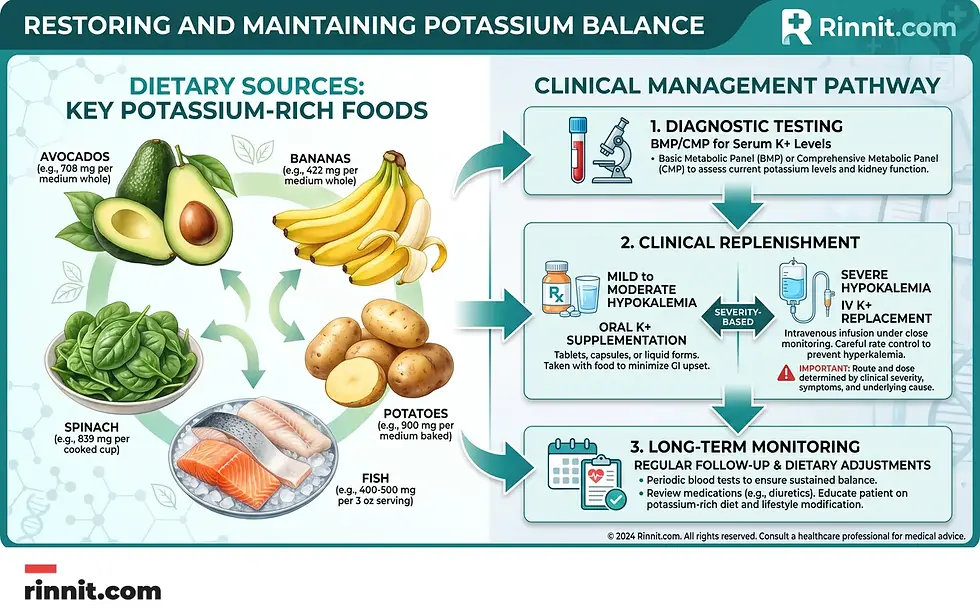
The treatment for hypokalemia is focused on two goals: replenishing the body's potassium levels and addressing the root cause of the loss. The method of replenishment depends on the severity of the symptoms and the blood test results. [1]
Replenishment Methods
For mild cases, doctors typically prescribe oral potassium supplements. These are effective for steady replenishment. However, if the deficiency is severe or causing heart issues, potassium must be administered intravenously (IV) in a hospital setting. IV treatment is also necessary if oral supplements are not being absorbed correctly or if the patient is losing potassium too quickly. [1] [2]
Long-Term Management
Preventing recurrence involves managing underlying conditions. This may include switching to potassium-sparing diuretics or treating adrenal disorders. Additionally, patients are encouraged to maintain a diet rich in potassium-heavy foods. [1]
Conclusion
Hypokalemia is a significant clinical marker that requires proactive management to avoid serious complications. By recognizing the early signs of muscle weakness and heart palpitations, individuals can seek the necessary blood tests to identify a deficiency. Whether caused by medication, illness, or underlying organ dysfunction, restoring potassium balance is essential for long-term cardiovascular and muscular health.
Take action. If you are experiencing symptoms of low potassium, consult your healthcare provider for a metabolic panel. For more resources on electrolyte balance and heart health, visit Rinnit.com.
Frequently Asked Questions
Can a poor diet alone cause hypokalemia?
It is rare for diet alone to cause a significant deficiency in healthy individuals, as the kidneys are very efficient at conserving potassium when intake is low.
How long does it take to recover from low potassium?
Recovery time depends on the severity. Mild cases can often be corrected within days of starting supplements, while severe cases requiring IV therapy are managed in a hospital until levels stabilize.
Why does low magnesium affect potassium levels?
Magnesium is necessary for the kidneys to properly retain potassium. If magnesium is low, the kidneys may continue to leak potassium even if you are taking supplements.
Are bananas the best source of potassium?
While bananas are a good source, many other foods like avocados, spinach, potatoes, and white beans actually contain higher concentrations of potassium per serving.
Can stress cause low potassium?
While stress itself doesn't directly lower potassium, it can lead to behaviors or conditions (like excessive sweating or digestive issues) that contribute to loss.
Is it possible to have too much potassium?
Yes, a condition called hyperkalemia occurs when levels are too high, which is also dangerous for the heart. Supplements should only be taken under medical supervision.
What is the "water pill" connection to potassium?
Many diuretics work by increasing urine output, which often carries potassium out of the body. Patients on these medications frequently need potassium-sparing versions or supplements.
Can I treat severe hypokalemia at home?
No. Severe hypokalemia (below 3.0 mEq/L) is a medical emergency that requires clinical monitoring and potentially IV treatment.
Does alcohol affect potassium?
Yes, alcohol use disorder is a known risk factor for hypokalemia as it can interfere with nutrient absorption and kidney function.
Can vomiting once cause hypokalemia?
A single episode is unlikely to cause a clinical deficiency, but prolonged vomiting (over 24-48 hours) can lead to significant electrolyte loss.
What is Gitelman syndrome?
Gitelman syndrome is a rare genetic kidney disorder that causes an imbalance of electrolytes, including low potassium, magnesium, and calcium.
Can low potassium cause high blood pressure?
While hypokalemia itself is often associated with low blood pressure, certain conditions that cause it (like Liddle syndrome) can lead to high blood pressure.
Should I take a potassium supplement just in case?
No. You should only take potassium supplements if a blood test confirms a deficiency and a doctor prescribes them.
What happens if hypokalemia is left untreated?
Untreated severe hypokalemia can lead to life-threatening heart arrhythmias and total muscle paralysis.
Are there specific symptoms for children?
Symptoms in children are generally similar to adults, focusing on muscle weakness, fatigue, and digestive issues.
Related Reading
Potassium Binders: Types, How They Work and Side Effects explains potassium binder medicines.
Aldosterone Antagonists: Uses, Types and Side Effects explains aldosterone antagonist medicines.
Electrolytes and Electrolyte Panel: Test, Normal Ranges and Imbalances: An electrolyte panel is a quick blood test that checks potassium and other key electrolytes and is used to spot and monitor low potassium.
References
Cleveland Clinic. Hypokalemia. Cleveland Clinic. Last updated May 12, 2022. https://my.clevelandclinic.org/health/diseases/17740-low-potassium-levels-in-your-blood-hypokalemia
Viera AJ, Wouk N. Potassium Disorders: Hypokalemia and Hyperkalemia. Am Fam Physician. 2015;92(6):487-95. PMID 26371733. https://pubmed.ncbi.nlm.nih.gov/26371733/
Colombo MG, Kirchberger I, Amann U, et al. Association of serum potassium concentration with mortality and ventricular arrhythmias in patients with acute myocardial infarction: A systematic review and meta-analysis. Eur J Prev Cardiol. 2018;25(6):576-595. PMID 29473462. https://doi.org/10.1177/2047487318759694
Medical disclaimer
The information provided in this guide is for educational purposes only and should not be considered medical advice. Always consult with a qualified healthcare professional for diagnosis and treatment of any health condition. If you are experiencing a medical emergency, call 911 or your local emergency services immediately.



Comments