Hyperparathyroidism: A Comprehensive Guide to Symptoms, Causes, and Clinical Management

Updated: 2 days ago
Medically reviewed by Dr. Baraa Alnahhal, MD · Last reviewed: October 2026
Quick Answer: 5 Key Facts About Hyperparathyroidism
Hyperparathyroidism is overactive parathyroid glands making excess parathyroid hormone and, in the primary form, high blood calcium. Symptoms include bone pain, muscle weakness, fatigue, depression and kidney stones. It is caused by noncancerous adenomas, kidney disease or vitamin D deficiency, and can lead to osteoporosis and heart disease. Treatment is surgery for the primary form or addressing underlying deficiencies.
Feature | Details |
Definition | Overactivity of the parathyroid glands leading to excess PTH and, in the primary form, high blood calcium. |
Primary Symptoms | Bone pain, muscle weakness, fatigue, depression, and kidney stones. |
Main Causes | Noncancerous gland growths (adenomas), kidney disease, or vitamin D deficiency. |
Common Complications | Osteoporosis, heart disease, and chronic kidney issues. |
Standard Treatments | Surgical removal of glands (primary) or addressing underlying deficiencies (secondary). |
What the research says
Guidelines favor surgery for anyone with symptoms. An expert panel of the American Association of Endocrine Surgeons reviewed the medical literature from 1985 to mid-2015 and concluded that parathyroidectomy is indicated for all symptomatic patients, should be considered for most asymptomatic patients, and is more cost-effective than observation or drug therapy (Wilhelm et al., JAMA Surg, 2016).
Surgery lowers fracture risk. In a meta-analysis of 238,188 patients with primary hyperparathyroidism, parathyroidectomy lowered the risk of fractures at any site (relative risk 0.80; 95% CI 0.74–0.86) and of hip fractures (relative risk 0.63; 95% CI 0.52–0.76) compared with observation, but no reduction was seen for forearm or vertebral fractures (Kongsaree et al., J Clin Endocrinol Metab, 2024).
Drug-only management leaves calcium and PTH higher. Across 12 studies of 1,346 patients with mild disease (average follow-up about 41 months), post-treatment calcium (10.46 vs 9.39) and PTH (106.1 vs 43.3) were significantly higher in medically managed patients, and their bone density was lower. Rates of fracture, kidney stones and death did not differ significantly between the groups (Cironi et al., Cancers, 2023).
What Is Hyperparathyroidism?

Hyperparathyroidism occurs when one or more of the four tiny parathyroid glands in your neck become overactive. These glands are responsible for regulating the levels of calcium and phosphate in your blood. When they release too much parathyroid hormone (PTH), they signal your bones to release calcium into the bloodstream and your kidneys to hold onto it rather than excreting it in your urine. In primary hyperparathyroidism, this results in hypercalcemia, or elevated blood calcium, which can affect the heart, kidneys, and skeletal system; in secondary hyperparathyroidism, calcium is often normal or low. [1]
The condition is categorized into three distinct types based on its origin. Primary hyperparathyroidism stems from a problem within the glands themselves, such as a benign growth. Secondary hyperparathyroidism is a reactive state where the glands work harder to compensate for other health issues like chronic kidney disease or low vitamin D. Tertiary hyperparathyroidism develops when the glands become permanently enlarged after years of secondary overactivity. [1]
Symptoms and Warning Signs
Many individuals with hyperparathyroidism do not experience obvious symptoms initially. The condition is frequently discovered during routine blood screenings that show elevated calcium levels. However, as the condition progresses or calcium levels rise significantly, a wide range of physical and mental symptoms can emerge. [1]
Common Clinical Indicators
Musculoskeletal Pain: Aching in the joints or deep bone pain is a frequent complaint.
Systemic Fatigue: A persistent sense of tiredness, muscle weakness, and general exhaustion.
Mental Health Changes: Symptoms may include depression, trouble concentrating, and confusion.
Digestive Issues: Nausea, vomiting, loss of appetite, and chronic constipation.
Renal and Urinary Signs: Increased thirst and a frequent need to urinate, often leading to kidney stones.
Because these symptoms are often vague and can mimic other conditions, they are sometimes overlooked. If you experience persistent fatigue combined with bone pain or digestive distress, it is important to consult a healthcare provider for electrolyte testing. [1]
Causes and Risk Factors
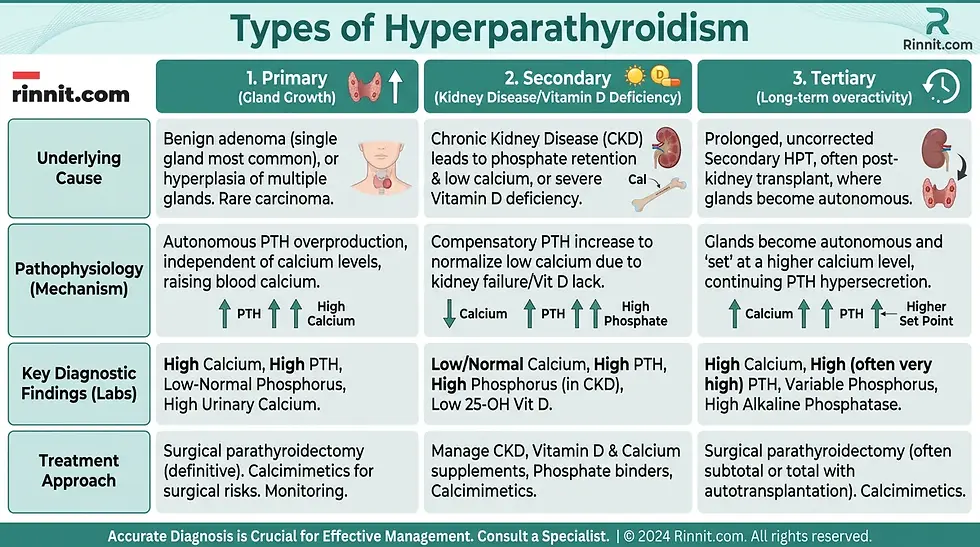
The underlying cause of hyperparathyroidism depends entirely on the type of the condition. In primary cases, the most common culprit is a noncancerous tumor known as an adenoma, which causes the gland to ignore the body's natural "stop" signals for hormone production. Less commonly, a general enlargement of the glands (hyperplasia) or, very rarely, parathyroid cancer can be the cause. [1]
Secondary hyperparathyroidism is most often driven by chronic kidney disease. When the kidneys fail, phosphate levels rise and vitamin D levels drop, causing calcium to plummet. The parathyroid glands respond by pumping out extra PTH to restore balance. Other risk factors include a history of radiation treatment to the neck, severe nutritional deficiencies, and gender, as females are statistically more likely to develop the condition. [1]
Diagnosis and Complications
Healthcare providers typically diagnose hyperparathyroidism by measuring blood levels of PTH, calcium, vitamin D, and phosphate. A 24-hour urine test may also be used to see how much calcium is being excreted. Once diagnosed, imaging tests like sestamibi scans or ultrasounds help locate the specific glands causing the issue, while bone density scans (DEXA) assess the impact on skeletal health. [1]

If left untreated, the excess calcium in the blood can lead to severe long-term complications:
Osteoporosis: Bones lose their mineral density, becoming thin, brittle, and prone to fractures.
Kidney Stones: Excess calcium accumulates in the kidneys, forming painful stones.
Cardiovascular Disease: Calcium buildup in the blood vessels and heart increases the risk of heart attack and stroke.
Skin Issues: In severe cases, calcium deposits can cause painful skin sores and infections. [1]
Treatment and Recovery
The treatment path for hyperparathyroidism is tailored to the specific type and severity of the condition. For primary hyperparathyroidism, the most effective treatment is often a parathyroidectomy—the surgical removal of the overactive gland. This procedure is generally curative and is highly recommended for patients under 50 or those with significant symptoms. [1] [2]
For secondary hyperparathyroidism, the focus shifts to treating the root cause. This often involves high-dose vitamin D or calcium supplements and specialized management of kidney disease. Medications known as calcimimetics may also be used to trick the glands into producing less PTH. Regardless of the treatment, regular monitoring of calcium and PTH levels is essential to ensure long-term health and prevent recurrence. [1]
Learn more. Learn More at Rinnit.com
Frequently Asked Questions
Can hyperparathyroidism be cured without surgery?
For primary hyperparathyroidism caused by a growth, surgery is the only definitive cure. Secondary cases can often be managed by treating the underlying cause, such as vitamin D deficiency.
Is hyperparathyroidism a type of cancer?
No, it is usually caused by benign (noncancerous) growths called adenomas. Parathyroid cancer is an extremely rare cause of the condition.
Why does hyperparathyroidism cause depression?
High calcium levels directly affect the nervous system, which can lead to mood changes, irritability, and depression.
How do the parathyroid glands differ from the thyroid gland?
Although they are located near each other, they have completely different functions. The thyroid regulates metabolism, while the parathyroid glands regulate calcium.
Can diet alone fix hyperparathyroidism?
While a healthy diet is important, primary hyperparathyroidism is a structural issue that usually requires medical or surgical intervention.
What is a sestamibi scan?
A sestamibi scan is a specialized imaging test that uses a small amount of radioactive material to identify which parathyroid glands are overactive.
Does hyperparathyroidism run in families?
Hyperparathyroidism can be part of inherited syndromes like Multiple Endocrine Neoplasia (MEN), though most cases are sporadic.
How long is the recovery after parathyroid surgery?
Most patients recover quickly, often returning to normal activities within a week, though calcium levels must be monitored closely during this time.
Can high calcium levels cause heart palpitations?
Yes, electrolyte imbalances, including high calcium, can affect the heart's electrical signals and lead to palpitations or arrhythmias.
What is the "stones, bones, abdominal moans, and psychic groans" mnemonic?
The mnemonic is a classic medical phrase used to remember the symptoms: kidney stones, bone pain, abdominal pain (constipation/nausea), and mental changes (depression/confusion).
Is hyperparathyroidism more common in men or women?
Hyperparathyroidism is significantly more common in females, particularly those who are postmenopausal.
Can vitamin D supplements cause hyperparathyroidism?
No, but a deficiency in vitamin D is a major cause of secondary hyperparathyroidism.
What happens if I choose not to have surgery for primary hyperparathyroidism?
You will need lifelong monitoring of your calcium levels and bone density to prevent severe osteoporosis and kidney damage.
Can hyperparathyroidism cause high blood pressure?
Yes, high calcium levels can lead to the stiffening of blood vessels, contributing to hypertension.
Are there any specific foods I should avoid?
You should consult your doctor, but generally, you may need to manage your intake of calcium and phosphate depending on the type of hyperparathyroidism you have.
Related Reading
Hypercalcemia: Symptoms, Causes & Treatment — A Complete Guide explains high blood calcium, the main effect of hyperparathyroidism.
Parathyroidectomy: Surgery, Success Rate and Recovery describes the surgery that removes overactive parathyroid glands.
Parathyroid Scan (Sestamibi): Finding Overactive Glands Before Surgery explains the imaging test that locates an overactive parathyroid gland.
Osteoporosis: Causes, Symptoms, Diagnosis and Treatment Explained covers bone thinning, a common complication of high parathyroid hormone.
References
Cleveland Clinic. Hyperparathyroidism. Cleveland Clinic. Last updated February 29, 2024. https://my.clevelandclinic.org/health/diseases/14454-hyperparathyroidism
Wilhelm SM, Wang TS, Ruan DT, et al. The American Association of Endocrine Surgeons Guidelines for Definitive Management of Primary Hyperparathyroidism. JAMA Surg. 2016;151(10):959-968. PMID 27532368. https://doi.org/10.1001/jamasurg.2016.2310
Kongsaree N, Thanyajaroen T, Dechates B, et al. Skeletal Effect of Parathyroidectomy on Patients With Primary Hyperparathyroidism: A Systematic Review and Meta-Analysis. J Clin Endocrinol Metab. 2024;109(10):e1922-e1935. PMID 38739762. https://doi.org/10.1210/clinem/dgae326
Cironi KA, Issa PP, Albuck AL, et al. Comparison of Medical Management versus Parathyroidectomy in Patients with Mild Primary Hyperparathyroidism: A Meta-Analysis. Cancers (Basel). 2023;15(12):3085. PMID 37370696. https://doi.org/10.3390/cancers15123085
Medical Disclaimer: The information provided in this article is for educational purposes only and should not be considered medical advice. Always consult with a qualified healthcare professional for concerns regarding your hormonal health or calcium levels.
Medical disclaimer
The information provided in this article is for educational purposes only and should not be used as a substitute for professional medical advice, diagnosis, or treatment. Always seek the advice of your physician or other qualified health provider with any questions you may have regarding a medical condition.



Comments