Hypercalcemia: Symptoms, Causes & Treatment — A Complete Guide

Updated: 2 days ago
Medically reviewed by Dr. Baraa Alnahhal, MD · Last reviewed: September 2026
What Is Hypercalcemia?
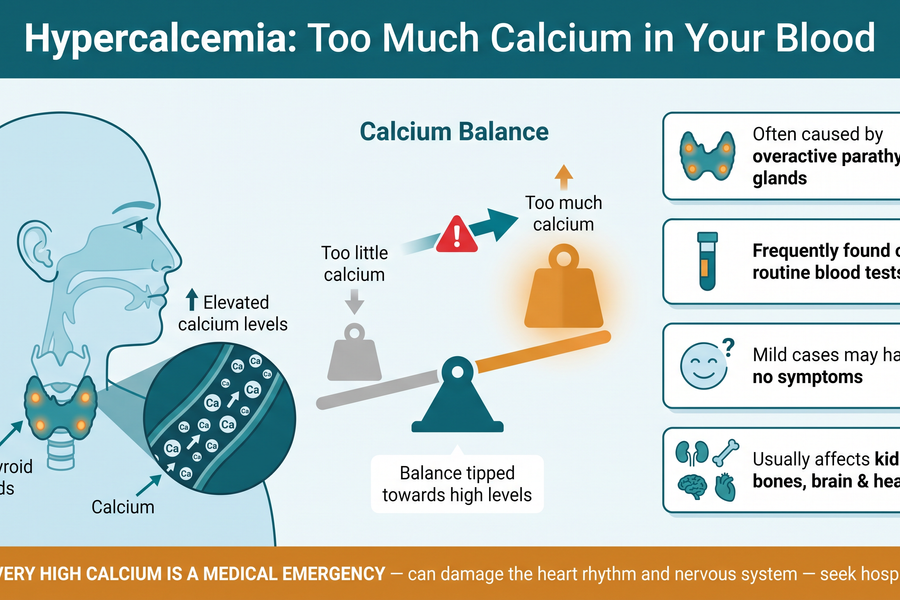
Hypercalcemia is a condition in which the calcium level in the blood becomes too high. Calcium is a mineral your body needs to build strong bones and teeth, help muscles contract, and allow nerves to send signals. But your body must keep the amount of calcium in your blood within a tight, delicate range.
When that balance tips too far in either direction, problems begin. Too much calcium in the blood can weaken bones, create kidney stones, and affect the heart and brain.
Where Does Blood Calcium Come From?
Four tiny parathyroid glands sit in your neck, just behind the thyroid gland. They produce parathyroid hormone, which controls the levels of two minerals in your body: calcium and phosphorus. When your body needs more calcium in the blood, parathyroid hormone triggers three actions.
Bones release calcium: Stored calcium moves into the bloodstream.
Digestive tract absorbs more calcium: More dietary calcium is taken up from food.
Kidneys release less calcium: Less calcium is lost in urine, and more vitamin D is activated.
Vitamin D plays a key role in your body's ability to absorb calcium. This three-part system normally keeps blood calcium in a healthy range. Hypercalcemia develops when one or more parts of this system malfunction.
Most often, hypercalcemia happens after one or more of the parathyroid glands makes too much hormone. But cancer, certain medical conditions, some medicines, and too much calcium and vitamin D in supplements can also cause it.
Some people have no symptoms at all. Others experience symptoms ranging from mild to serious. Treatment always depends on the underlying cause.
Hypercalcemia Symptoms: What Does High Calcium Feel Like?
Mild hypercalcemia may cause no symptoms, which is why it is so often found on routine blood tests before anyone notices anything wrong. When symptoms do appear, they are related to the parts of your body affected by the high blood calcium levels.
Kidneys: Excess calcium makes the kidneys work harder to filter it, causing serious thirst and frequent urination.
Digestive system: Stomach upset or pain, vomiting, and constipation.
Bones and muscles: The extra calcium in the blood is usually leached from the bones, which weakens them and causes bone pain and muscle weakness.
Brain: Trouble focusing, confusion, drowsiness, and fatigue; it can also cause depression.
Heart: Rarely, serious hypercalcemia causes a fast-beating, fluttering, or pounding heartbeat and can make the heart beat out of rhythm.

Hypercalcemia Causes: Why Does Blood Calcium Go Up?
Eight factors can push blood calcium too high, in order of importance.
Overactive parathyroid glands (hyperparathyroidism): The most common cause — too much parathyroid hormone, from a small noncancerous tumor or an enlarged gland.
Cancer: Lung cancer, breast cancer, and some blood cancers raise risk; cancer that spreads to the bones raises it further.
Tuberculosis and sarcoidosis: These diseases raise blood vitamin D levels, so the digestive tract absorbs more calcium.
Lithium and thiazide diuretics: These medicines may cause more parathyroid hormone to be released.
Too much calcium or vitamin D supplements: Taking excessive amounts over time raises blood calcium.
Serious dehydration: A common cause of mild or short-term hypercalcemia; less fluid in the blood means calcium concentrates.
Little or no movement: Bones that don't bear weight over time release calcium into the blood.
Familial hypocalciuric hypercalcemia: A rare genetic condition that raises blood calcium but does not cause symptoms or complications.
What Is Hyperparathyroidism?
Hyperparathyroidism is the medical name for overactive parathyroid glands. It is the single most common cause of hypercalcemia. It usually stems from either a small noncancerous tumor on one of the glands or enlargement of one or more of the four glands. Because so many cases come from one affected gland, surgery to remove the problem tissue often cures the condition.
When to See a Doctor
Call your healthcare professional if you think you have any symptoms of hypercalcemia — especially extreme thirst (kidneys straining to filter excess calcium), frequent urination (the kidneys' early response to high calcium), and pain in the stomach area (digestive tract involvement).
Because mild hypercalcemia often has no symptoms, it is worth mentioning high calcium on any blood test you already have — and asking whether a recheck or a parathyroid hormone test is appropriate.
Hypercalcemia Complications: What Happens If It Goes Untreated?
Left unaddressed, high blood calcium can lead to five serious medical conditions. This is why finding the cause matters so much.
Osteoporosis: Thinning bones from continuous calcium release — leading to broken bones, a curving spinal column, and loss of height.
Kidney stones: Too much calcium in urine forms crystals that combine into painful kidney stones.
Kidney failure: Progressive kidney damage limits the organs' ability to clean the blood and remove extra fluid.
Nervous system conditions: Serious hypercalcemia can lead to confusion, dementia, and coma, which can be fatal.
Irregular heart rhythm (arrhythmia): High calcium disrupts the electrical signals that control your heartbeat.
How Is Hypercalcemia Diagnosed?
Hypercalcemia can cause few or no symptoms, so many people do not know they have it until a routine blood test shows a high calcium level.
Blood calcium test: Confirms that blood calcium is high.
Parathyroid hormone (PTH) test: A high PTH level suggests hyperparathyroidism as the cause.
Imaging tests: Scans of bones or lungs help determine whether cancer or sarcoidosis is the cause.
Common imaging studies used in the workup include chest X-rays, CT scans, mammograms, and MRI. Your doctor's goal is not just to confirm the high calcium but to find the cause — because treatment follows the cause.

Hypercalcemia Treatment: How Is High Blood Calcium Treated?
Treatment depends on the severity of your hypercalcemia and, above all, on what is causing it.
Mild Hypercalcemia: Watchful Monitoring
If your hypercalcemia is mild, you might not need treatment right away. You and your healthcare professional may simply wait to see if symptoms start or become worse. Your bones and kidneys are checked over time to be sure they stay healthy.
More Serious Hypercalcemia: Medicines
For more serious cases, doctors may recommend one or more of these six types of treatment.
Calcitonin (Miacalcin): A hormone from salmon that controls calcium levels in the blood; mild upset stomach can occur.
Calcimimetics: Help control overactive parathyroid glands; cinacalcet (Sensipar) is approved for this use and works on the glands themselves.
Bisphosphonates: Osteoporosis medicines that quickly lower calcium when given through a vein (IV); often used for hypercalcemia due to cancer; risks include thigh fractures and jaw breakdown (osteonecrosis).
Denosumab (Prolia, Xgeva): Used for hypercalcemia caused by cancer that does not respond well to bisphosphonates — a second-line cancer option.
Prednisone: Short-term steroid pills that counter hypercalcemia caused by high vitamin D levels.
IV fluids and loop diuretics: Given in the hospital to rapidly lower calcium; used for emergency-level cases.
Medical Emergency: Very High Calcium
Very high calcium levels are a medical emergency. You may need treatment with IV fluids in the hospital to quickly lower your calcium level. This helps prevent heart rhythm problems or damage to the nervous system. Loop diuretics may also be needed if your calcium stays high or if too much fluid builds up in your body.
Surgery: When the Parathyroids Are the Problem
Conditions linked with overactive parathyroid glands can often be cured by surgery to remove the tissue causing the problem. In many people, only one of the four parathyroid glands is affected. Before surgery, a special scanning test involves an injection of a small amount of radioactive material that helps pinpoint exactly which gland or glands are affected.
Self-Care and Prevention
While medical treatment targets the cause, everyday habits can support calcium balance and reduce your risk.
Stay well hydrated: Serious dehydration is a common cause of mild, short-term hypercalcemia.
Review your supplements with a doctor: Too much calcium or vitamin D over time raises blood calcium.
Review your medicines: Lithium and thiazide diuretics can raise parathyroid hormone — never stop them on your own, but do discuss them.
Stay active: Long periods of sitting or lying down cause weight-bearing bones to release calcium.
Attend follow-up testing: Routine blood tests catch hypercalcemia early, before bones and kidneys are damaged.
Preparing for Your Appointment
You might start by seeing your primary healthcare professional. You will likely then be referred to an endocrinologist — a doctor who treats hormonal conditions.
Before your appointment, make a list of your symptoms (including any that seem unrelated, and note when they began), key personal information (major stresses or recent life changes, your medical history, and your family's medical history), all medicines, vitamins, and supplements (including the doses you take), and questions for your doctor. Take a family member or friend along if you can — they can help you remember the information you are given.
Useful questions to ask include: What is the most likely cause of my symptoms? What tests do I need? What treatments are available, and which do you recommend? What side effects can I expect from treatment? Are there treatment options other than the one you are suggesting? I have other health conditions — how can I best manage them together?
Expect questions such as: Does anything improve your symptoms? What makes them worse? Have you had kidney stones, bone fractures, or osteoporosis? Do you have bone pain or unexplained weight loss? Have family members had hypercalcemia or kidney stones?
Conclusion
Hypercalcemia — too much calcium in the blood — is a condition that often announces itself quietly, sometimes surfacing only on a routine blood test. Its most common driver is an overactive parathyroid gland, but cancer, certain medications, excess supplements, dehydration, and immobility can all tip the balance. Left untreated, it can damage bones, kidneys, the heart's rhythm, and the nervous system. The good news: mild cases may require only careful monitoring, serious cases respond to targeted medicines, and parathyroid-related hypercalcemia can often be cured with surgery.
Your next step: If you have experienced extreme thirst, frequent urination, or unexplained stomach pain — or if a blood test has ever shown high calcium — talk to a healthcare professional about checking your calcium and parathyroid hormone levels. If your symptoms are severe (confusion, abnormal heartbeat, or vomiting you cannot control), seek emergency medical care immediately.
Frequently Asked Questions
What is the most common cause of hypercalcemia?
Overactive parathyroid glands, a condition called hyperparathyroidism. The four tiny glands behind your thyroid produce too much hormone, which releases calcium from your bones into your blood. Cancer is the other major cause.
Can hypercalcemia cause no symptoms?
Yes. Mild hypercalcemia frequently causes few or no symptoms, which is why it is often discovered by accident on routine blood tests rather than because someone felt unwell.
Is hypercalcemia a medical emergency?
Mild hypercalcemia usually is not. However, very high calcium levels are a medical emergency that requires hospital treatment with IV fluids to protect the heart rhythm and nervous system. Seek emergency care for severe confusion, abnormal heartbeat, or uncontrollable vomiting.
Can too much calcium in supplements cause hypercalcemia?
Yes. Taking too much calcium or vitamin D in supplements over time can raise blood calcium levels. Have your doctor review all supplements you take.
What medicines can cause hypercalcemia?
Lithium and thiazide diuretics may cause the parathyroid glands to release more hormone, raising blood calcium. Never stop a prescribed medicine on your own — discuss it with your doctor.
Can hypercalcemia be cured?
When the cause is an overactive parathyroid gland, surgery to remove the affected tissue can often cure the condition. When the cause is cancer, another disease, or a medication, treatment focuses on managing the underlying problem.
What complications can hypercalcemia cause?
Five main complications: osteoporosis (thinning bones), kidney stones, kidney failure, nervous system problems (confusion, dementia, and potentially fatal coma), and irregular heart rhythm (arrhythmia).
What kind of doctor treats hypercalcemia?
You typically start with your primary healthcare professional, who will likely refer you to an endocrinologist — a specialist in hormonal conditions, which is where the parathyroid glands fit in.
References
Health information, not medical advice. This article is for general education and is not a substitute for professional diagnosis or treatment. Always consult a qualified healthcare provider about your own health, and seek emergency care for urgent symptoms.
Comments