Hyperglycemia in Diabetes: Warning Signs, Target Numbers, and When It Becomes an Emergency

Updated: 2 days ago
Medically reviewed by Dr. Baraa Alnahhal, MD · Last reviewed: October 2026
Hyperglycemia is high blood sugar — glucose above roughly 180 to 200 mg/dL (10 to 11.1 mmol/L) — and it affects people who have diabetes [1]. It usually develops slowly over days or weeks, starting with frequent urination, increased thirst, blurred vision, and unusual tiredness. Left untreated, it can trigger two life-threatening emergencies: diabetic ketoacidosis (DKA) and hyperosmolar hyperglycemic state (HHS). Routine blood sugar monitoring, a consistent eating plan, correct medication use, and knowing your target range (typically 80–130 mg/dL before meals per widely used guidelines) are the foundation of prevention. Seek emergency care if blood sugar stays above 240 mg/dL (13.3 mmol/L) with ketones in the urine, or if you cannot keep food or fluids down [2].
Quick Answer: What Is Hyperglycemia?
Hyperglycemia is high blood sugar (glucose), which affects people with diabetes. Symptoms usually begin once glucose rises above 180 to 200 mg/dL and include frequent urination, thirst, blurred vision and tiredness. Untreated, it can progress to diabetic ketoacidosis or hyperosmolar hyperglycemic state, both emergencies. Most cases are managed at home, while severe cases need IV fluids and insulin.
What the research says
Tight glucose control sharply cuts complications in type 1 diabetes. In 1,441 people with type 1 diabetes followed for a mean of 6.5 years, intensive therapy lowered the risk of developing retinopathy by 76% in those who started without it, reduced clinical neuropathy by 60% and albuminuria by 54%, but raised severe hypoglycemia two- to threefold (Diabetes Control and Complications Trial Research Group, N Engl J Med, 1993 [3]).
In type 2 diabetes, lower glucose protects small blood vessels. In 3,867 people newly diagnosed with type 2 diabetes, intensive treatment brought average HbA1c to 7.0% versus 7.9% with conventional treatment over 10 years, and lowered the risk of any diabetes-related endpoint by 12% and of microvascular endpoints by 25%. It did not clearly reduce macrovascular disease, and it caused more hypoglycemia and weight gain (UKPDS Group, Lancet, 1998 [4]).
Missed insulin and infection are leading triggers of ketoacidosis. In a retrospective review of 200 adults admitted with DKA in Baghdad, insulin non-compliance triggered 50.5% of episodes and infection 35%; 10.5% needed intensive care and in-hospital mortality was 3.5%. This is a single-region study (Tabrah and Al-Bakri, Cureus, 2025 [5]).
What Is Hyperglycemia?
Hyperglycemia is the medical term for high blood sugar. It affects people who have diabetes, and several factors can play a role in it. These include food and physical activity, illness, and medications not related to diabetes. Skipping doses or not taking enough insulin or other blood-sugar-lowering medication can also lead to hyperglycemia.
Treating hyperglycemia matters. When it is not treated, it can become severe and cause serious health problems that require emergency care, including a diabetic coma. Hyperglycemia that lasts, even if it is not severe, can lead to health problems affecting the eyes, kidneys, nerves, and heart.
Key fact | What it means |
Also called | High blood sugar or high blood glucose |
Who it affects | People who have diabetes |
Symptom threshold | Usually no symptoms until glucose is above 180–200 mg/dL (10–11.1 mmol/L) |
Development speed | Symptoms build slowly over several days or weeks |
Emergency triggers | Diabetic ketoacidosis (DKA) and hyperosmolar hyperglycemic state (HHS) |
Emergency blood sugar level | 240 mg/dL (13.3 mmol/L) or higher with ketones in the urine |
Symptoms of High Blood Sugar
Hyperglycemia usually does not cause symptoms until blood sugar (glucose) levels are high — above 180 to 200 mg/dL (10 to 11.1 mmol/L). Symptoms develop slowly over several days or weeks. The longer blood sugar levels stay high, the more serious symptoms may become. However, some people who have had type 2 diabetes for a long time may not show any symptoms despite high blood sugar levels.
Early Signs and Symptoms
Recognizing early symptoms of hyperglycemia can help identify and treat it right away. Watch for:
Frequent urination
Increased thirst
Blurred vision
Feeling weak or unusually tired
Later Signs and Symptoms
If hyperglycemia is not treated, it can cause toxic acids, called ketones, to build up in the blood and urine. This condition is called ketoacidosis. Symptoms include:
Fruity-smelling breath
Dry mouth
Abdominal pain
Nausea and vomiting
Shortness of breath
Confusion
Loss of consciousness

When to See a Doctor
Seek immediate help from your care provider or call 911 if any of the following apply:
You have ongoing diarrhea or vomiting, and you cannot keep any food or fluids down.
Your blood glucose levels stay above 240 mg/dL (13.3 mmol/L) and you have symptoms of ketones in your urine.
These are emergency situations that should never be managed at home alone.
Situation | What to do |
Ongoing diarrhea or vomiting, unable to keep food or fluids down | Seek immediate care / call 911 |
Blood glucose above 240 mg/dL (13.3 mmol/L) with ketones in urine | Seek immediate care / call 911 |
Frequent urination, increased thirst, blurred vision, tiredness | Check blood sugar; contact your provider |
Fruity breath, abdominal pain, confusion, or vomiting | Emergency — treat as possible ketoacidosis |
What Causes High Blood Sugar?
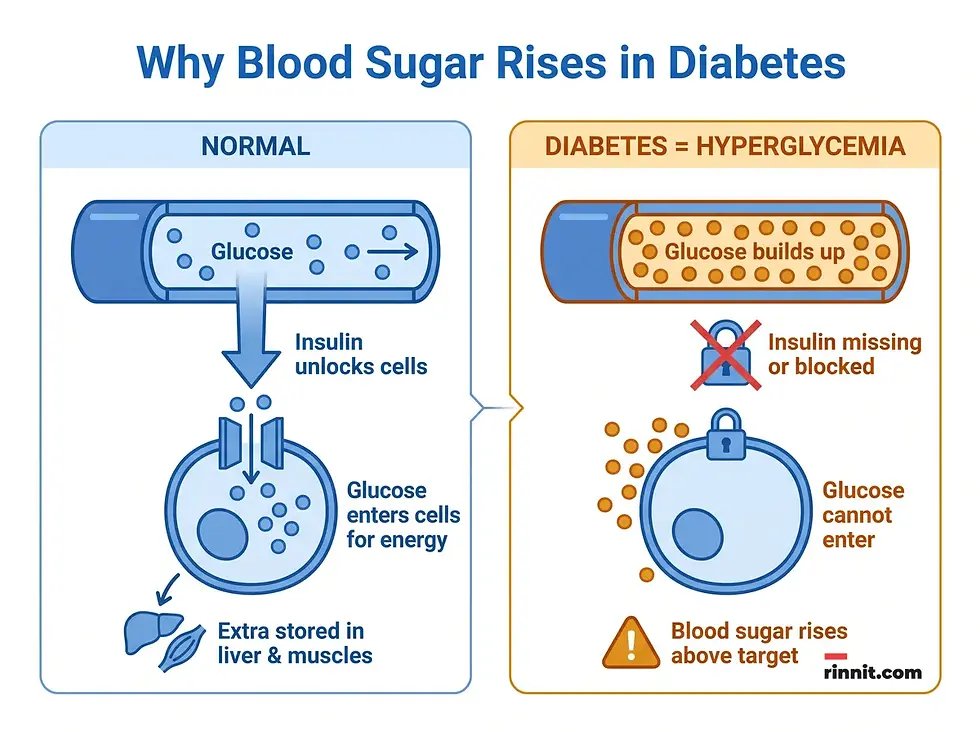
During digestion, the body breaks down carbohydrates from foods — such as bread, rice, and pasta — into sugar molecules. One of these sugar molecules is called glucose, and it is one of the body's main energy sources. Glucose is absorbed and goes directly into the bloodstream after eating, but it cannot enter the cells of most of the body's tissues without the help of insulin. Insulin is a hormone made by the pancreas.
When the glucose level in the blood rises, the pancreas releases insulin. The insulin unlocks the cells so that glucose can enter, providing the fuel the cells need to work properly. Extra glucose is stored in the liver and muscles. This process lowers the amount of glucose in the bloodstream and prevents it from reaching dangerously high levels. As the blood sugar level returns to normal, so does the amount of insulin the pancreas makes.
Diabetes drastically reduces insulin's effects on the body. This may be because the pancreas is unable to produce insulin, as in type 1 diabetes. Or it may be because the body is resistant to the effects of insulin, or does not make enough insulin to keep a normal glucose level, as in type 2 diabetes. In people who have diabetes, glucose tends to build up in the bloodstream — a condition called hyperglycemia. It may reach dangerously high levels if it is not treated properly. Insulin and other drugs are used to lower blood sugar levels.
Cause type | How it raises blood sugar |
Type 1 diabetes | The pancreas is unable to produce insulin |
Type 2 diabetes | The body resists insulin's effects or does not make enough insulin |
Missed or insufficient doses | Skipping doses or not taking enough insulin or other diabetes medication |
Food and activity factors | Meals, snacks, and physical activity that outpace the insulin working in the body |
Illness and infection | Hormones made to fight illness also raise blood sugar |
Non-diabetes medications | Certain drugs, such as steroids or immunosuppressants |
Risk Factors
Many factors can contribute to hyperglycemia. The table below summarizes them.
Risk factor | Why it matters |
Not using enough insulin or other diabetes medication | Glucose-lowering coverage is insufficient |
Not injecting insulin properly or using expired insulin | The insulin does not work as intended |
Not following your diabetes eating plan | Food intake falls out of balance with insulin |
Being inactive | Less glucose is used by working muscles |
Having an illness or infection | Illness-fighting hormones raise blood sugar |
Using certain medications | Steroids or immunosuppressants can raise glucose |
Being injured or having surgery | Physical stress triggers blood-sugar-raising hormones |
Experiencing emotional stress | Family problems or workplace issues trigger the same stress response |
Illness or stress can trigger hyperglycemia. That is because hormones your body makes to fight illness or stress can also cause blood sugar to rise. You may need to take extra diabetes medication to keep blood glucose in your target range during illness or stress.
Complications of High Blood Sugar
Long-Term Complications
Keeping blood sugar in a healthy range can help prevent many diabetes-related complications. Long-term complications of hyperglycemia that is not treated include:
Cardiovascular disease
Nerve damage (neuropathy)
Kidney damage (diabetic nephropathy) or kidney failure
Damage to the blood vessels of the retina (diabetic retinopathy) that could lead to blindness
Feet problems caused by damaged nerves or poor blood flow that can lead to serious skin infections, ulcerations, and, in some severe cases, amputation
Bone and joint problems
Teeth and gum infections
Emergency Complications
If blood sugar rises very high or if high blood sugar levels are not treated, it can lead to two serious conditions.
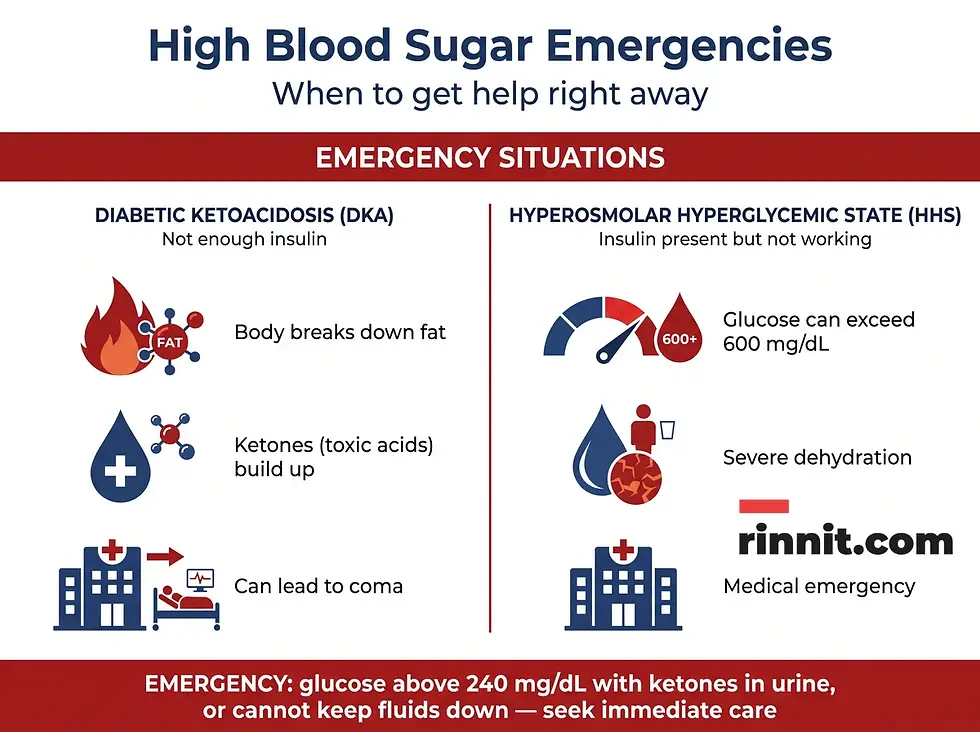
Diabetic ketoacidosis (DKA). This condition develops when you do not have enough insulin in your body. When this happens, glucose cannot enter your cells for energy. Your blood sugar level rises, and your body begins to break down fat for energy. When fat is broken down for energy in the body, it produces toxic acids called ketones. Ketones accumulate in the blood and eventually spill into the urine. If it is not treated, diabetic ketoacidosis can lead to a diabetic coma that can be life-threatening.
Hyperosmolar hyperglycemic state (HHS). This condition occurs when the body makes insulin, but the insulin does not work properly. Blood glucose levels may become very high — greater than 600 mg/dL (33.3 mmol/L) — without ketoacidosis. If you develop this condition, your body cannot use either glucose or fat for energy. Glucose then goes into the urine, causing increased urination. If it is not treated, diabetic hyperosmolar hyperglycemic state can lead to life-threatening dehydration and coma. It is very important to get medical care for it right away.
Complication type | Condition | What happens |
Long-term | Cardiovascular disease | Chronic high sugar damages blood vessels |
Long-term | Neuropathy | Nerve damage, often in the feet |
Long-term | Diabetic nephropathy / kidney failure | Kidney damage from high glucose |
Long-term | Diabetic retinopathy | Retinal blood vessel damage that could lead to blindness |
Long-term | Feet problems | Damaged nerves or poor blood flow → infections, ulcerations, possible amputation |
Long-term | Bone, joint, teeth, and gum problems | Increased risk of infections and joint issues |
Emergency | Diabetic ketoacidosis (DKA) | Not enough insulin → fat broken down → toxic ketones build up → possible coma |
Emergency | Hyperosmolar hyperglycemic state (HHS) | Insulin present but not working; glucose can exceed 600 mg/dL → severe dehydration and coma |
Prevention: Keeping Blood Sugar in a Healthy Range
To help keep your blood sugar within a healthy range, four habits work together.
Follow your diabetes meal plan. If you take insulin or oral diabetes medication, be consistent about the amount and timing of your meals and snacks. The food you eat must be in balance with the insulin working in your body.
Monitor your blood sugar. Depending on your treatment plan, you may check and record your blood sugar level several times a week or several times a day. Careful monitoring is the only way to make sure that your blood sugar level stays within your target range. Note when your glucose readings are above or below your target range.
Carefully follow your health care provider's directions for how to take your medication.
Adjust your medication if you change your physical activity. The adjustment depends on blood sugar test results and on the type and length of the activity. If you have questions about this, talk to your health care provider.
Prevention step | Key detail |
Follow your diabetes meal plan | Keep the amount and timing of meals and snacks consistent and balanced with your insulin |
Monitor your blood sugar | Check several times a week or day as your plan requires; note readings outside your target range |
Take medication as directed | Follow your provider's directions carefully |
Adjust for physical activity | Changes depend on test results and the type and length of activity; ask your provider |
Diagnosis: Target Blood Sugar Levels and Testing
Target Blood Sugar Ranges
Your health care provider sets your target blood sugar range. For many people who have diabetes, Mayo Clinic generally recommends the following target blood sugar levels before meals:
Between 80 and 120 mg/dL (4.4 and 6.7 mmol/L) for people age 59 and younger who have no medical conditions other than diabetes.
Between 100 and 140 mg/dL (5.6 and 7.8 mmol/L) for people age 60 and older, those who have other medical conditions such as heart, lung, or kidney disease, and people who have a history of low blood sugar (hypoglycemia) or difficulty recognizing the symptoms of hypoglycemia.
The American Diabetes Association generally recommends for many people who have diabetes:
Between 80 and 130 mg/dL (4.4 and 7.2 mmol/L) before meals.
Less than 180 mg/dL (10 mmol/L) two hours after meals.
Your target blood sugar range may differ, especially if you are pregnant or you have other health problems caused by diabetes. Your target range may change as you get older. Sometimes, reaching your target blood sugar range can be a challenge.
Target range | mg/dL (mmol/L) | Applies to |
Before meals (Mayo Clinic recommendation) | 80–120 mg/dL (4.4–6.7 mmol/L) | Age 59 and younger, no other medical conditions |
Before meals (Mayo Clinic recommendation) | 100–140 mg/dL (5.6–7.8 mmol/L) | Age 60+, other conditions (heart, lung, kidney disease), or history/difficulty with hypoglycemia |
Before meals (ADA recommendation) | 80–130 mg/dL (4.4–7.2 mmol/L) | General guideline for many people with diabetes |
Two hours after meals (ADA recommendation) | Less than 180 mg/dL (10 mmol/L) | General guideline for many people with diabetes |
Home Blood Sugar Monitoring
Routine blood sugar monitoring with a blood glucose meter is the best way to be sure that your treatment plan is keeping your blood sugar within your target range. Check your blood sugar as often as your health care provider recommends.
If you have any symptoms of severe hyperglycemia — even if they seem minor — check your blood sugar level right away. If your blood sugar level is 240 mg/dL (13.3 mmol/L) or above, use an over-the-counter urine ketones test kit. If the urine test is positive, your body may have started making the changes that can lead to diabetic ketoacidosis. Talk to your health care provider about how to lower your blood sugar level safely.
Hemoglobin A1C Test
During an appointment, your health care provider may conduct an A1C test. This blood test shows your average blood sugar level for the past 2 to 3 months. It works by measuring the percentage of blood sugar attached to the oxygen-carrying protein in red blood cells, called hemoglobin.
A1C result | What it means |
7% or less | Treatment plan is working; blood sugar was consistently within a healthy range |
Higher than 7% | Average blood sugar was above a healthy range; a treatment plan change may be recommended |
8% or more (in some cases) | May be appropriate for some older adults and people with certain medical conditions |
How often you need the A1C test depends on the type of diabetes you have and how well you are managing your blood sugar. Most people with diabetes receive this test 2 to 4 times a year.
Treatment for High Blood Sugar
Home Treatment
Talk to your health care provider about managing your blood sugar and understand how different treatments can help keep your glucose levels within your target range. Your provider may suggest the following.
Get physical. Regular exercise is often an effective way to control blood sugar. But do not exercise if you have ketones in your urine — this can drive your blood sugar even higher.
Take your medication as directed. If you develop hyperglycemia often, your provider may adjust the dosage or timing of your medication.
Follow your diabetes eating plan. It helps to eat smaller portions and avoid sugary beverages and frequent snacking. If you are having trouble sticking to your meal plan, ask your provider or dietitian for help.
Check your blood sugar. Monitor your blood glucose as directed by your provider. Check more often if you are sick or if you are concerned about severe hyperglycemia or hypoglycemia.
Adjust your insulin doses. Changes to your insulin program or a supplement of short-acting insulin can help control hyperglycemia. A supplement is an extra dose of insulin used to help temporarily correct a high blood sugar level. Ask your provider how often you need an insulin supplement if you have high blood sugar.
Home treatment step | Key detail |
Get physical | Exercise often controls blood sugar, but not if ketones are in your urine |
Take medication as directed | Dosage or timing may be adjusted if hyperglycemia develops often |
Follow your eating plan | Smaller portions; avoid sugary beverages and frequent snacking |
Check your blood sugar | Monitor as directed; more often when sick or concerned |
Adjust insulin doses | Insulin program changes or short-acting insulin supplements can temporarily correct high levels |
Emergency Treatment for Severe Hyperglycemia
If you have signs and symptoms of diabetic ketoacidosis or hyperosmolar hyperglycemic state, you may be treated in the emergency room or admitted to the hospital. Emergency treatment can lower your blood sugar to a normal range. Treatment usually includes:
Fluid replacement. You will receive fluids — usually through a vein (intravenously) — until your body has the fluids it needs. This replaces fluids you have lost through urination and helps dilute the extra sugar in your blood.
Electrolyte replacement. Electrolytes are minerals in your blood that are necessary for your tissues to work properly. A lack of insulin can lower the level of electrolytes in your blood. You will receive electrolytes through your veins to help keep your heart, muscles, and nerve cells working the way they should.
Insulin therapy. Insulin reverses the processes that cause ketones to build up in your blood. Along with fluids and electrolytes, you will receive insulin therapy — usually through a vein.
As your body returns to normal, your health care provider will consider what may have triggered the severe hyperglycemia. Depending on the circumstances, you may need additional tests and treatment.
Emergency treatment | What it does |
Fluid replacement (IV) | Rehydrates the body, replaces fluids lost through urination, and dilutes extra blood sugar |
Electrolyte replacement (IV) | Restores minerals needed for the heart, muscles, and nerve cells to work properly |
Insulin therapy (IV) | Reverses the processes that cause ketones to build up in the blood |
Coping and Support
Living with diabetes means blood sugar management is a daily practice, and reaching your target range is not always easy. If you have trouble keeping your blood sugar within your target range, schedule an appointment to see your health care provider. Your provider can help you make changes to better manage your diabetes. Talking through your glucose records together often reveals patterns — and small adjustments in timing, portions, or doses can make a meaningful difference.
Preparing for Your Appointment
If you have trouble keeping your blood sugar within your target range, schedule an appointment to see your health care provider. Your provider can help you make changes to better manage your diabetes.
What You Can Do
Be aware of any pre-appointment restrictions. If your provider is going to test your blood sugar, you may need to stop eating or drinking anything but water for up to eight hours before your appointment. When making an appointment, ask if there are restrictions on eating or drinking.
Write down key personal information, including any major stresses or recent life changes.
Make a list of all medications, vitamins, and supplements you take.
Create a record of metered glucose values. Give your provider a written or printed record of your blood glucose values, times, and medication. Using the record, your provider can recognize trends and offer advice on how to prevent hyperglycemia or adjust your medication.
Write down questions to ask your health care provider. If you need more information about your diabetes management, be sure to ask.
Check if you need prescription refills. Your provider can renew your prescriptions while you are at the appointment.
For hyperglycemia, questions you may want to ask include:
How often do I need to monitor my blood sugar?
What is my target range?
How do diet and exercise affect my blood sugar?
When do I test for ketones?
How can I prevent high blood sugar?
Do I need to worry about low blood sugar? What are the symptoms I need to watch for?
Will I need follow-up care?
Sick-Day Planning
Illness or infections can cause your blood sugar to rise, so it is important to plan for these situations. Talk to your health care provider about creating a sick-day plan. Questions to ask include:
How often should I monitor my blood sugar when I'm sick?
Does my insulin injection or oral diabetes pill dose change when I'm sick?
When should I test for ketones?
What if I can't eat or drink?
When should I seek medical help?
Preparation step | Details |
Know pre-appointment restrictions | You may need to fast (water only) up to 8 hours if blood sugar will be tested |
Write down key personal information | Include major stresses or recent life changes |
List all medications | Include vitamins and supplements |
Record metered glucose values | Provide values, times, and medication so your provider can spot trends |
Write down questions | Use the suggested list above |
Check prescription refills | Your provider can renew prescriptions at the appointment |
Conclusion: Catch High Blood Sugar Early — and Know When It's an Emergency
Hyperglycemia affects people who have diabetes, and its earliest signs — frequent urination, increased thirst, blurred vision, and unusual tiredness — are easy to overlook as they build slowly over days or weeks. Most of the time, staying in your target range comes down to consistent habits: monitoring your blood sugar, following your eating plan, taking medication as directed, and adjusting for activity and illness. The important exceptions are emergencies. Blood sugar above 240 mg/dL (13.3 mmol/L) with ketones in your urine, or illness that leaves you unable to keep fluids down, requires immediate medical care.
Take the next step: If you have diabetes and your readings have been running high, bring your glucose record to your next appointment and ask your provider about your target range, ketone testing, and whether your medication or eating plan needs adjusting.
Frequently Asked Questions
What is hyperglycemia?
Hyperglycemia is high blood sugar (glucose), and it affects people who have diabetes. Symptoms usually do not appear until glucose rises above 180 to 200 mg/dL (10 to 11.1 mmol/L). It can result from food, activity, illness, non-diabetes medications, or missed insulin doses.
What blood sugar level is considered high?
High blood sugar is generally above 180 to 200 mg/dL (10 to 11.1 mmol/L), the level at which symptoms usually begin. Commonly recommended targets are 80–130 mg/dL (4.4–7.2 mmol/L) before meals and less than 180 mg/dL (10 mmol/L) two hours after meals.
What are the first signs of high blood sugar?
The earliest signs are frequent urination, increased thirst, blurred vision, and feeling weak or unusually tired. They typically develop slowly over several days or weeks.
What happens if high blood sugar is left untreated?
Untreated hyperglycemia can cause toxic acids called ketones to build up (ketoacidosis), with symptoms like fruity-smelling breath, abdominal pain, nausea, and confusion. Long-term, it damages the eyes, kidneys, nerves, heart, and feet.
When is high blood sugar an emergency?
Seek immediate care if blood glucose stays above 240 mg/dL (13.3 mmol/L) with ketones in your urine, if you cannot keep food or fluids down due to ongoing diarrhea or vomiting, or if you show signs of ketoacidosis or severe dehydration.
What is diabetic ketoacidosis (DKA)?
DKA develops when there is not enough insulin for glucose to enter cells, so the body breaks down fat for energy, producing toxic acids called ketones. Untreated, DKA can lead to a life-threatening diabetic coma.
What is hyperosmolar hyperglycemic state?
Hyperosmolar hyperglycemic state occurs when the body makes insulin but the insulin does not work properly, allowing blood glucose to rise above 600 mg/dL (33.3 mmol/L) without ketoacidosis. The body cannot use glucose or fat for energy, and untreated it can cause life-threatening dehydration and coma.
What is the target blood sugar range for people with diabetes?
Your provider sets your target. Commonly, 80–120 mg/dL (4.4–6.7 mmol/L) before meals is recommended for people 59 and younger with no other conditions, 100–140 mg/dL (5.6–7.8 mmol/L) for older adults or those with other conditions, and 80–130 mg/dL (4.4–7.2 mmol/L) before meals per ADA guidance, with less than 180 mg/dL (10 mmol/L) two hours after meals.
What does the A1C test tell me?
The A1C blood test shows your average blood sugar for the past 2 to 3 months by measuring blood sugar attached to hemoglobin in red blood cells. A result of 7% or less means your plan is working; above 7% suggests your average blood sugar was above a healthy range. Most people with diabetes receive this test 2 to 4 times a year.
How do you treat high blood sugar at home?
Follow your eating plan with smaller portions, take medication as directed, check your blood sugar as instructed, and get regular physical activity — but never exercise if ketones are in your urine. If high blood sugar develops often, your provider may adjust your medication dosage or timing or recommend short-acting insulin supplements.
Can illness cause high blood sugar?
Yes. Hormones your body makes to fight illness or stress can also raise blood sugar. You may need extra diabetes medication during illness or stress, which is why a sick-day plan — covering monitoring frequency, dose changes, ketone testing, and when to seek help — is important to discuss with your provider.
Related Reading
Learn more in our guide to A1C Test: Normal Levels, Prediabetes and Diabetes Ranges and What Affects Results.
Fasting Blood Sugar Test: How to Prepare, Normal Levels and What Your Results Mean explains what fasting blood sugar levels mean and when a high reading points to diabetes.
Blood Glucose Test: Normal Blood Sugar Levels, Prediabetes and Diabetes Ranges explains normal, prediabetes and diabetes blood sugar ranges.
References
Mayo Clinic Staff. Hyperglycemia in diabetes - Symptoms and causes. Mayo Clinic. September 3, 2026. https://www.mayoclinic.org/diseases-conditions/hyperglycemia/symptoms-causes/syc-20373631
Mayo Clinic Staff. Hyperglycemia in diabetes - Diagnosis and treatment. Mayo Clinic. September 3, 2026. https://www.mayoclinic.org/diseases-conditions/hyperglycemia/diagnosis-treatment/drc-20373635
Diabetes Control and Complications Trial Research Group. The effect of intensive treatment of diabetes on the development and progression of long-term complications in insulin-dependent diabetes mellitus. N Engl J Med. 1993;329(14):977-986. PMID 8366922. https://doi.org/10.1056/NEJM199309303291401
UK Prospective Diabetes Study (UKPDS) Group. Intensive blood-glucose control with sulphonylureas or insulin compared with conventional treatment and risk of complications in patients with type 2 diabetes (UKPDS 33). Lancet. 1998;352(9131):837-853. PMID 9742976. https://pubmed.ncbi.nlm.nih.gov/9742976/
Tabrah A, Al-Bakri A. Demographic, clinical, and biochemical characteristics of patients admitted with diabetic ketoacidosis (DKA): a retrospective descriptive study. Cureus. 2025;17(7):e88882. PMID 40755641. https://doi.org/10.7759/cureus.88882
Further reading: American Diabetes Association. Hyperglycemia (High Blood Glucose). American Diabetes Association. Accessed October 30, 2026. https://diabetes.org/living-with-diabetes/treatment-care/hyperglycemia; National Institute of Diabetes and Digestive and Kidney Diseases. What Is Diabetes? National Institute of Diabetes and Digestive and Kidney Diseases. April 2023. https://www.niddk.nih.gov/health-information/diabetes/overview/what-is-diabetes; American Diabetes Association. DKA: Signs, Symptoms, and Treatment. American Diabetes Association. Accessed October 30, 2026. https://diabetes.org/living-with-diabetes/dka; National Institute of Diabetes and Digestive and Kidney Diseases. Managing Diabetes. National Institute of Diabetes and Digestive and Kidney Diseases. October 2023. https://www.niddk.nih.gov/health-information/diabetes/overview/managing-diabetes.
Medical disclaimer
This article is for educational purposes only and does not replace professional medical advice. Always consult a qualified healthcare provider for diagnosis and treatment.



Comments