Hodgkin's Lymphoma: Symptoms, Causes & Treatment

Updated: 2 days ago
Medically reviewed by Dr. Baraa Alnahhal, MD · Last reviewed: September 2026
TL;DR: Hodgkin lymphoma (formerly Hodgkin disease) is a cancer of the lymphatic system — the germ-fighting network of lymph nodes, spleen, thymus, tonsils, and bone marrow. It starts in B lymphocytes, white blood cells that fight germs. Key signs include swollen lymph nodes (often felt as a lump in the neck, armpit, or groin), fever, fatigue, drenching night sweats, unexplained weight loss, and itchy skin. The condition is highly treatable and often curable. Treatment is tailored to the type and stage and may include chemotherapy, radiation, targeted therapy, immunotherapy, bone marrow transplant, or clinical trials. If you have any symptoms that worry you, make an appointment with a healthcare professional.
Quick Answer: What Is Hodgkin's Lymphoma?
Quick Answer: Hodgkin lymphoma is a cancer of the lymphatic system that starts in B lymphocytes (white blood cells). Key facts:
What it is: cancer affecting the lymphatic system — lymph nodes, spleen, thymus, tonsils, adenoids, and bone marrow
Two types: classic Hodgkin lymphoma (most common — features large Reed-Sternberg cells) and nodular lymphocyte-predominant Hodgkin lymphoma (rare, uses "popcorn cells," usually diagnosed early with less intensive treatment)
Key symptoms: swollen lymph nodes (neck, armpit, groin), fever, fatigue, drenching night sweats, unexplained weight loss, itchy skin
Outlook: highly treatable and often curable
Diagnosis: physical exam → blood tests → CT/PET scans → biopsy with lab testing of cell markers
Treatments: chemotherapy (often first), radiation therapy, targeted therapy, immunotherapy, bone marrow transplant, clinical trials
Watch after treatment: relapse is possible — more common with advanced cancer — follow-up blood tests, imaging, and biopsies are standard
When to act: make an appointment with a healthcare professional if you have any symptoms that worry you
What Is Hodgkin's Lymphoma?
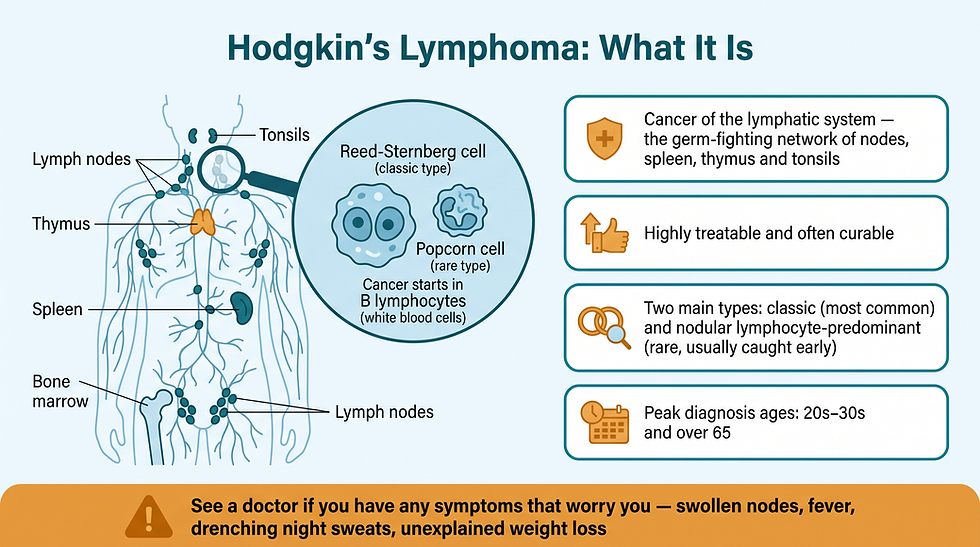
Hodgkin lymphoma is a type of lymphoma — cancer that affects the lymphatic system. The lymphatic system is made up of organs, glands, tubelike vessels, and clusters of cells called lymph nodes. It's part of the body's germ-fighting immune system. The lymphatic system also includes the spleen, thymus, tonsils, adenoids, and bone marrow.
Hodgkin lymphoma — which used to be called Hodgkin disease — can affect all these areas and other organs in the body. Importantly, Hodgkin lymphoma starts in germ-fighting white blood cells called B lymphocytes.
There are many types of lymphoma. They're often divided into two broad categories: Hodgkin lymphoma and non-Hodgkin lymphoma. The best news: Hodgkin lymphoma is highly treatable and often curable.
The Two Types of Hodgkin Lymphoma
Type | How common | What defines it | Typical outlook |
Classic Hodgkin lymphoma | Most common type | Large lymphoma cells called Reed-Sternberg cells in the lymph nodes | Treated with combination therapy depending on stage |
Nodular lymphocyte-predominant Hodgkin lymphoma | Much rarer | Lymphoma cells sometimes called "popcorn cells" because of how they look | Usually diagnosed early; may need less intensive treatment |
Subtypes of classic Hodgkin lymphoma include: nodular sclerosing, mixed cellularity, lymphocyte-depleted, and lymphocyte-rich classic Hodgkin lymphoma.
Hodgkin's Lymphoma Symptoms
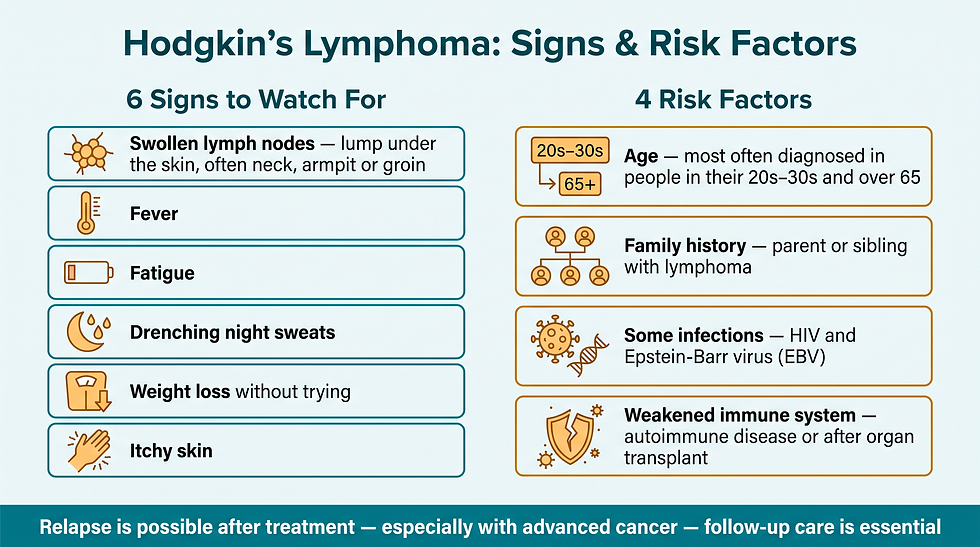
Signs and symptoms of Hodgkin lymphoma may include:
Symptom | What you notice |
Swollen lymph nodes | Might feel like a lump under the skin — most often in the neck, armpit, and groin |
Fever | Fever that isn't explained by an obvious infection |
Fatigue | Ongoing tiredness not relieved by rest |
Drenching night sweats | Sweating heavily during sleep |
Unexplained weight loss | Weight loss that happens without trying |
Itchy skin | Itching that persists |
When to See a Doctor
Make an appointment with a doctor or other healthcare professional if you have any symptoms that worry you. A persistent lump, ongoing fever, or drenching night sweats deserves a proper medical evaluation.
Causes: What Causes Hodgkin's Lymphoma?
It's not clear what causes Hodgkin lymphoma. What is known is the general mechanism of cancer: cancer happens when cells develop changes in their DNA. In healthy cells, the DNA gives instructions to grow and multiply at a set rate and to die at a set time. In cancer cells, the DNA changes give different instructions — telling the cancer cells to make many more cells quickly and to keep living when healthy cells would die.
In Hodgkin lymphoma, the cancer cells can build up in the lymph nodes, bone marrow, spleen, and other tissues throughout the body. The cancer starts in germ-fighting white blood cells called B lymphocytes.
Risk Factors
Risk factor | Details |
Age | Most often diagnosed in people in their 20s and 30s and those over age 65 |
Family history of lymphoma | Having a blood relative — such as a parent or sibling — with lymphoma may increase risk |
Some infections | HIV and EBV (Epstein-Barr virus) have been linked to Hodgkin lymphoma |
Weakened immune system or an autoimmune condition | Conditions such as rheumatoid arthritis, lupus, and sarcoidosis can increase risk; also after an organ transplant |
Complications
A potential complication of Hodgkin lymphoma is that the cancer may come back after treatment — this is called a relapse. Relapse is more common in people with advanced cancer. That's why post-treatment monitoring is a standard part of care.
How Is Hodgkin's Lymphoma Diagnosed?
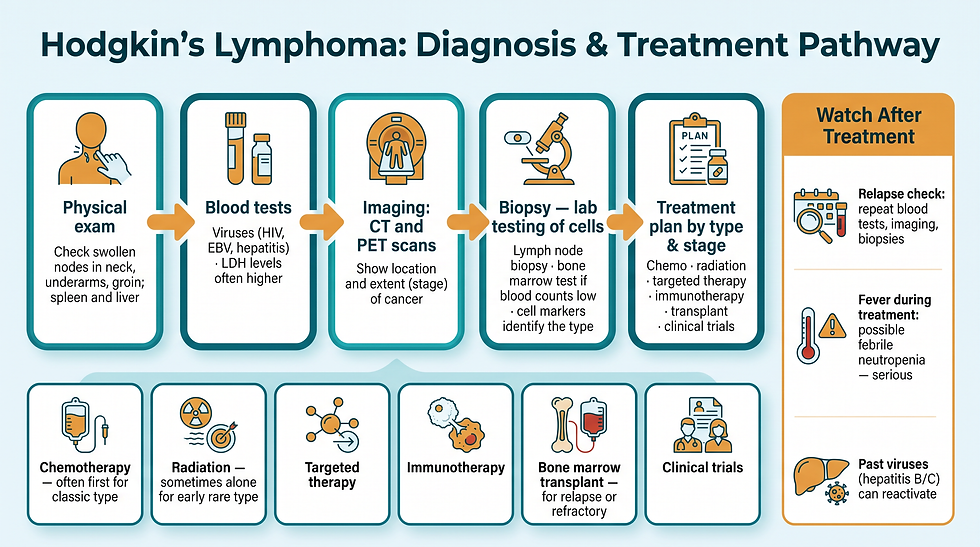
Hodgkin lymphoma diagnosis often begins with a physical exam that checks for swollen lymph nodes in the neck, underarms, and groin and an enlarged spleen or liver. From there, several tests build the picture:
Test | What it involves |
Physical exam | Checks swollen lymph nodes in the neck, underarms, and groin; looks for an enlarged spleen or liver |
Blood tests | Can sometimes show whether lymphoma cells are present; may test for viruses including HIV, EBV, hepatitis B, and hepatitis C; measures LDH — often higher in people with lymphoma |
Imaging tests (CT and PET scans) | Show the location and extent of Hodgkin lymphoma — this determines the stage |
Biopsy | Removes all or part of a lymph node to look for cancer cells; lab testing can confirm Hodgkin lymphoma |
Bone marrow aspiration and biopsy | A needle collects liquid bone marrow — and often a small piece of bone tissue — from the hip bone; recommended only if blood counts are low with no clear reason |
Lab testing of cells | Specialized tests look for proteins (markers) on the surface of cancer cells to identify the specific type |
Hodgkin's Lymphoma Treatment
Which treatment is best depends on the type of lymphoma and the extent (stage) of the cancer. Your healthcare team also considers how quickly the cancer is growing, your overall health, and your preferences.
Treatment | How it works | Role in Hodgkin lymphoma |
Chemotherapy | Strong medicines that treat cancer — most given through a vein, some in pill form | Often the first treatment for classic Hodgkin lymphoma; combinations of medicines are common |
Radiation therapy | Powerful energy beams directed at precise points to kill cancer cells | Often combined with chemotherapy; may be the only treatment needed for early-stage nodular lymphocyte-predominant type |
Targeted therapy | Medicines that attack specific chemicals in cancer cells, causing them to die | Often combined with chemotherapy; an option for refractory or relapsed disease |
Immunotherapy | Medicine that helps the immune system find and kill cancer cells that hide from it | Combined with chemotherapy or used alone for refractory or relapsed disease |
Bone marrow transplant | Healthy bone marrow stem cells put into the body — from your own body or a donor; chemotherapy typically precedes it | Done for relapsed or refractory Hodgkin lymphoma |
Clinical trials | Studies of new treatments — a chance to try the latest options | Discuss with your healthcare team |
Treatment Side Effects to Know
Treatment | Notable side effects |
Chemotherapy | Nausea, hair loss; long-term: heart disease, lung damage, infertility, secondary cancers |
Radiation therapy | Fatigue, sunburnlike skin reaction; site-specific: dry mouth and thyroid damage (neck), heart and lung damage (chest) |
Targeted therapy | Diarrhea, liver issues, high blood pressure, blood clotting and wound-healing issues, fatigue, mouth sores, nail changes — most go away after treatment ends |
Immunotherapy | Fever, chills, weakness, dizziness, aches, nausea, vomiting; rarely an allergic reaction |
Bone marrow transplant | Short-term: nausea, vomiting, fatigue, mouth sores, hair loss, skin reactions. Long-term: infertility, secondary cancers, organ damage, bone/muscle weakness, cataracts |
Treatments for lymphoma may also cause nausea, vomiting, fatigue, fever, rash, diarrhea, and infection. More serious treatment-related risks include:
Serious risk | What it means |
Bone marrow suppression | The bone marrow can't produce enough blood cells — including infection-fighting white blood cells — raising infection risk |
Febrile neutropenia | A serious condition combining fever with a low count of neutrophils — the body is trying to fight an infection without enough infection-fighting cells |
Medicine toxicity | Some cancer medicines can harm the body and cause organ damage, depending on type and amount |
Reactivating viruses | Past viral infections such as hepatitis B or C can become active again during treatment, leading to liver inflammation and damage |
Monitoring After Treatment
After treatment is complete, you may have frequent follow-up appointments to check whether the cancer has come back (relapse). These may include repeat blood and imaging tests and, if needed, biopsies.
Conclusion: Highly Treatable, Often Curable
Hodgkin lymphoma is one of the more treatable forms of cancer — and in many cases it is curable. It starts quietly, most often as a painless lump in the neck, armpit, or groin, and can be accompanied by fever, fatigue, drenching night sweats, unexplained weight loss, and itchy skin. Diagnosis moves quickly through physical exam, blood tests, CT and PET imaging, and biopsy, and the lab's cell-marker testing pins down exactly which type you have. From there, treatment is matched to the type and stage. Awareness of side effects — and vigilance for relapse during follow-up — are part of the journey. The single most important step is getting symptoms checked early.
If you have any symptoms that worry you — a persistent lump, fever, drenching night sweats, or unexplained weight loss — make an appointment with a healthcare professional promptly.
Frequently Asked Questions
What is Hodgkin's lymphoma?
Hodgkin lymphoma is a type of lymphoma — cancer that affects the lymphatic system, the germ-fighting network made up of lymph nodes, spleen, thymus, tonsils, adenoids, and bone marrow. It starts in white blood cells called B lymphocytes.
Is Hodgkin's lymphoma curable?
Yes — Hodgkin lymphoma is highly treatable and often curable. Treatment may include chemotherapy, radiation therapy, targeted therapy, immunotherapy, bone marrow transplant, and clinical trials, matched to the type and stage of the cancer.
What is the difference between Hodgkin's and non-Hodgkin's lymphoma?
Lymphomas are often divided into two categories: Hodgkin lymphoma and non-Hodgkin lymphoma. Hodgkin lymphoma is identified by large abnormal cells called Reed-Sternberg cells (classic type) and starts in B lymphocytes. The types are diagnosed and treated differently.
What are the first symptoms of Hodgkin's lymphoma?
The most recognizable sign is a swollen lymph node that feels like a lump under the skin — most often in the neck, armpit, or groin. Other symptoms include fever, fatigue, drenching night sweats, weight loss without trying, and itchy skin.
Why do I have drenching night sweats — is it Hodgkin's lymphoma?
Drenching night sweats have many possible causes, from infections to hormones to menopause. But persistent drenching night sweats combined with fever, unexplained weight loss, or swollen nodes are a reason to see a healthcare professional for evaluation.
At what age does Hodgkin's lymphoma occur?
It is most often diagnosed in people in their 20s and 30s and in those over age 65.
What happens if Hodgkin's lymphoma comes back after treatment?
This is called a relapse — more common in people with advanced cancer. Options include chemotherapy, radiation, targeted therapy, immunotherapy, and bone marrow transplant, often with clinical trials as another option. Follow-up appointments with repeat blood tests, imaging, and biopsies check for relapse.
What side effects does Hodgkin's lymphoma treatment cause?
Common effects include nausea, hair loss, fatigue, and skin reactions. Serious risks include bone marrow suppression, febrile neutropenia, medicine toxicity, and reactivation of past viruses such as hepatitis B or C. Long-term effects can include heart disease, lung damage, infertility, and secondary cancers — which is why monitoring continues after treatment.
References
Hodgkin lymphoma (Hodgkin disease) — Symptoms & causes (source dated September 24, 2025)
Hodgkin lymphoma (Hodgkin disease) — Diagnosis & treatment (source dated September 24, 2025)
This article is for general information only and is not a substitute for professional medical advice. Seek care from a qualified healthcare professional for diagnosis and treatment decisions.
Comments