Hepatitis: Causes, Symptoms, and Modern Treatment Options

Updated: 2 days ago
Medically reviewed by Dr. Baraa Alnahhal, MD · Last reviewed: October 2026
Quick Answer
Hepatitis is inflammation of the liver, most often caused by hepatitis A, B, C, D or E viruses. Acute hepatitis lasts less than six months, while chronic cases are long-term and can cause permanent damage. It spreads through food, bodily fluids or blood, depending on type. Hepatitis C can now be cured, and vaccines prevent hepatitis A and B. [1]
What the research says
Modern antivirals cure most hepatitis C infections. In a meta-analysis of 49 studies, the pooled cure rate (sustained virologic response) was 93.3% in 35,701 patients without liver cancer and 89.6% in 3,341 patients with liver cancer. (Ji et al., J Hepatol, 2019)
Hepatitis B vaccination in infancy gives lasting protection. Across 46 studies, a prognostic model predicted that 90% of children of non-carrier mothers vaccinated with the recommended dose and schedule would still have long-term protection at age 17 (based on lasting antibodies plus the response to a booster dose). (Schönberger et al., Pediatr Infect Dis J, 2013)
What Is Hepatitis?
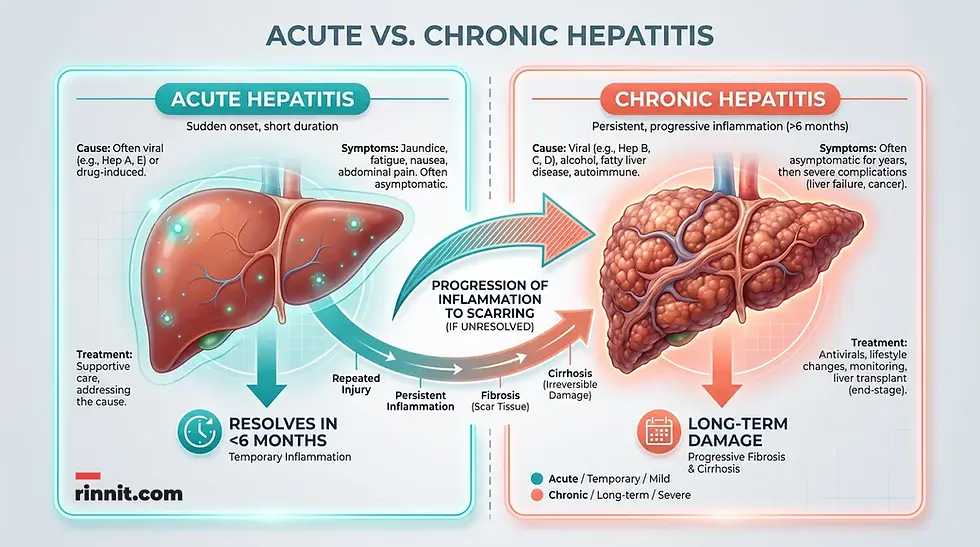
Hepatitis is the clinical term for inflammation of the liver, a vital organ responsible for filtering toxins, processing nutrients and producing bile. Inflammation is the body's natural response to injury or infection. However, when the liver remains inflamed for extended periods, its ability to function correctly is compromised. The condition is broadly categorized into acute hepatitis, which appears suddenly and resolves within six months, and chronic hepatitis, which persists long-term and can lead to progressive liver damage. [1]
What Are the Different Types of Hepatitis?
The medical community identifies several distinct types of hepatitis based on the underlying cause. Viral hepatitis is the most common form, but non-viral triggers are also significant contributors to liver disease.
Type | Common Causes | Duration |
Viral hepatitis | Viruses A, B, C, D and E | Acute or chronic |
Toxic hepatitis | Alcohol, chemicals and specific drugs | Acute or chronic |
Autoimmune hepatitis | Immune system attacking liver tissue | Chronic |
Metabolic-related | Fatty liver (MASLD), Wilson disease | Chronic |
Viral hepatitis remains the primary focus of public health efforts. In the United States, hepatitis A, B and C are the most frequently diagnosed types. Hepatitis D and E are less common but can be severe in specific populations. [1]
How Is Hepatitis Transmitted?
The method of transmission varies significantly depending on the specific virus involved. Understanding these pathways is essential for effective prevention.
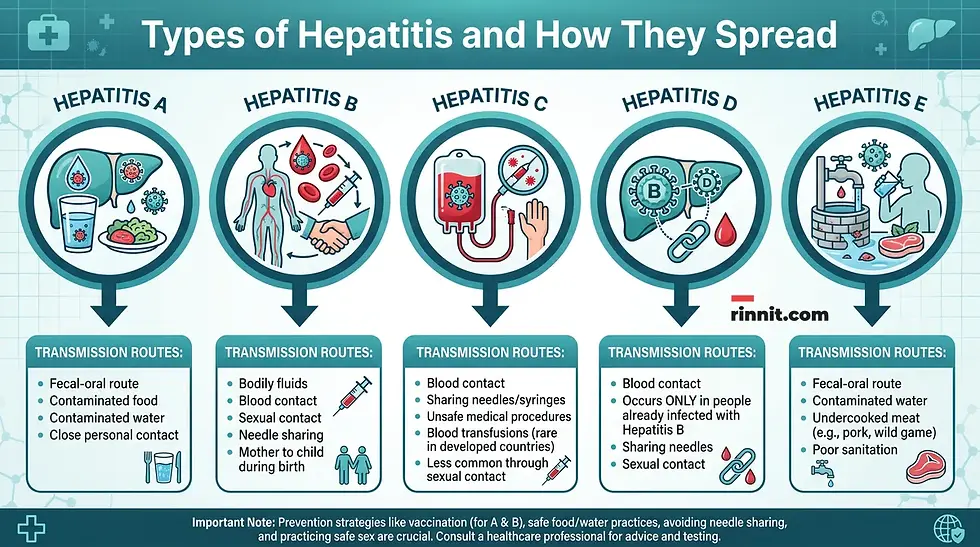
Food and water: Hepatitis A and E are typically spread through the fecal-oral route, often involving contaminated food or water supplies. [1]
Bodily fluids: Hepatitis B can be transmitted through saliva, semen and vaginal fluids, often during unprotected sexual contact or from parent to child during childbirth. [1]
Blood contact: Hepatitis B, C and D are frequently spread through contact with infected blood, most commonly through the sharing of needles for intravenous drug use. [1]
What Are the Symptoms of Hepatitis?
Hepatitis can be sneaky: it often causes no symptoms in its early stages. When symptoms do appear, they may initially resemble a common viral illness before progressing to more specific signs of liver distress.
Early and Acute Symptoms
Common signs of acute liver inflammation include diarrhea, fatigue and a general sense of weakness. You may also have a low-grade fever, nausea or a loss of appetite. Pain on the upper right side of the abdomen is a classic sign of liver swelling. [1]
Advanced and Chronic Symptoms
As liver damage progresses, more severe symptoms may emerge. Jaundice, a yellowing of the skin and the whites of the eyes, occurs when the liver can no longer process bilirubin. Other advanced signs include dark-colored urine, light-colored stools and intense skin itching (pruritus). In severe cases, people may experience confusion or drowsiness, a condition known as hepatic encephalopathy. [1]
What Are the Complications of Untreated Hepatitis?
If left unmanaged, chronic inflammation can lead to irreversible liver damage. The most significant complications include:
Cirrhosis: The development of extensive scar tissue that replaces healthy liver cells. [1]
Liver cancer: Specifically hepatocellular carcinoma, which is frequently linked to chronic hepatitis B and C. [1]
Liver failure: A life-threatening state where the liver stops working. [1]
Portal hypertension: Increased blood pressure in the liver's main vein, caused by scar tissue blocking blood flow. [1]
How Is Hepatitis Diagnosed and Treated?
Healthcare providers use a combination of a physical exam, a medical history review and specialized tests to diagnose hepatitis. These include liver function blood tests, imaging such as elastography or nuclear scans, and occasionally a liver biopsy to assess the extent of tissue damage. [1]
Modern Treatment Pathways
Treatment is specific to the type and severity of the condition.
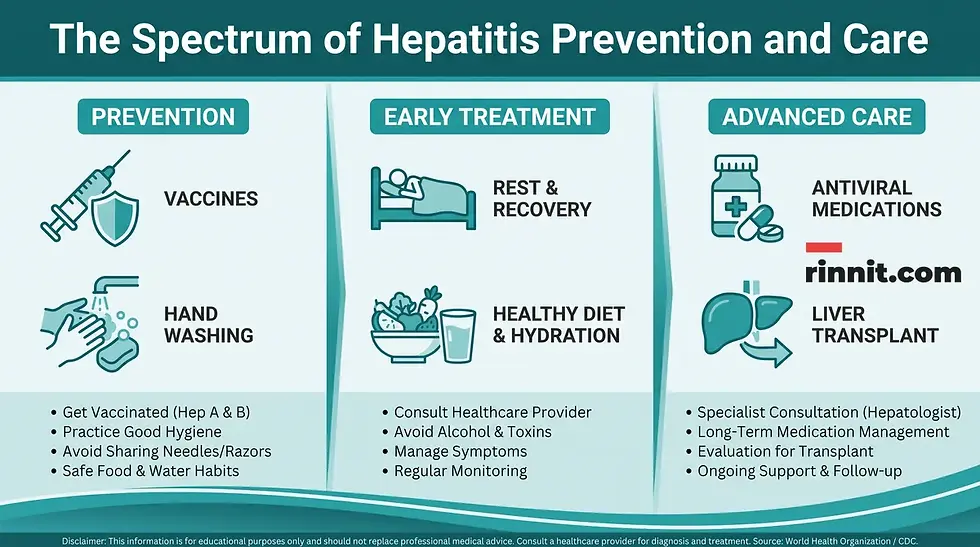
Supportive care: For hepatitis A and acute hepatitis B, treatment focuses on rest, proper nutrition and avoiding liver irritants such as alcohol. [1]
Antiviral therapy: Chronic hepatitis B is managed with lifelong antivirals to prevent complications. Direct-acting antivirals (DAAs) can now cure hepatitis C. [1]
Surgical intervention: In end-stage liver failure, a liver transplant may be the only viable option for survival. [1]
Conclusion
While hepatitis remains a serious health concern, advances in vaccination and antiviral therapy have transformed the outlook for millions of people. Early detection through regular screening and prompt medical care are the most effective ways to protect liver health and prevent long-term complications. If you believe you have been exposed to hepatitis or have symptoms of liver distress, consult a healthcare professional promptly.
Looking for clear answers on tough health questions? Browse plain-language health guides at Rinnit.com.
Frequently Asked Questions
Can I have hepatitis and not know it?
Yes, many people have no symptoms for years while the virus slowly damages the liver. [1]
Is there a vaccine for all types of hepatitis?
No, vaccines are currently only available for hepatitis A and B. [1]
Can alcohol cause hepatitis?
Yes, excessive alcohol consumption can lead to toxic hepatitis and permanent liver scarring. [1]
Is hepatitis C curable?
Yes, modern direct-acting antiviral medications can cure most cases of hepatitis C. [1]
How long does acute hepatitis last?
By definition, acute hepatitis resolves within six months. [1]
Does hepatitis A become chronic?
No, hepatitis A is an acute infection that does not lead to chronic liver disease. [1]
Can I spread hepatitis B through casual contact?
No, it is not spread through hugging, kissing or sharing utensils. It requires contact with bodily fluids or blood. [1]
What is jaundice?
Jaundice is a yellowing of the skin and eyes caused by a buildup of bilirubin in the blood. [1]
Is a liver biopsy always necessary?
No, many cases are diagnosed using blood tests and non-invasive imaging such as elastography. [1]
Can fatty liver cause hepatitis?
Yes, metabolic dysfunction-associated steatotic liver disease (MASLD, or fatty liver) can lead to inflammation and liver damage. [1]
What is cirrhosis?
Cirrhosis is the late stage of liver scarring caused by many forms of liver disease. [1]
Are there medications for hepatitis A?
No specific medications exist. Treatment focuses on managing symptoms and resting the liver. [1]
Can I get hepatitis from food?
Yes, hepatitis A and E can be spread through contaminated food and water. [1]
Is chronic hepatitis B life-threatening?
Chronic hepatitis B can be if left untreated, as it increases the risk of liver cancer and liver failure. [1]
Should I get tested for hepatitis?
Testing is recommended for people at high risk and for anyone with symptoms of liver distress. [1]
Related Reading
Protease Inhibitors: Types, How They Work and Side Effects explains protease inhibitor medicines.
Learn more in our guide to ALT Blood Test: What It Measures, Normal Range and What High Levels Mean.
Albumin Blood Test: What It Checks, How It's Done and What Results Mean explains how an albumin blood test checks liver function and why hepatitis can lower albumin.
HBsAg Test (Hepatitis B Surface Antigen): Purpose, Results and What a Positive Means explains the blood test that checks for hepatitis B virus in your blood and what a positive result means.
References
Cleveland Clinic. Hepatitis. Cleveland Clinic. Last updated February 8, 2025. https://my.clevelandclinic.org/health/diseases/hepatitis
Ji F, et al. Sustained virologic response to direct-acting antiviral therapy in patients with chronic hepatitis C and hepatocellular carcinoma: A systematic review and meta-analysis. J Hepatol. 2019;71(3):473-485. PMID 31096005. https://doi.org/10.1016/j.jhep.2019.04.017
Schönberger K, et al. Determinants of Long-term protection after hepatitis B vaccination in infancy: a meta-analysis. Pediatr Infect Dis J. 2013;32(4):307-313. PMID 23249904. https://doi.org/10.1097/INF.0b013e31827bd1b0
Medical disclaimer
This article is for general educational purposes only and is not a substitute for professional medical advice, diagnosis, or treatment. Always seek the advice of your physician or other qualified healthcare provider with any questions you may have about a medical condition. Never disregard professional medical advice or delay seeking care because of something you have read here. If you think you may have a medical emergency, call your doctor or emergency services immediately.



Comments