Gorlin Syndrome: What It Is, Why It Happens, and How It's Treated

Updated: 2 days ago
Medically reviewed by Dr. Baraa Alnahhal, MD · Last reviewed: October 2026
Quick Answer
Gorlin syndrome is a rare genetic condition that makes people prone to skin cancer and other tumors. Signs include multiple basal cell carcinomas, jaw cysts and small pits on the palms or soles. It is caused by mutations in tumor suppressor genes and confirmed by genetic testing. Treatment manages cancers with surgery or topical therapies and avoiding UV exposure. [1]
What the research says
What complications are most common. A population-based study of 84 people with Gorlin syndrome in north-west England found that basal cell carcinomas and jaw cysts occurred in over 90% of patients by age 40, and could both appear before age 10. Less common complications included ovarian calcification or fibroma (24%), medulloblastoma (5%), cardiac fibroma (3%), cleft palate (5%), and eye abnormalities such as squint or cataract (26%). This is an older study from 1993, so current figures may differ [2].
A drug can reduce new skin cancers, but side effects are common. In a randomized, placebo-controlled trial of the hedgehog pathway inhibitor vismodegib in 41 patients, the rate of new surgically eligible basal cell carcinomas was 2 versus 29 per group per year (P<0.001), and 54% of patients on vismodegib (14 of 26) stopped treatment because of adverse events [3]. In the final results, only 3 of 18 patients (17%) tolerated vismodegib continuously for 36 months, and interruptions of treatment were followed by tumor recurrence [4].
Surveillance starts early. A European surveillance report recommends dermatologic examination from age 10 in carriers of PTCH1 variants and from age 20 in carriers of SUFU variants, repeated brain MRI from birth to 5 years for SUFU carriers only, and prolonged, thorough follow-up of anyone treated with radiotherapy because of the risk of secondary cancers [5].
What Is Gorlin Syndrome?
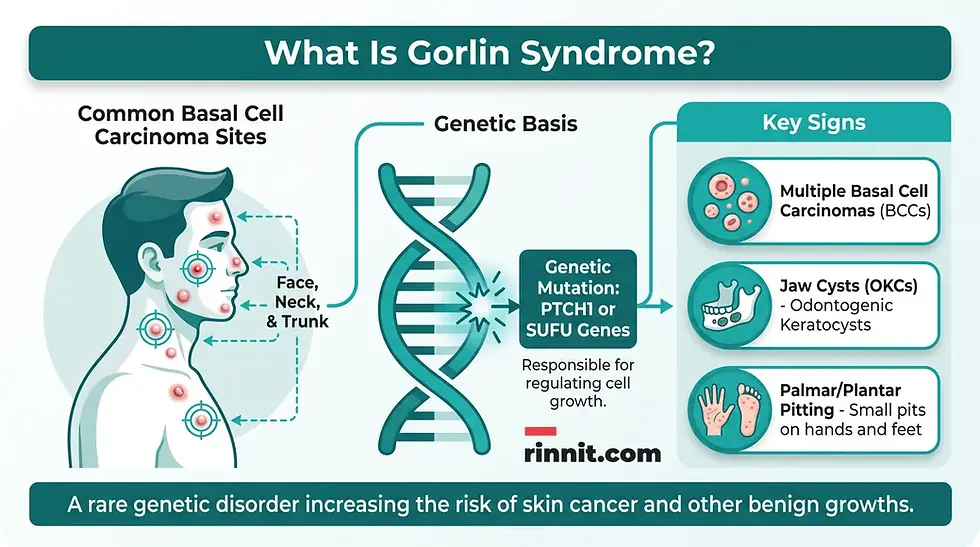
Gorlin syndrome is a rare genetic disorder that primarily increases the risk of developing both cancerous and benign (noncancerous) tumors. In the medical community, it is also frequently called nevoid basal cell carcinoma syndrome (NBCCS), basal cell nevus syndrome, or Gorlin-Goltz syndrome [6][7]. The hallmark of the condition is a high susceptibility to basal cell carcinoma, which is the most common form of skin cancer.
Experts estimate that fewer than 50,000 people in the United States have this condition, though many mild cases may go undiagnosed [1]. Symptoms typically begin to appear during adolescence or early adulthood. While the condition is lifelong, it does not necessarily impact a person's lifespan or quality of life, provided they receive regular medical monitoring and take preventive measures against skin cancer.
Feature | Description |
Common Name | Gorlin Syndrome |
Medical Name | Nevoid Basal Cell Carcinoma Syndrome (NBCCS) |
Prevalence | Fewer than 50,000 in the U.S. |
Primary Risk | Basal cell carcinoma (skin cancer) |
Lifespan | Generally normal with regular screening |
What Are the Symptoms and Linked Conditions?
The signs of Gorlin syndrome can vary widely from person to person. Some individuals may experience only mild skin changes, while others may have more complex skeletal or neurological symptoms.
Skin and Jaw Symptoms
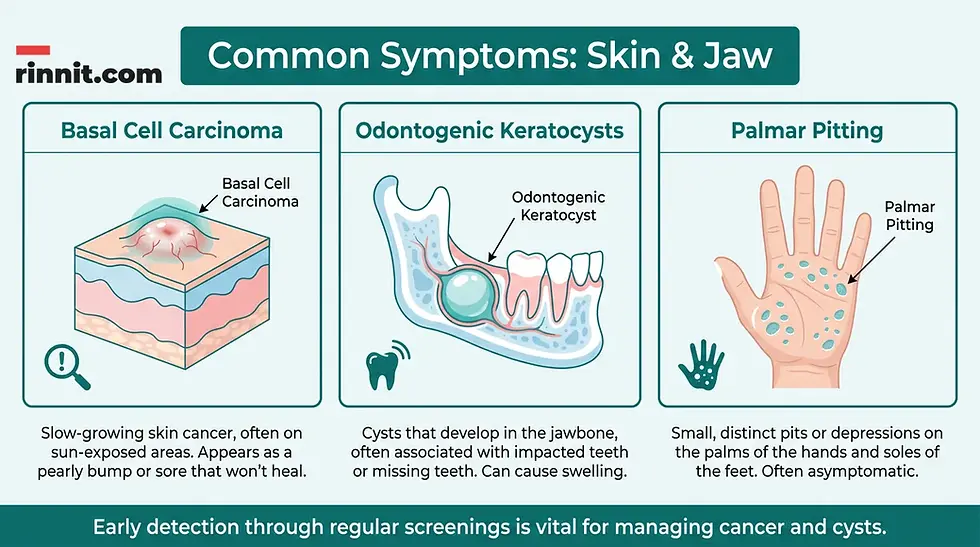
The most common symptom is the development of multiple basal cell carcinomas, often starting at a young age. These cancers usually appear on sun-exposed areas like the face and neck. Another frequent sign is the presence of odontogenic keratocysts: painless, benign cysts in the jawbone that are often discovered during dental exams in children or young adults. Additionally, many people with the syndrome develop small, permanent indentations or "pits" in the skin on the palms of their hands or the soles of their feet [1].
Skeletal and Neurological Issues
Gorlin syndrome can also affect the way bones are formed, particularly the ribs and spine. In some cases, it may lead to spina bifida (an incompletely formed spine) or atypical facial features such as wideset eyes and a cleft lip or palate. Neurological symptoms can include an enlarged head (macrocephaly), seizures, or medulloblastoma, a type of cancerous brain tumor that occasionally occurs in children with the condition [1].
Less Common Signs
Fibromas: Noncancerous tumors that can form in the heart or ovaries.
Eye problems: Including cataracts, crossed eyes (strabismus), or rapid eye movements (nystagmus).
Milia: Tiny white bumps that appear on the face.
What Causes Gorlin Syndrome?
Gorlin syndrome is caused by a mutation in one of three tumor suppressor genes: PTCH1 (the most common), PTCH2, or SUFU [1]. These genes are responsible for stopping tumors from forming. When they are mutated, certain cells grow abnormally, leading to the characteristic tumors and cysts of the syndrome.
Inheritance and Development
Most people with Gorlin syndrome inherit the mutated gene from a biological parent in an autosomal dominant pattern. This means that inheriting only one mutated copy of the gene is enough to cause the condition. However, in some cases, the mutation occurs spontaneously before birth in individuals with no family history of the disorder [1]. Scientists believe that cancer develops when the remaining "normal" copy of the gene is damaged, often by environmental factors like sun exposure.
How Is It Diagnosed and Treated?
Diagnosis involves a combination of physical examinations and specialized testing. A healthcare provider will check for skin cancers, palmar pits, and atypical facial features. Imaging tests are used to look for jaw cysts or skeletal issues, while a biopsy can confirm if a skin growth is cancerous. Genetic testing is often the final step to confirm a mutation in the PTCH or SUFU genes [1].
Treatment and Management
There is no cure for the genetic mutation itself, so treatment focuses on managing the symptoms and preventing cancer.
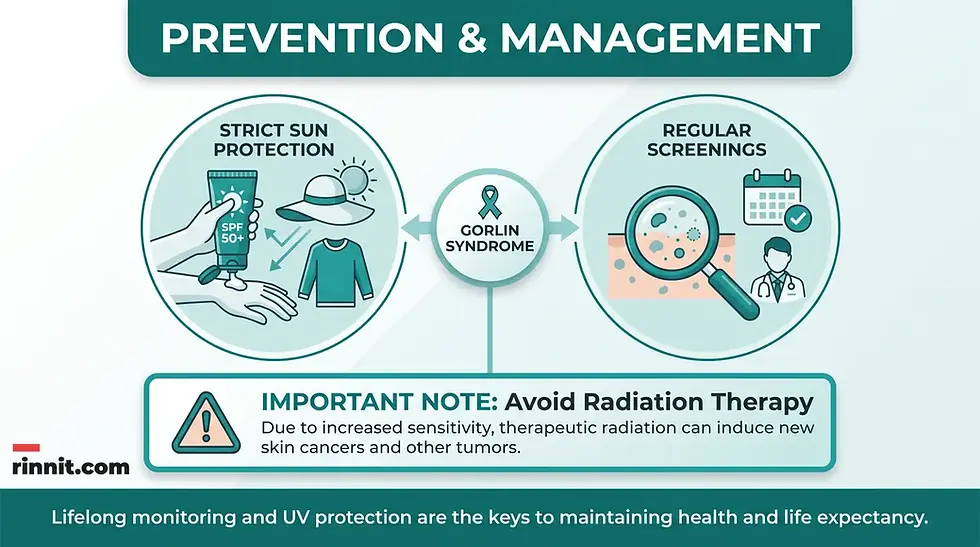
Cancer management: Surgery is often used to remove skin cancers or jaw cysts. Other options include topical creams or photodynamic therapy to destroy cancer cells [1].
Radiation precaution: It is crucial to note that oncologists generally avoid radiation therapy for treating cancer in people with Gorlin syndrome, as radiation can actually increase the risk of developing new tumors [1][5].
Sun protection: Strict UV protection is mandatory. This includes wearing broad-spectrum sunblock, long sleeves, and hats, and avoiding tanning beds [1][8].
Looking for specialized care? Visit Rinnit.com to find resources on genetic counseling, skin cancer prevention strategies, and connections to specialists familiar with Gorlin syndrome.
Frequently Asked Questions
Does Gorlin syndrome affect life expectancy?
Generally, no. With careful monitoring and early treatment of any cancers, people with Gorlin syndrome can have the same life expectancy as those without it.
Is Gorlin syndrome always inherited?
No. While most people inherit it from a parent, some cases occur due to a spontaneous genetic mutation before birth.
What is the most common symptom?
The most common sign is the development of several basal cell carcinomas (skin cancers), often starting in the teens or early adulthood.
What are palmar and plantar pits?
Palmar and plantar pits are small, permanent indentations in the skin on the palms of the hands and soles of the feet, which are a common sign of the syndrome.
Can Gorlin syndrome be cured?
There is currently no cure for the underlying genetic mutation, but the symptoms and cancers it causes are highly manageable.
Why should people with Gorlin syndrome avoid radiation therapy?
Radiation can increase the risk of new tumors forming, possibly by damaging the remaining healthy copy of a tumor suppressor gene.
Are jaw cysts in Gorlin syndrome cancerous?
No, odontogenic keratocysts are benign (noncancerous), but they can cause pain and displacement of teeth, often requiring surgical removal.
At what age do symptoms usually start?
Most symptoms, such as skin cancers and jaw cysts, begin to appear during adolescence or early adulthood.
Can children with Gorlin syndrome have brain tumors?
Yes, a type of cancerous brain tumor called medulloblastoma can occur in children with the syndrome, though it is less common than skin cancer.
How common is Gorlin syndrome?
Gorlin syndrome is considered rare, affecting fewer than 50,000 people in the United States.
Does it cause intellectual disability?
While most people with Gorlin syndrome have normal intelligence, intellectual disabilities can occur in some cases.
What is the "two-hit" theory?
The "two-hit" theory is the idea that you are born with one mutated gene (the first "hit") and cancer only develops if the second, healthy copy of the gene is also damaged (the second "hit").
What is the best way to prevent skin cancer?
The most effective methods are avoiding tanning beds, staying out of the sun during peak hours, and using high-quality sunblock and protective clothing.
Should I see a genetic counselor?
Yes, if you have the condition or a family history of it, a genetic counselor can help you understand the risks and options for planning a family.
Can Gorlin syndrome be detected before birth?
Gorlin syndrome is rarely detected on prenatal ultrasounds, but genetic testing can confirm the condition if there is a known family history.
Related Reading
References
Cleveland Clinic. Gorlin Syndrome (Nevoid BCC Syndrome). Cleveland Clinic. Last updated March 14, 2025. https://my.clevelandclinic.org/health/diseases/22730-gorlin-syndrome
Evans DG, et al. Complications of the naevoid basal cell carcinoma syndrome: results of a population based study. J Med Genet. 1993;30(6):460-4. PMID 8326488. https://doi.org/10.1136/jmg.30.6.460
Tang JY, et al. Inhibiting the hedgehog pathway in patients with the basal-cell nevus syndrome. N Engl J Med. 2012;366(23):2180-8. PMID 22670904. https://doi.org/10.1056/NEJMoa1113538
Tang JY, et al. Inhibition of the hedgehog pathway in patients with basal-cell nevus syndrome: final results from the multicentre, randomised, double-blind, placebo-controlled, phase 2 trial. Lancet Oncol. 2016;17(12):1720-1731. PMID 27838224. https://doi.org/10.1016/S1470-2045(16)30566-6
Guerrini-Rousseau L, et al. Current recommendations for cancer surveillance in Gorlin syndrome: a report from the SIOPE host genome working group (SIOPE HGWG). Fam Cancer. 2021;20(4):317-325. PMID 33860896. https://doi.org/10.1007/s10689-021-00247-z
National Organization for Rare Disorders. Nevoid Basal Cell Carcinoma Syndrome. NORD (National Organization for Rare Disorders). Last updated January 24, 2024. https://rarediseases.org/rare-diseases/nevoid-basal-cell-carcinoma-syndrome/
Genetic and Rare Diseases Information Center (GARD), NIH. Gorlin syndrome. GARD. Last updated September 2026. https://rarediseases.info.nih.gov/diseases/7166/gorlin-syndrome
The Skin Cancer Foundation. Basal Cell Carcinoma. The Skin Cancer Foundation. Last updated March 2026. https://www.skincancer.org/skin-cancer-information/basal-cell-carcinoma/
BCCNS Alliance. Home page. BCCNS Alliance. Accessed October 30, 2026. https://bccns.org/
Medical disclaimer
This article is for general educational purposes only and is not a substitute for professional medical advice, diagnosis, or treatment. Always seek the advice of your physician or other qualified healthcare provider with any questions you may have about a medical condition. Never disregard professional medical advice or delay seeking care because of something you have read here. If you think you may have a medical emergency, call your doctor or emergency services immediately.



Comments