Understanding Functional Electrical Stimulation (FES) for Rehabilitation

Updated: 3 days ago
Medically reviewed by Dr. Baraa Alnahhal, MD · Last reviewed: October 2026
Quick Answer
Functional electrical stimulation (FES) is a rehabilitation treatment that uses small electrical currents to stimulate specific nerves and muscles. [1] By triggering muscle contractions, it helps restore walking, grasping and swallowing in people with spinal cord injuries, stroke or multiple sclerosis, and supports breathing and bladder control. [1] It is painless and helps build strength and long-term independence.
What the research says
FES-based systems improved arm and hand function after stroke. A systematic review of 25 studies of FES rehabilitation systems for the upper limb after stroke reported gains on the Fugl-Meyer Assessment (mean difference 5.6, 95% CI 3.77–7.5 with manually controlled FES, and 14.14, 95% CI 11.72–16.6 with EMG-controlled FES) (Khan et al., Front Neurol, 2023). [2]
Linking FES to the brain's own signals gave a moderate benefit, but long-term effects are unproven. In a meta-analysis of 10 randomized trials (290 stroke patients), brain-computer interface–controlled FES training produced a moderate improvement in upper limb function (SMD 0.50, 95% CI 0.26–0.73). The authors note that evidence for its long-term impact remains limited (Ren et al., Front Hum Neurosci, 2024). [3]
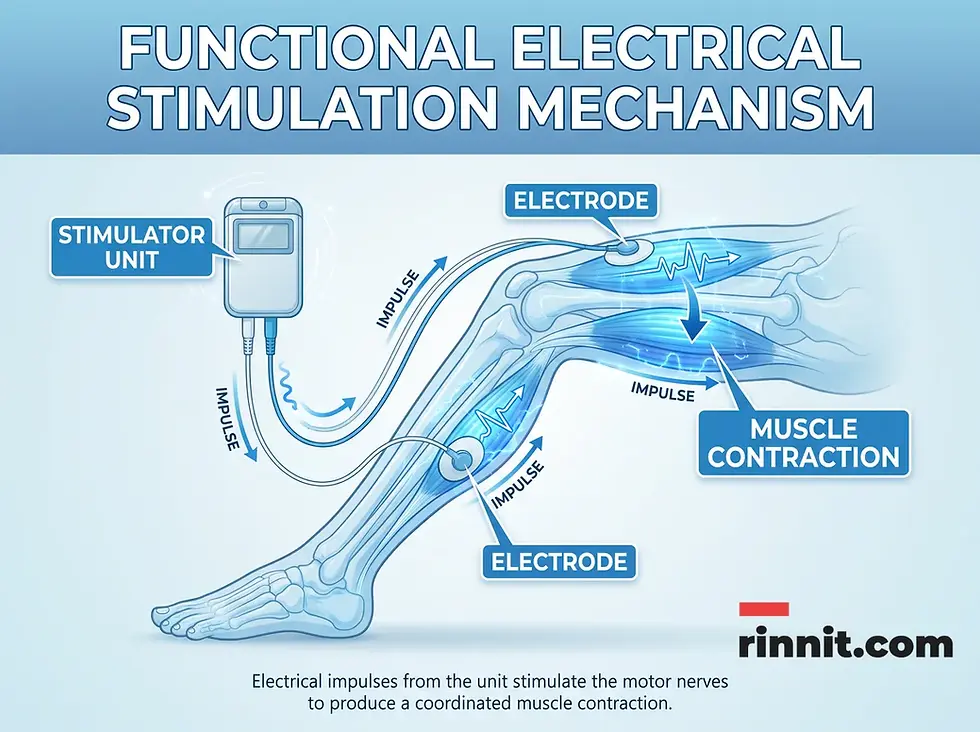
What is Functional Electrical Stimulation?
Functional electrical stimulation (FES) is a therapeutic approach that sends controlled electrical currents to nerves and muscles. [1] This process activates the nervous system, instructing muscles to contract and move, even when the brain's natural signals are interrupted due to injury or illness. It is frequently used to address "foot drop," muscle weakness, and various forms of paralysis resulting from central nervous system damage. [1]
While FES is generally painless, the sensation of the electrical impulses can range from a mild tingling at low settings to a "pins and needles" or slight burning feeling at higher intensities. [1] Healthcare providers, including physical and occupational therapists, carefully calibrate these settings to ensure patient comfort while maximizing therapeutic outcomes.
Core Applications and Benefits
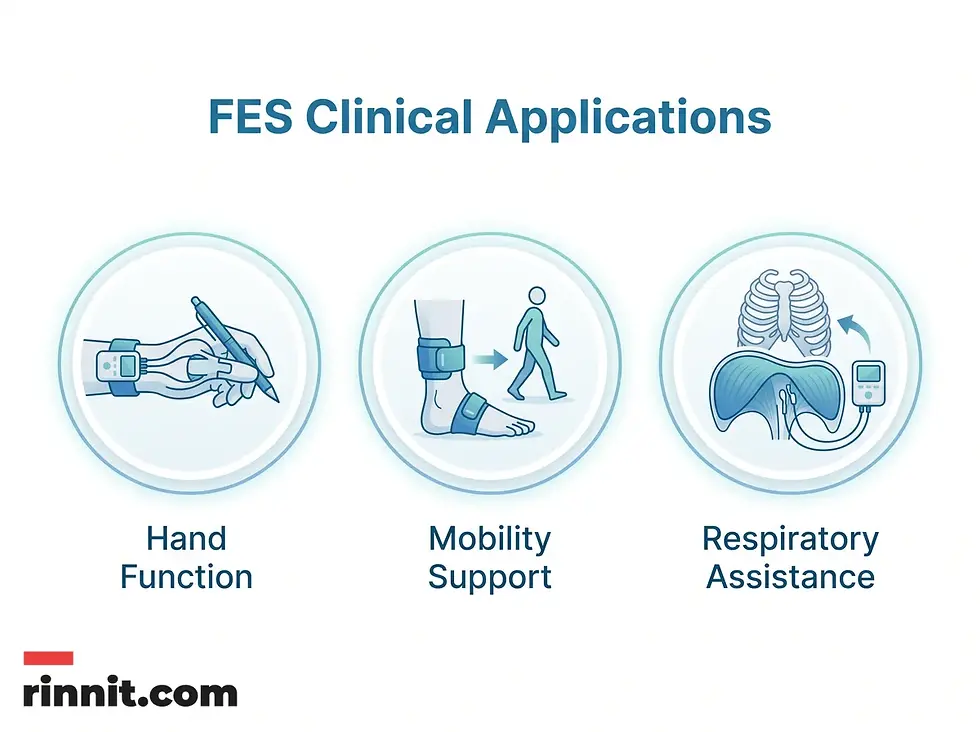
FES serves as a versatile tool in modern rehabilitation, assisting with both voluntary movements and involuntary bodily functions. It is particularly effective for exercising muscle tissue when traditional physical activity is not possible due to physical limitations.
Application Area | Specific FES Benefits |
Mobility | Assists in standing, stepping, and walking short distances. |
Upper Body | Enables grasping, holding utensils, and writing. |
Autonomic Function | Improves bladder and bowel control; stimulates the diaphragm for breathing. |
Pain & Skin Health | Reduces chronic pain and prevents pressure sores by stimulating gluteal muscles. |
Sensory Restoration | Helps regain sensations of pressure, touch, and temperature. |
Targeted Conditions
FES is most commonly prescribed for individuals who have experienced damage to the brain or spinal cord. By targeting specific muscle groups, the therapy helps maintain muscle mass and prevent atrophy in areas that would otherwise remain inactive.
Spinal Cord Injuries: Long-term therapy to restore movement and autonomic regulation.
Stroke Recovery: Addressing hemiparesis and improving limb coordination.
Multiple Sclerosis (MS): Specifically treating MS-related foot drop to improve gait. [1]
Cerebral Palsy: Enhancing motor control and reducing spasticity.
Traumatic Brain Injury (TBI): Assisting in the complex rehabilitation of motor pathways.
Equipment and Components
FES systems vary in design based on the targeted area and the duration of treatment. The core components typically include a stimulator unit, connectors, and electrodes that deliver the impulse to the tissue. [1]
Component | Description |
Stimulator Unit | A small electrical box that generates the impulses. |
Connectors | Wires or wireless radio-wave systems that transmit signals. |
Surface Electrodes | Sticky pads placed on the skin for short-term rehabilitation. |
Percutaneous Electrodes | Wires placed under the skin during a clinical visit. |
Implanted Electrodes | Fully embedded systems for long-term, continuous therapy. |
Candidate Suitability and Safety
A thorough clinical assessment is required to determine if an individual will respond to FES. [1] This typically involves a one-hour evaluation to see if the muscles react to the electrical stimulation. [1] FES is generally not suitable for individuals with implanted electrical devices (like pacemakers), active cancer, epilepsy, or during pregnancy. [1]
Potential risks associated with FES include minor skin irritation at the electrode sites and muscle fatigue. In individuals with spinal cord injuries above the T6 level, there is a specific risk of autonomic dysreflexia, a sudden and potentially dangerous increase in blood pressure triggered by the stimulation.

Conclusion
Functional Electrical Stimulation represents a significant advancement in neurorehabilitation, providing a pathway to increased mobility and better quality of life for those with neurological impairments. By bridging the gap between the nervous system and muscle tissue, FES enables patients to regain lost functions and maintain physical health through active stimulation.
If you or a loved one are navigating recovery from a spinal or brain injury, consult with a rehabilitation specialist to see if FES technology is a suitable addition to your treatment plan.
Frequently Asked Questions
What is the primary purpose of functional electrical stimulation?
The primary purpose of FES is to use electrical impulses to activate muscles and nerves that are otherwise weakened or paralyzed, restoring functional movements like walking or grasping. [1]
Is functional electrical stimulation painful?
FES is designed to be painless, though the sensation can be unpleasant for some. [1] It may range from a mild tingling to a "pins and needles" feeling depending on the intensity. [1]
Can FES help with bladder and bowel control?
Yes, FES can be used to stimulate the nerves responsible for bladder and bowel regulation, helping patients regain control over these essential functions. [1]
How long does an FES treatment session last?
Initial assessments usually take about an hour. [1] The duration of ongoing treatment sessions and the overall length of the therapy plan vary based on individual goals and progress.
Who is not a candidate for FES?
Individuals with pacemakers, active cancer, epilepsy, severe osteoporosis, or those who are pregnant are generally not considered candidates for FES treatment. [1]
Does FES cure paralysis?
FES does not cure paralysis, but it helps strengthen muscles and restore movement in affected areas by providing the electrical signals that the brain can no longer send.
Can FES be used at home?
Many FES devices are portable and designed for home use after a patient has been properly trained by a healthcare provider or rehabilitation specialist.
What are the different types of FES electrodes?
There are three main types: surface electrodes (sticky pads), percutaneous electrodes (placed under the skin), and implanted electrodes (surgically embedded for long-term use). [1]
Can FES help with breathing?
Yes, FES can stimulate the diaphragm muscle, which may help some patients reduce their reliance on mechanical ventilators. [1]
What are the risks of using FES?
The most common risks include skin irritation from the electrodes and muscle fatigue. A more serious but rare risk for certain spinal cord injuries is autonomic dysreflexia.
Content reviewed and produced following the Rinnit editorial framework. Last updated: October 8, 2026.
Related Reading
Physical Therapy: Enhancing Mobility, Strength, and Recovery explains how physical therapy rebuilds strength and movement.
Spinal Cord Injury Guide: Symptoms, Causes, Diagnosis, and Treatment covers spinal cord injury and rehabilitation options.
Foot Drop: Symptoms, Causes, Treatment & Prevention — Complete Guide explains foot drop, a common reason for FES devices.
TENS Unit: How Transcutaneous Electrical Nerve Stimulation Relieves Pain describes electrical nerve stimulation used for pain relief.
References
Cleveland Clinic. Functional Electrical Stimulation (FES). Cleveland Clinic Health Library. Medically reviewed; last updated December 15, 2023. https://my.clevelandclinic.org/health/treatments/21163-functional-electrical-stimulation-fes
Khan MA, Fares H, Ghayvat H, et al. A systematic review on functional electrical stimulation based rehabilitation systems for upper limb post-stroke recovery. Front Neurol. 2023;14:1272992. PMID 38145118. doi:10.3389/fneur.2023.1272992
Ren C, Li X, Gao Q, et al. The effect of brain-computer interface controlled functional electrical stimulation training on rehabilitation of upper limb after stroke: a systematic review and meta-analysis. Front Hum Neurosci. 2024;18:1438095. PMID 39391265. doi:10.3389/fnhum.2024.1438095
Medical disclaimer
This article is for general education only and does not replace advice from a qualified healthcare professional. Talk to your doctor about your own diagnosis and treatment, and seek emergency care right away for severe or sudden symptoms.



Comments