Frenulum Breve: Understanding the Causes and Treatments for a Short Frenulum

Updated: 2 days ago
Medically reviewed by Dr. Baraa Alnahhal, MD · Last reviewed: October 2026
Quick Answer
Frenulum breve, or short frenulum, is a condition in which the skin fold under the head of the penis is too short for the foreskin to retract comfortably. [1] It can cause pain during erections or intercourse and bleeding from small tears. [1] Mild cases may improve with stretching exercises and steroid creams, while severe cases may need a frenuloplasty. [1] [3]
What the research says
A short frenulum is common among men with lifelong premature ejaculation. In a study of 137 men with lifelong premature ejaculation, 59 (43%) had a short frenulum. In a before-and-after comparison, average time to ejaculation rose from 1.65 to 4.11 minutes after frenulectomy (P < 0.0001) over roughly 7 months of follow-up, with no surgical complications reported (Gallo et al., J Sex Med, 2010) [2].
Several frenuloplasty techniques give good results, but the evidence is limited. A review of the literature found that methods from simple division of the frenulum to plasty or grafting, with or without laser or diathermy, appear to provide good functional and cosmetic outcomes, yet studies were small with low response rates and lacked long-term comparative data, so individual clinical judgment should guide the choice (Pyrgidis et al., Int J Impot Res, 2021) [3].
Frenulum breve is an uncommon reason for foreskin surgery in boys. Among 181 boys in Denmark who had foreskin surgery for medical reasons in 2014, 5.0% were operated on because a short frenulum caused problems during erection, while phimosis accounted for 95.0% of cases (Sneppen & Thorup, Pediatrics, 2016) [4].
What is Frenulum Breve?
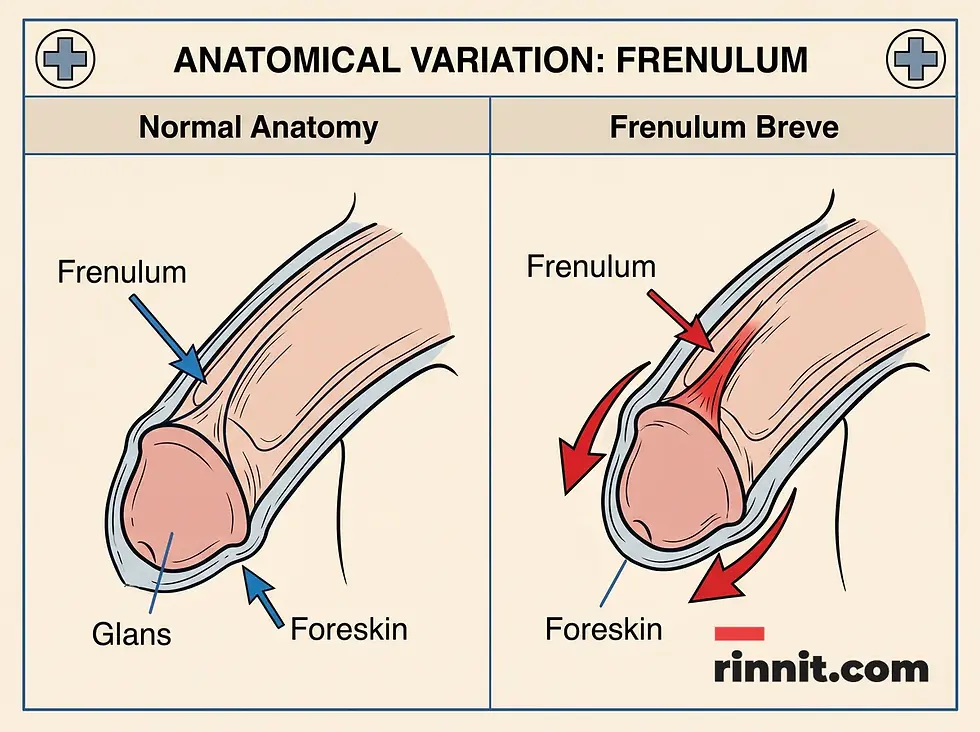
Frenulum breve, pronounced "FREN-yuh-luhm brev-AY," is a condition characterized by an abnormally short or tight penile frenulum. [1] The frenulum is the elastic fold of skin that connects the glans (head of the penis) to the underside of the foreskin. [1] Its primary physiological purpose is to facilitate the smooth retraction of the foreskin over the head of the penis. [1]
When this tissue is too short, it places excessive tension on the foreskin, particularly during an erection. [1] This tension can lead to significant discomfort and physical complications. While the condition is often referred to as "short foreskin," it specifically involves the connecting fold rather than the foreskin itself. [1]
Term | Definition |
Frenulum | The skin fold connecting the glans to the foreskin. [1] |
Frenulum Breve | A condition where this fold is too short or tight. [1] |
Phimosis | A tight foreskin that cannot be retracted (distinct from a short frenulum). [1] |
Dyspareunia | Painful sexual intercourse, a common symptom of the condition. [1] |
What are the symptoms of frenulum breve?
The symptoms of frenulum breve are often most apparent during physical activity or erections. Because the tissue is under tension, it can cause both immediate pain and long-term complications if left untreated.
Common signs and symptoms include:
Painful Erections: A pulling sensation or sharp pain when the penis is erect. [1]
Intercourse Discomfort: Pain during sexual activity or masturbation. [1]
Retraction Issues: Difficulty or inability to pull the foreskin back completely. [1]
Tearing and Bleeding: Small, painful tears in the tissue under the head of the penis. [1]
Premature Ejaculation: In some cases, the increased tension can lead to earlier ejaculation than desired. [1] [2]
Crucially, frenulum breve does not decrease the physical sensation of the penis, as the frenulum remains highly sensitive even when short. [1]
What causes frenulum breve, and which conditions are linked to it?
Most individuals with frenulum breve are born with the condition, making it a congenital anatomical variation. [1] However, it can also be acquired later in life due to various medical factors that cause the tissue to tighten or scar. [1]
Acquired causes and associated conditions include:
Chronic Inflammation: Conditions like balanitis (inflammation of the glans) or balanoposthitis (inflammation of both the glans and foreskin). [1]
Infections: Sexually transmitted infections (STIs) that lead to swelling and tissue changes. [1]
Scarring: Injuries to the frenulum that do not heal correctly, leading to the formation of tight scar tissue. [1]
Phimosis: A naturally tight foreskin can sometimes contribute to the development of a short frenulum over time. [1]

How is frenulum breve diagnosed?
Diagnosis is straightforward and typically only requires a physical examination by a healthcare provider. [1] A doctor will review the patient's symptoms, such as pain during erections or a history of tearing, and examine the penis to determine the degree of tightness and whether any inflammation or scarring is present. [1]
How is frenulum breve managed and treated?
Treatment for frenulum breve is tailored to the severity of the symptoms and the impact on the patient's quality of life. Options range from conservative home management to surgical intervention.
Non-Surgical Management
For mild cases, healthcare providers often recommend conservative approaches:
Steroid Creams: Prescribed to help thin and loosen the skin, making it more elastic.
Stretching Exercises: Gentle, daily stretching of the frenulum for a few minutes. This is often most effective after a hot shower or with the use of a lubricant. [1]
Caution: All stretching should be performed strictly under medical guidance, as aggressive stretching can cause further tearing and scarring. [1]
Surgical Treatment
If conservative methods are unsuccessful or if the condition is severe, surgery may be necessary. [1]
Frenuloplasty: An outpatient surgical procedure to lengthen or remove the frenulum. [1] [3]
Recovery: Patients can typically go home the same day. [1] Recovery involves minor discomfort for 2–3 days. [1] Healing takes approximately 10 days for children and 4–6 weeks for adults. [1]
Post-Op Care: All sexual activity, including masturbation, must be avoided for the full 4–6 week recovery period to ensure proper healing and prevent infection. [1]

How can frenulum breve be prevented and cared for long term?
Congenital frenulum breve cannot be prevented, but circumcision, good hygiene, safe sex and protective sports gear can lower the risk of the acquired form. [1] Circumcision is considered a preventive measure, since it removes the foreskin and usually the frenulum with it. For uncircumcised individuals, maintaining excellent hygiene by regularly cleaning under the foreskin is essential to prevent the infections that lead to inflammation and scarring. [1]
Additionally, practicing safe sex to avoid STIs and wearing protective athletic gear during contact sports can help prevent injuries that might lead to a short frenulum. [1]
Conclusion
Frenulum breve is a common and treatable condition that should not be ignored if it causes pain or discomfort. Whether managed through gentle stretching or a routine surgical procedure, the outlook for those affected is excellent. [1] Open communication with a healthcare provider is the first step toward resolving the physical and emotional distress associated with a short frenulum.
Call to Action: If you experience pain during erections or difficulty with foreskin retraction, consult a urologist. Early diagnosis and a tailored treatment plan can prevent painful complications like tearing and ensure a return to comfortable physical activity.
This article provides general information and is not a substitute for professional medical advice. Always consult a qualified healthcare provider about your symptoms and treatment options.
Frequently Asked Questions
What exactly is a short frenulum?
A short frenulum is a condition where the elastic band of skin under the head of the penis is too short, preventing the foreskin from retracting smoothly and causing pain during erections. [1]
Can I treat this at home without a doctor?
While some stretching exercises can be done at home, they must be prescribed and guided by a doctor. Attempting to "fix" it yourself can lead to severe tearing and permanent scarring. [1]
Does frenulum breve affect sexual sensation?
No. The frenulum remains highly sensitive. [1] However, the pain caused by the tension can interfere with sexual enjoyment and may contribute to premature ejaculation. [1] [2]
What is the difference between frenulum breve and phimosis?
Phimosis is a general tightness of the foreskin itself. Frenulum breve specifically involves the short connecting fold of skin. Both can occur together, but they are distinct conditions. [1]
Is surgery for a short frenulum painful?
The surgery (frenuloplasty) is performed under anesthesia, so you won't feel pain during the procedure. [1] There is typically mild discomfort for a few days afterward, which can be managed with over-the-counter pain relievers. [1]
How long is the recovery after surgery?
For adults, the full healing process takes about 4 to 6 weeks. [1] During this time, you must avoid all sexual activity and masturbation. [1]
Can a short frenulum tear on its own?
Yes. During vigorous activity or sexual intercourse, a short frenulum can tear, leading to sudden pain and bleeding. [1] If this happens, keep the area clean and see a doctor. [1]
Does circumcision fix frenulum breve?
Circumcision removes the foreskin, and the frenulum is typically divided or removed as part of the procedure, which usually resolves the problem. Your surgeon will explain which option fits your situation.
Can infections cause a short frenulum?
Yes. Recurring infections like balanitis can cause inflammation and scarring, which may eventually tighten and shorten the frenulum. [1]
When should I see a urologist?
You should see a specialist if you experience pain during erections, have difficulty pulling back your foreskin, or experience recurring bleeding from the area.
Content reviewed and produced following the Rinnit editorial framework. Last updated: October 8, 2026.
Related Reading
Circumcision: Procedure, Methods, Recovery and Risks explains the foreskin removal surgery sometimes used to treat a short frenulum.
Penis: Anatomy, Function, Normal Variation, Conditions and Care explains normal penis anatomy, including the foreskin and frenulum.
Painful Intercourse (Dyspareunia): Causes, Diagnosis, and Treatment Explained covers common causes of pain during sex and how they are treated.
Congenital Penile Curvature (Chordee): Signs, Causes, Diagnosis, and Treatment Options explains another penile condition present from birth that can affect erections.
References
Cleveland Clinic. Frenulum Breve (Short Frenulum). Cleveland Clinic Health Library. Medically reviewed; last updated August 4, 2025. https://my.clevelandclinic.org/health/diseases/23361-frenulum-breve-short-frenulum
Gallo L, Perdonà S, Gallo A. The role of short frenulum and the effects of frenulectomy on premature ejaculation. J Sex Med. 2010;7(3):1269-1276. PMID: 20074312. DOI: 10.1111/j.1743-6109.2009.01661.x
Pyrgidis N, Sokolakis I, Dimitriadis F, Hatzichristodoulou G. Frenuloplasty: from alpha to omega. Int J Impot Res. 2021;34(4):347-352. PMID: 34007064. DOI: 10.1038/s41443-021-00446-3
Sneppen I, Thorup J. Foreskin morbidity in uncircumcised males. Pediatrics. 2016;137(5):e20154340. PMID: 27244821. DOI: 10.1542/peds.2015-4340



Comments