Enameloplasty: A Guide to Cosmetic Tooth Reshaping

Updated: 2 days ago
Medically reviewed by Dr. Baraa Alnahhal, MD · Last reviewed: September 2026
TL;DR
Enameloplasty, also known as teeth reshaping or dental contouring, is a minimally invasive cosmetic dental procedure used to correct minor tooth imperfections. By removing very small amounts of enamel, dentists can alter the shape, size, or surface of a tooth to improve the overall balance of a smile. It is a faster, less expensive, and more conservative alternative to treatments like veneers or dental bonding.
Quick Answer: What Is Enameloplasty?
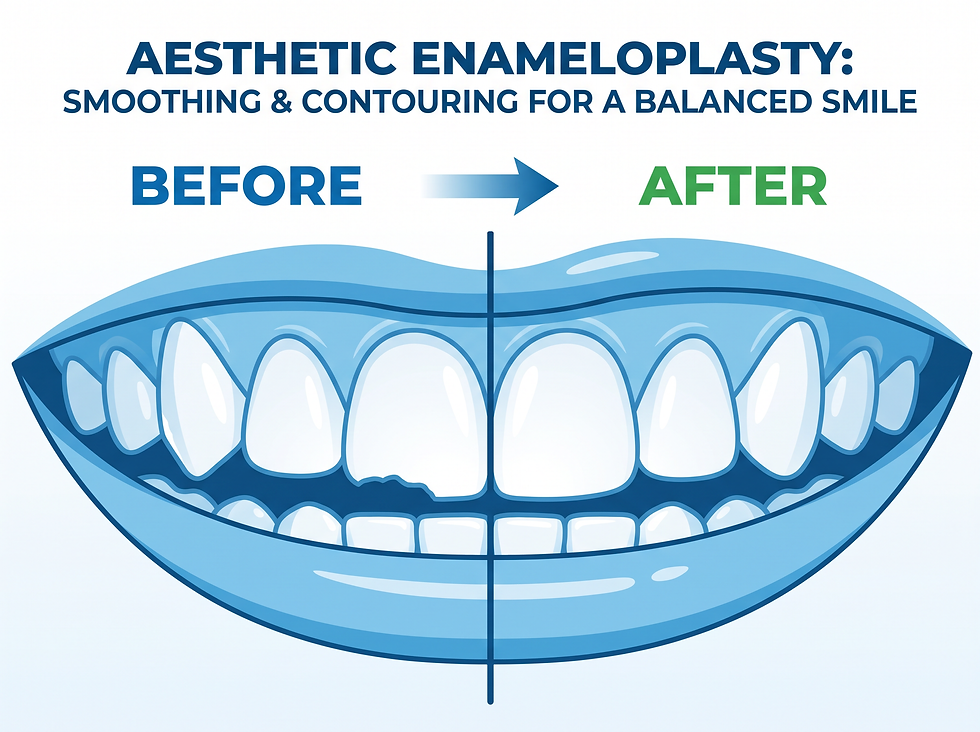
Enameloplasty is an elective cosmetic procedure where a dentist removes tiny amounts of tooth enamel to repair minor flaws such as small chips, pointy teeth, or uneven edges. The process is typically painless, requires no numbing, and takes about 30 minutes. While it offers immediate results with zero downtime, it is only suitable for healthy teeth and must be performed by a professional to avoid permanent damage.
Understanding Enameloplasty
Enameloplasty is a specialized cosmetic dentistry technique designed to enhance the aesthetic appearance of the teeth through precise sculpting. Often referred to by names such as odontoplasty, teeth filing, or dental contouring, this procedure focuses on the outer layer of the tooth — the enamel. Because enamel does not contain nerves, the process is generally comfortable for the patient and provides a conservative way to address aesthetic concerns without the need for extensive restorations.
The primary objective of enameloplasty is to bring balance and symmetry to the smile. It is an elective treatment, meaning it is not medically necessary for maintaining oral health but is chosen by individuals who wish to correct minor imperfections. By smoothing out rough edges or adjusting the proportions of specific teeth, dentists can create a more uniform and harmonious appearance.
Because enamel cannot grow back, it is worth understanding how it forms and what happens when there is too little of it — our guide to enamel hypoplasia explains this in detail.
Common Indications for Teeth Reshaping
Dentists utilize enameloplasty to address a variety of subtle cosmetic issues that may detract from a person's smile. The procedure is particularly effective for teeth that are healthy but have minor structural irregularities.
Pointy teeth: smooths down sharp cusps to create a softer, more natural shape.
Uneven length: shortens teeth that appear longer than their neighbors for a level smile line.
Minor chips: levels out small cracks or chips on the biting edges of the teeth.
Irregular shape: contours teeth with unusual proportions or surface grooves.
Rough edges: polishes and smooths out jagged edges between or on the surface of teeth.

The Enameloplasty Procedure
The journey toward a reshaped smile begins with a thorough clinical examination. A dentist must first verify that the teeth are structurally sound, as removing enamel from teeth with underlying issues like cavities or gum disease can lead to significant complications. In many cases, X-rays are taken to assess the thickness of the enamel and the position of the tooth's internal pulp.
Once cleared for the procedure, the actual reshaping process is straightforward and typically completed in a single 30-minute session.
Reshaping: the dentist uses specialized rotating tools, such as a dental bur or a fine sanding disc, to gently remove minute amounts of enamel from the targeted areas.
Contouring: for tight spaces between the teeth, abrasive strips — similar to very fine sandpaper — are used to smooth the edges.
Bite assessment: the dentist carefully checks the patient's bite to ensure that the changes do not interfere with how the upper and lower teeth fit together.
Polishing: the treated teeth are polished to a high shine, ensuring they look natural and blend seamlessly with the surrounding teeth.
Benefits and Comparisons
Enameloplasty is often compared to other cosmetic treatments like veneers or dental bonding. While those procedures add material to the teeth, enameloplasty is subtractive, making it a more conservative choice for minor adjustments. For more on material-adding options, see our overview of dental restorations.
Enameloplasty vs. dental veneers
Invasiveness: enameloplasty is minimally invasive and preserves most enamel; veneers are more invasive and require significant enamel removal.
Time required: enameloplasty takes one visit (approximately 30 minutes); veneers need multiple visits and laboratory fabrication.
Recovery: enameloplasty has zero downtime; veneers have minimal to no downtime.
Cost: enameloplasty is generally the most affordable option; veneers cost more because of materials and lab fees.
Durability: enameloplasty is a permanent change to the natural tooth; veneer restorations may need replacement over time.
Risks and Safety Considerations
While enameloplasty is considered a safe and gentle procedure, it is not without risks if performed incorrectly. The most critical safety rule is that individuals should never attempt to file their own teeth at home. DIY teeth shaving can cause irreversible damage, leading to severe pain and the need for expensive restorative surgery.
When performed by a professional, the primary risk involves the removal of too much enamel. Because enamel does not grow back, stripping away an excessive amount can weaken the tooth's structure. This may result in permanent tooth sensitivity to hot and cold temperatures, an increased vulnerability to cavities, or a higher risk of the tooth cracking under pressure.
Recovery and Long-Term Care
Patients can expect a seamless transition back to their daily lives immediately following an enameloplasty appointment. There is no recovery period, although some individuals may experience mild, temporary sensitivity to temperature for a few days. Using a desensitizing toothpaste during this time can help manage any discomfort.
To maintain the results and ensure long-term oral health, patients should adhere to standard hygiene practices. This includes brushing twice daily with a soft-bristled toothbrush and fluoride toothpaste, flossing once a day, and attending regular dental checkups. Additionally, avoiding the use of teeth as tools to open packages or bite hard objects will help protect the newly contoured edges from damage.

Frequently Asked Questions
What exactly is enameloplasty?
It is a cosmetic dental procedure that involves removing tiny amounts of enamel to change a tooth's shape, size, or appearance.
Does the procedure hurt?
No, because tooth enamel does not have nerves, the procedure is generally painless and does not require numbing.
How long does it take?
A typical session lasts about 30 minutes, though it may take longer if multiple teeth are being treated.
Is enameloplasty permanent?
Yes, the removal of enamel is permanent as the body cannot regrow tooth enamel once it is gone.
Can I file my own teeth at home?
No, you should never attempt DIY teeth filing, as it can cause irreversible damage to your teeth and nerves.
Will it make my teeth sensitive?
Some patients experience temporary sensitivity to hot or cold for a few days, but permanent sensitivity only occurs if too much enamel is removed.
Is the procedure expensive?
It is generally one of the most affordable cosmetic dental treatments available.
Who is a good candidate?
Individuals with healthy teeth and minor cosmetic flaws like small chips or uneven edges are ideal candidates.
Can it fix large gaps?
No, enameloplasty is for minor reshaping; large gaps usually require braces, bonding, or veneers.
Does it weaken the teeth?
When performed correctly by a dentist, it does not affect the structural integrity of the teeth.
Can I eat right after the procedure?
Yes, you can return to your normal diet immediately, though you should be careful with very hot or cold foods if you have sensitivity.
What is the difference between enameloplasty and contouring?
They are different names for the same procedure; other names include odontoplasty and teeth reshaping.
Do I need X-rays first?
Often, yes, to ensure your enamel is thick enough and your teeth are healthy before the procedure.
Can it be combined with whitening?
Yes, many people choose to have their teeth reshaped and then whitened for a complete smile makeover.
What happens if I'm not happy with the result?
Because the change is permanent, it is important to discuss your goals thoroughly with your dentist before starting.
Medical disclaimer: the information provided is for educational purposes only and should not be used as a substitute for professional medical advice, diagnosis, or treatment. Always seek the advice of your physician or other qualified health provider with any questions you may have regarding a medical condition.
Comments