Dental Bonding: What It Fixes, Procedure and How Long It Lasts

Updated: 2 days ago
Written and medically reviewed by Dr. Baraa Alnahhal, MD · Last reviewed: November 2026 · How we review
Quick Answer
Dental bonding is a cosmetic dental procedure that uses tooth-colored composite resin to improve how a tooth looks. It can change a tooth's shape, close small gaps and hide chips, cracks or stains. It takes 30 to 60 minutes per tooth and is painless. Bonding lasts three to 10 years but stains and chips more easily than porcelain.
What the research says
Most bonded front teeth lasted years: in 6 studies of 141 patients with 1,068 composite restorations on worn front teeth, 88% survived over 2 to 10 years and 68% stayed in ideal condition (Aziz IM et al., European Journal of Prosthodontics and Restorative Dentistry, 2024) [2]
Fracture was the main reason for failure: a review of 25 studies covering 75,637 front-tooth composite restorations found annual failure rates of 0% to 27.11%, with fracture the main cause of failure (Shah YR et al., Journal of Conservative Dentistry, 2021) [3]
Key takeaways
Dental bonding uses tooth-colored resin to fix chips, gaps and stains.
It takes 30 to 60 minutes per tooth, usually in one visit.
It's painless and usually needs no enamel removal.
There's no downtime.
Bonding typically lasts three to 10 years.
What is dental bonding?
Dental bonding uses the same tooth-colored resin used for fillings. It's a quick, affordable way to improve your smile. Unlike porcelain veneers, bonding is reversible. Sources: [1]
What it can fix
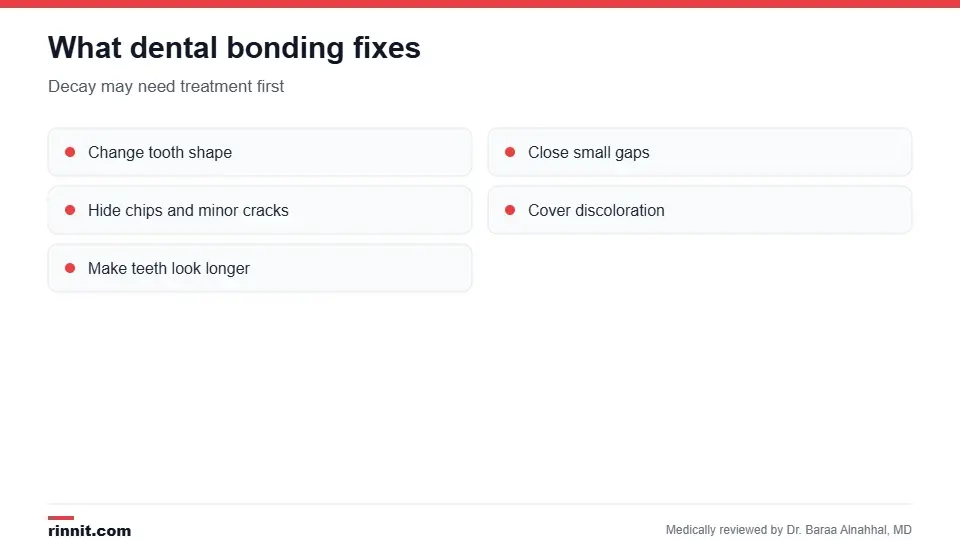
Problems like tooth decay may need treatment first.
Change a tooth's shape.
Close small gaps or spaces.
Hide chipped teeth or minor cracks.
Cover discoloration.
Make teeth look longer. Sources: [1]
Problems like tooth decay may need treatment first. Sources: [1]
Bonding vs. veneers and crowns
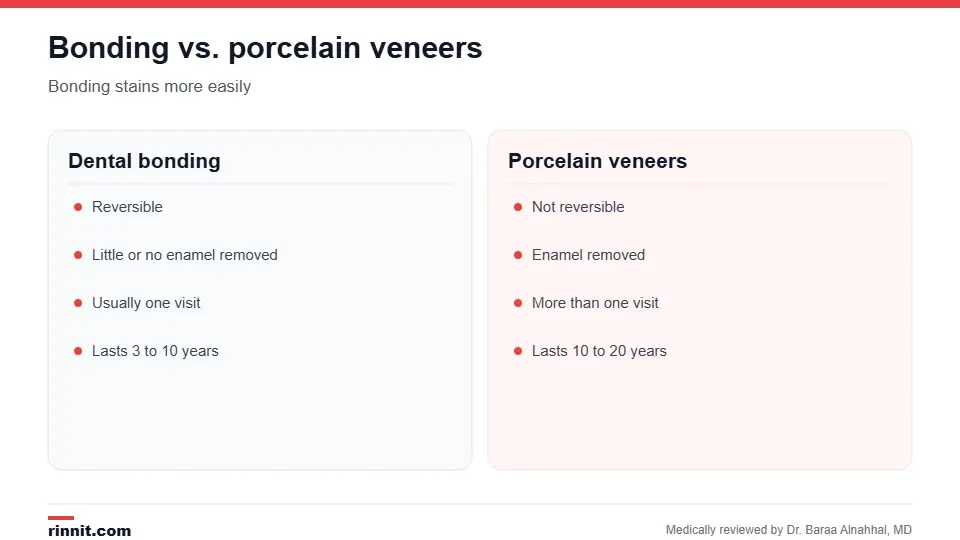
Bonding stains and chips more easily than porcelain.
;; Bonding | Porcelain veneers | |
Reversible | Yes | No |
Enamel removal | Usually none | Yes |
Visits | Usually one | More than one |
Lifespan | 3 to 10 years | 10 to 20 years |
Stain resistance | Lower | Higher |
Bonding is also less durable than dental crowns. Sources: [1]
What happens during bonding
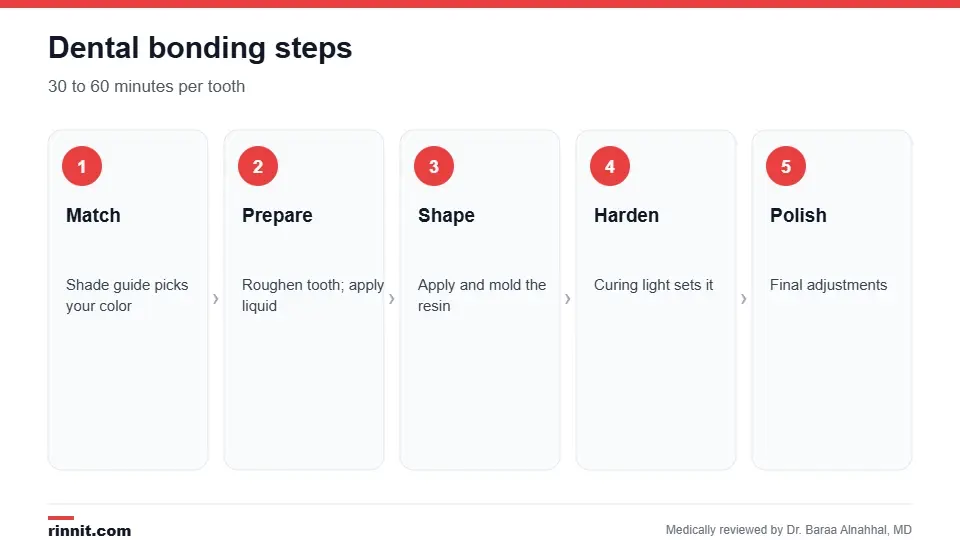
It takes about 30 to 60 minutes per tooth.
Your dentist uses a shade guide to match your natural tooth color.
The tooth surface is roughened, and a liquid is applied to help the resin stick.
Putty-like resin is applied, molded and smoothed.
A curing light hardens the resin.
Your dentist makes final adjustments and polishes the tooth. Sources: [1]
Risks
Bonding has no risks to oral health if your teeth and gums are healthy.
Short-term sensitivity is possible; over-the-counter pain relievers help.
Resin stains more easily than porcelain.
It can chip and is less durable than veneers or crowns. Sources: [1, 3]
Caring for bonded teeth
Brush at least twice a day with a soft brush and fluoride toothpaste.
Floss once a day and use an alcohol-free mouthwash.
Limit coffee, tea, red wine and acidic foods to reduce staining.
Don't bite nails, chew pens or open packages with your teeth.
Quit smoking.
Keep up with regular checkups and cleanings. Sources: [1]
How long it lasts
Bonding typically lasts three to 10 years before it needs a touch-up or replacement. How long it lasts depends on your habits and how many teeth are treated. Sources: [1, 2]
When to see your dentist
A bonded tooth has sharp edges.
Your bite feels odd.
You're concerned about how your teeth look. Sources: [1]
Conclusion
Dental bonding is a quick, painless and affordable way to fix small cosmetic problems. Good oral habits and limiting stain-causing foods help your bonding last longer.
Keep learning: read about dental veneers and chipped teeth.
Frequently asked questions
What is dental bonding?
A cosmetic treatment that uses tooth-colored resin to improve a tooth's look.
What can dental bonding fix?
Chips, cracks, gaps, stains and tooth shape.
Does dental bonding hurt?
No. It's usually painless.
How long does bonding take?
About 30 to 60 minutes per tooth.
How long does bonding last?
Typically three to 10 years.
Is bonding reversible?
Yes, unlike porcelain veneers.
Is there downtime?
No. You can return to normal activities right away.
Does bonding stain?
It stains more easily than porcelain.
Is bonding better than veneers?
Bonding is quicker and reversible; veneers last longer and resist stains.
How do I care for bonded teeth?
Brush, floss and avoid biting hard objects.
Related Reading
Dental Veneers: Enhancing Your Smile with Custom Restorations a longer-lasting cosmetic option.
Chipped Tooth: What It Is, Why It Happens, and How It's Repaired a common reason for bonding.
Dental Crowns: Types, Procedure and How Long They Last caps that cover a whole tooth.
Dental Fillings: Types, Procedure and How Long They Last fillings that use similar resin.
Dental Cleaning: Types, What to Expect and How Often keeping bonded teeth healthy.
References
Cleveland Clinic. What is Dental Bonding & What To Expect. Cleveland Clinic. Last updated January 5, 2026. https://my.clevelandclinic.org/health/treatments/10922-dental-bonding
Aziz IM, Locke M. Success and survival of composite resin restorations for the management of localized anterior tooth wear: a systematic review and meta-analysis. Eur J Prosthodont Restor Dent. 2024;32(4):403-414. PMID 39535392. https://doi.org/10.1922/EJPRD_2576Aziz12
Shah YR, Shiraguppi VL, Deosarkar BA, et al. Long-term survival and reasons for failure in direct anterior composite restorations: a systematic review. J Conserv Dent. 2021;24(5):415-420. PMID 35399771. https://doi.org/10.4103/jcd.jcd_527_21
Medical disclaimer
This article is for general education only and does not replace advice from a qualified healthcare professional. Talk to your doctor about your own diagnosis and treatment, and seek emergency care right away for severe or sudden symptoms.



Comments