Empty Nose Syndrome: Symptoms, Causes, Diagnosis, Treatments, Prognosis and When to See Your Provider — What You Need to Know

Updated: 2 days ago
Medically reviewed by Dr. Baraa Alnahhal, MD · Last reviewed: September 2026
Quick Answer
Empty nose syndrome (ENS) is a rare group of symptoms that can appear after turbinate reduction surgery (TRS), a procedure that shrinks the turbinates — tiny structures inside the nose that clean, heat and humidify the air you breathe. Paradoxically, people with ENS feel that their nose is both blocked and too open at the same time, and breathing can even become painful. It affects fewer than 1% of people who have TRS. There is no cure, but nasal sprays and oil lubricants, tissue-enlarging medications, filler injections and other measures can manage the symptoms.
TL;DR
What it is: a rare group of symptoms that can show up after nasal (turbinate reduction) surgery.
How rare: affects less than 1% of people who have turbinate reduction surgery.
The paradox: the nose can feel blocked and too open at the same time.
When it starts: symptoms can begin weeks, months or even years after surgery.
Is there a cure: no cure, but treatments can ease discomfort and manage symptoms.
Bottom line: if you develop ENS symptoms after nasal surgery, contact your provider early — before symptoms take a toll on your well-being.
Limitation: this article is based strictly on the cited clinical source. The only prevalence figure available is that ENS affects less than 1% of people who undergo turbinate reduction surgery. No overall population incidence or symptom-rate statistics are available from the source, and none are invented here.
What Is Empty Nose Syndrome?
Empty nose syndrome (ENS) is a rare group of symptoms that can show up after nasal surgery. With ENS, you may feel as if you can't get enough air when you breathe in through your nose. Or your nasal cavity may feel too open, like the air you inhale is rushing to the back of your throat.
Symptoms can be so intense that they get in the way of day-to-day living. That is why the condition deserves prompt medical attention rather than silent endurance.

How do the turbinates normally work?
Your turbinates are tiny structures inside your nose. They clean, heat and humidify the air you breathe. But sometimes, they can make your nose feel blocked, so it's hard to breathe.
If this happens and other treatments don't help, an ear, nose and throat specialist (ENT) may perform turbinate reduction surgery (TRS) to make your turbinates smaller. It creates more empty space in your nose, so air can move more freely.
Why is ENS surprising after this surgery?
TRS helps the vast majority of people who need this surgery. But for reasons ENTs don't completely understand, it can cause new symptoms in some people. It can cause new feelings of nasal obstruction.
This is especially odd, as there's actually more empty space in your nose after the procedure. Healthcare providers are still studying why this condition happens and how to best manage it.
What Are the Symptoms of Empty Nose Syndrome?
What does empty nose syndrome feel like?
ENS can feel like you can't inhale a full breath through your nose. It may even hurt to breathe. The recognized symptoms are:
Diminished airflow sensation: a sense that airflow through your nose has decreased.
Nose feels too open: a sense that your nasal cavity is overly open.
Nasal crusting: crusting inside your nose.
Nasal dryness: dryness inside your nose.
Painful airflow: breathing in may feel freezing cold or like razors.
Suffocation feeling: may feel like someone is holding a pillow over your nose.
Why do people feel blocked and open at the same time?
It may feel odd explaining to others that your nose feels blocked and too open at the same time. But this is a common contradiction in ENS. The sense of obstruction coexists with the sense that the nasal cavity is excessively open.
What Causes Empty Nose Syndrome?
Why does it happen to some people and not others?
Experts don't know why ENS affects some people but not others. It's linked to having more space in your nose after TRS. But the amount of empty space doesn't always match the symptoms.
One person may have lots of their turbinate tissue removed and have no issues. Another may have just a little tissue removed and have ENS. The amount of tissue removed, by itself, does not predict the condition.
What is the most likely explanation?
The most likely explanation is that the loss of turbinate tissue changes how you sense your breathing. It may impact the receptors inside your nose that sense pressure or temperature changes. As a result, you may not be able to fully feel when you're breathing.
But empty nose syndrome is a bit of a medical mystery. ENTs aren't exactly sure why it happens.

What Complications Can Empty Nose Syndrome Cause?
How does ENS affect quality of life?
ENS symptoms can feel miserable and take a toll on your well-being. Trouble breathing can interrupt your sleep. It can lead you to focus on each breath so much that you become anxious about how bad it will feel.
That is why it's essential to speak to an ENT before your symptoms reach this point. Early contact with a specialist can prevent the spiral of sleep loss and breath-focused anxiety.
How Is Empty Nose Syndrome Diagnosed?
How do doctors diagnose this condition?
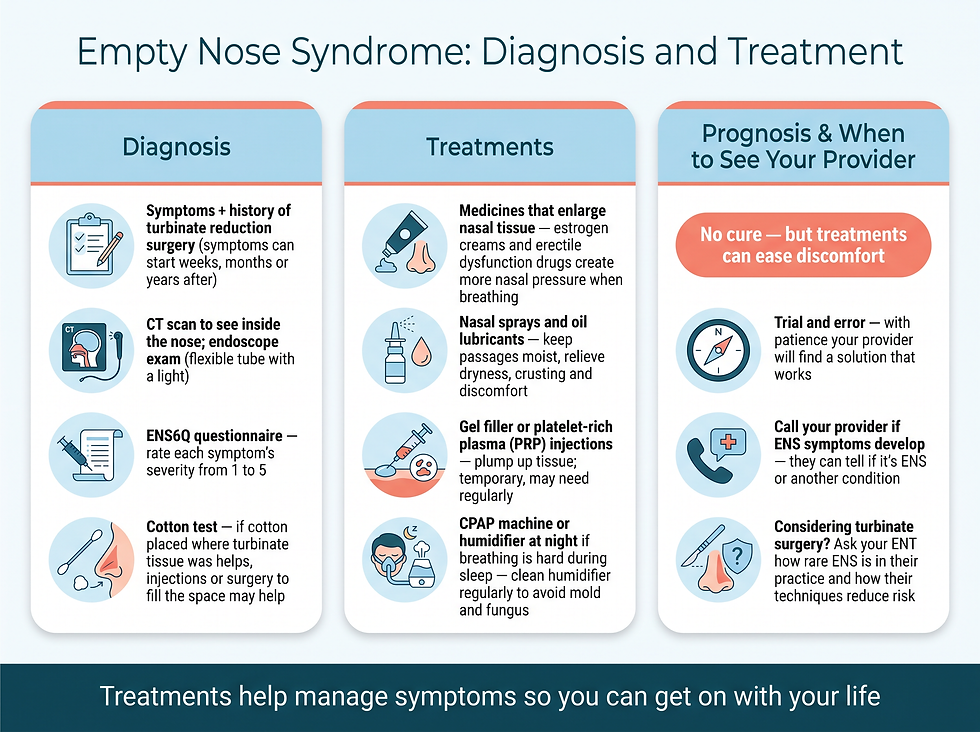
Your healthcare provider will consider your symptoms in light of whether you've had turbinate reduction surgery in the past. Timing matters: symptoms can happen weeks, months or even years later, so a complete surgical history is important.
Your provider may order a CT scan to see inside your nose. They may look inside your nose with an endoscope, a flexible tube with a light at the end.
What tests confirm the diagnosis?
ENS6Q questionnaire: you indicate whether you have each ENS-linked symptom and rank its severity on a scale from 1 to 5. It gives a symptom profile specific to empty nose syndrome.
Cotton test: your provider places cotton inside your nose where the turbinate tissue once was, then asks if it helps your symptoms. If the cotton helps, you may benefit from injections or surgery to fill in some of the empty space.
How Is Empty Nose Syndrome Treated?
What is the goal of treatment?
The goal of empty nose syndrome treatment is to ease discomfort and manage symptoms. Since there isn't a cure, treatment focuses on improving how you feel day to day.
What medications and products help?
Medicine that enlarges nasal tissue: estrogen creams and erectile dysfunction drugs can enlarge your nasal tissue, creating more nasal pressure when you breathe.
Nasal sprays and oil lubricants: these keep your nasal passages moist, which can relieve dryness, crusting and discomfort.
Injections: gel fillers or platelet-rich plasma (PRP) plump up the tissue; these treatments are temporary, so you may need them regularly.
What helps with breathing at night?
You may also need to sleep with a CPAP machine or a humidifier if you're having trouble breathing at night. If you use a humidifier, clean it regularly — that way, you're not breathing in the mold or fungus that can build up inside the machine.
When Should You See Your Healthcare Provider?
Call your healthcare provider if you develop symptoms of ENS. They can determine if your symptoms are due to ENS or another condition. Early evaluation matters, since untreated symptoms can interrupt sleep and fuel breath-focused anxiety.
Talk to your provider if you're deciding whether to have turbinate reduction surgery and you're concerned about empty nose syndrome. They can tell you how common it is in their practice (it's extremely rare). They can also explain how the procedures they use may reduce the risks.
Conclusion: You Don't Have to Live with ENS Symptoms
Having new symptoms appear after you've already had surgery to fix nasal issues can feel extra frustrating. The good news is that while there isn't a cure for empty nose syndrome, there are solutions that can help you feel better. It may take some trial and error to find the best treatments that ease your symptoms, but with some patience, your healthcare provider will help find a solution that works for you.
Having new symptoms appear after you've already had surgery to fix nasal issues can feel extra frustrating. If you're concerned about your chances of developing empty nose syndrome (ENS), talk to your healthcare provider. They can help you weigh the pros and cons of nasal surgery. If you think you may have ENS, let your provider know. Treatments can help manage symptoms so you can get on with your life.
What to do next. If you've had turbinate reduction surgery and now notice diminished airflow, painful or freezing-cold breathing, crusting, dryness or a suffocation feeling, don't wait for symptoms to escalate — contact your provider now. If you're still deciding about TRS, bring up your ENS concerns during the consultation; specialists can tell you how common the condition is in their practice and how their techniques reduce risk. And if you're managing ENS at home, pair your prescribed treatment with nightly airway support — a CPAP machine or a regularly cleaned humidifier — to protect your sleep.
This content is for general educational purposes only and is not a substitute for professional medical advice, diagnosis or treatment. Always seek the advice of your physician or other qualified health provider with any questions you may have regarding a medical condition.
Frequently Asked Questions (FAQ)
What is empty nose syndrome?
Empty nose syndrome (ENS) is a rare group of symptoms that can show up after nasal surgery. You may feel as if you can't get enough air when you breathe in through your nose, or your nasal cavity may feel too open, like the air you inhale is rushing to the back of your throat.
How common is empty nose syndrome?
It affects less than 1% of people who have turbinate reduction surgery.
Is empty nose syndrome curable?
There isn't a cure for empty nose syndrome, but there are solutions that can help you feel better. Treatments aim to ease discomfort and manage symptoms.
Why is empty nose syndrome a paradox?
People with ENS commonly feel that their nose is blocked and too open at the same time. This contradiction is a hallmark of the condition, and it's odd because there's actually more empty space in the nose after surgery.
What are the turbinates?
Turbinates are tiny structures inside your nose. They clean, heat and humidify the air you breathe.
What is turbinate reduction surgery?
If the turbinates make your nose feel blocked, so it's hard to breathe, and other treatments don't help, an ear, nose and throat specialist may do turbinate reduction surgery (TRS) to make the turbinates smaller. It creates more empty space in your nose, so air can move more freely.
Who performs turbinate reduction surgery?
An otolaryngologist (ENT) performs TRS when other treatments haven't relieved nasal blockage.
Does turbinate reduction surgery usually help?
TRS helps the vast majority of people who need this surgery. ENS is a rare exception.
What are the symptoms of empty nose syndrome?
Symptoms include a sense of diminished airflow through the nose, a sense that the nose feels too open, crusting inside the nose, dryness inside the nose, painful airflow when breathing in (which may feel freezing cold or like razors), and a suffocation feeling (like someone is holding a pillow over your nose).
Can breathing actually hurt with empty nose syndrome?
Yes — ENS can make it hurt to breathe, and breathing in may feel freezing cold or like razors.
What does the suffocation feeling of ENS feel like?
It may feel like someone is holding a pillow over your nose.
Can ENS symptoms be intense?
Yes. Symptoms can be so intense that they get in the way of day-to-day living.
Why doesn't everyone who has turbinate surgery get ENS?
Experts don't know why ENS affects some people but not others. The amount of empty space doesn't always match the symptoms — one person may have lots of turbinate tissue removed and have no issues, while another may have just a little removed and have ENS.
What most likely causes empty nose syndrome?
The most likely explanation is that the loss of turbinate tissue changes how you sense your breathing. It may impact the receptors inside your nose that sense pressure or temperature changes, so you may not be able to fully feel when you're breathing.
How soon after surgery can ENS appear?
Symptoms can happen weeks, months or even years after turbinate reduction surgery.
How is empty nose syndrome diagnosed?
Your provider considers your symptoms in light of past TRS, may order a CT scan to see inside your nose, and may look inside your nose with an endoscope (a flexible tube with a light at the end).
What is the ENS6Q test?
The ENS6Q is a questionnaire that asks about the symptoms linked to ENS. You indicate whether you have each symptom and rank its severity on a scale from 1 to 5.
What is the cotton test for empty nose syndrome?
Your provider places cotton inside your nose where the turbinate tissue once was, then asks if it helps your symptoms. If the cotton helps, you may benefit from injections or surgery to fill in some of the empty space.
What treatments help empty nose syndrome?
Treatments include medicines that enlarge nasal tissue (estrogen creams, erectile dysfunction drugs), nasal sprays and oil lubricants, and injections of gel fillers or platelet-rich plasma to plump up tissue.
Do estrogen creams and erectile dysfunction drugs really treat ENS?
Yes — these medicines can enlarge your nasal tissue, creating more nasal pressure when you breathe.
Are filler injections permanent?
No — injection treatments (gel fillers or platelet-rich plasma) are temporary, so you may need them regularly.
Does a CPAP machine help with empty nose syndrome?
You may need to sleep with a CPAP machine or a humidifier if you're having trouble breathing at night.
Should I clean my humidifier?
Yes — clean the humidifier regularly so you're not breathing in the mold or fungus that can build up inside the machine.
How do ENS symptoms affect quality of life?
Symptoms can feel miserable and take a toll on your well-being. Trouble breathing can interrupt your sleep, and focusing on each breath can make you anxious about how bad it will feel.
Can ENS cause anxiety?
The condition can lead you to focus on each breath so much that you become anxious about how bad it will feel. That's why it's essential to speak to an ENT before your symptoms reach this point.
When should I see my healthcare provider about ENS?
Call your healthcare provider if you develop symptoms of ENS — they can determine if your symptoms are due to ENS or another condition. If you're deciding whether to have turbinate reduction surgery and are concerned about ENS, talk to your provider beforehand about how rare it is and how their techniques reduce risk.
Comments